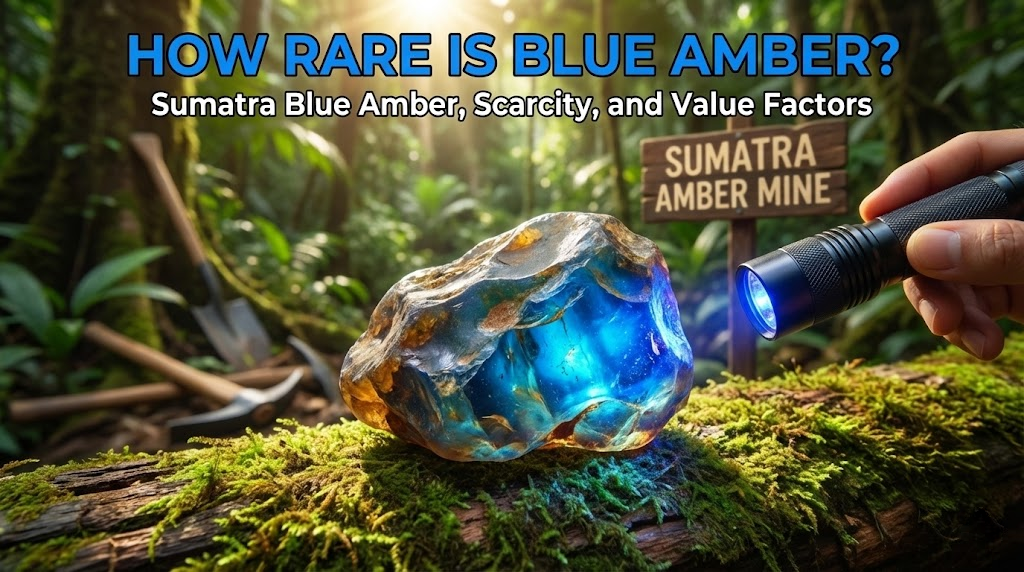
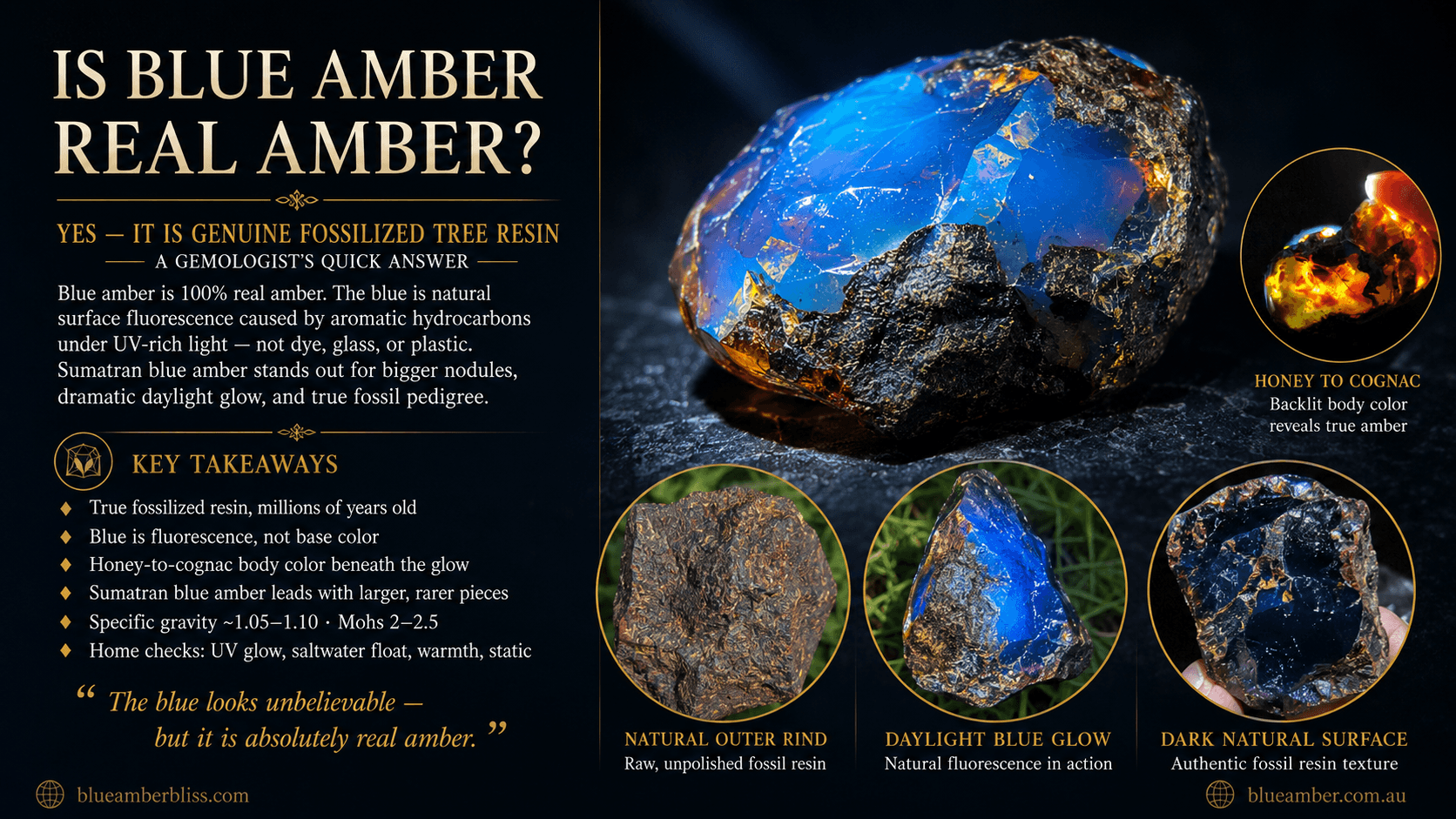
If you have ever held a glowing blue stone and wondered whether it could possibly be authentic, you are asking the right question. The blue is so otherworldly that doubt is reasonable. So let me, as a gemologist would, walk you through exactly why the answer to is blue amber real amber is an unqualified yes, and how you can confirm it yourself.
Key Takeaways
- It is real fossilized resin. Blue amber is true amber (succinite-class fossil resin), millions of years old, not a synthetic or treated material.
- The blue is fluorescence, not color. The base material is honey-to-cognac; UV-reactive hydrocarbons make the surface glow blue, so blue amber is natural and undyed.
- Sumatran blue amber leads. The Indonesian source yields larger pieces and an intense daylight blue glow, making it the most valuable and sought-after.
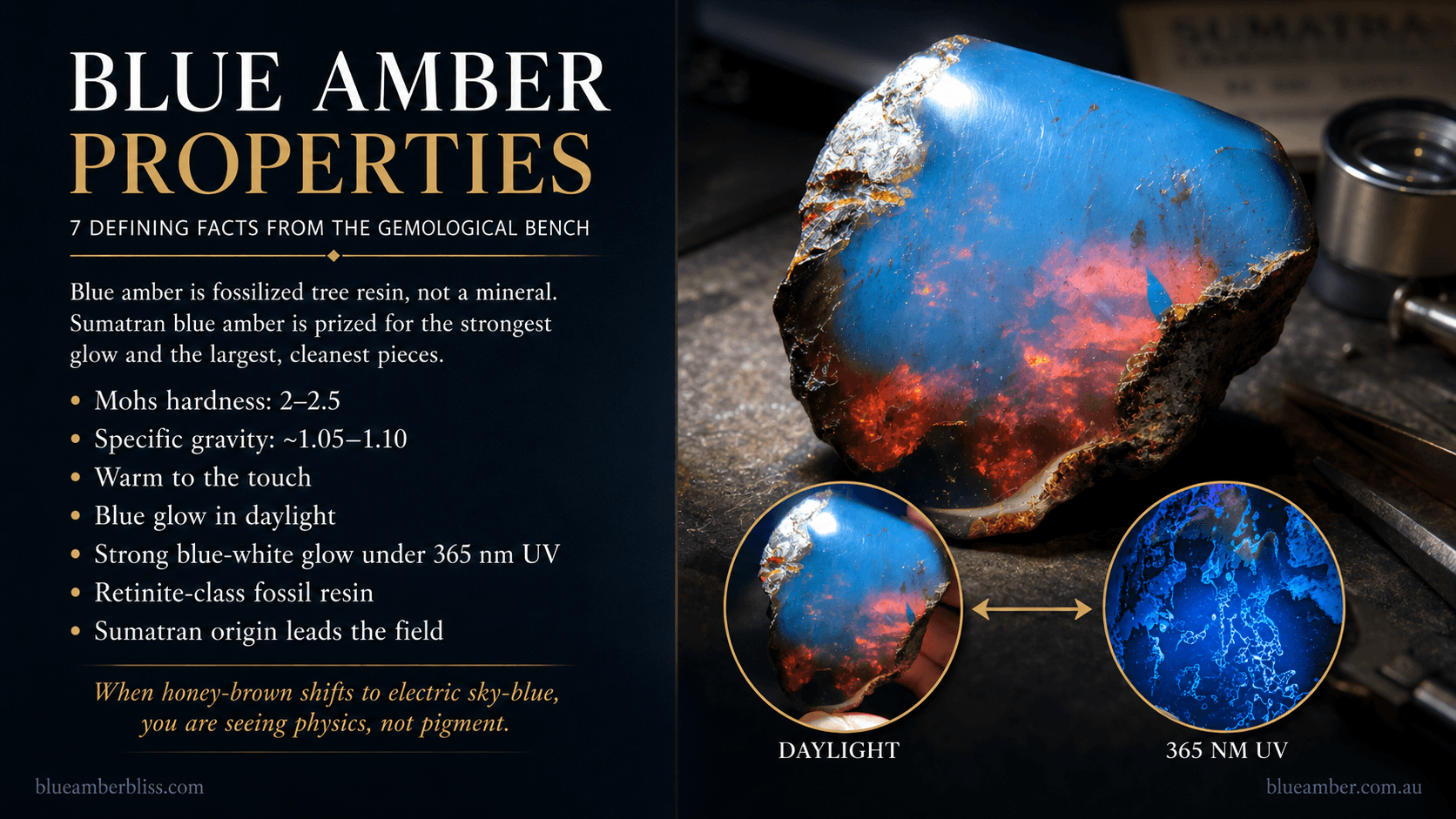
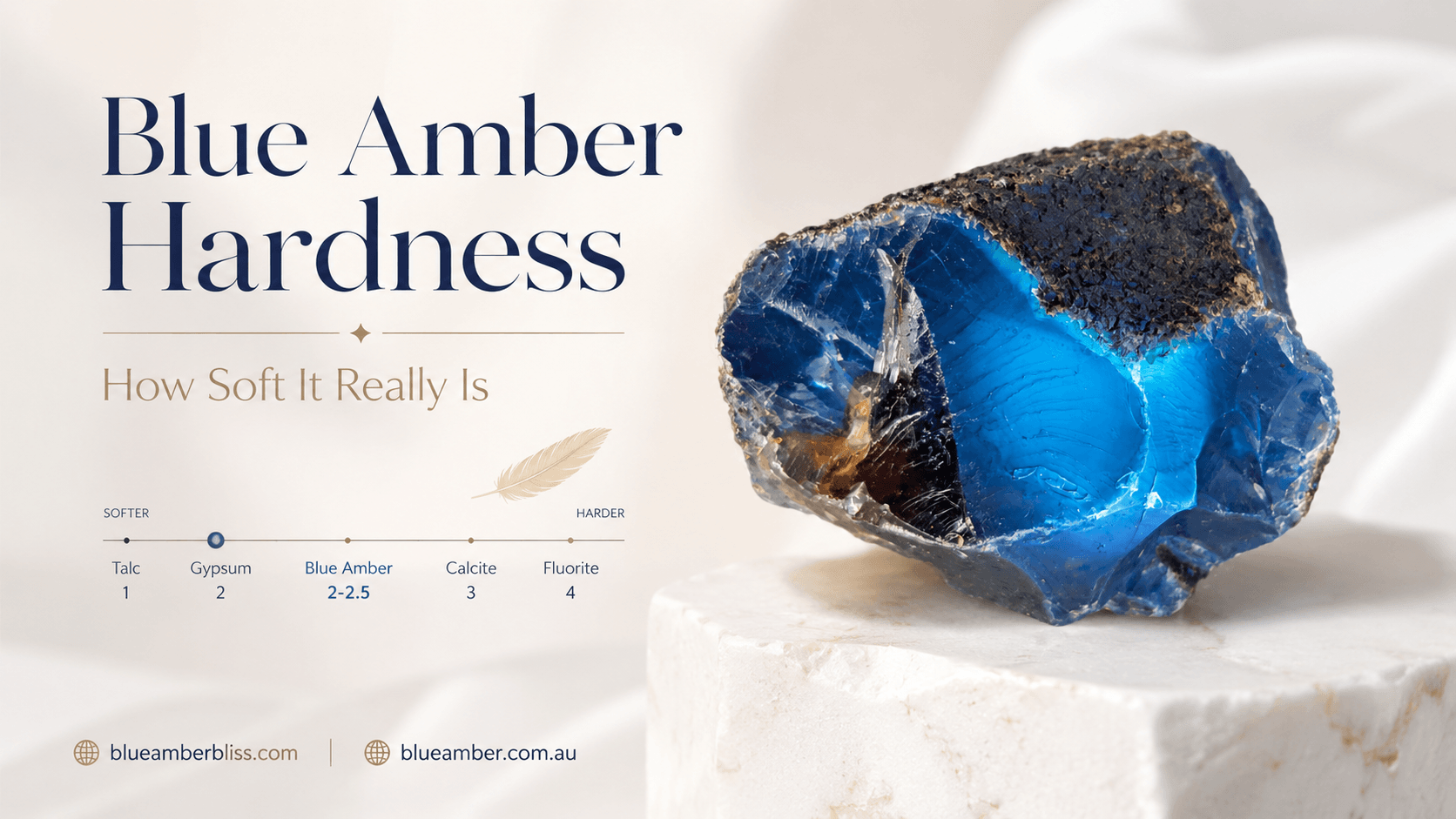
- It is a true organic gemstone. Specific gravity ~1.05-1.10, Mohs 2-2.5, it floats in saltwater and carries genuine inclusions.
- Authenticity is testable at home. UV light, saltwater float, warmth, and static all help confirm whether your blue amber is real amber.
What Exactly Is Amber, and Where Does Blue Amber Fit?
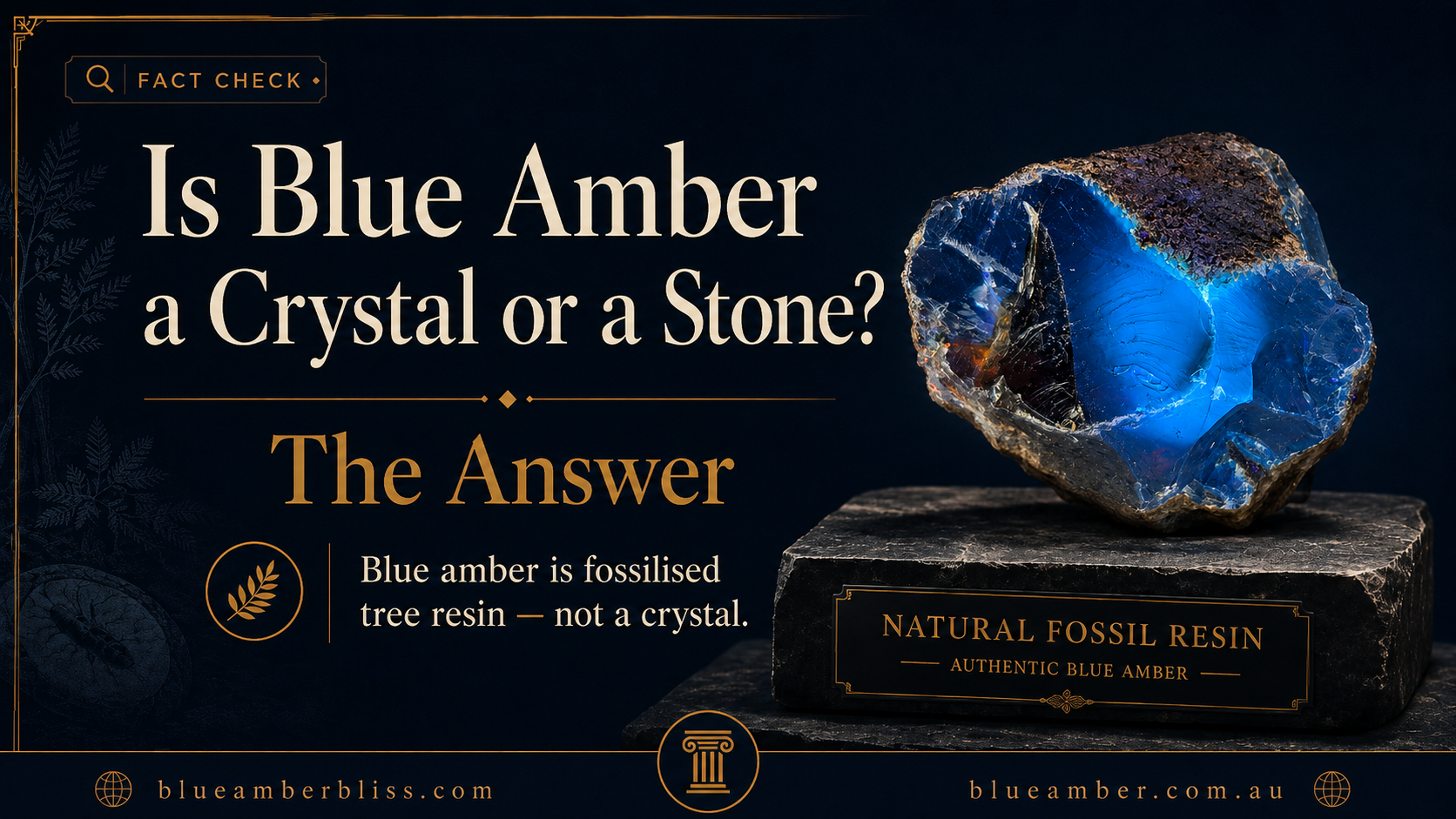
Amber is fossilized tree resin, not sap. Resin oozed from ancient trees, hardened, got buried, and over millions of years polymerized and lost volatile compounds to become a stable organic solid. That process, called maturation, is what separates amber from young copal. So when you ask is blue amber real amber, you are really asking whether blue amber underwent this same fossilization, and it did.
Blue amber is simply amber that displays a blue fluorescent glow. Geologically and chemically, it is the same fossil resin family as the golden Baltic amber you already trust. For a fuller grounding in the material, see our primer on what blue amber actually is. The blue is an optical bonus, not a different substance.
According to the Gemological Institute of America, amber is classified as an organic gem, the same category as pearl and coral. That classification settles a common doubt: is blue amber a gemstone? Yes, an organic one, prized for both beauty and provenance.
How Old Is the Resin in Blue Amber?
Sumatran blue amber typically dates to millions of years (Miocene era), while Dominican blue amber dates to a similar window of millions of years. Both are unambiguously fossilized, which is the threshold that makes the answer to is blue amber real amber a clear yes rather than “it depends.” Copal, by contrast, is only thousands to a few hundred thousand years old and does not qualify.
Is Blue Amber Real Amber by Chemical Composition?
Chemically, blue amber is a complex mix of carbon, hydrogen, and oxygen, organized into terpenoid polymers and resin acids. Baltic amber additionally contains succinic acid, sometimes up to 8%, while Sumatran and Dominican ambers are succinic-acid-poor but rich in aromatic hydrocarbons. Those aromatics matter enormously, because they are the very compounds that fluoresce blue.
So the chemistry directly explains the glow. There is no pigment, no coating, no injected dye. When people ask is blue amber real amber while staring at that electric blue, the honest gemologist answer is that the blue is an emergent optical property of the genuine resin chemistry itself. The material being real is precisely why the blue exists.
| Property | Blue Amber (Sumatran/Dominican) | Plastic Imitation |
|---|---|---|
| Base material | Fossilized tree resin | Polystyrene / phenolic resin |
| Specific gravity | ~1.05-1.10 (floats in brine) | Often 1.05-1.5 (varies; many sink) |
| Mohs hardness | 2-2.5 | Variable, often harder/softer |
| UV fluorescence | Strong blue/violet glow | Usually none or dull white |
| Hot-needle smell | Resinous, piney | Acrid, chemical, plastic |
Why Doesn’t Blue Amber Just Look Honey-Colored?
Hold a piece of Sumatran blue amber to a plain bulb and you will often see warm amber, tea, or even greenish-brown body color. Tilt it under sunlight or a dark background, and the surface erupts in blue. That dual nature confuses newcomers, but it is the signature of authenticity. A dyed fake shows the same color from every angle; real blue amber changes character with the light source.
Why Is Blue Amber Blue? The Fluorescence Explained
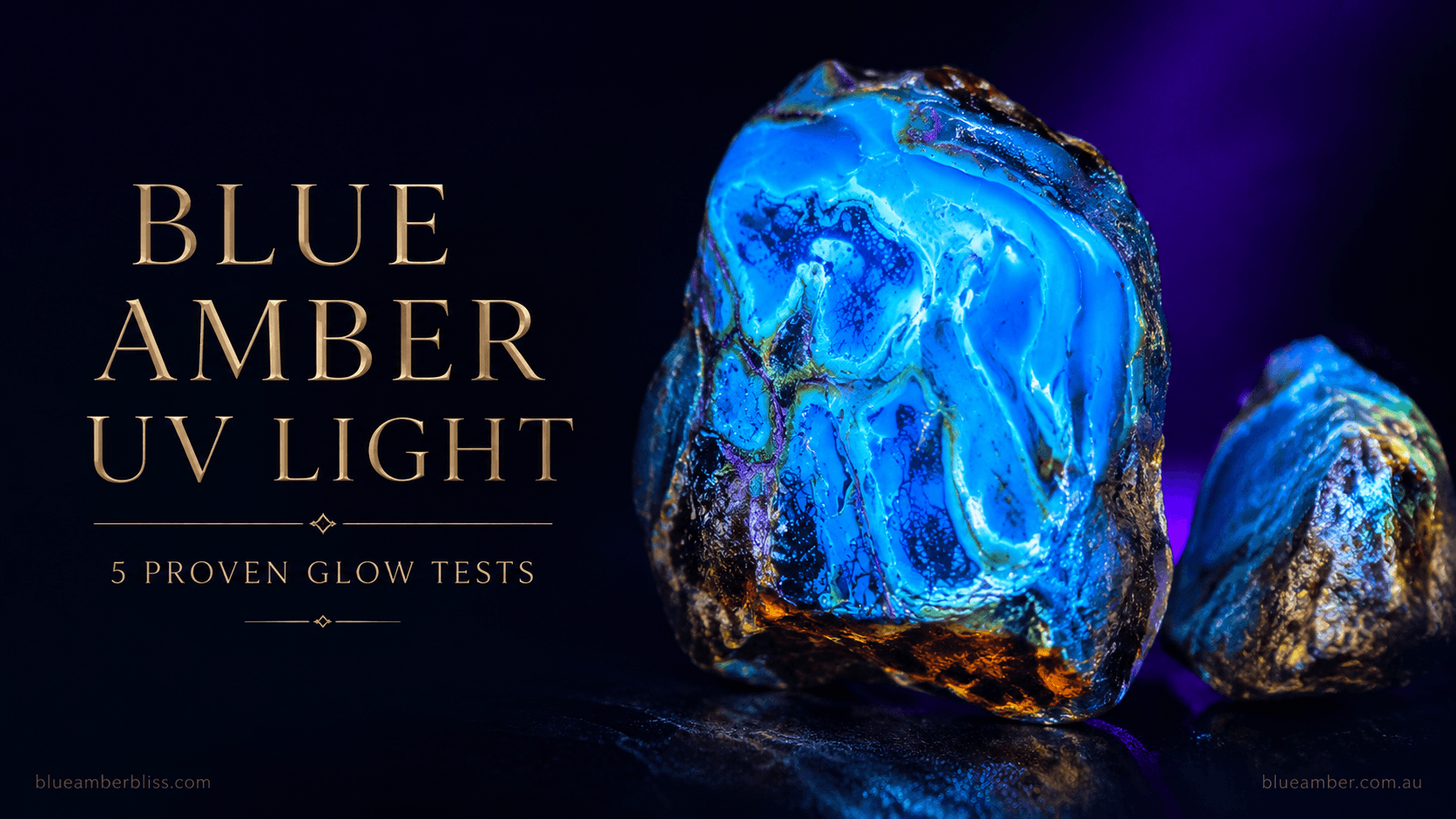
The blue is a textbook case of fluorescence. Ultraviolet light (including the UV component in ordinary daylight) strikes aromatic hydrocarbon molecules in the resin. Those molecules absorb the high-energy UV and re-emit it as visible blue light, around 430-460 nanometers. You are literally watching the amber convert invisible light into a visible blue haze on its surface.
This is why a blue amber bead can look brownish in your shadow and vivid blue in the sun. The glow lives at the surface where UV penetrates first. If you want the deeper optics, our explainer on why blue amber glows blue covers the physics. The key takeaway: nothing was added. The answer to is blue amber real amber and the answer to “why is it blue” share the same root cause, genuine fossil chemistry.
Is Blue Amber Natural, or Could the Glow Be Treated?
Is blue amber natural? In the case of reputable Sumatran material, yes, entirely. The fluorescence is an inherent property of the fossil resin and needs no treatment. Be aware that some sellers heat-treat or pressure-treat ordinary amber to alter clarity, but that does not create the blue fluorescence, the aromatic hydrocarbons must already be present. True blue glow cannot be faked into honey amber by heating.
Sumatran vs Dominican: Which Blue Amber Leads?
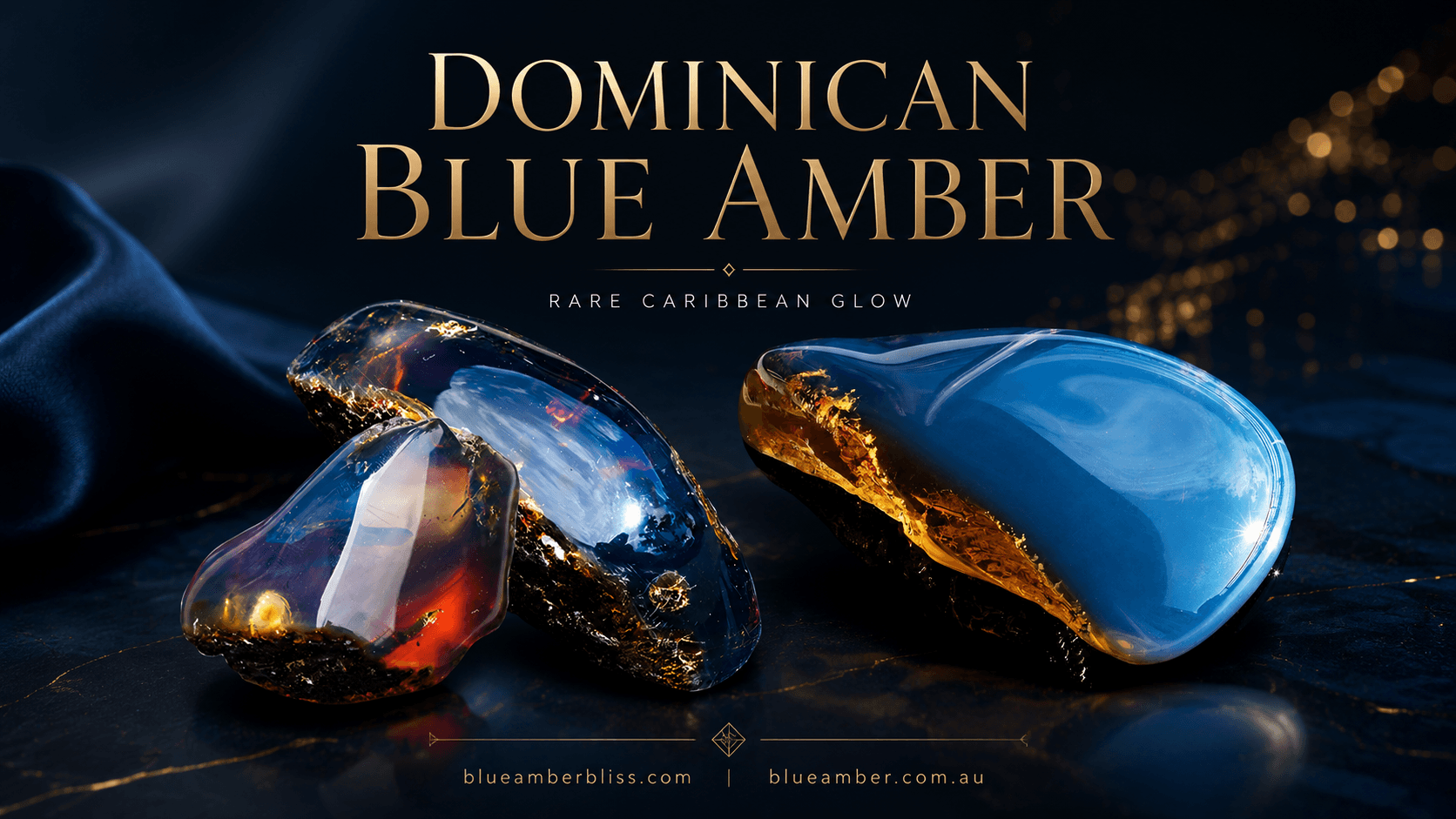
Both Sumatran (Indonesian) and Dominican blue amber are genuine, high-quality fossil resin, and on pure authenticity they are equals. But Sumatran blue amber is the newer, headline-grabbing source, and it earns the top spot. It is famous for dramatic daylight blue, meaning the glow is visible without a UV lamp, and for unusually large nodules that let cutters produce bigger, cleaner statement pieces.
That combination, scale plus a vivid daylight glow, is why Sumatran blue amber is generally the more valuable and the standout in the market. Dominican blue amber remains beautiful and collectible; it simply tends to come in smaller pieces. If you are weighing sources, our guide on where blue amber comes from maps the deposits in detail.
| Factor | Sumatran (Indonesian) | Dominican |
|---|---|---|
| Authenticity | Genuine fossil resin | Genuine fossil resin |
| Typical age | millions of years | millions of years |
| Daylight blue glow | Dramatic, often visible in sun | Visible, typically needs good light/UV |
| Piece size | Large nodules, big cuts possible | Generally smaller pieces |
| Overall standing | Newer source, more valuable standout | Classic, prized, collectible |
To be clear and credible: neither origin is “fake,” and Dominican amber is a respected classic. The point is that Sumatran blue amber’s size and daylight drama make it the leader you should reach for first.
Is Blue Amber a Gemstone? Physical Properties That Prove It
Blue amber checks every box for an organic gemstone. Its specific gravity sits at roughly 1.05-1.10, low enough that it floats in saltwater but sinks in fresh water. Its Mohs hardness is just 2-2.5, soft and warm to the touch, never cold like glass. These numbers are consistent with all genuine amber and help answer is blue amber real amber with measurable, repeatable physics.
Because it is organic, blue amber is warm against your skin, can hold a static charge when rubbed, and may carry inclusions like ancient air bubbles, plant debris, or even insects. Those trapped time capsules are nearly impossible to fake convincingly. For grade and clarity differences, our breakdown of blue amber types and grades shows what to expect across material.
Is Blue Amber Genuine Amber the Same Way Baltic Amber Is?
Is blue amber genuine amber in the same sense as the golden Baltic stones in your grandmother’s necklace? Yes. Both are fossilized resin meeting the same maturation and hardness criteria. The difference is geographic source and the fluorescent hydrocarbons, not the fundamental identity. Baltic amber simply skews golden; Sumatran and Dominican amber skew toward that blue glow. The category is identical.
5 Proven Facts: How to Confirm Blue Amber Is Real Amber
Here is the practical, gemologist-approved checklist. No single test is conclusive on its own, but together they give a confident verdict. Run several before you trust a piece, especially if you bought it from an unfamiliar seller. For a deeper walkthrough, see our full guide on how to spot real blue amber.
- UV light test. Shine a 365nm UV flashlight on it. Genuine blue amber fluoresces a strong blue or violet. Plastic and most fakes stay dull or glow flat white.
- Saltwater float test. Dissolve about 2 tablespoons of salt per cup of water. Real amber (SG ~1.05-1.10) floats; most plastics and glass sink.
- Warmth and feel. Real amber warms quickly in your hand and feels light. Glass stays cold and feels heavy.
- Static test. Rub it on wool or cotton; genuine amber builds a charge and lifts a tiny scrap of paper or hair.
- Hot needle (sacrifice test). On an inconspicuous spot, a heated pin yields a piney, resinous scent in real amber; plastic smells acrid and chemical.
Apply these and the question is blue amber real amber stops being a leap of faith and becomes something you can verify on your kitchen table. Do the float and UV tests first, since they are non-destructive and catch the vast majority of fakes.
What Are the Most Common Blue Amber Fakes?
The usual suspects are dyed plastic (polystyrene or Bakelite), glass, and “reconstructed” or pressed amber made from fused scrap. Copal, immature resin, is sometimes sold as amber too; it is softer, smells stronger when heated, and dissolves with a drop of acetone or alcohol where true amber resists. Knowing these helps you keep asking is blue amber real amber with a critical eye.
Myth-Busting: Setting the Record Straight on Blue Amber
Let me dismantle the persistent myths directly, because misinformation is exactly why so many people ask is blue amber real amber in the first place. The blue color is the biggest source of suspicion, and it deserves a clear, confident correction.
Myth 1: “The Blue Means It Is Dyed”
False. No dye produces a color that appears and disappears depending on the light angle and UV content. Dye is constant; fluorescence is dynamic. The blue shifting as you tilt the stone is actually proof of authenticity, the opposite of what the myth claims.
Myth 2: “Real Amber Is Always Yellow or Honey”
False. Amber spans a wide palette, including cherry, green, and blue fluorescent varieties. Color does not define amber; fossilized resin chemistry does. So is blue amber real amber despite not being yellow? Absolutely yes.
Myth 3: “Blue Amber Is a Lab-Made Stone”
False. While pressed amber exists, the prized Sumatran and Dominican blue ambers are dug from natural deposits as solid fossil nodules. The fluorescent hydrocarbons cannot be synthesized into honey amber after the fact, which is why imitations never replicate the true daylight glow. Once more, is blue amber real amber, and the geological record says yes.
Myth 4: “If It Glows, It Cannot Be Natural”
False, and backwards. Per the general mineralogy described by sources like Wikipedia’s amber entry, fluorescence is a well-documented natural property of many genuine minerals and organic gems. Glowing under UV is normal for real amber, not a red flag. The strength and blue hue of that glow is, in fact, a hallmark of the best Sumatran material.
How to Buy Blue Amber With Confidence
The best protection against fakes is sourcing, not just testing. Buy from a specialist who can tell you the origin (Sumatran first, for the reasons above), the grade, and whether the piece is solid versus pressed. Ask whether the blue is visible in daylight or only under UV; strong daylight blue points to top-tier Sumatran material.
A trustworthy seller welcomes the very tests in this article and will never bristle when you ask is blue amber real amber. They will hand you a UV light and a cup of saltwater. Pair good sourcing with the five proven tests above, and you can collect blue amber, especially the dramatic Sumatran stones, with total peace of mind. Genuine, natural, and a true gemstone, every time.
What Convinces Us a Piece Is Genuine Blue Amber
At Blue Amber Bliss we handle Sumatran blue amber every day, and the authenticity tells are unmistakable once you have held enough of it. In ordinary daylight our Sumatran stones read as a deep cognac-to-near-black resin, yet the moment they catch UV or bright sun that blue fluorescence floods across the surface, something copal, plastic and glass simply cannot fake. We also look for the small trapped inclusions and natural flow lines that only ancient, millions-of-years-in-the-making tree resin carries, and a warm, slightly aromatic feel that confirms it is true amber rather than an imitation.
If you would like to see these authenticity cues for yourself, we warmly invite you to explore our hand-selected Sumatran blue amber at Blue Amber Bliss. Shop hand-selected Sumatran blue amber →
FAQ
Is blue amber real amber or a man-made stone?
It is real amber. Blue amber is genuine fossilized tree resin, millions of years old, identical in nature to golden Baltic amber. The blue is natural fluorescence, not a synthetic effect, so is blue amber real amber answers firmly yes.
Is blue amber genuine amber compared to Baltic amber?
Yes. Is blue amber genuine amber in the same way Baltic is? Both are fossilized resin meeting the same maturation criteria. They differ mainly in source and in the aromatic hydrocarbons that make Sumatran and Dominican material fluoresce blue rather than appear golden.
Is blue amber natural, or is the blue added?
Is blue amber natural? Completely. The blue comes from UV-reactive hydrocarbons already inside the fossil resin re-emitting light at around 430-460nm. Nothing is dyed, painted, or coated. Reputable Sumatran blue amber needs no treatment to glow.
Is blue amber a gemstone?
Yes. Is blue amber a gemstone? It is classified as an organic gem, alongside pearl and coral, valued for beauty and provenance. With a specific gravity of ~1.05-1.10 and Mohs 2-2.5, it has the measurable properties of a genuine gem material.
Why does my blue amber look brown indoors?
Because the base body color is honey-to-cognac, and the blue is surface fluorescence triggered by UV. Indoor bulbs emit little UV, so you see the warm body color. Under sunlight or UV, the blue glow appears. This shift confirms is blue amber real amber rather than dyed.
How can I test if blue amber is real at home?
Use a 365nm UV light (look for strong blue glow), a saltwater float test (real amber floats), the warmth-and-weight check, and a static test with wool. A hot-needle test on a hidden spot gives a piney, resinous scent in genuine amber.
Is Sumatran blue amber better than Dominican?
Both are genuine and equal in authenticity, but Sumatran blue amber is the standout. As a newer source, it offers larger nodules and a dramatic daylight blue glow, making it generally more valuable. Dominican is a respected classic, typically in smaller pieces.
Does fake blue amber exist, and what is it made of?
Yes. Common fakes are dyed plastic, glass, pressed or reconstructed amber, and immature copal sold as amber. The five tests above, especially UV fluorescence and the saltwater float, reliably separate genuine blue amber from these imitations.
Will blue amber lose its glow over time?
No, the fluorescence is an intrinsic property of the resin chemistry and does not fade with normal wear. Keep it away from harsh solvents, perfume, and prolonged heat to protect the surface, and the blue glow remains for generations.
Is blue amber worth the price?
For genuine, well-sourced material, yes. Fine Sumatran blue amber commands premium prices because of its rarity, size, and vivid daylight glow. Confirming is blue amber real amber through testing and trusted sourcing ensures you pay for authentic fossil resin, not an imitation.
Related Blue Amber Guides
- how to tell copal from real amber
- blue amber vs Baltic amber
- Blue Amber Types: 4 Real Origins, Grades & Prices
- Sumatran Blue Amber vs Dominican: 7 Proven Differences
- Green Amber: 7 Proven Facts vs Blue Amber
- Blue Amber vs Sapphire: 7 Proven Differences