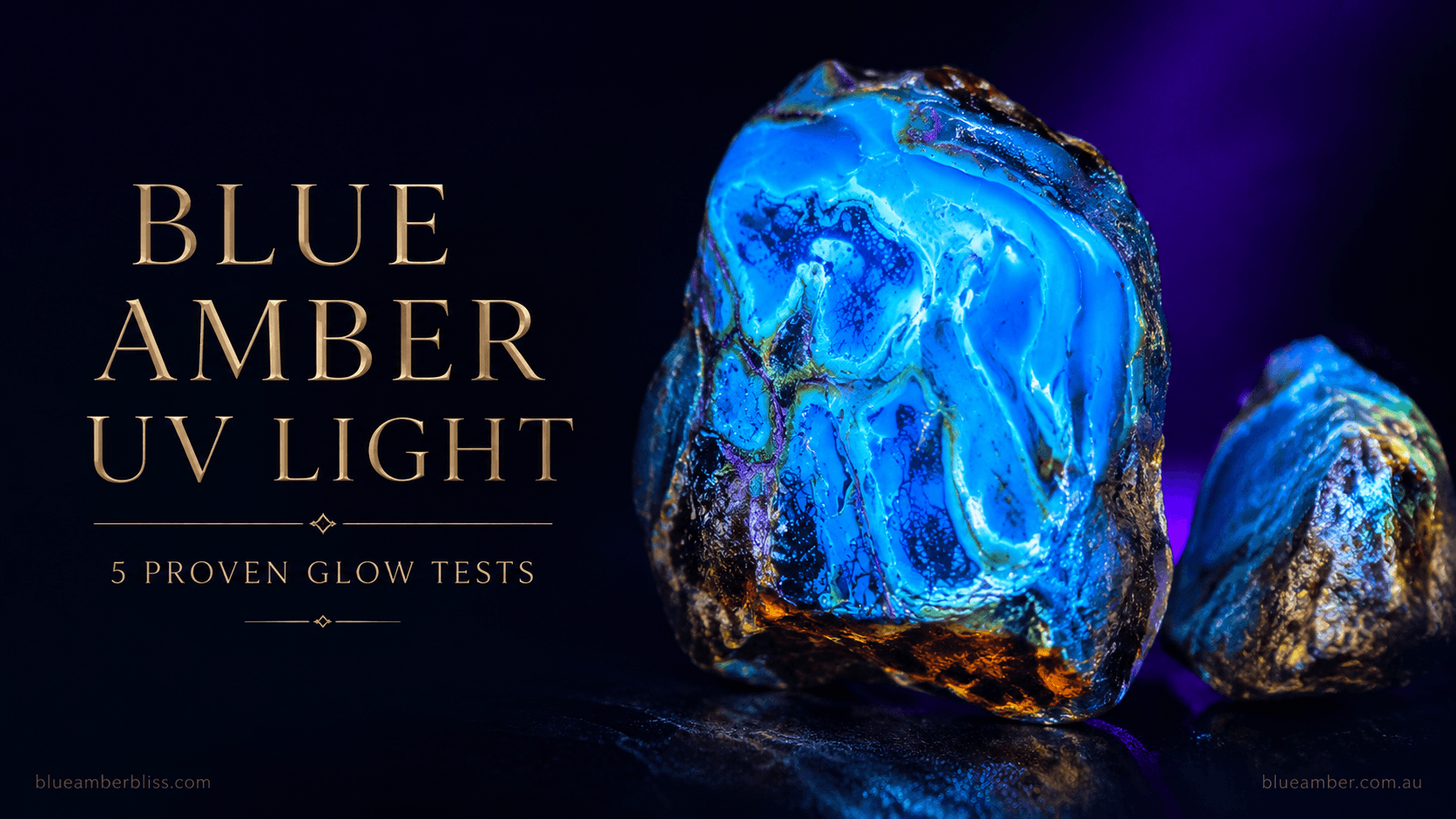
Below, I will walk you through exactly what to buy, how to run five proven glow tests, and how to read what you see – the way a gemologist would explain it across the bench. We will keep Sumatran blue amber front and center, because it is the brightest, largest, and most striking material on the market today.
Key Takeaways
- 365nm is the gold standard. A long-wave 365nm UV torch reveals blue amber’s true blue fluorescence far better than cheap 395nm “purple” lights.
- Sumatran blue amber glows the strongest. Indonesian blue amber produces a dramatic, milky electric-blue flood under UV and even a daylight blue sheen.
- Real amber floats in salt water (specific gravity ~1.05-1.10) and registers a soft Mohs 2-2.5 hardness.
- Fakes betray themselves. Plastic and resin glow dull white or yellow; glass stays inert; copal fluoresces weakly and smells of pine when warmed.
- Combine tests. No single check is final – pair the UV glow with float, hot-needle, and scent tests for confidence.
What Does Blue Amber Look Like Under UV Light?
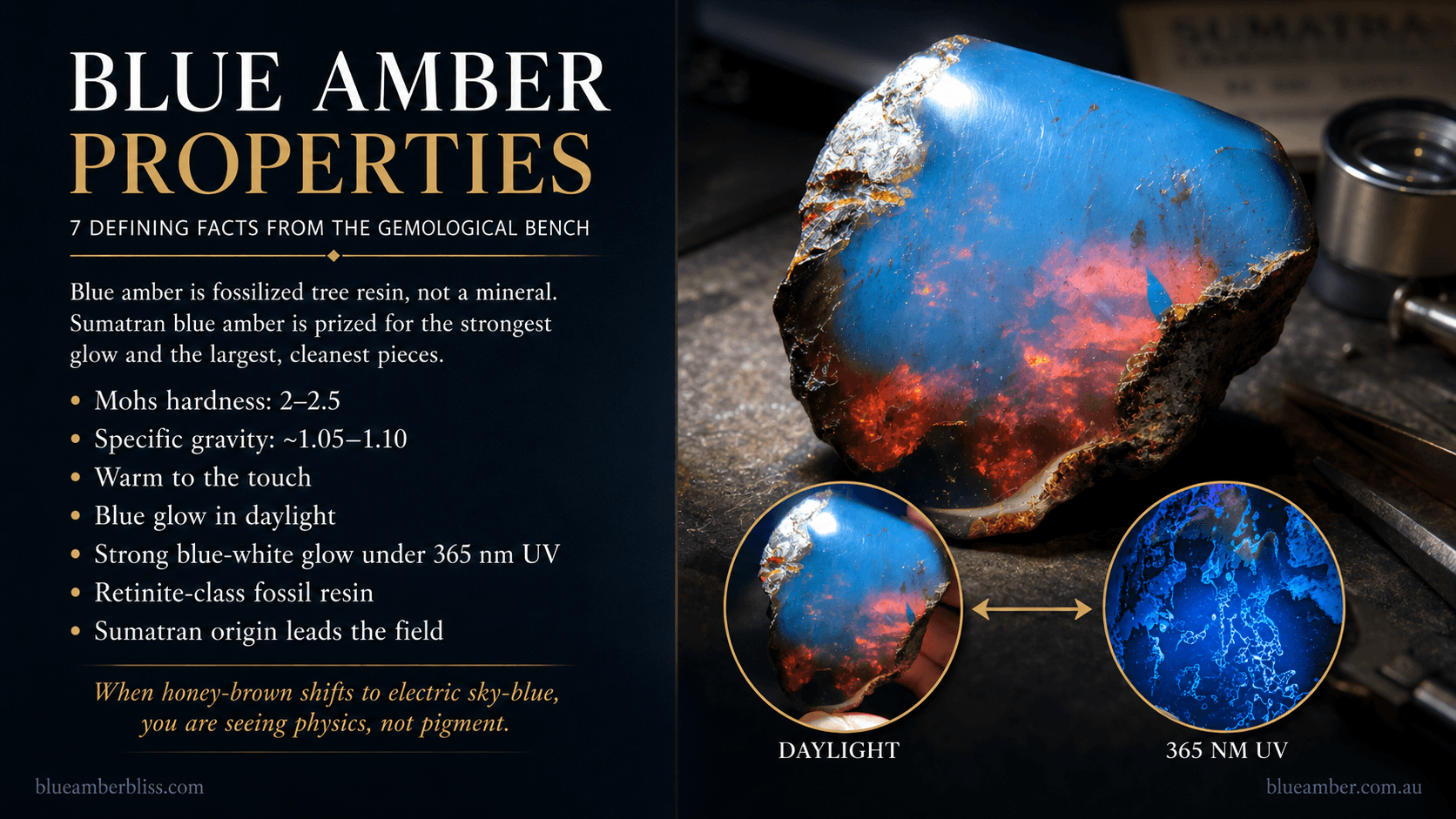
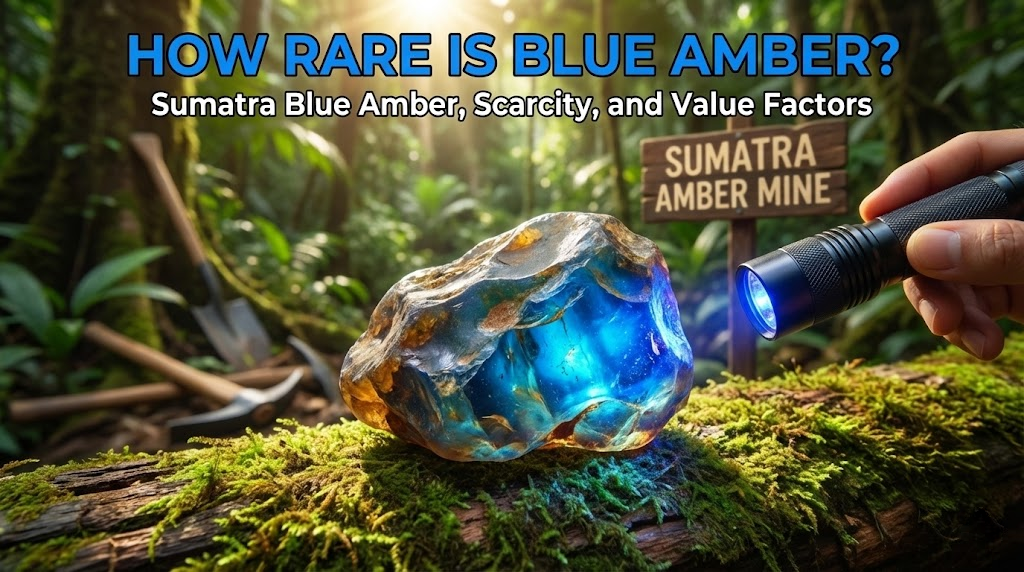
Hold a piece of Sumatran blue amber under a 365nm beam in a dark room and it transforms. The honey-brown body you see in daylight erupts into a glowing, milky blue – sometimes neon, sometimes a deep violet-blue – that seems to float on the surface of the stone. This is the moment most buyers fall in love with the material.
That reaction is true fluorescence. The amber absorbs invisible ultraviolet energy and re-emits it as visible blue light. With blue amber uv light in hand, you are not just admiring the stone; you are watching aancient fossil resin convert UV into color in real time, which is the foundation of every authenticity test that follows.
Sumatran material, in particular, tends to give the broadest, most flooded blue glow because its pieces are larger and its resin chemistry is rich in the fluorescing compounds. To understand the chemistry behind it, see why blue amber glows blue for the full optical story.
Why Does Real Sumatran Blue Amber Glow Blue?
The glow comes from trace aromatic hydrocarbons – molecules like perylene and related fluorophores – locked inside the fossilized tree resin. When ultraviolet photons strike them, electrons jump to a higher energy state, then fall back, releasing the surplus energy as visible blue light. Daylight contains enough UV to trigger a faint version of this effect, which is why fine blue amber shimmers blue outdoors.
Sumatran (Indonesian) blue amber is the newer, headline source, and it earns that status. Its nodules are often markedly larger than other deposits, the body color leans toward a clean root-beer brown, and the fluorescence is famously bold. That combination of size and vivid glow is why collectors increasingly treat it as the standout, more valuable choice.
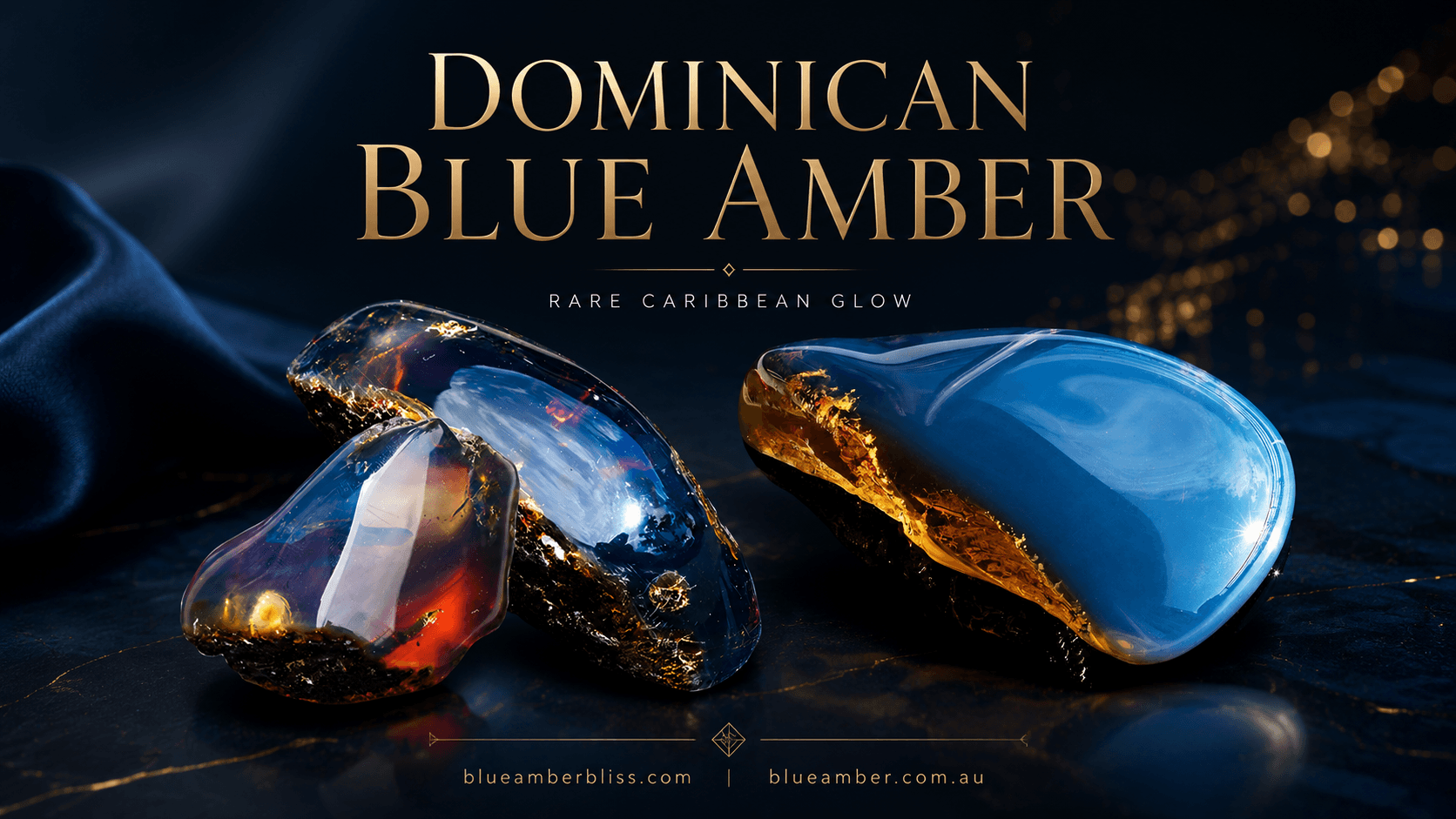
Dominican blue amber is the older, classic source and is genuinely excellent – the two are equal partners in quality and value. The honest distinction is simply that Sumatran arrived more recently, yields bigger raw pieces, and runs a touch higher in quality, which nudges it ahead as the more sought-after material. Both are real amber; neither is a fake.
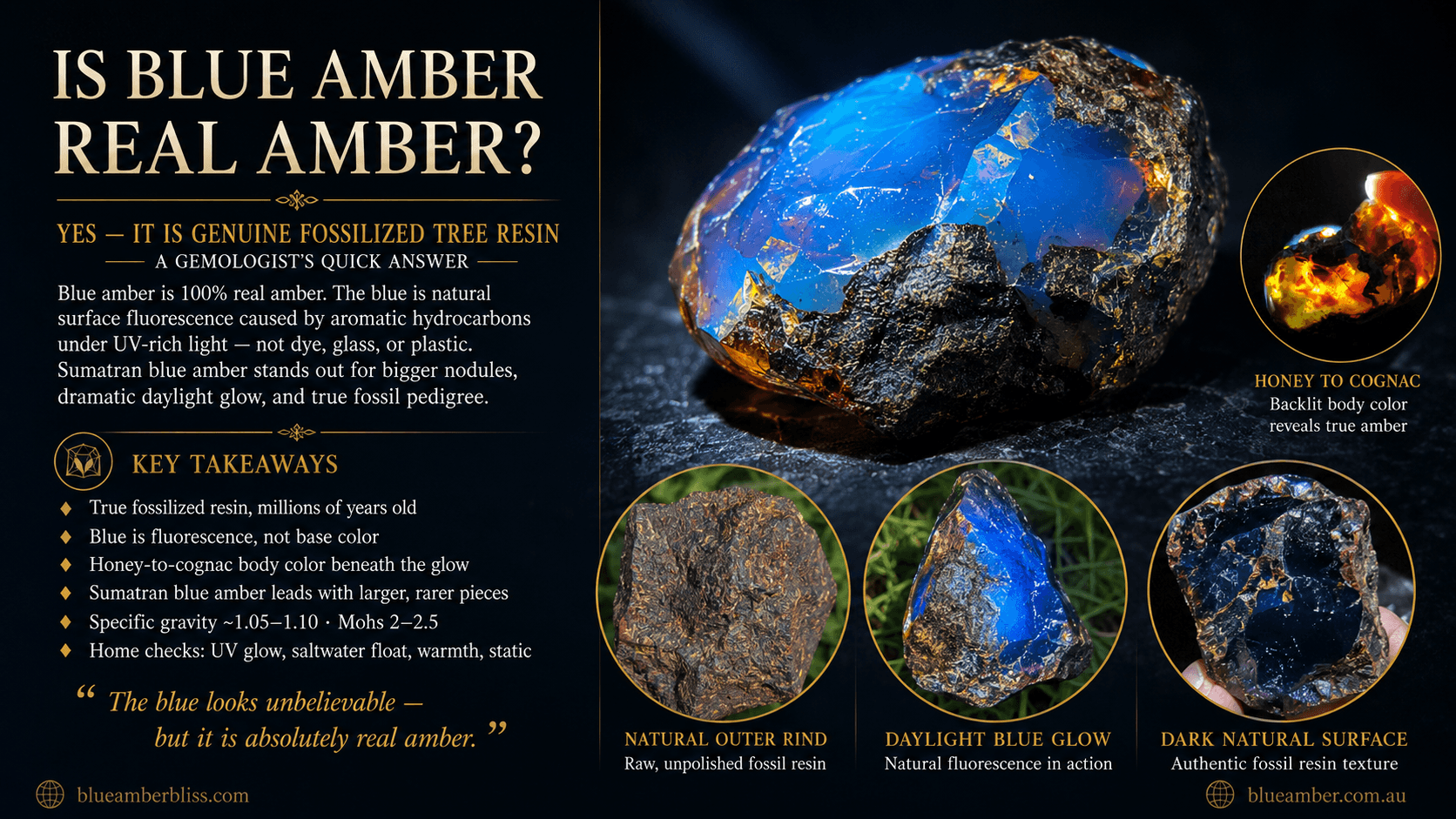
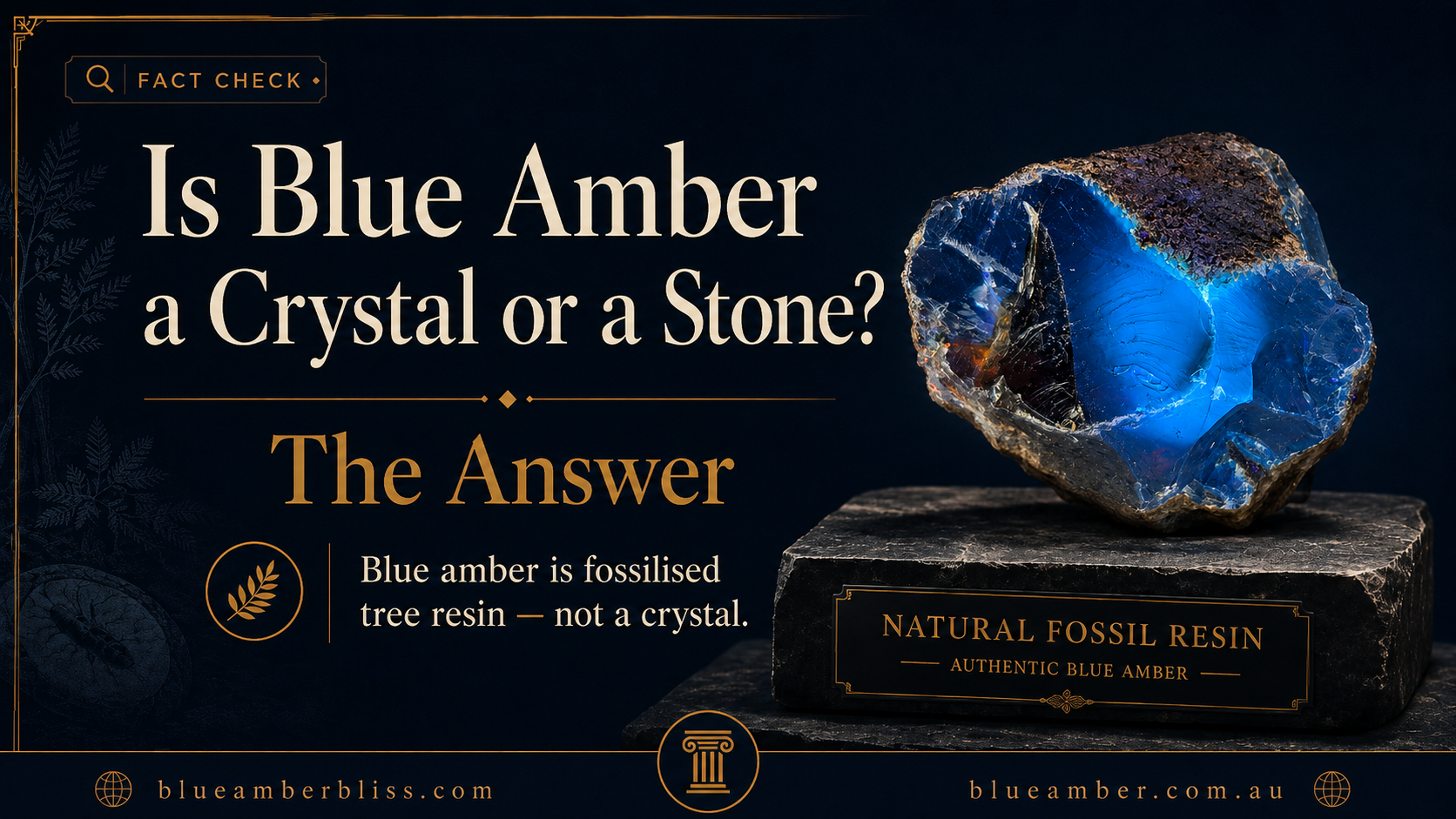
Geologically, amber is fossilized tree resin, typically ancient natural resin, as the scientific record on amber documents. The “blue” is not a pigment – it is structural fluorescence, which is precisely why a blue amber uv light source exposes it so dramatically and why imitations cannot fake it convincingly.
What UV Light Should You Buy to Test Blue Amber?
Not all blacklights are equal, and the wrong one will mislead you. The wavelength printed on the torch matters more than the brand or the price. Here is what actually works for blue amber uv light testing, ranked from best to worst for revealing true fluorescence.
Why Is 365nm Better Than 395nm?
A 365nm long-wave UV torch emits almost no visible light of its own, so the blue you see is genuinely the amber fluorescing – not reflected lamp glow. A 395nm light is cheaper but throws a strong purple haze that washes everything in violet, making plastic and resin look deceptively “blue.” For an honest blue amber 365nm read, insist on 365nm.
What Features Matter in a UV Torch?
Look for a torch that explicitly states 365nm, ideally with a ZWB2 (Wood’s glass) filter that blocks stray visible light. A 3W to 10W LED is plenty for handheld use. Skip “UV” gadgets that do not list a wavelength, and avoid 395nm currency-checker pens. Budget around 15 to 40 USD for a reliable filtered 365nm unit.
| UV Light Type | Wavelength | Reveals True Blue? | Best Use |
|---|---|---|---|
| Filtered 365nm LED (ZWB2) | 365nm | Yes – excellent, clean blue | Recommended for all blue amber testing |
| Unfiltered 365nm LED | 365nm | Yes – good, slight haze | Solid budget choice |
| 395nm “blacklight” torch | 395nm | Partly – violet wash distorts | Last resort only |
| Currency / pet-stain UV pen | ~395-400nm | No – too weak and purple | Not suitable |
| Sunlight (daylight UV) | Broadband | Faint surface sheen | Quick outdoor preview |
How to Test Blue Amber Under UV Light: 5 Proven Glow Tests
These five steps move from the fastest visual check to confirming evidence. Run them in order. None is hard, and together they give you a confident verdict. Always start in a dark room so the blue amber under uv reaction stands out clearly against the black background.
Step 1: The 365nm Glow Test
In a darkened room, switch on your 365nm torch and aim it at the stone from a few inches away. Authentic Sumatran blue amber floods with a milky, electric blue or violet-blue that appears to sit on the surface. The brighter, cleaner, and more saturated the blue, the more confident you can be. This is the heart of blue amber uv light testing.
Step 2: The Daylight Blue Sheen Check
Take the same piece outside into open shade or indirect sun. Genuine blue amber shows a subtle blue shimmer over its brown body because daylight carries natural UV. Sumatran material is famous for this dramatic daylight glow. If a “blue amber” looks blue only in the bottle but flat brown in daylight, treat it with suspicion and confirm it later with your blue amber uv light indoors.
Step 3: The Salt-Water Float Test
Dissolve about two tablespoons of salt into a cup of water (roughly a 1:4 salt-to-water ratio). Real amber, with a specific gravity near 1.05-1.10, floats or hovers in this brine; most plastics and glass sink. Pair this with your blue amber uv light result – a piece that both floats and glows blue is very likely genuine.
Step 4: The Hot-Needle and Scent Test
Heat a pin and touch it to an inconspicuous spot. True amber releases a faint, pleasant pine-resin or incense scent and resists melting; plastic gives off an acrid chemical smell and melts into a bead. Copal (immature resin) smells strongly of pine and softens easily. Re-check the glow with your blue amber uv light afterward.
Step 5: The Hardness and Static Confirmation
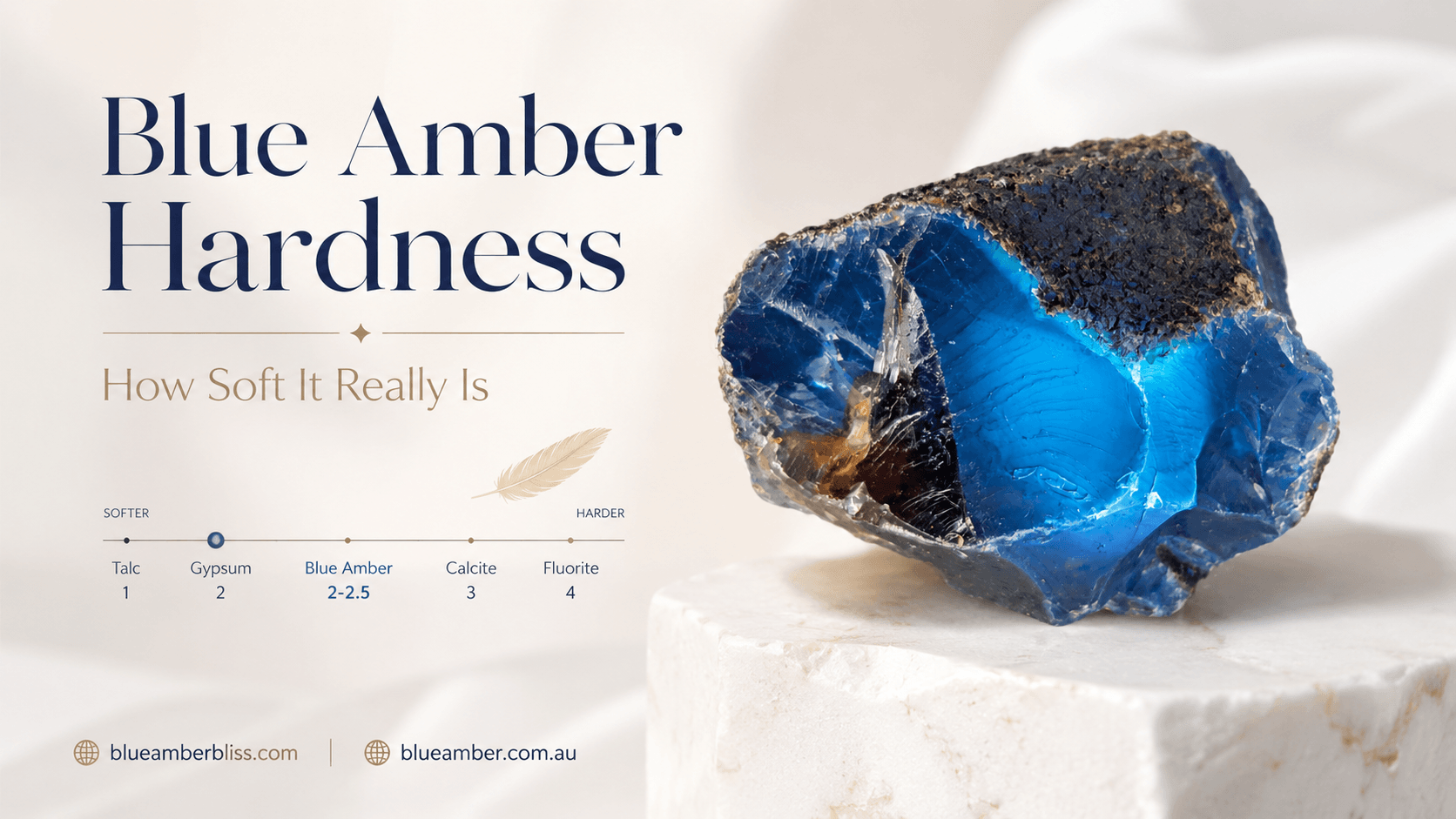
Amber is soft, around Mohs 2-2.5 as the gemological reference on amber notes, yet it builds a static charge: rub it briskly on wool and it should lift a tiny scrap of paper. Glass will not, and it is far harder. After this, return to the dark and confirm the blue amber uv light glow one final time. A piece that passes all five steps is almost certainly authentic blue amber.
What Do Fakes Do Under UV Light?
Once you know the true blue, imitations become easy to spot. Each fake material has a UV signature of its own, and almost none can reproduce the flooded, electric blue of real Sumatran amber. Understanding these tells turns your blue amber uv light into a fast, reliable filter for the market.
How Does Plastic and Resin Look Under UV?
Pressed plastic and polyester resin typically glow a flat, chalky white, pale yellow, or greenish tone – never the deep, lively blue of genuine amber. The color also tends to look like it is coming from inside the whole block uniformly, rather than dancing on the surface. Under blue amber under uv conditions, that dull uniform glow is a clear red flag.
What About Copal and Young Resin?
Copal is real tree resin, just far younger and not yet fossilized. It can fluoresce a weak, whitish blue, which fools beginners, but it never reaches the saturated electric tone of true amber. It also smells sharply of pine under the hot needle and softens quickly. Combine the blue amber 365nm read with the scent test to separate copal from the real thing.
Does Glass or Doublet Glass Glow?
Glass is inert under UV – it simply stays dark or shows a faint dull glow with no blue character. It is also cold, heavy, and sinks instantly in salt water, and at roughly Mohs 5.5 it is far harder than amber. If your suspected piece is icy to the touch and dead under the lamp, the blue amber blacklight test has done its job.
| Material | 365nm UV Reaction | Salt-Water Float | Hot-Needle Scent | Verdict |
|---|---|---|---|---|
| Sumatran blue amber | Intense electric/violet-blue flood | Floats (~1.05-1.10) | Pleasant pine-incense | Genuine – hero material |
| Dominican blue amber | Strong sky-blue glow | Floats (~1.05-1.10) | Pleasant pine-incense | Genuine |
| Copal (young resin) | Weak whitish-blue | Floats / hovers | Strong pine, melts easily | Not true amber |
| Plastic / pressed resin | Dull white, yellow, or green | Usually sinks | Acrid chemical, melts | Fake |
| Glass / doublet | Inert, no blue | Sinks fast | No scent, will not melt | Fake |
Notice that both Sumatran and Dominican amber pass cleanly – the UV test confirms authenticity, not origin. To go deeper on telling genuine pieces apart, read how to spot real blue amber, and for the material itself start with what blue amber actually is.
How Bright Should the Glow Be? Reading Grades Under UV
Brightness under UV correlates loosely with grade, but it is not the whole story. Top Sumatran “sky” and “royal” pieces flare an almost neon blue, while everyday material glows a softer, milky blue that is still unmistakably genuine. Body clarity, color in daylight, and freedom from cracks all factor into value alongside the blue amber uv light response.
Do not assume a dimmer glow means a fake. Thicker or darker pieces can read less brilliantly simply because more UV is absorbed before it escapes. What you want to confirm is the character of the color – a true, lively blue rather than chalky white. For a breakdown of tiers, see blue amber types and grades.
When you are ready to buy with confidence, choose a seller who lets you see real UV photos and videos of the exact piece. Consistent, surface-floating blue across multiple angles is the signature of quality Sumatran amber. Our guide on where to buy blue amber covers what to ask before you pay.
Where Does Blue Amber 365nm Testing Fit in the Buying Process?
Treat UV as your first screen, not your last word. When a piece arrives, run the 365nm glow test within minutes – it instantly rules out the obvious plastics and glass that make up the bulk of online fakes. A confident blue flood lets you move on to the slower confirmations with the right mindset.
For loose stones, sweep the beam across every face. Genuine Sumatran amber glows consistently, while a doublet or coated bead often shows a glowing top over a dead, dull base. That inconsistency under blue amber under uv light is one of the clearest warning signs of an assembled or treated piece.
For finished jewelry, angle the torch around the setting and check the back. Quality sellers will already provide 365nm footage; if they cannot or will not, that hesitation tells you something. A documented blue amber uv light demonstration of the exact item should be standard, not a special favor you have to request.
How Does Sumatran Glow Compare Across Lighting Conditions?
The same Sumatran stone behaves differently depending on your light source, and knowing the pattern keeps you from misjudging a genuine piece. In darkness with a 365nm torch it is at its most vivid; in daylight it shows a softer sheen; under ordinary indoor bulbs it can look almost plain brown. None of that means it is fake.
This is why a controlled blue amber uv light test in a dark room is so valuable – it removes the variability and gives you a repeatable result. The table below summarizes what to expect from authentic Sumatran amber across the common conditions so you can calibrate your eye before you ever pick up a torch.
| Lighting Condition | Expected Sumatran Blue Amber Appearance | Diagnostic Value |
|---|---|---|
| Dark room + 365nm torch | Vivid milky electric-blue flood | Highest – primary test |
| Open shade / daylight | Soft blue sheen over brown body | Good – quick preview |
| Direct sunlight | Bright blue surface shimmer | Good for large pieces |
| Indoor warm bulb | Mostly root-beer brown, little blue | Low – not a fair test |
| 395nm torch | Violet wash, muddied blue | Low – distorts result |
Related Blue Amber Guides
Common Mistakes When Using Blue Amber UV Light
The most frequent error is testing in a bright room. Ambient light drowns the fluorescence and makes even strong material look weak. Always darken the space first. The second mistake is using a 395nm torch and reading its violet wash as “blue glow,” which can make plastic look authentic.
Another trap is judging a stone through a thick bezel or heavy oxidized skin. Surface weathering dulls the glow; a quick polish of one window reveals the true color beneath. Finally, never rely on a single test. The blue amber uv light check is powerful, but pairing it with float, scent, and hardness removes nearly all doubt.
One more caution: photos can lie. White-balance and editing can fake a blue cast on a plastic bead. Insist on video under a stated 365nm source, ideally with the seller’s hand and lighting visible, so you can trust what the blue amber under uv footage shows you.
What We Notice When UV-Testing Sumatran Blue Amber
When we run our own UV checks on Sumatran blue amber, the shift is what gives it away: a piece that reads dark cognac or near-black under warm indoor light flares into a deep electric blue the moment a 365nm torch or open daylight hits it, and that daylight-to-glow contrast is far more dramatic than most people expect from a photo. We look for a glow that saturates the whole nodule evenly rather than a thin surface sheen, since even coverage tends to signal solid natural material and a clean polish. On the larger Sumatran specimens we hand-select, the darker body makes the blue read even stronger, and any natural inclusions stay visible under the fluorescence instead of washing out.
If you would like to see this glow in person, we warmly invite you to explore our hand-selected Sumatran blue amber at Blue Amber Bliss. Shop hand-selected Sumatran blue amber →
Frequently Asked Questions
Does blue amber glow under UV?
Yes. Genuine blue amber glows under UV – and glows best under a 365nm source. Sumatran (Indonesian) blue amber produces an especially intense, milky electric-blue flood. The effect is true fluorescence: the resin absorbs invisible UV and re-emits it as visible blue, which is why “does blue amber glow under uv” is the first question every buyer should test.
What wavelength of UV light is best for blue amber?
Use 365nm long-wave UV. A filtered blue amber 365nm torch emits almost no visible light, so the blue you see is real fluorescence rather than reflected lamp color. Cheaper 395nm lights add a violet haze that distorts the result and can make fakes look blue. For honest testing, 365nm is the standard.
Why is Sumatran blue amber the best to test?
Sumatran blue amber is the newer source, yields larger nodules, and runs a touch higher in quality, which makes it the standout and more valuable choice. Its fluorescence is famously bold and floods broadly under a blue amber blacklight, so the glow is easy to see and easy to verify – ideal for first-time UV testing.
Will fake amber glow blue under a blacklight?
Rarely, and never convincingly. Plastic and resin glow dull white, yellow, or green; glass stays inert; copal manages only a weak whitish-blue. None reproduces the saturated, surface-floating electric blue of genuine amber. That contrast is exactly why a blue amber uv light test is such a fast, dependable filter against imitations.
Can I use my phone’s UV light to test blue amber?
No. Phone flashlights are white LEDs with no UV output, and most “UV” phone accessories are weak 395nm units. Neither reveals true blue amber fluorescence reliably. Invest in a dedicated 365nm torch for any serious blue amber under uv testing – it is the single most useful tool you can own.
Does real blue amber glow in sunlight too?
Yes, faintly. Daylight contains natural ultraviolet, so genuine blue amber shows a subtle blue sheen over its brown body outdoors. Sumatran material is celebrated for this dramatic daylight glow. It is a useful quick preview, but a 365nm blue amber uv light indoors gives a far clearer, more diagnostic result.
How can I tell Sumatran from Dominican blue amber under UV?
UV confirms authenticity, not origin – both glow blue and both are genuine, equal in quality and value. Sumatran tends to come in larger pieces with a root-beer body and a broad, flooded glow, while Dominican often reads a clear sky-blue. To distinguish source reliably, weigh body color, size, and provenance alongside the blue amber blacklight reaction.
Is the UV test enough to prove authenticity?
It is the strongest single test, but not the only one. Pair your blue amber uv light result with the salt-water float (specific gravity ~1.05-1.10), a hot-needle scent check, and the Mohs 2-2.5 softness. A piece that floats, smells of pine resin, and floods electric blue under 365nm is almost certainly authentic.
Can UV light damage blue amber?
Brief testing is harmless. A few minutes under a handheld 365nm torch will not hurt your stone. Prolonged, intense UV exposure over years can slowly oxidize and darken any amber, so store pieces away from constant strong light. For routine blue amber 365nm checks, there is nothing to worry about.
How much should a good 365nm UV torch cost?
A reliable filtered 365nm LED torch runs roughly 15 to 40 USD. You do not need a lab-grade lamp; a 3W to 10W handheld with a ZWB2 filter is ideal for blue amber under uv testing. Avoid sub-10-dollar 395nm “blacklights,” which are too purple and weak to give a trustworthy reading.
Master these checks once and you will never second-guess a purchase again. With a proper 365nm torch and a few minutes in a dark room, the difference between a glowing Sumatran treasure and a dull imitation becomes obvious – and that confidence is what good blue amber buying is all about.