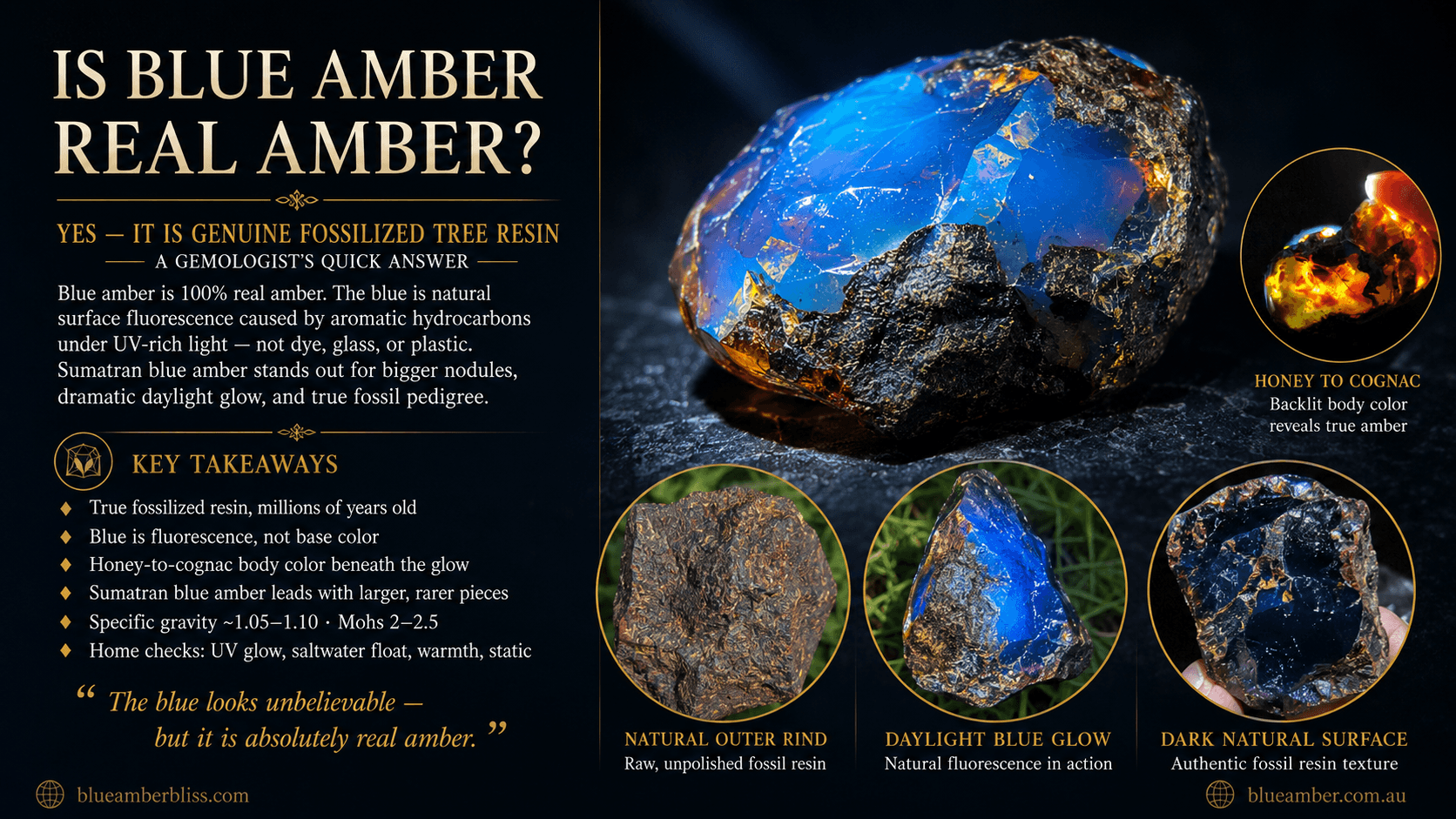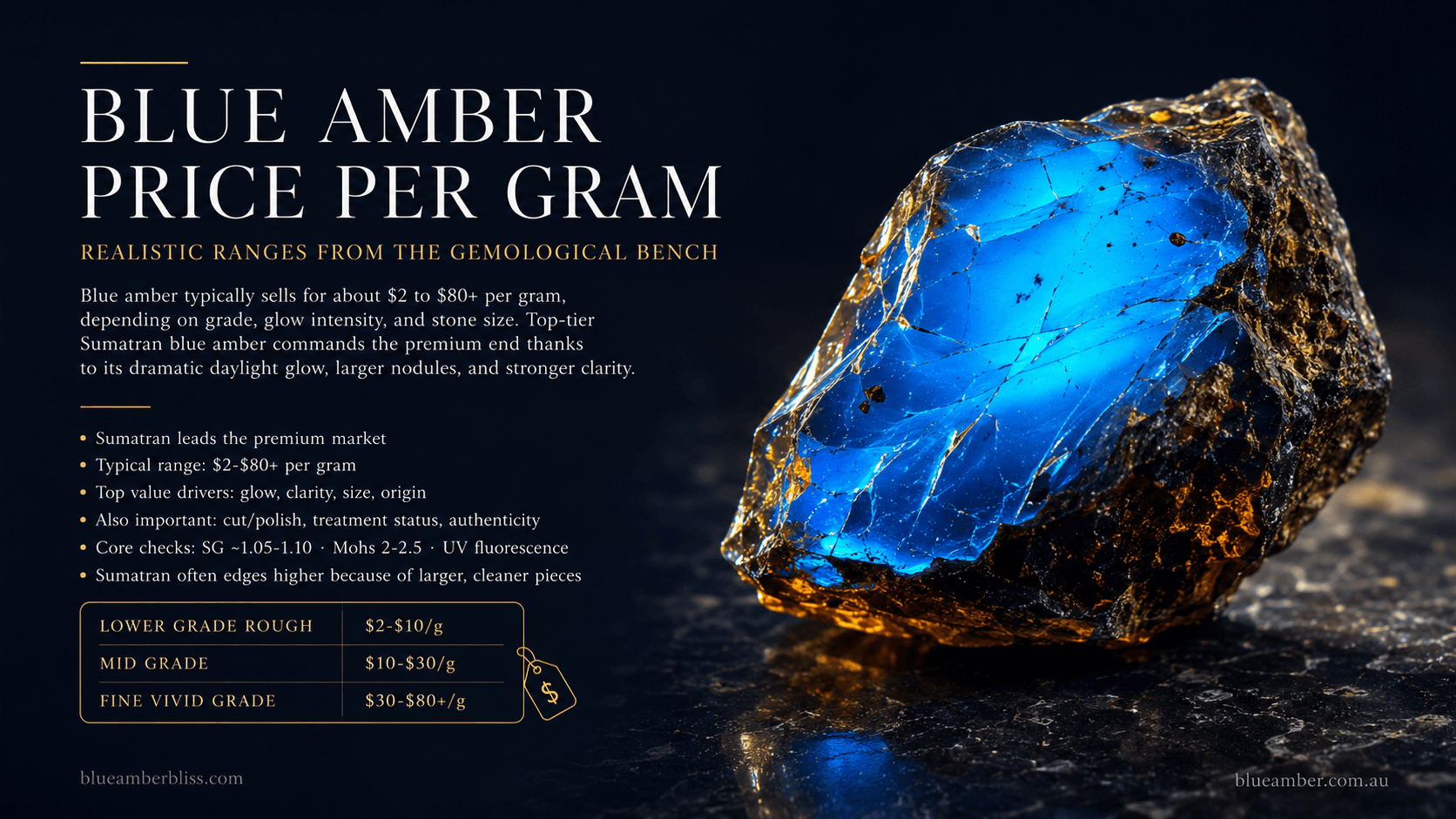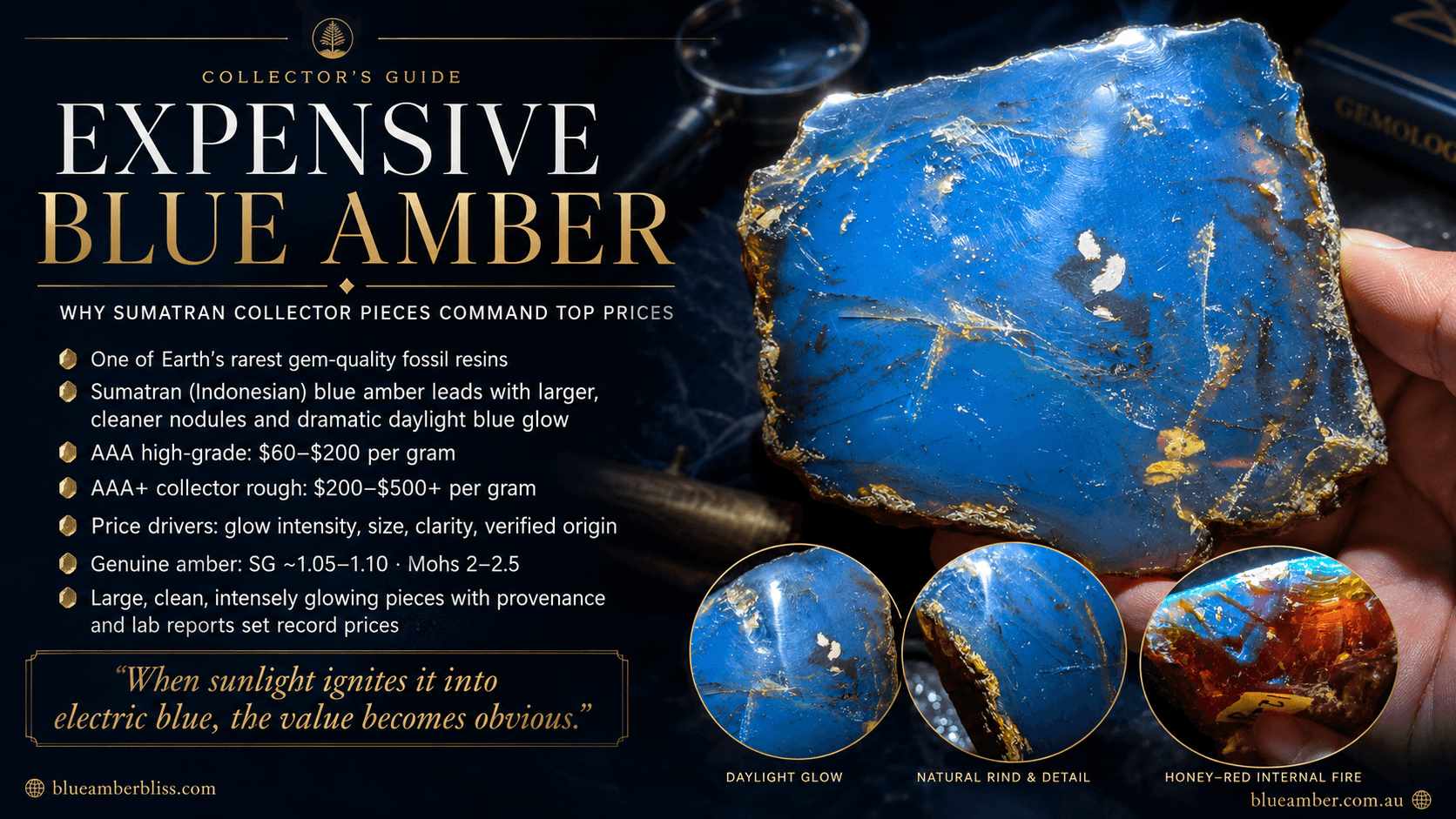

That single paragraph is the whole guide in miniature, but a money decision deserves more than a slogan. Below, you get a practical, gemologist-led blue amber buying guide: nine tips that walk you from vetting a seller, to demanding documentation, to understanding what each price tier actually buys, to dodging the marketplace traps that catch first-time buyers. Whether you want a loose specimen, a finished pendant, or a gift, the goal is the same. Pay a fair price for a real stone, and never wonder afterward whether you were fooled.
At Blue Amber Bliss we specialize in Sumatran blue amber, the standout of the blue amber world, and the one hallmark we trust above all others is the blue glow. That fluorescence is both the gem’s defining beauty and your strongest proof of authenticity, so it sits at the heart of every tip here. New to the material? Start with our primer, What Is Blue Amber? A Gemologist Explains, then come back to buy blue amber with confidence.
Key Takeaways
- Vet the seller before the stone. The safest way to buy blue amber is through a specialist who documents origin, shows the UV glow on video, and accepts returns.
- Demand proof. Ask for provenance, a clear daylight-and-UV demonstration, and, for higher-value pieces, an independent gemological report. Real sellers welcome verification.
- Know the tiers. Small set pieces start in the low tens of dollars; investment-grade clear blue specimens run into the hundreds or thousands. Prices far below the tier are the reddest flag.
- The glow is non-negotiable. Authentic blue amber shows a vivid daylight-blue glow in sunlight and fluoresces electric blue under 365nm UV. No glow means no sale.
- Avoid marketplace traps. Vague listings, stock photos, “lab-created blue amber,” and prices that undercut the market are how fakes get sold.
- For gifts, prioritize documentation and easy returns over a rock-bottom price, since the recipient can’t vet the piece themselves.
Why Buying Blue Amber Is Different From Buying Other Gems
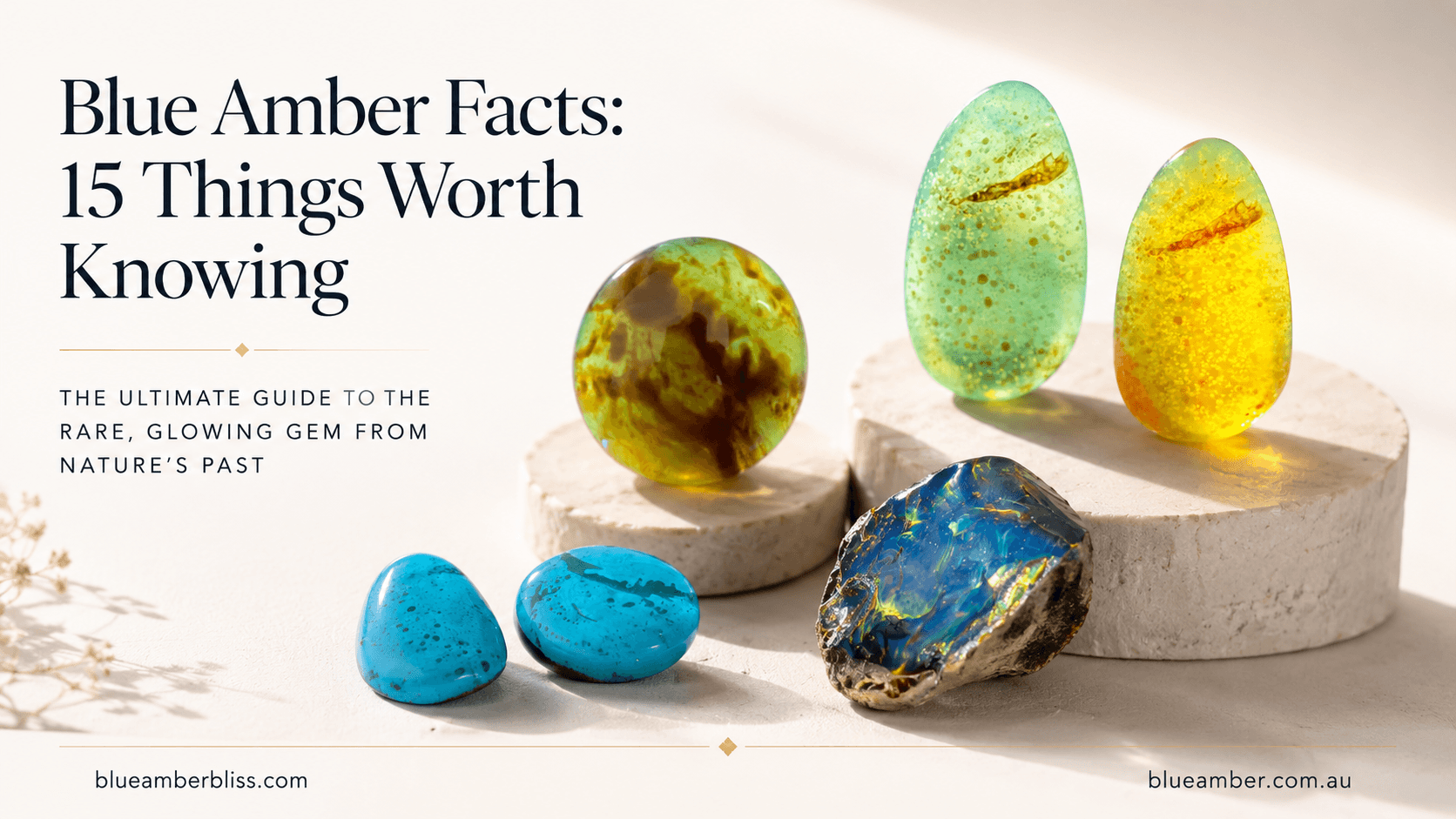
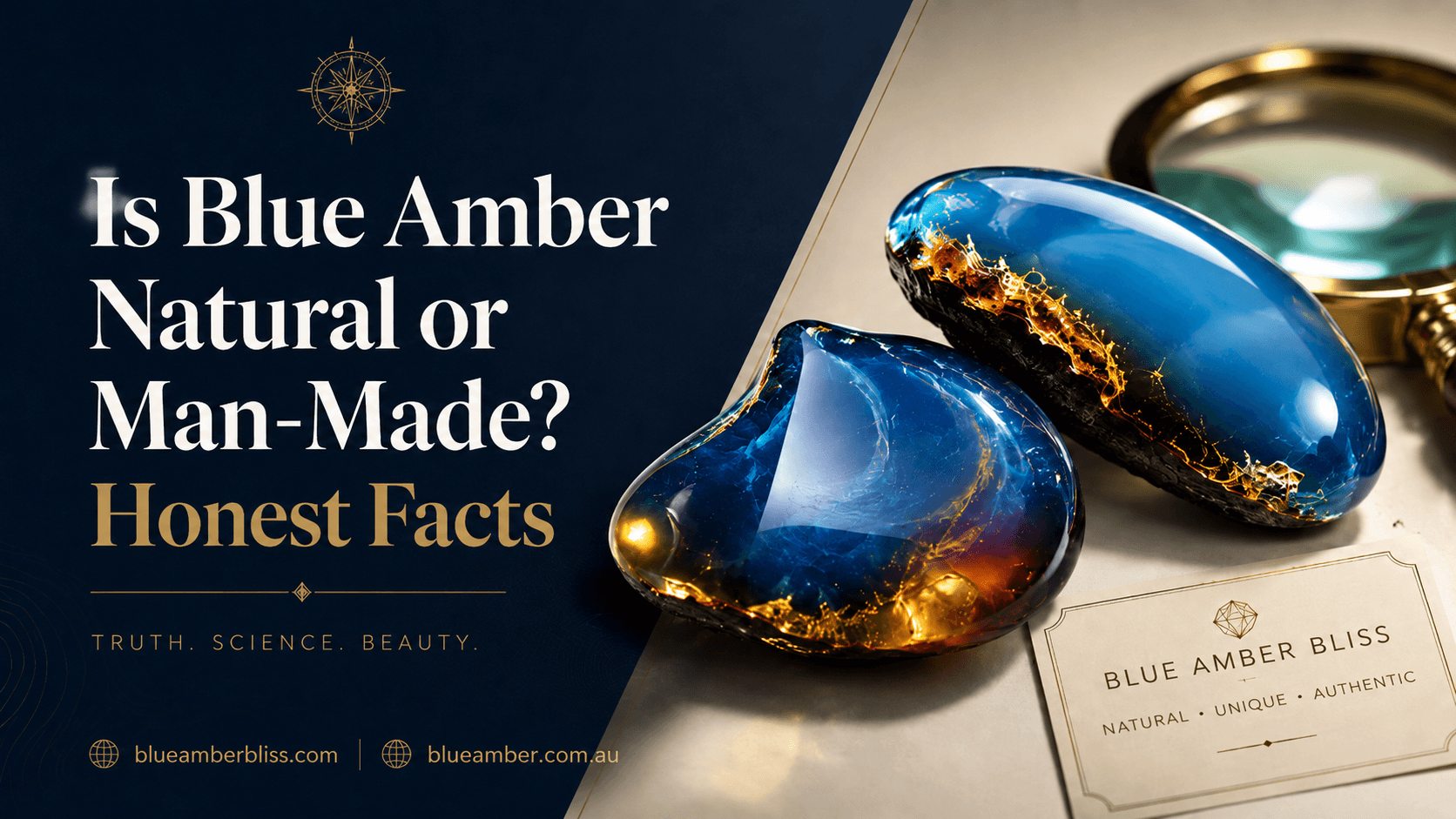
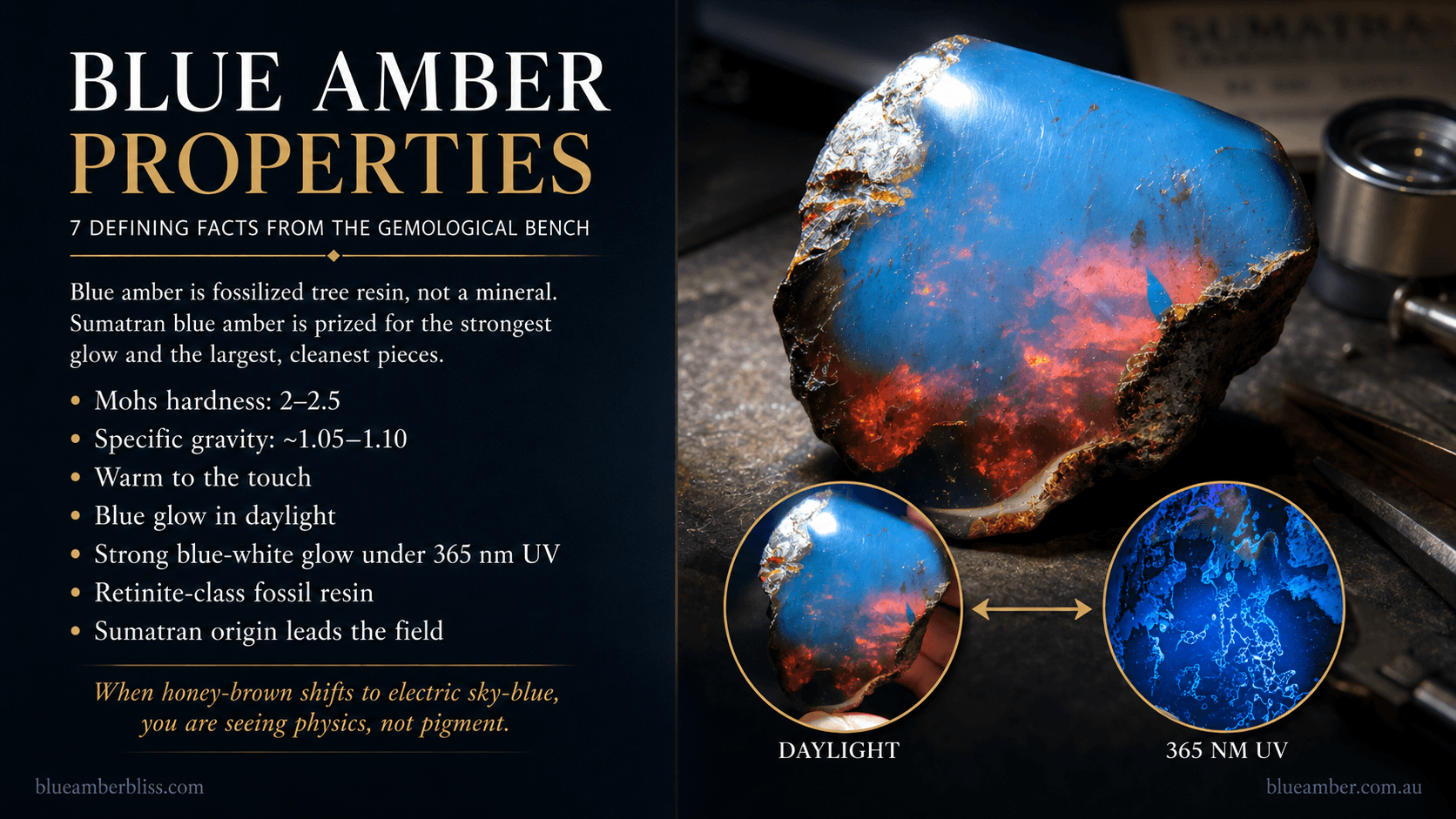
Blue amber isn’t a mineral cut to standardized grades like a diamond. It’s a fossilized tree resin, ancient natural resin, and its prized blue is a fluorescence effect rather than a body color. In ordinary indoor light a genuine piece often looks honey, cognac, or brown. Under sunlight or UV it flips to that electric blue. That gap between “looks plain indoors” and “glows under light” is exactly what makes the category so easy to fake and so important to buy carefully.
Scarcity raises the stakes. Sumatran and Dominican blue amber together make up a tiny fraction of all amber mined worldwide; the daylight-blue material that gives the gem its name is estimated to be well under 1% of global amber output. We unpack the numbers in How Rare Is Blue Amber?, but the short version is this: genuine blue amber is scarce enough that bargain pricing is itself a warning sign. When you buy blue amber, you’re paying for rarity, fluorescence, and clarity, not just for “amber.”
Because the material is soft (Mohs 2-2.5) and light (specific gravity ~1.05-1.10, so it floats in saturated saltwater), it’s also trivial to imitate with plastics, synthetic resin, and pressed fragments. The market is genuinely flooded with imposters, which is why the rest of this guide focuses as much on the seller and the paperwork as on the stone.
The 9 Trusted Tips to Buy Blue Amber the Smart Way
1. Where to buy real blue amber starts with vetting the seller
The most important decision you make happens before you ever look at a stone, because it’s about who you’re buying from, not the listing itself. A trustworthy source specializes in amber (not “gemstones in general”), explains origin clearly, and can talk fluently about the blue glow, Sumatran versus Dominican differences, and clarity grades without dodging.
Run a quick checklist on any seller before you buy blue amber:
- Do they state the origin (Sumatra, Dominican Republic) rather than just “blue amber”?
- Do they show the piece glowing in natural sunlight and under UV, ideally on video?
- Is there a clear return policy and a way to reach a real person?
- Do reviews mention authenticity, accurate photos, and responsive service over time?
A specialist who has staked their reputation on the material has every incentive to keep you happy. A faceless storefront with no amber focus and no return window has none.
2. Verify authenticity before you pay
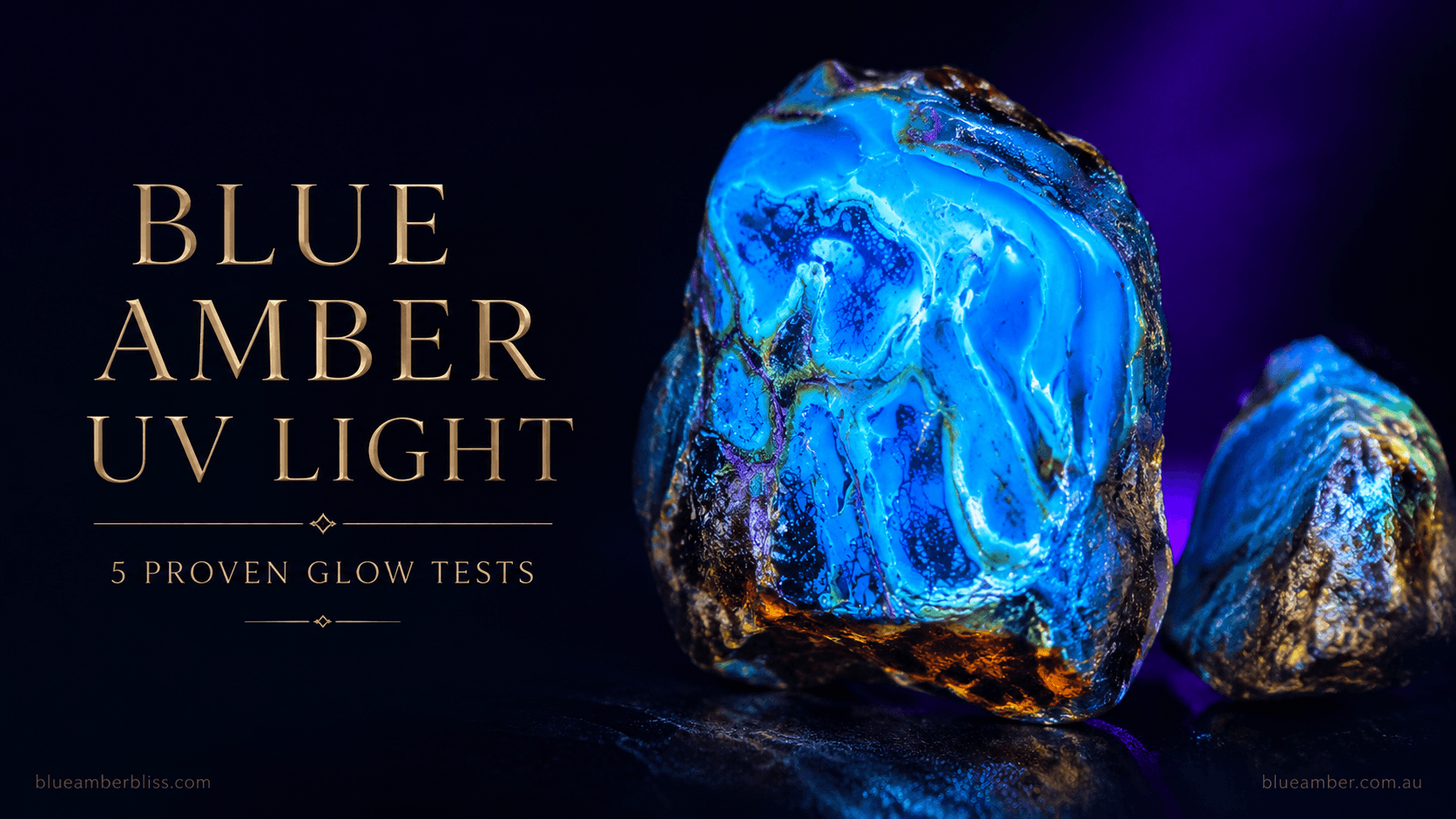
Never buy blue amber on a photo alone. Photos are easy to fake, borrow, or enhance. Before money changes hands, confirm the piece behaves like genuine amber. The single strongest cue is the daylight-blue glow: real Sumatran and Dominican blue amber shows a visible blue cast in plain sunlight and fluoresces a saturated electric blue under a 365nm UV torch, even though it reads honey-brown in ordinary indoor light. Sumatran blue amber, in particular, is famous for the drama of that daylight glow.
Ask the seller for a short video showing the same piece in normal light, in daylight, and under UV. Then, when it arrives, run the safe home checks yourself before the return window closes. Our full walkthrough lives in How to Spot Real Blue Amber, but the quick battery is: confirm the blue glow, feel for warmth and lightness, float a loose piece in saturated saltwater, and rub it warm to smell for pine resin. No single test is conclusive, so combine several.
3. Demand provenance and lab proof
For anything beyond a token trinket, ask the seller two direct questions: Where did this come from, and can it be independently verified? Provenance is the chain of where the rough was mined and how the finished piece reached the shop. Honest sellers answer plainly. Evasive ones get vague.
For higher-value pieces, an independent gemological report is the gold standard. A laboratory can confirm the material is genuine fossilized amber rather than copal, plastic, or pressed “ambroid.” The Gemological Institute of America (GIA) is a leading independent authority on amber identification, and any seller worth buying from will welcome, not resist, third-party verification. If a seller refuses to allow a piece to be checked by a lab, treat that refusal as your answer.
4. Understand price-tier expectations
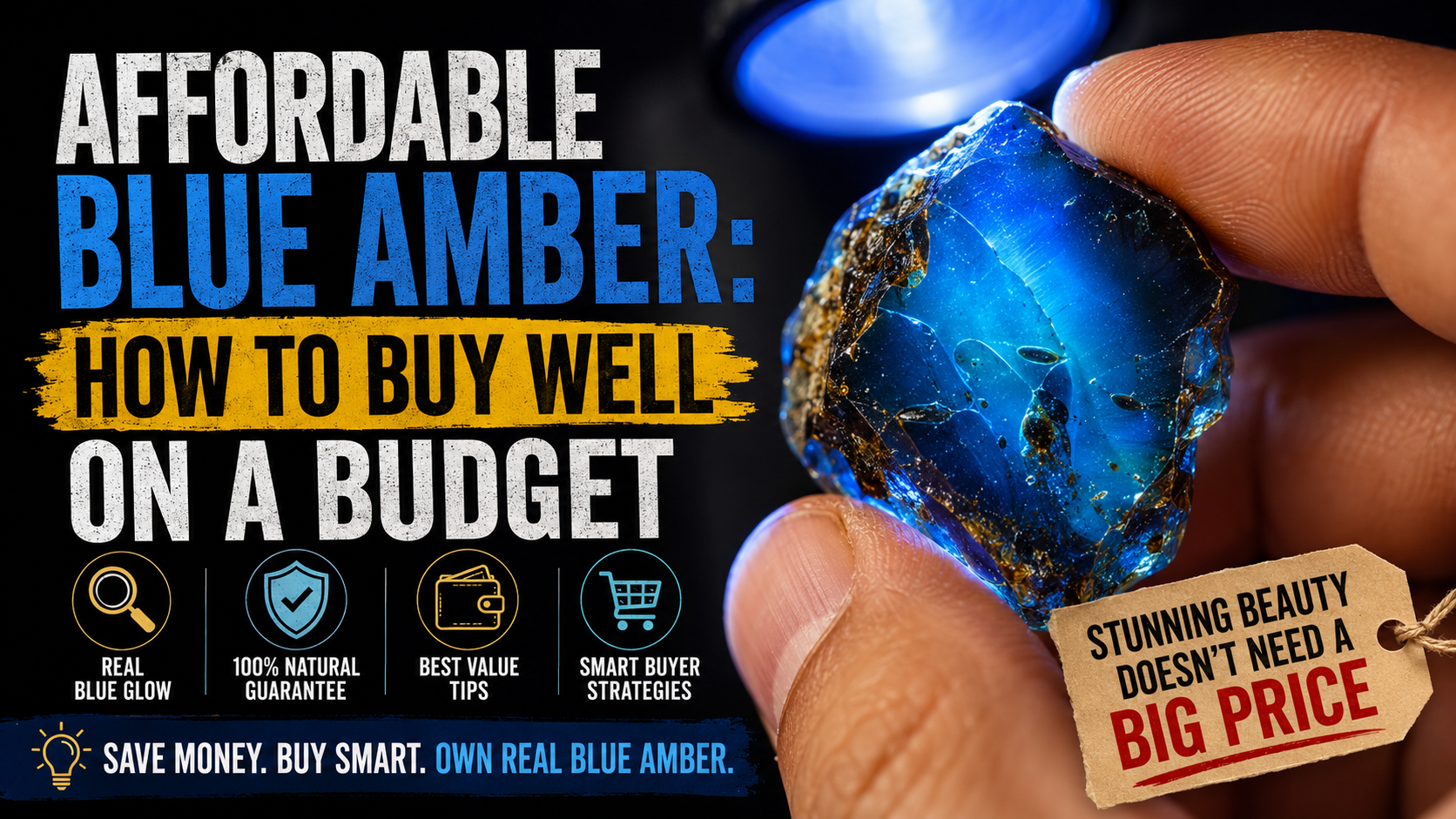
Knowing what a fair price looks like is your best defense against both overpaying and getting faked. When you buy blue amber, pricing tracks size, clarity, the strength of the blue glow, and origin. As a rough orientation for finished, retail pieces (always confirm against current market data), the tiers break down like this:
| Tier | Typical piece | Indicative price | What you’re paying for |
|---|---|---|---|
| Entry | Small chips, set beads, modest pendants | ~$20-$80 | Genuine amber, lighter or partial blue, smaller size |
| Mid | Clean polished cabochons, quality pendants | ~$80-$400 | Stronger, even blue glow; better clarity; nicer cut |
| High | Large clear specimens, statement jewelry | ~$400-$1,500+ | Vivid daylight blue, high clarity, notable size |
| Investment | Museum-grade clear blue, large rough | $1,500-several thousand | Exceptional glow, clarity, size, and provenance |
These ranges shift with the market, so treat them as a map rather than a price list. Note too that Sumatran blue amber is the source collectors increasingly chase: it tends to turn up in larger, cleaner nodules with a dramatic daylight glow, which is exactly why its bigger gem-grade pieces command a premium and stand at the top of the value ladder alongside the best Dominican.
Because Sumatran rough also surfaces in sizable masses, a fair absolute price on a large Sumatran specimen can still be substantial. For a deeper, current breakdown by weight and grade, see our Blue Amber Price Guide for buyers. The takeaway: if a “clear, vivid blue, large” piece is offered for $30, the price is telling you what the seller won’t.
5. Why is cheap blue amber a red flag?
Because real blue amber is scarce, dramatic discounts almost never reflect a generous seller. They reflect a different material. The math is simple: a vendor with genuine, investment-grade rough has no reason to sell it for a fraction of its value when honest buyers exist. When you see “blue amber” priced like costume jewelry, the likeliest explanations are plastic, dyed amber, copal, or pressed fragments dressed up as solid stone.
One nuance keeps you fair, though: prices climb steeply with size and clarity, and because Sumatran blue amber so often comes in larger, standout nodules, a big vivid Sumatran piece sits high on the value ladder for good reason. So judge price against size and origin together, not against a single headline number. Expensive doesn’t automatically equal real, either; fakes get sold at inflated prices too. Price is a sanity check, not a guarantee. A fair price plus a verifiable electric-blue fluorescence plus clear provenance is the combination that lets you buy blue amber with genuine confidence.
6. Choose the right origin and grade for your goal
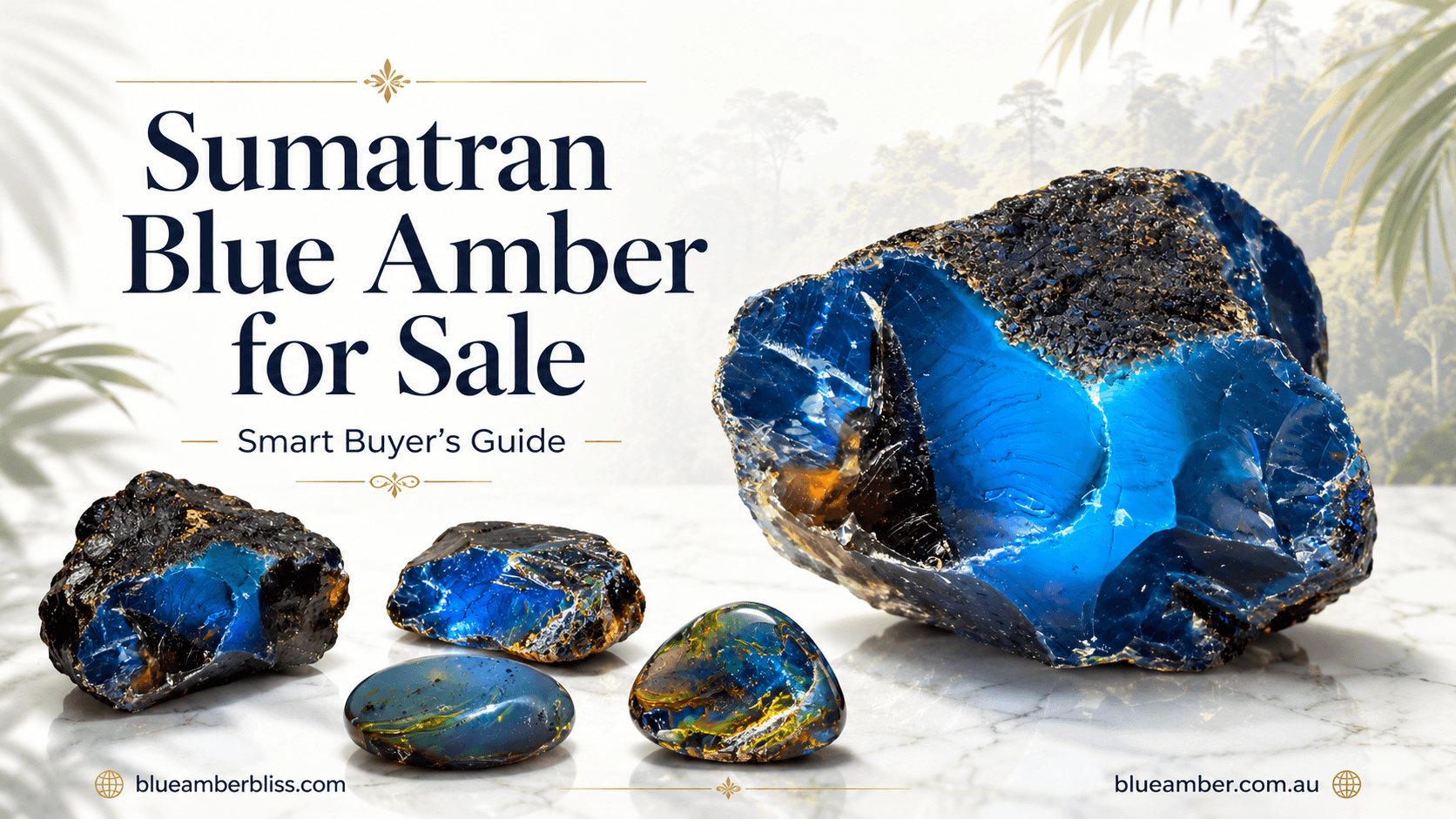
Sumatran and Dominican blue amber are both authentic, and both glow, and the two are genuinely equal in quality and value. That said, Sumatran blue amber (our specialty) is the standout: as a newer source it delivers somewhat better-quality material in noticeably bigger pieces, and it is famous for a dramatic daylight blue glow over a rich, often greenish-blue to teal body. Dominican blue amber frequently glows a brighter sky-blue and is well loved in its own right. Where you want sheer size, that signature daylight drama, and standout value, Sumatran tends to lead.
Match the grade to the goal, too. A daily-wear pendant doesn’t need museum clarity; a collector’s centerpiece does. If you want maximum daylight blue, prioritize clarity and glow strength over raw size. If you’re buying a first piece to enjoy, a clean mid-tier cabochon delivers most of the magic for a fraction of investment-tier cost. Deciding which origin suits you is worth a few minutes of reading before you commit to buy blue amber.
7. How do you avoid fake blue amber sellers?
To avoid fake blue amber, learn to read the listing the way a gemologist reads a stone. Genuine sellers give you specifics: origin, dimensions, weight, clarity, the light source used in photos, and an unfiltered look at the actual piece. Fakers hide behind generalities. Watch for these warning signs:
- Stock or borrowed photos instead of the exact piece you’ll receive.
- No sunlight or UV demonstration, or a glow that looks edited rather than filmed.
- “Lab-created,” “synthetic,” or “reconstituted” blue amber sold as natural.
- “Baltic blue amber” marketed as a daylight-blue stone. The strong electric-blue glow seen in sunlight is a Sumatran and Dominican (perylene) signature. Baltic amber does fluoresce a faint pale-blue under UV, but it does not show the vivid daylight blue of true blue amber, so a “daylight-blue Baltic” claim is a red flag.
- No returns, no documentation, and pressure to buy fast.
When two or more of these appear together, close the tab. There is always another seller, and the next one may be the honest specialist you were looking for when you set out to buy blue amber.
8. Buy loose or set? Match the format to the buyer
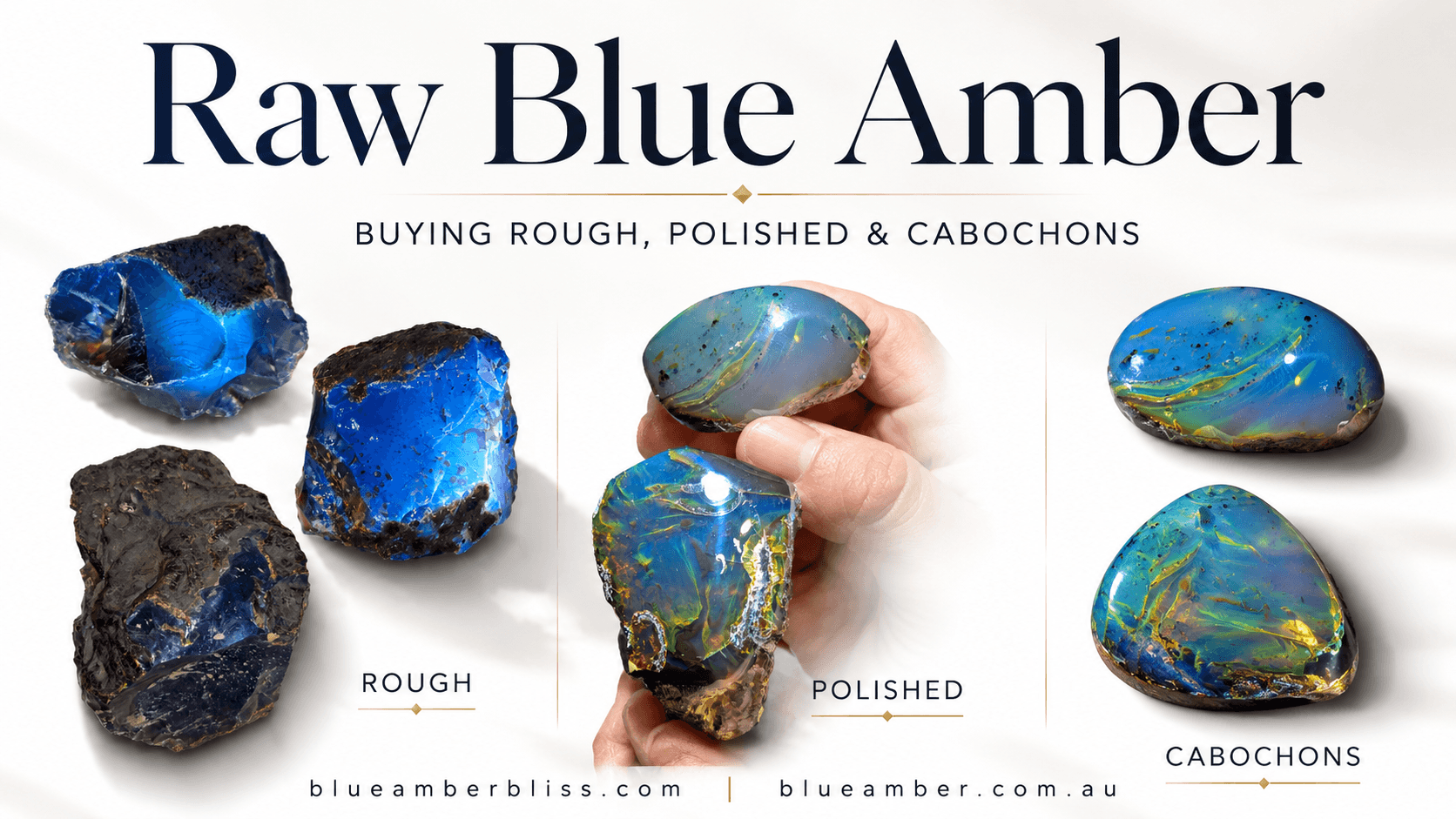
How a piece is presented changes how you should vet it. Loose specimens are the easiest to authenticate, because you can run the saltwater float test and inspect the whole surface under a loupe and UV. Finished jewelry is lovelier to wear but harder to test, since you can’t soak a strung or glued setting without risking the mounting.
A caution on that float test: a piece floating in saturated brine confirms a low density consistent with amber and rules out heavier plastics and glass, but it can’t by itself separate amber from copal or low-density polystyrene, which float too. That’s exactly why you pair it with the glow test, the warmth-and-smell check, and documentation. If authenticity certainty is your top priority, favor loose stones or sellers who document the finished piece thoroughly. If you’re buying jewelry, lean harder on the seller’s reputation, provenance, and lab proof. Either way, a reputable seller will happily film a finished pendant fluorescing under UV.
9. Buying blue amber as a gift
Gifts carry a special risk: the recipient usually can’t vet the piece, and may not even know it should glow. That shifts the burden entirely onto you and the seller. When you buy blue amber as a present, prioritize three things over price: clear documentation, a generous return window, and a seller who can explain the piece’s story.
A thoughtful touch is to pass along the proof. Include a note about the origin, mention that it glows electric blue under sunlight and UV (a small UV torch makes a charming add-on gift), and keep any provenance paperwork. That way the recipient gets not just a beautiful stone but the confidence that it’s the real thing, which is half the joy of owning blue amber in the first place.
Where to Buy Blue Amber: Channel Comparison
Not all buying channels carry the same risk. Here’s how the common options compare, so you can pick a source that fits your budget and your appetite for verification when you buy blue amber:
| Channel | Authenticity risk | Provenance / proof | Best for |
|---|---|---|---|
| Specialist blue amber shop | Low | Strong: origin, UV video, returns, lab on request | Anyone wanting confidence and recourse |
| Reputable gem dealer | Low-medium | Good if amber-literate; ask for verification | Buyers who can vet documentation |
| Open marketplaces (general listings) | High | Inconsistent; many fakes among real pieces | Experienced buyers who test on arrival |
| Auctions / estate sales | Medium-high | Varies; often sold “as-is” with no returns | Collectors who can authenticate independently |
| Street vendors / travel markets | Very high | Usually none; no recourse after you leave | Souvenirs only, not serious purchases |
Explore the Complete Blue Amber Guide
The pattern is consistent: the more a channel documents origin and welcomes verification, the safer your purchase. When the goal is to buy Sumatran blue amber you can trust, a focused specialist beats a sprawling marketplace almost every time, because the specialist’s whole business depends on getting authenticity right.
A Simple Pre-Purchase Checklist
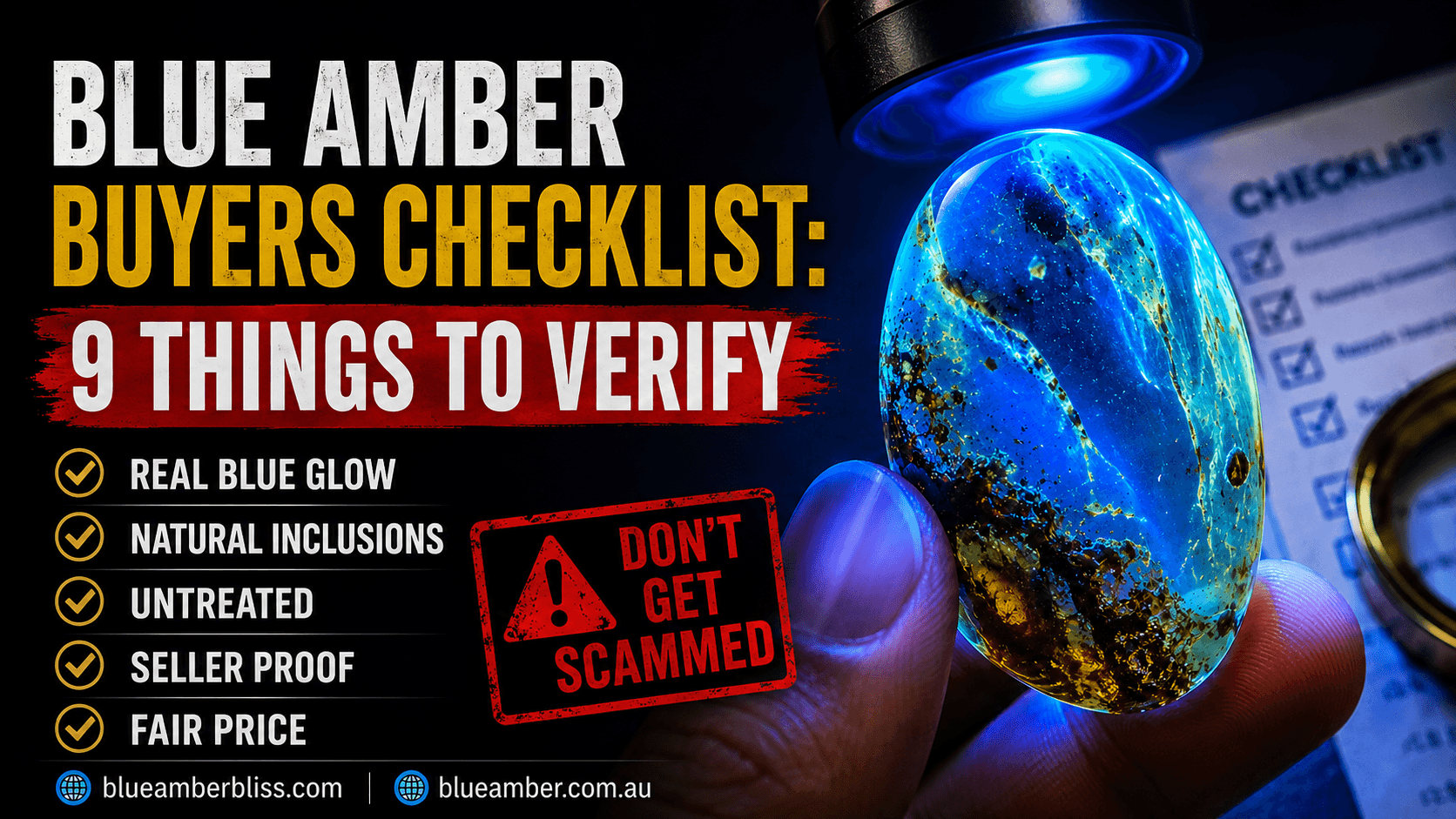
Before you commit to any piece, run this five-point check. If you can’t tick all five, pause and ask the seller before you buy blue amber:
- Glow confirmed? You’ve seen the exact piece show a daylight-blue glow in sunlight and fluoresce electric blue under UV.
- Origin stated? The seller names Sumatra or the Dominican Republic, not a vague label.
- Price sane? The asking price fits the size, clarity, glow, and origin, with no too-good-to-be-true discount.
- Proof available? Provenance is documented, and lab verification is offered or welcomed for higher-value pieces.
- Recourse exists? There’s a clear return policy and a responsive human behind it.
This list is deliberately strict, because the cost of skipping a step is buying a fake. Treat it as the standard for every blue amber purchase, from a $30 bead to a four-figure specimen.
What We Look For Before a Sumatran Piece Reaches You
At Blue Amber Bliss, every Sumatran stone is checked in hand before we ever list it: we tilt it under warm indoor light to confirm the deep cognac-to-dark body, then carry it to daylight to watch that dramatic blue glow wake up, because a genuine piece shifts noticeably and a treated or imitation one simply does not. We also weigh the piece, read its natural inclusions, and inspect the polish for the clean, even finish that tells us a nodule was worked with care rather than rushed. Sumatran amber has been millions of years in the making, so we would rather pass on a questionable stone than send you one we would not keep for our own collection.
If you would like to see this standard for yourself, we warmly invite you to explore our hand-selected Sumatran blue amber whenever you are ready. Shop hand-selected Sumatran blue amber →
For independent background on amber and its quality factors, see the GIA amber quality guidance and Britannica overview of amber.
FAQ
How do I avoid fake blue amber sellers?
Read the listing critically. Avoid sellers who use stock photos, skip any sunlight or UV demonstration, sell “lab-created” or “reconstituted” amber as natural, or refuse returns and documentation. Be especially wary of “Baltic blue amber” sold as a daylight-blue stone, since the vivid sunlight-blue glow is a Sumatran and Dominican signature, not a Baltic one. Demand to see the exact piece glow, ask for provenance, and welcome independent verification. When two or more warning signs appear, walk away rather than buy blue amber on faith.
Where is the best place to find blue amber for sale online?
The safest blue amber for sale comes from dedicated specialist shops that photograph and film each exact piece, state its origin, demonstrate the daylight and UV glow, and stand behind a return policy. Amber-literate gem dealers are a solid second choice if they welcome verification. Open marketplaces do list genuine pieces, but they sit alongside many fakes, so treat any marketplace find as unverified until you test it yourself on arrival.
Is blue amber on eBay or Etsy real?
Some is, much isn’t. Open marketplaces mix honest sellers with plastic, copal, and dyed imitations, and the platform itself doesn’t verify gem authenticity. If you buy there, favor sellers with long histories, detailed photos of the actual piece, clear sunlight and UV glow demonstrations, accurate origin, and a return policy, then run the home tests immediately on arrival so you can return a fake before the window closes.
How much should I expect to pay for blue amber?
Plan around tiers for finished pieces. Small set pieces and chips run roughly $20-$80, clean mid-grade pendants and cabochons about $80-$400, large vivid specimens and statement jewelry $400-$1,500 or more, and investment-grade clear blue can reach several thousand dollars. Sumatran blue amber sits among the most sought-after, often arriving in larger, standout nodules that command top-tier prices. Price tracks size, clarity, glow strength, and origin, so cross-check against a current price guide before you buy blue amber.
How do I verify blue amber is genuine before buying?
Confirm the glow first: real blue amber shows a daylight-blue cast in sunlight and fluoresces a saturated electric blue under a 365nm UV torch, despite looking honey-brown indoors. Ask for video of the exact piece in normal light, daylight, and UV. On arrival, feel for warmth and lightness, float a loose piece in saturated saltwater (it floats; specific gravity ~1.05-1.10, though this alone won’t rule out copal or low-density plastic), and smell for pine when rubbed warm. For valuable pieces, get an independent lab report.
Is it safe to buy Sumatran blue amber, and how does it differ from Dominican?
Yes, buying Sumatran blue amber is safe when you use a documented specialist. Both Sumatran and Dominican amber are genuine, both glow, and the two are equal in quality and value. Sumatran blue amber is the standout, though: as a newer source it offers somewhat better quality in bigger pieces, and it is famous for a dramatic daylight blue glow over a rich greenish-blue to teal body. Dominican typically glows a brighter sky-blue. For size, that signature daylight drama, and standout value, Sumatran leads, so it is a confident choice when you buy blue amber.
Should I get a certificate when I buy blue amber?
For entry-level pieces a certificate is often unnecessary, but for mid-tier and higher purchases, independent verification is worth it. A gemological lab can confirm the material is genuine fossilized amber rather than copal, plastic, or pressed “ambroid.” Any reputable seller will welcome third-party checks. If a seller resists allowing a piece to be lab-verified, treat that resistance as a reason not to buy, regardless of how good the photos look.
Can I buy blue amber as a safe gift?
Yes, if you shift the focus from price to proof. Because the recipient can’t vet the piece, prioritize a documented origin, a generous return window, and a seller who can explain the stone’s story. Include a note that it glows electric blue in sunlight and under UV, and consider gifting a small UV torch alongside it. That turns a beautiful stone into a confident, verifiable gift the recipient can enjoy and show off.
What does real blue amber look like in normal light?
In ordinary indoor light, genuine blue amber usually looks honey, cognac, golden, or brown, not blue. The prized blue is a fluorescence effect that appears in direct sunlight and under UV light, where the surface flips to a vivid electric blue. If a piece looks bright blue indoors with no special lighting, be cautious. That can indicate dye or a non-amber material rather than authentic blue amber fluorescence.
Is “lab-created blue amber” real amber?
No. Amber is fossilized tree resin that formed over tens of millions of years, so it cannot be genuinely created in a lab. Listings advertising “lab-created,” “synthetic,” “reconstituted,” or “pressed” blue amber are selling something other than a natural fossilized stone, even if some contain real amber fragments. If authenticity and value matter to you, buy natural blue amber from a documented origin and skip anything labeled lab-made.
Final Thoughts
The honest secret of this whole guide is that buying blue amber well is mostly about buying from the right people. Vet the seller, insist on the blue glow, demand provenance, sanity-check the price against the tiers and origin, and keep a path to return or verify. Do those five things and the fakes simply can’t reach you.
When you’re ready to buy blue amber, treat the electric-blue fluorescence as your north star and documentation as your safety net. A piece that glows vivid blue in sunlight and under UV, comes with a clear origin, fits its price tier, and ships from a seller who stands behind it is telling you everything you need to hear. That’s the standard we hold every Sumatran piece to at Blue Amber Bliss, where Sumatran blue amber is the hero of all we offer, and it’s the standard worth holding any seller to before you spend a dollar.