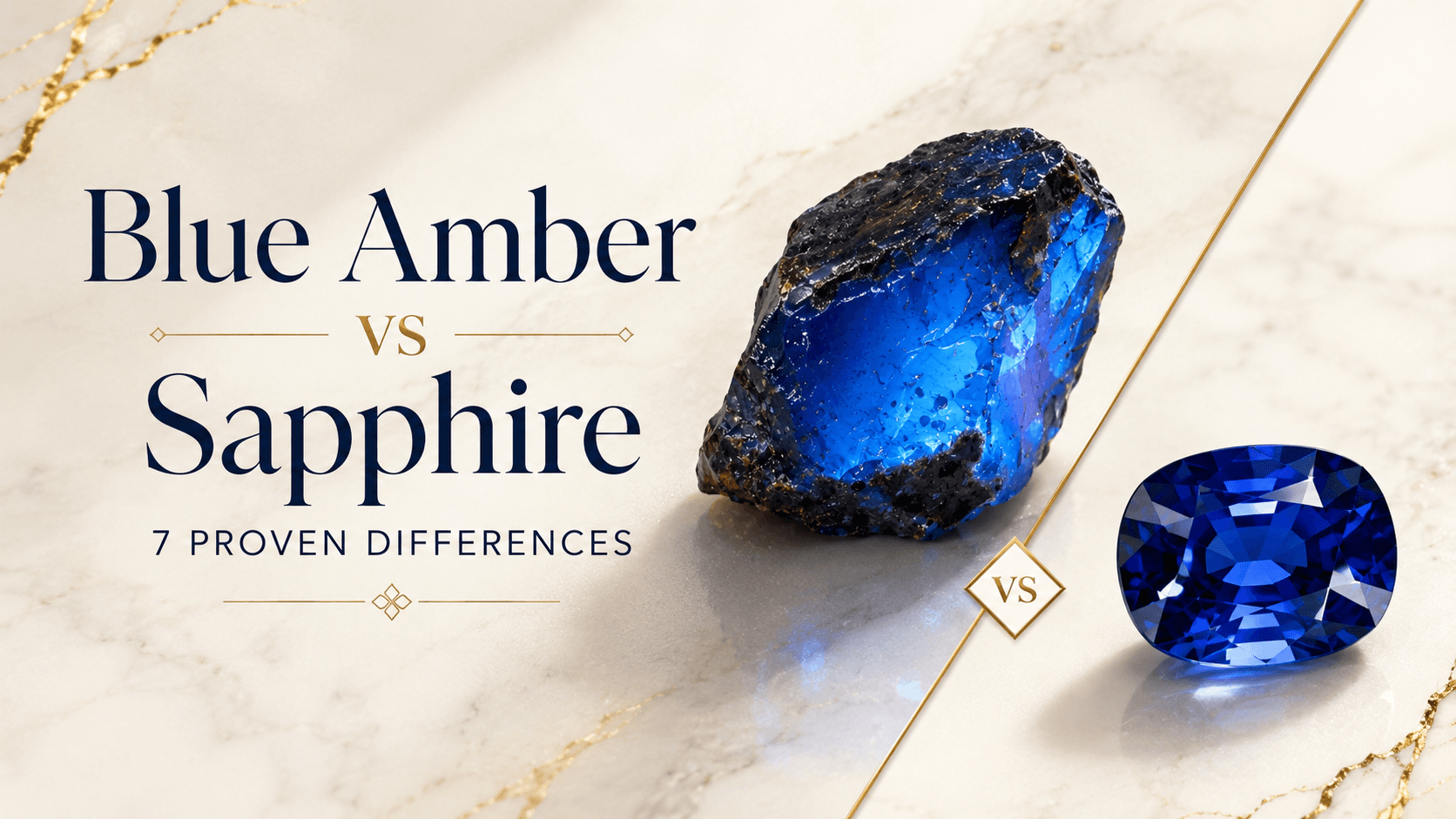
Blue amber vs sapphire comes down to organic resin versus crystalline mineral. Sumatran blue amber is a soft (Mohs 2-2.5), lightweight fossil resin famous for a dramatic daylight blue glow, while sapphire is a hard (Mohs 9) corundum prized for fixed body color. Both are stunning, but their beauty works in completely different ways.
If you have ever held a piece of Sumatran blue amber in sunlight and watched it ignite into electric blue, you already sense why this comparison is not as simple as “gem A versus gem B.” Below, you will get a working gemologist’s breakdown of blue amber vs sapphire across hardness, optics, rarity, price, and lifestyle fit, so you can choose with confidence rather than guesswork.
Key Takeaways
- Blue amber vs sapphire is organic vs mineral: Sumatran (Indonesian) amber is fossilized tree resin; sapphire is crystalline aluminum oxide (corundum).
- Hardness gap is huge: amber sits at Mohs 2-2.5 with specific gravity ~1.05-1.10, while sapphire hits Mohs 9 with SG ~3.95-4.03.
- The optics differ: Sumatran blue amber’s color is a daylight fluorescent glow under UV-rich light, not a fixed body color like sapphire’s blue.
- Rarity: blue amber is far scarcer than blue sapphire, representing roughly 0.2% of all amber found.
- Price: fine Sumatran blue amber runs about $50-$300+/gram, overlapping mid-grade sapphire by carat.
- Fit: sapphire suits daily-wear rings; blue amber suits pendants, earrings, and collectors who love living color.
What Is the Core Difference in Blue Amber vs Sapphire?
The first thing to understand about blue amber vs sapphire is that you are comparing two different categories of gem material. One is organic and one is inorganic, and that single fact drives almost every other contrast you will read below.
Blue amber is an organic gem: fossilized resin from ancient trees, hardened over millions of years. According to the GIA, amber is a fossil resin, not a mineral, which means it has no crystal structure and no fixed chemical formula.
Sapphire, by contrast, is a textbook mineral. It is gem-quality corundum, crystalline aluminum oxide (Al2O3), with trace iron and titanium producing its classic blue. Its atoms sit in a rigid, repeating lattice, which is exactly why it behaves so differently from amber.
So when people ask whether they should pick blue amber or sapphire, the honest answer is that they are not really substitutes. They are two distinct experiences of “blue” that happen to share a color family but almost nothing else.
Why does organic vs mineral matter so much?
Because origin dictates behavior. An organic gem like Sumatran blue amber is light, warm to the touch, and full of natural inclusions, bubbles, and flow lines that tell a story of ancient forests. It feels alive in the hand.
A mineral like sapphire is dense, cold, and engineered by geology into near-perfect hardness. It feels like a tiny piece of indestructible glass. Neither is “better” in the abstract; they simply answer different desires, which is the heart of any honest blue gemstone comparison.
How Do Hardness and Durability Compare?
This is where blue amber vs sapphire shows its widest gap. On the Mohs scale of scratch resistance, amber sits at just 2-2.5, while sapphire ranks at 9, second only to diamond at 10.
That difference is not linear. The Mohs scale is ordinal, so the real-world toughness gap between a 2.5 and a 9 is enormous. Sapphire shrugs off keys, countertops, and decades of daily wear; amber can be scratched by a fingernail edge or a sandy pocket.
Amber is also far less dense. Its specific gravity of roughly 1.05-1.10 means it nearly floats in saltwater, while sapphire’s SG of about 3.95-4.03 makes it feel reassuringly heavy. You can almost identify each gem blindfolded just by weight.
Does soft amber break easily?
Soft does not mean fragile in the shattering sense, but it does mean amber needs care. It can chip on a hard knock and scratch with rough handling, so it is happiest in protected settings.
Sapphire, meanwhile, is one of the most wearable colored stones on earth. If you want a gem you can wear gardening, then to dinner, without a second thought, sapphire wins durability outright. This is one axis where the answer to blue amber or sapphire is clear.
What about heat, chemicals, and sunlight?
Amber is a resin, so it reacts to solvents, alcohol, perfume, and heat; prolonged sun and dryness can craze its surface over years. Store Sumatran blue amber away from harsh chemicals and sudden temperature swings.
Sapphire is chemically inert and heat-stable to extreme temperatures. You can clean it with almost anything short of harsh abrasives. So in any blue amber vs sapphire durability test, sapphire is the low-maintenance partner and amber is the gem you cherish gently.
Blue Amber vs Sapphire: The Daylight Glow vs Body Color
Here is the most exciting part of the blue amber vs sapphire story, and where Sumatran blue amber claims its standout edge. The two gems produce “blue” through completely different physics.
Sapphire’s blue is body color. The stone absorbs certain wavelengths and transmits blue, so it looks blue from every angle, in almost any light, exactly the way you expect a colored stone to behave.
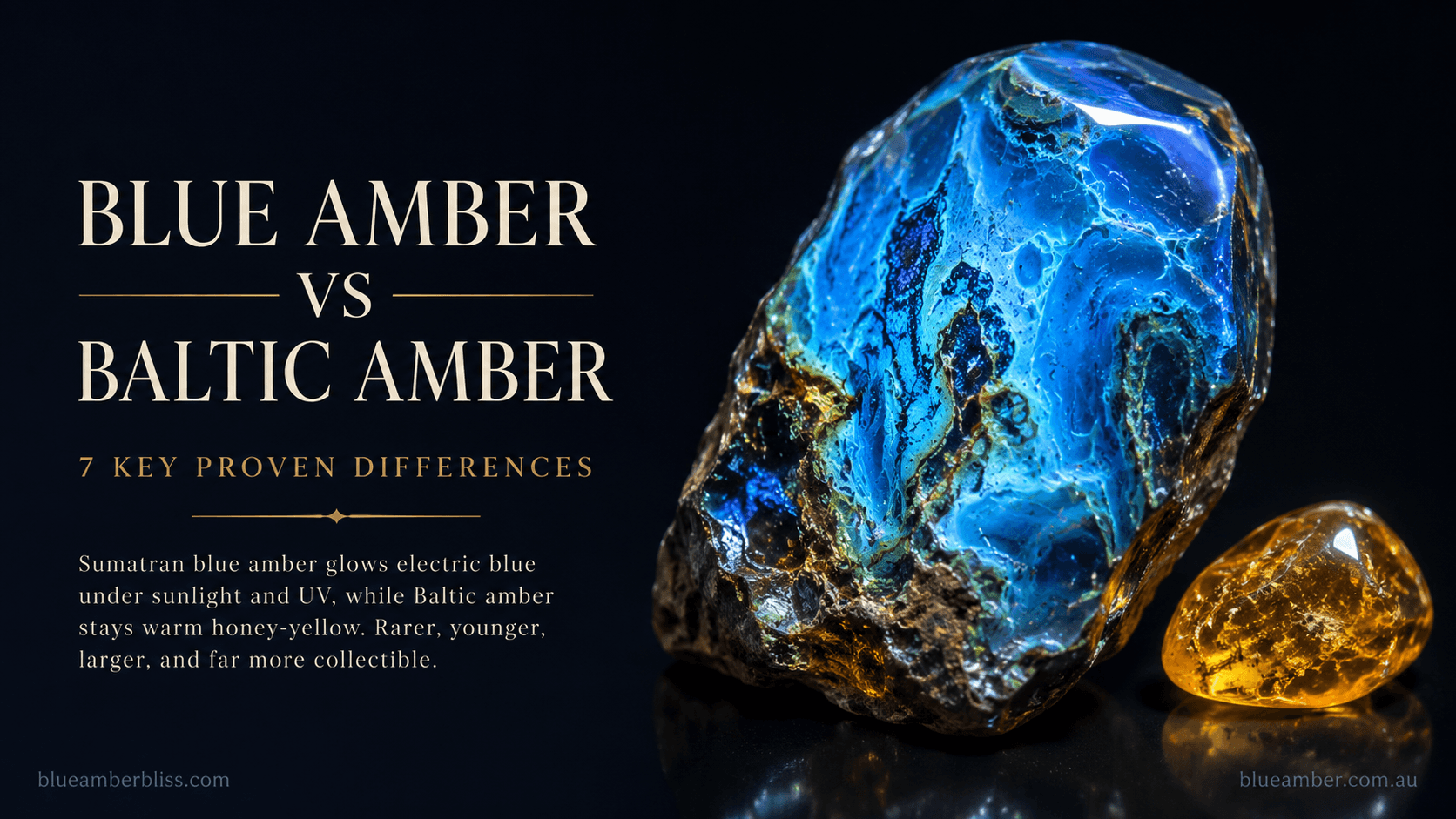
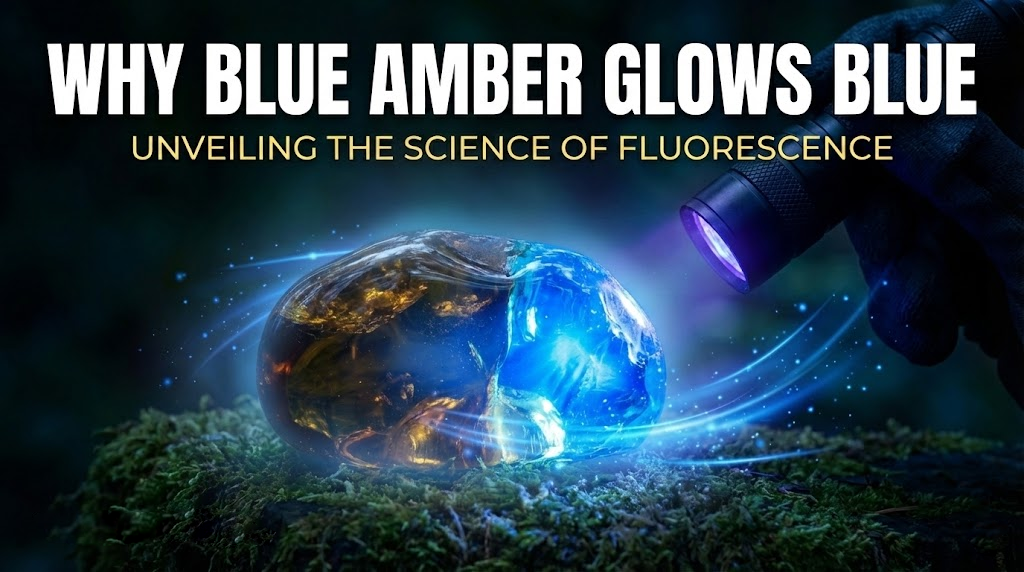
Sumatran blue amber’s blue is something rarer: a fluorescent daylight glow. In ordinary light the amber may look amber, honey, or greenish, but tilt it under sunlight or UV-rich light and it erupts into a vivid, electric blue surface shimmer. If you want the science, see our deep dive on why blue amber glows blue.
Is blue amber like sapphire in how it shows color?
Not really, and that is the magic. People ask is blue amber like sapphire because both can read as blue in a photo, but the experience is opposite. Sapphire’s color lives inside the stone; amber’s blue lives on its surface as reflected fluorescence.
This means a Sumatran blue amber piece changes dramatically as you move it, shifting from warm honey in shade to glowing blue in sun. A sapphire stays steadfastly blue. One gem is theatrical and dynamic; the other is constant and classic.
Why is the daylight glow such a big deal?
Because it is genuinely uncommon in the gem world. Most gems have one color and keep it. Sumatran blue amber gives you a living, light-reactive performance that no faceting can replicate, driven by fluorescence under ultraviolet wavelengths around 365 nm and the UV component of daylight.
This dramatic daylight blue glow, especially in the large nodules Sumatra is famous for, is the single feature that makes blue amber unforgettable. In a blue gemstone comparison, it is the one optical trick sapphire simply cannot perform.
How Rare Is Each Gem?
Rarity is another place where blue amber vs sapphire diverges sharply. Blue sapphire, while precious, is mined commercially worldwide in Sri Lanka, Madagascar, Australia, and beyond, so supply is steady.
Blue amber is extraordinarily scarce. It is estimated that blue amber makes up only about 0.2% of all amber ever found, and only a handful of deposits worldwide produce the true blue fluorescence. To understand just how unusual this is, read how rare is blue amber.
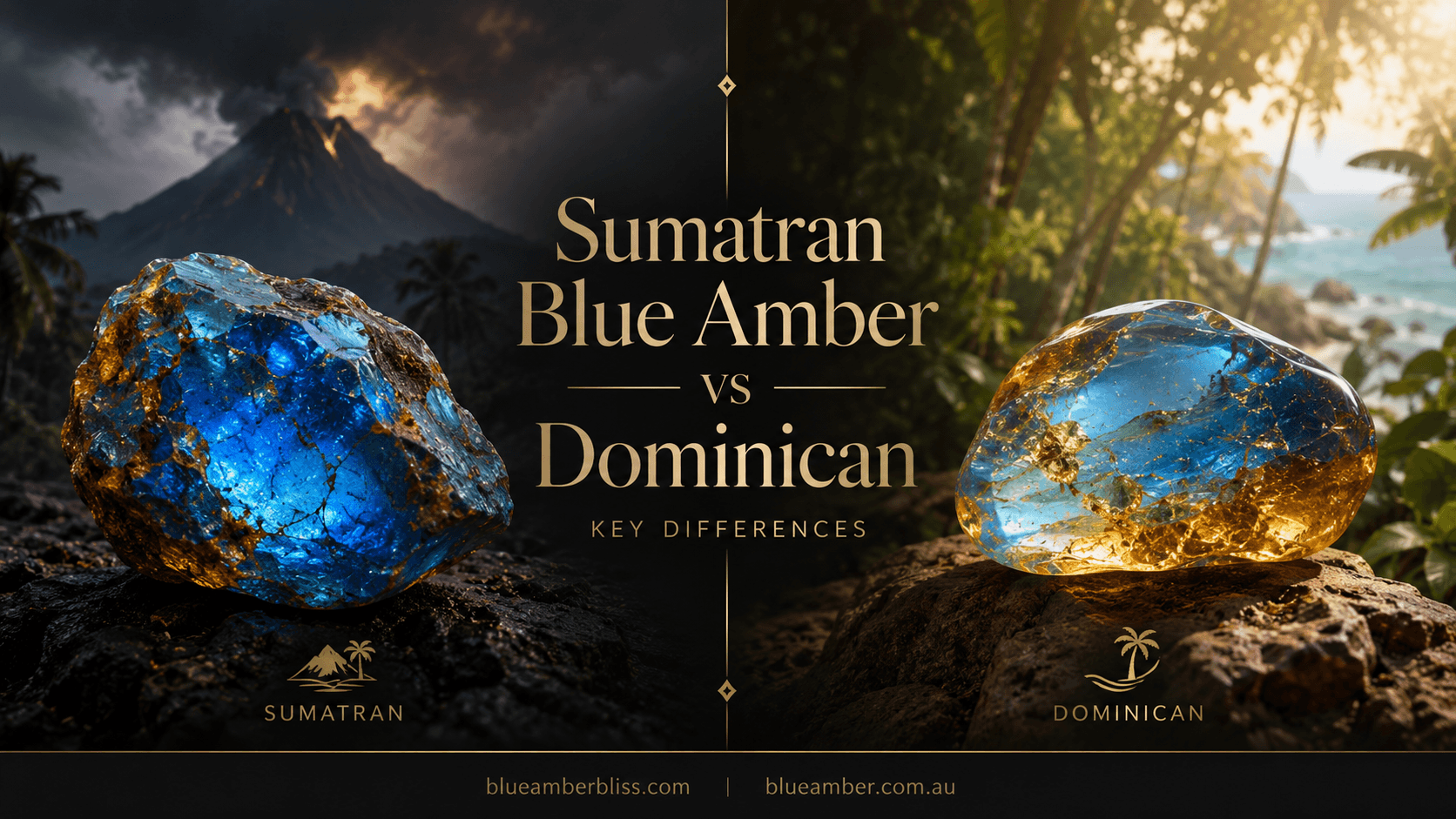
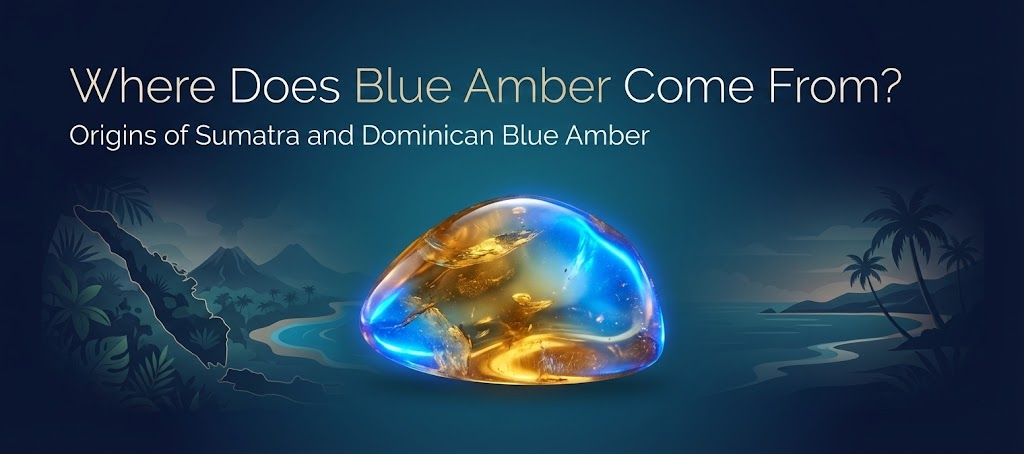
Within that tiny fraction, Sumatran (Indonesian) blue amber stands out as the newer, headline source, prized for producing larger nodules and exceptionally clean, dramatic blue glow. It joins Dominican blue amber as one of the two premier blue-amber origins.
Which source of blue amber should you know first?
Sumatran blue amber comes first for good reason. As a more recently developed deposit, it yields bigger pieces and consistently strong daylight blue, which makes it the standout and, piece for piece, often the more valuable choice.
Dominican blue amber is its equal in quality and value and remains a respected classic. The two origins sit shoulder to shoulder, but Sumatra’s larger nodules and vivid glow give it the edge as the hero of any blue amber collection.
Blue Amber vs Sapphire Comparison Table
For a fast, scannable overview of this blue amber vs sapphire matchup, here is how the two gems line up across the properties buyers care about most. Sumatran blue amber leads the amber column.
| Property | Blue Amber (Sumatran first) | Blue Sapphire |
|---|---|---|
| Gem type | Organic fossil resin | Inorganic mineral (corundum) |
| Composition | Hydrocarbons, terpenes; no formula | Aluminum oxide (Al2O3) |
| Mohs hardness | 2-2.5 (soft) | 9 (very hard) |
| Specific gravity | ~1.05-1.10 (nearly floats) | ~3.95-4.03 (dense) |
| Source of blue | Daylight/UV fluorescent glow (surface) | Body color (whole stone) |
| Color behavior | Shifts honey to electric blue with light | Constant blue in all light |
| Rarity | Extreme (~0.2% of amber) | Precious but mined widely |
| Typical price | ~$50-$300+/gram (fine grade) | ~$25-$11,000+/carat by quality |
| Best for | Pendants, earrings, collectors | Daily-wear rings, heirlooms |
| Weight feel | Warm, light | Cold, heavy |
What About Amber vs Sapphire Value and Price?
When buyers weigh amber vs sapphire value, they often assume the harder, more famous stone must cost more. The reality is more nuanced, because the two are priced on entirely different scales.
Sapphire is sold by the carat, and prices swing wildly. A commercial blue sapphire might run $25-$200 per carat, while a fine unheated Kashmir or Burmese stone can exceed $11,000 per carat at auction. Quality, origin, and treatment drive that enormous range.
Blue amber is sold by the gram, and fine Sumatran material commonly trades around $50-$300+ per gram, with top specimens going higher. For a full breakdown, see our blue amber price guide.
Does that make one a better value?
Value is subjective, and that is the honest framing for amber vs sapphire value. Gram for gram, fine blue amber can rival mid-range sapphire in cost while offering something sapphire cannot: a one-of-a-kind glowing organic gem with ancient origins.
If you measure value purely by hardness or resale liquidity, sapphire has a deeper market. If you measure it by rarity, uniqueness, and emotional wow factor, Sumatran blue amber delivers an experience that mass-mined sapphire cannot match.
Why is Sumatran blue amber priced where it is?
Because supply is genuinely tiny and demand for its dramatic glow is rising. Larger Sumatran nodules with clean, intense blue fluorescence are scarce, and scarcity plus beauty sets the price. Learn more about grading in our guide to blue amber types and grades.
Treatments also matter in any amber vs sapphire value talk. Most blue sapphire on the market is heat-treated to improve color, which lowers its value versus untreated stones. Authentic blue amber’s glow is entirely natural and untreated, which collectors prize.
Who Should Choose Blue Amber or Sapphire?
The smartest way to settle blue amber vs sapphire is to match the gem to your life, not to chase the “best” stone in the abstract. Each excels for a different person and purpose.
Choose sapphire if you want an everyday engagement ring or heirloom that survives decades of hard wear, prefers a constant blue color, and values a deep, liquid resale market. Its Mohs 9 hardness makes it nearly worry-free.
Choose Sumatran blue amber if you are drawn to rarity, want a gem with a living, shifting glow, love organic origins and lightweight comfort, and plan to wear it as a pendant, brooch, or earrings where it is protected.
Can you own both?
Absolutely, and many collectors do. They are not rivals so much as complements. Sapphire anchors your daily jewelry; Sumatran blue amber becomes the conversation piece that glows blue across a dinner table and sparks every “what is that?” question.
Thinking of blue amber or sapphire as an either/or undersells both. Knowing their differences simply lets you buy each for the right reason and wear each in the right setting.
What suits sensitive skin or budgets?
Amber is hypoallergenic and lightweight, ideal for large statement pieces that would feel heavy in sapphire. It also lets you own a big, eye-catching gem at a friendlier entry point than a comparably sized fine sapphire.
Sapphire’s small dense crystals pack value into tiny stones, which suits minimalist rings and tight settings. For a deeper look at the science behind amber’s appeal, explore our overview of blue amber properties.
7 Proven Differences Between Blue Amber and Sapphire
To tie this blue amber vs sapphire guide together, here are the seven differences that matter most, ranked for quick reference and easy recall when you shop.
- Origin: amber is organic fossil resin; sapphire is an inorganic crystalline mineral.
- Hardness: Mohs 2-2.5 for amber versus Mohs 9 for sapphire, a massive durability gap.
- Density: amber’s SG ~1.05-1.10 nearly floats; sapphire’s ~4 feels heavy.
- Color source: Sumatran amber’s blue is a daylight/UV glow; sapphire’s blue is fixed body color.
- Rarity: blue amber is ~0.2% of all amber; sapphire is precious but widely mined.
- Treatment: blue amber’s glow is natural; most sapphire is heat-treated.
- Best use: amber for protected statement pieces; sapphire for everyday rings.
Keep these seven in mind and any blue gemstone comparison becomes simple. You are not asking which gem is superior; you are asking which set of trade-offs fits your hand, your habits, and your heart.
What We Notice Setting Sumatran Blue Amber Beside a Sapphire
When we place a Sumatran piece next to a blue sapphire on the bench, the difference is immediate and hands-on. A sapphire holds the same fixed blue no matter how you turn it, while our Sumatran blue amber reads as a deep cognac-to-treacle body in the hand, then floods with an electric blue glow the moment it meets UV or angled daylight — a living daylight-to-glow shift no faceted gem produces. It is also warm and feather-light against the cool, dense heft of a sapphire, and where a sapphire is glass-clear, our Sumatran stones carry natural inclusions and specimen character that tell you they are ancient resin, millions of years in the making, not a mineral.
If you would like to see that daylight-to-glow shift for yourself, we warmly invite you to explore our hand-selected Sumatran blue amber at Blue Amber Bliss. Shop hand-selected Sumatran blue amber →
FAQ: Blue Amber vs Sapphire
Is blue amber more valuable than sapphire?
It depends on grade. Fine Sumatran blue amber (~$50-$300+/gram) can rival mid-range sapphire in cost. Top unheated sapphires exceed it per carat, but blue amber’s extreme rarity and natural glow give it standout value.
Is blue amber like sapphire at all?
Only in that both can appear blue. Otherwise they are opposites: amber is soft organic resin glowing under daylight, while sapphire is a hard mineral with constant body color. Asking is blue amber like sapphire usually surprises people with how different they are.
Which is harder, blue amber or sapphire?
Sapphire, by a wide margin. It ranks Mohs 9 versus amber’s 2-2.5. Sapphire resists scratching in daily wear; amber needs protection from keys, sand, and rough handling to stay pristine.
Why does Sumatran blue amber glow blue?
Its molecules fluoresce under UV-rich light, including sunlight and UV around 365 nm, emitting blue light from the surface. This is a true fluorescent glow, not body color, which is why the blue appears and vanishes as light changes.
Is Sumatran or Dominican blue amber better?
They are equal in quality and value, but Sumatran blue amber is the newer source producing larger nodules and dramatic glow, making it the standout and often the more valuable choice. Both are premier origins worth owning.
Can I wear blue amber every day like a sapphire?
Sapphire suits daily wear; blue amber does not. At Mohs 2-2.5, amber scratches and chips easily, so wear it as protected pendants or earrings rather than rings exposed to constant knocks.
How can I tell real blue amber from sapphire or fakes?
Weight and glow are key. Amber is warm and light (SG ~1.05-1.10) and floats in saltwater; sapphire is cold and heavy. Real Sumatran blue amber fluoresces blue under UV, which plastic imitations and sapphire do not replicate the same way.
Is blue amber a good investment compared to sapphire?
Both can hold value. Sapphire has a deeper resale market, while blue amber’s extreme rarity (~0.2% of amber) and rising demand support strong long-term appeal. Buy quality, untreated material for the best prospects in either gem.
Does sapphire ever glow like blue amber?
No. Some sapphires show faint fluorescence, but none produce amber’s dramatic surface daylight glow. That theatrical color shift is unique to fluorescent ambers, and Sumatran material shows it especially vividly in large pieces.
Which gem is better for sensitive skin?
Blue amber. It is organic, hypoallergenic, and lightweight, making large pieces comfortable. Sapphire is also inert and skin-safe, but its density makes big stones heavy, so amber wins for oversized statement jewelry against the skin.
Related Blue Amber Guides
- blue amber vs larimar
- Blue Amber Types: 4 Real Origins, Grades & Prices
- Sumatran Blue Amber vs Dominican: 7 Proven Differences
- Green Amber: 7 Proven Facts vs Blue Amber
- Blue Amber vs Baltic Amber: 7 Key Proven Differences
- Is Blue Amber Real Amber? 5 Proven Facts