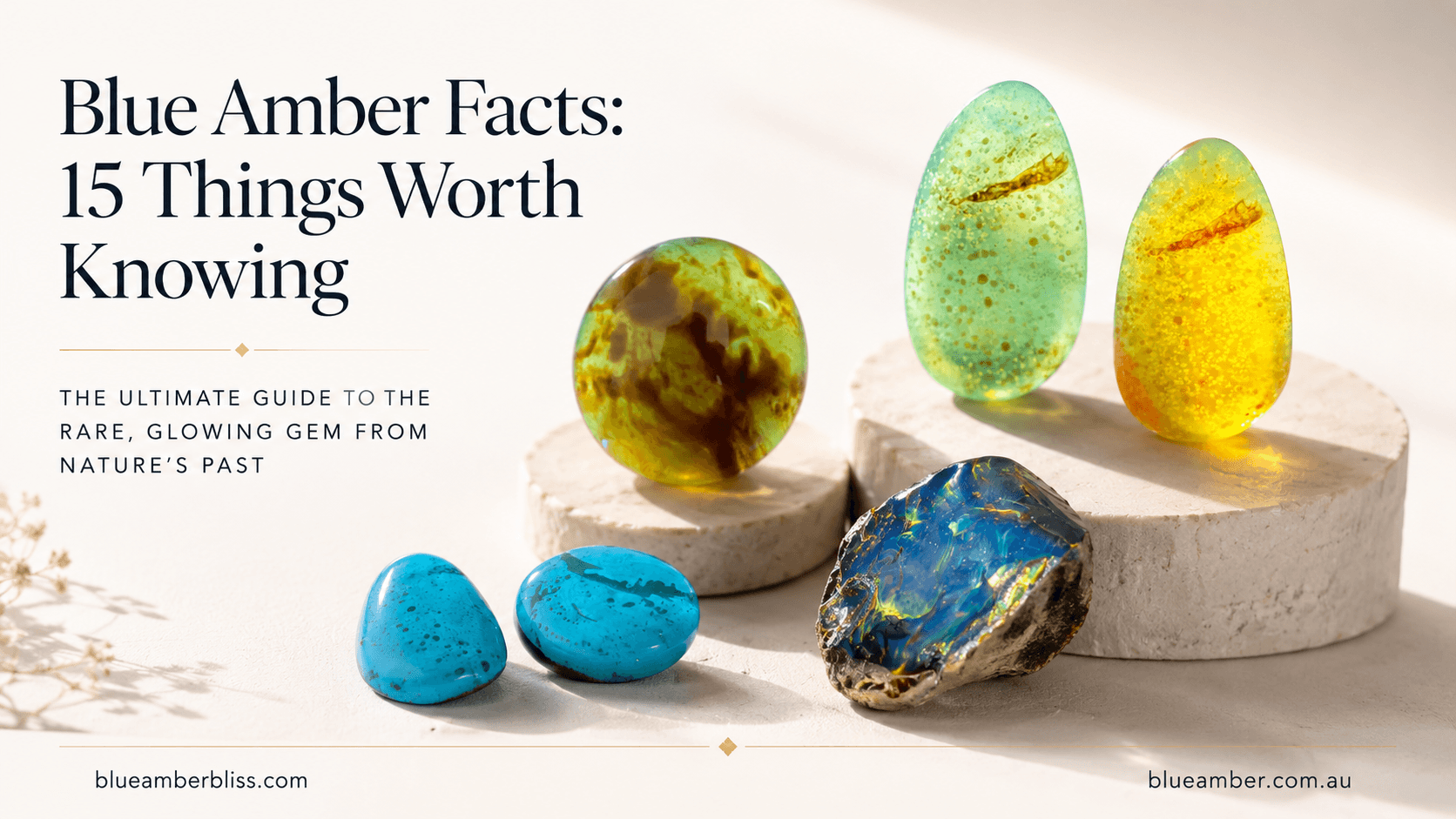
Here are the essential blue amber facts in one place: blue amber is fossilized tree resin millions of years in the making, and its blue color is not pigment but light physics. Sumatran (Indonesian) blue amber is the standout source, prized for large nodules and a dramatic daylight glow. It rates Mohs 2-2.5 and is astonishingly light.
This page is your scannable cheat sheet. Below you’ll find the numbers, origins, and science that matter, plus a summary table you can quote and links to the deep guides when you want more. Think of it as blue amber explained without the fluff, so you can separate real gemology from marketplace myth in a few minutes.
We’ve written it to be the one place you bookmark for reliable blue amber information: no hype, no invented history, just the verified facts that gemologists, collectors, and first-time buyers actually need. Each of the 15 facts below stands on its own, so feel free to skip straight to the number that answers your question.
Key Takeaways
If you only skim one section of these blue amber facts, make it this list. These are the points gemologists come back to again and again.
- It’s fossilized resin, not sap or plastic: hardened tree resin that turned to amber millions of years in the Miocene epoch.
- The blue is fluorescence and Rayleigh scattering of light, not a colored dye or mineral pigment.
- Two main origins: Sumatra (Indonesia) and the Dominican Republic, from two completely different ancient tree families.
- Sumatran blue amber is the standout: a newer source with bigger pieces, excellent quality, and a striking blue glow visible in ordinary daylight.
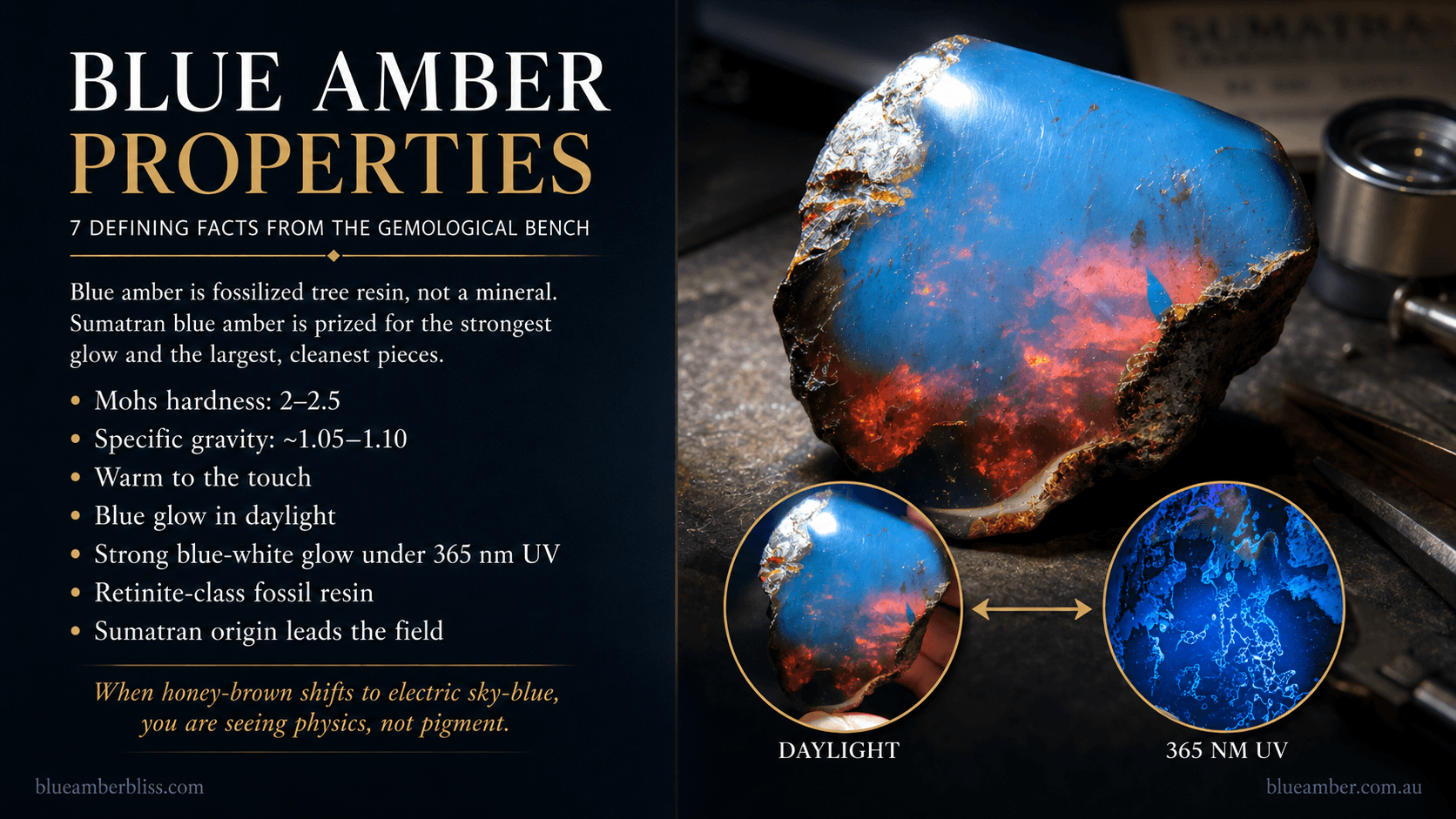
- Key physical numbers: Mohs hardness 2-2.5 and specific gravity ~1.05-1.10, so it’s soft and light enough to float in salt water.
- It’s genuinely rare: blue amber is a tiny fraction of an already uncommon gem material, which is why prices run high per gram.
What Is Blue Amber, Exactly?
Blue amber is ordinary amber, chemically speaking, that displays an extraordinary blue-to-teal glow under the right light. It is fossilized resin from ancient trees, not a separate mineral. What sets it apart is how it interacts with ultraviolet and visible light. For the complete definition, see our hub guide on what blue amber is.
Everything below builds on that foundation. The following 15 blue amber facts move from the science, to the origins, to the practical buying details, so you can read top to bottom or jump to the fact you need. Each one links out to a full article when you want to go deeper.
Blue Amber Facts: 15 Things Worth Knowing
1. Blue amber is fossilized tree resin, not sap
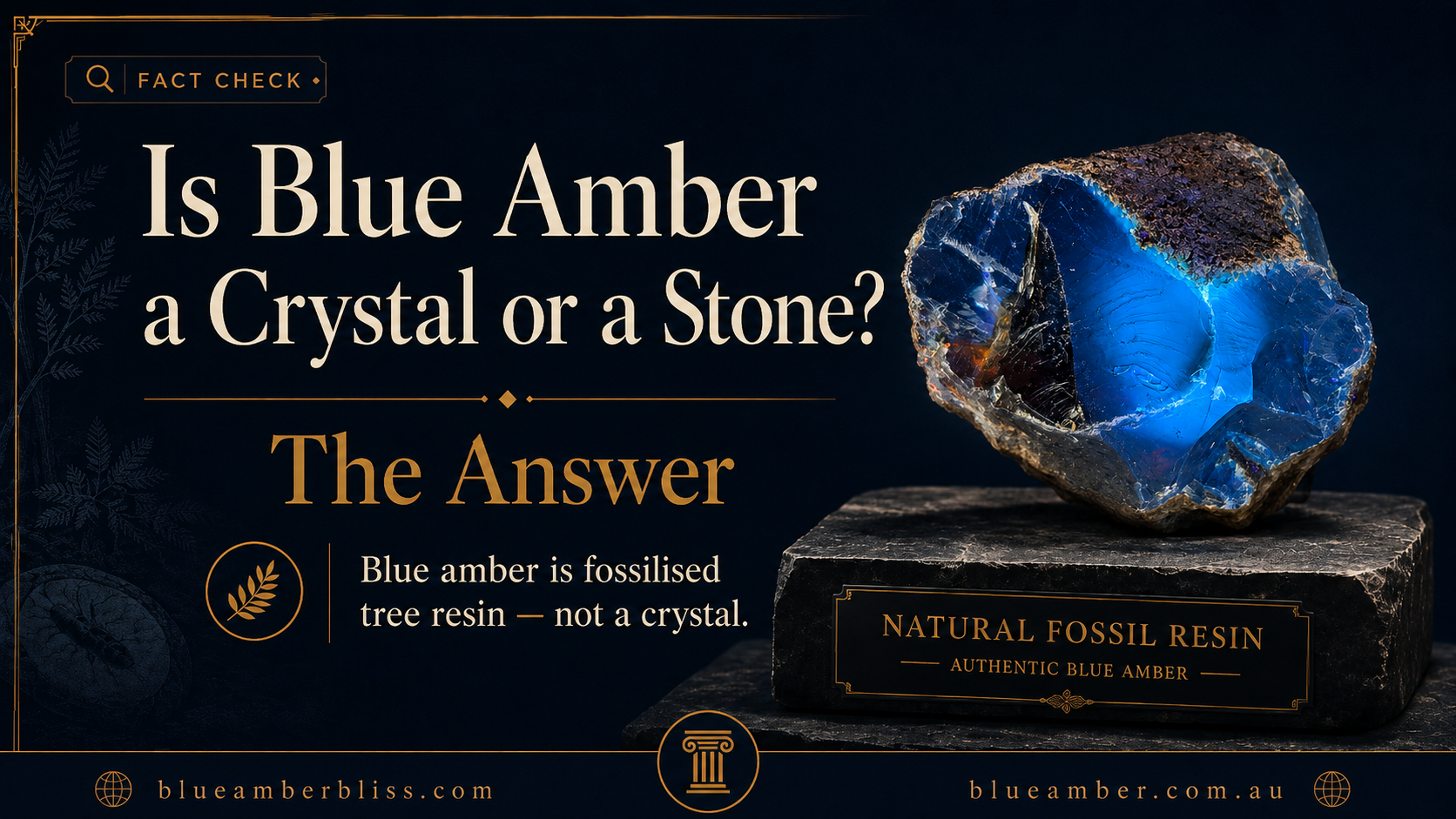
People often say “sap,” but resin and sap are different. Sap moves nutrients through a tree; resin is the sticky, aromatic defense fluid trees ooze over wounds. That resin hardened, got buried, and slowly polymerized and lost volatile compounds over millions of years to become amber. According to the GIA, amber is fossilized resin, which places it among the few organic gems alongside pearl and jet.
2. The blue is fluorescence and scattering, not pigment
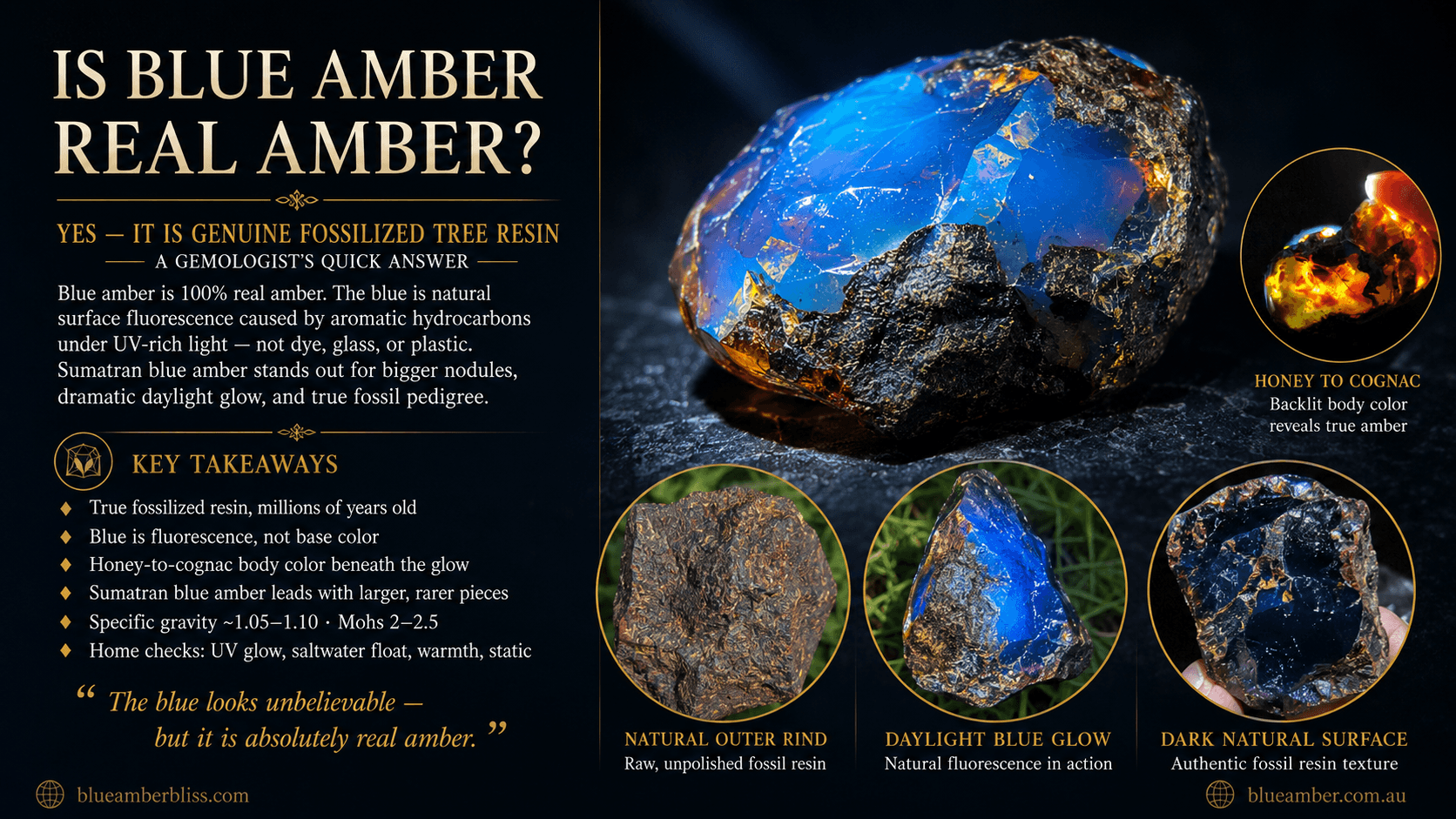
This is the single most misunderstood of all blue amber facts. There is no blue dye and no blue mineral inside. Instead, the amber absorbs invisible ultraviolet light and re-emits it as visible blue (fluorescence), while microscopic structure scatters short blue wavelengths back to your eye (Rayleigh scattering, the same physics that makes the sky blue). Learn the full mechanism in why blue amber glows blue.
3. It’s genuinely ancient, from the Miocene epoch
Blue amber isn’t decades or centuries old; it’s ancient natural resin. Most blue amber dates to the Miocene, commonly cited at millions of years, with some deposits estimated a little younger or older depending on the site. Britannica notes amber can range widely in age across deposits worldwide, which is why single numbers are always approximate. See Britannica’s amber overview for the geological context.
To be precise about terms: fresh, immature resin is called copal and is only thousands to a few million years old. It is not yet true amber and behaves differently. One of the most useful blue amber facts is that authentic blue amber has fully fossilized, so it resists solvents like acetone that soften young copal on contact.
4. Sumatran and Dominican amber come from different trees
Here’s a fact that surprises even collectors. The two famous blue ambers didn’t come from the same forest. Sumatran blue amber formed from resin of the Dipterocarpaceae family (notably Shorea trees), while Dominican amber came from an extinct legume tree in the genus Hymenaea. Different botany, different chemistry, similar magic, and it’s a key reason their body colors and glow differ.
5. Sumatran (Indonesian) blue amber is the standout source
Both origins produce beautiful, valuable material, and in raw quality they stand as equals. But Sumatran blue amber is the newer discovery and the one that turns heads. It tends to come in larger nodules, offers consistently strong quality, and is famous for a blue glow you can see in plain daylight, not just under a UV lamp. That combination of size and drama makes Sumatran the more valuable standout for many buyers today.
Practically, the larger Sumatran nodules also give artisans more room to cut clean cabochons, beads, and statement carvings without hidden fractures. If you’ve only ever read facts about blue amber that focus on the Dominican classic, the Sumatran story is the newer chapter worth knowing, and it’s the material we specialize in.
6. It’s soft, at Mohs 2-2.5
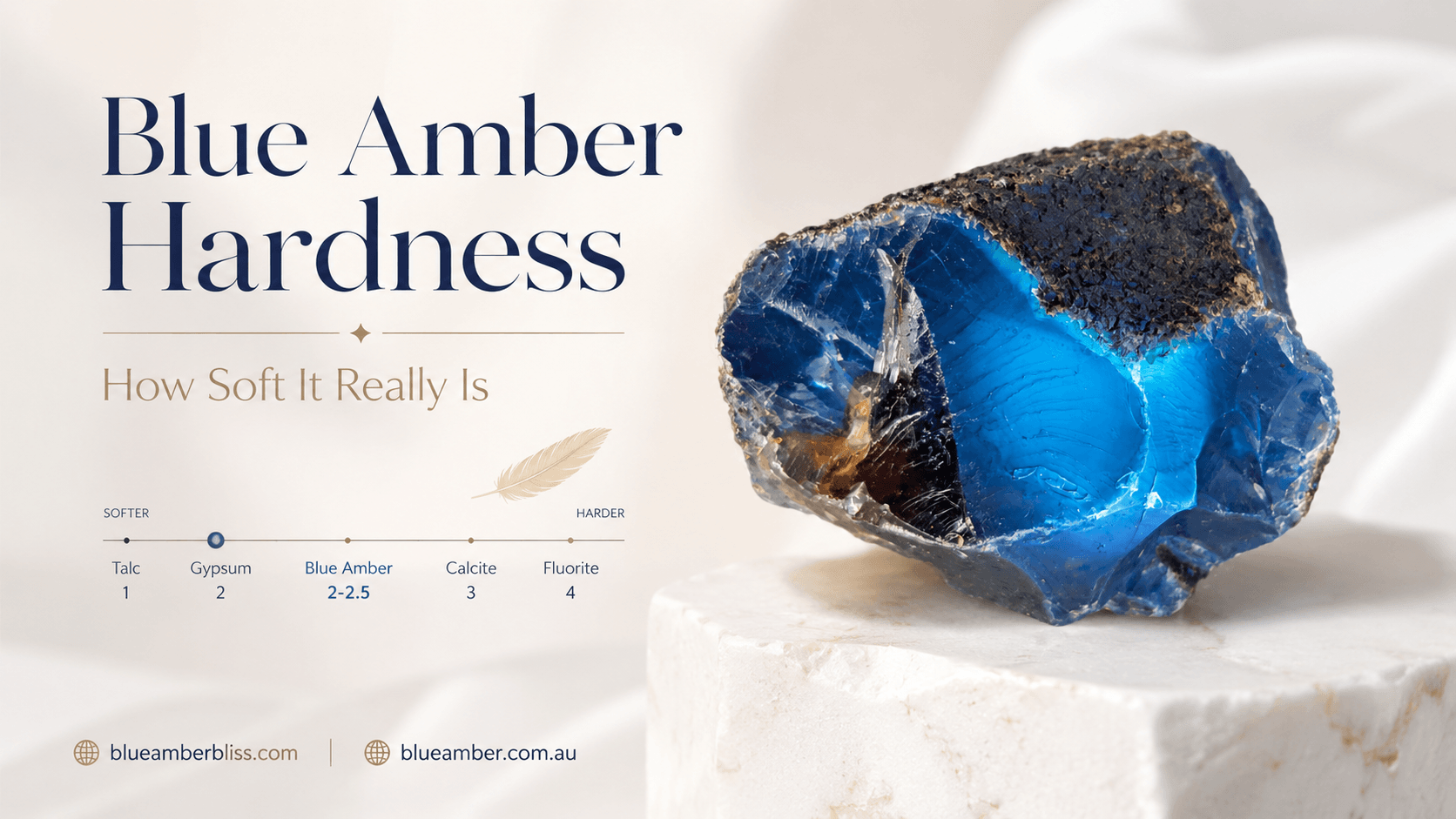
Among practical blue amber facts, hardness matters most for care. Blue amber sits at just 2-2.5 on the Mohs scale, about as soft as a fingernail (which can scratch it) and far softer than quartz (7). That means it scratches easily and should be kept away from keys, gemstones, and abrasive grit. Store it separately in a soft pouch. Full care numbers live in our blue amber properties guide.
7. It’s remarkably light and can float in salt water
Blue amber has a specific gravity of about 1.05-1.10, barely denser than fresh water. In saturated salt water (SG around 1.13), genuine amber floats while most imitations and heavier plastics sink. This buoyancy is one of the classic quick tests, though it’s not foolproof on its own. That lightness is also why a large amber piece feels warm and weightless in the hand compared to glass or stone.
8. The glow is strongest under UV, but Sumatran glows in daylight
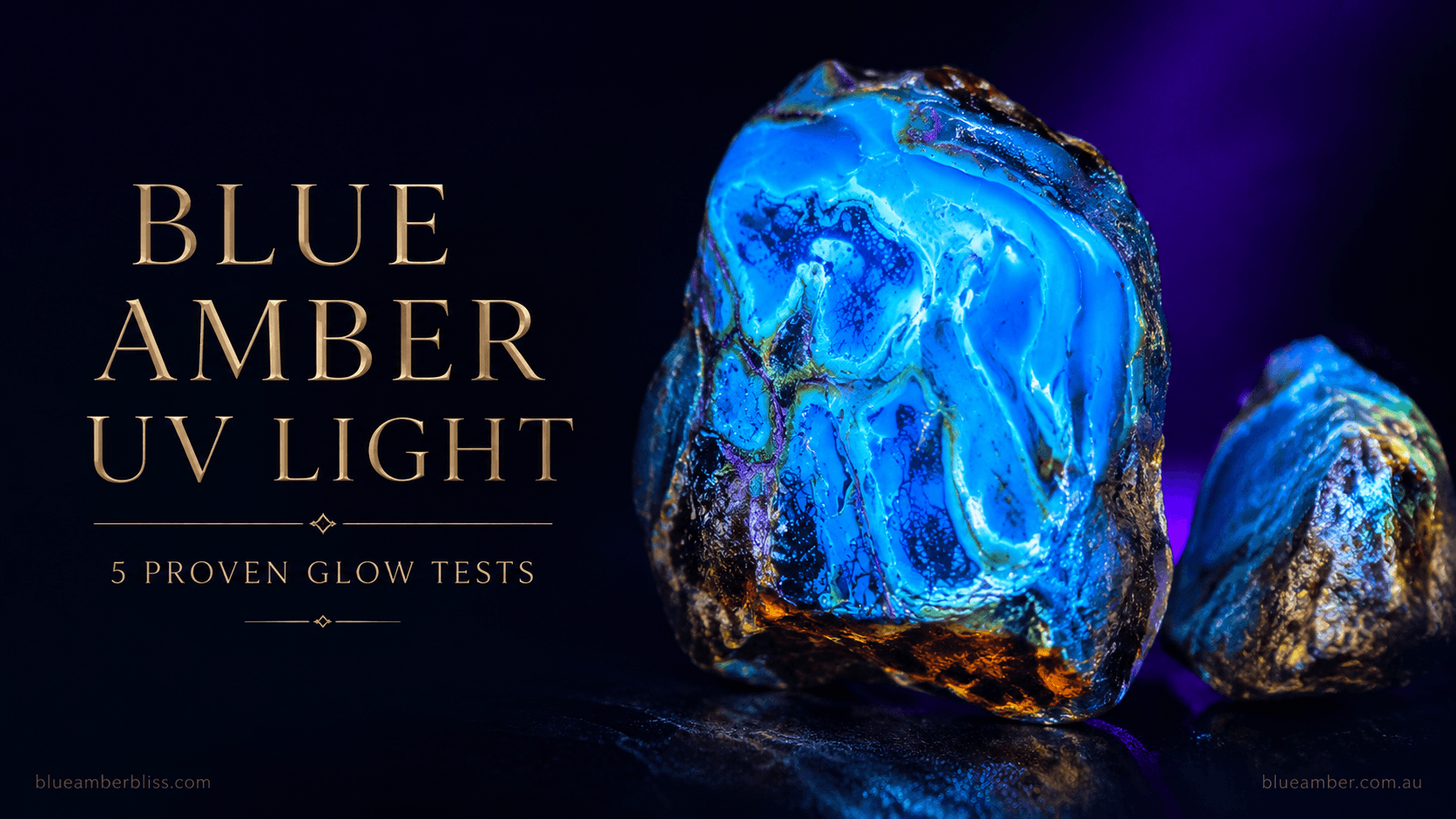
Under a UV lamp (around 365 nm long-wave ultraviolet), essentially all blue amber lights up vividly. What makes Sumatran material special is that its fluorescence is strong enough to read as a blue-teal glow in ordinary sunlight against a dark background, not only under a lamp. Dominican material famously glows too, especially in direct sun. These interesting blue amber facts about light explain why photos rarely do the stone justice.
9. Sumatra’s blue amber comes from Jambi and the Sinamar area
Geography is part of the story. Sumatran blue amber is mined chiefly in Indonesia’s Jambi province, associated with the Sinamar Formation deposits. It’s a comparatively recent addition to the world amber map, which is part of why it caused such a stir among collectors when better blue-fluorescing material started reaching the market in quantity and impressive sizes.
10. Dominican blue amber comes from northern mountain mines
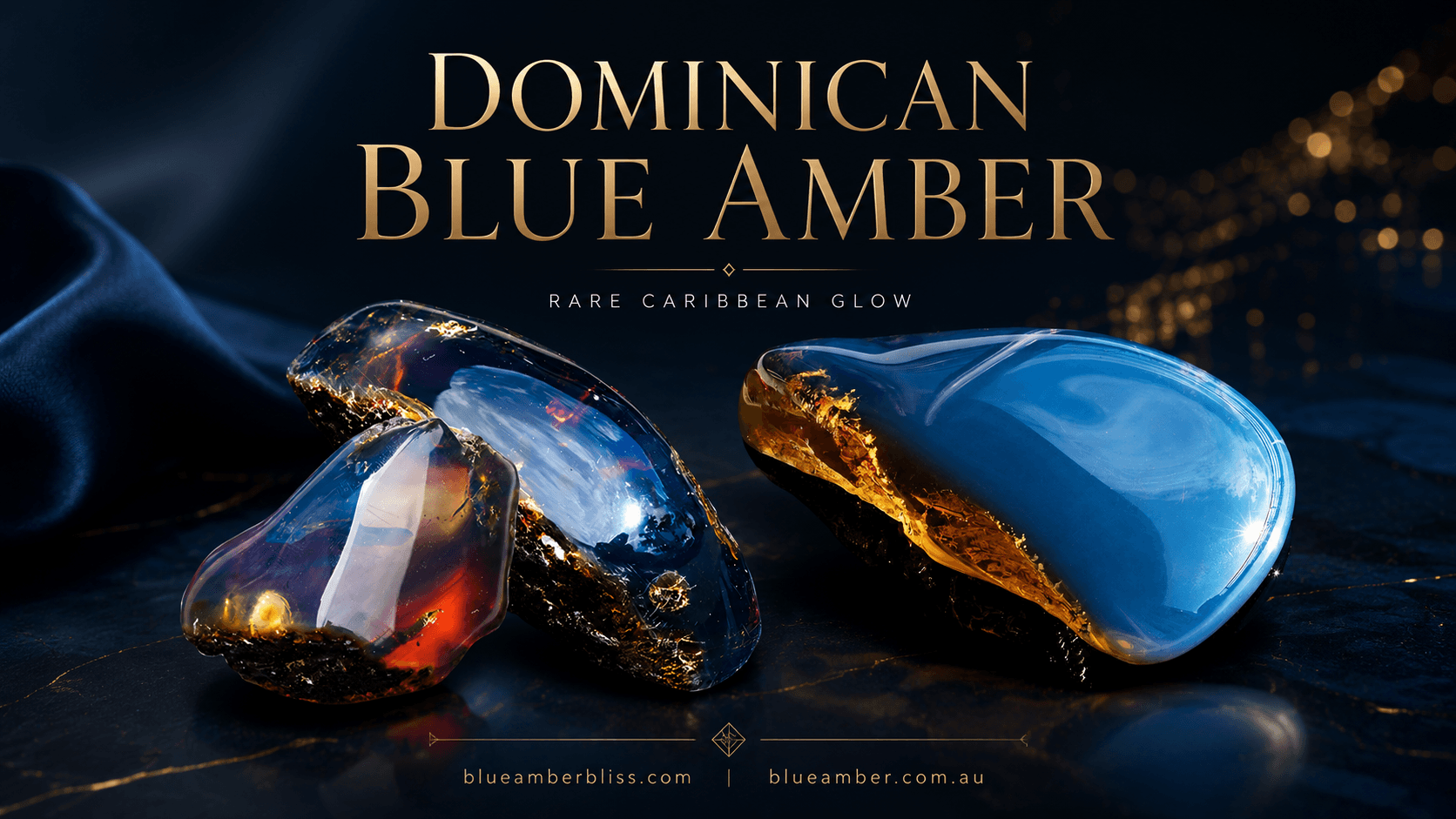
Dominican blue amber is dug from mines in the Cordillera Septentrional, the northern mountain range, near towns like Santiago in areas such as La Cumbre, Palo Quemado, and La Toca. These are narrow, hand-dug tunnels in soft rock, which makes recovery slow and dangerous. The scarcity of true blue-grade material from these mines is a big reason the color commands a premium wherever it’s found.
11. Blue amber is genuinely rare
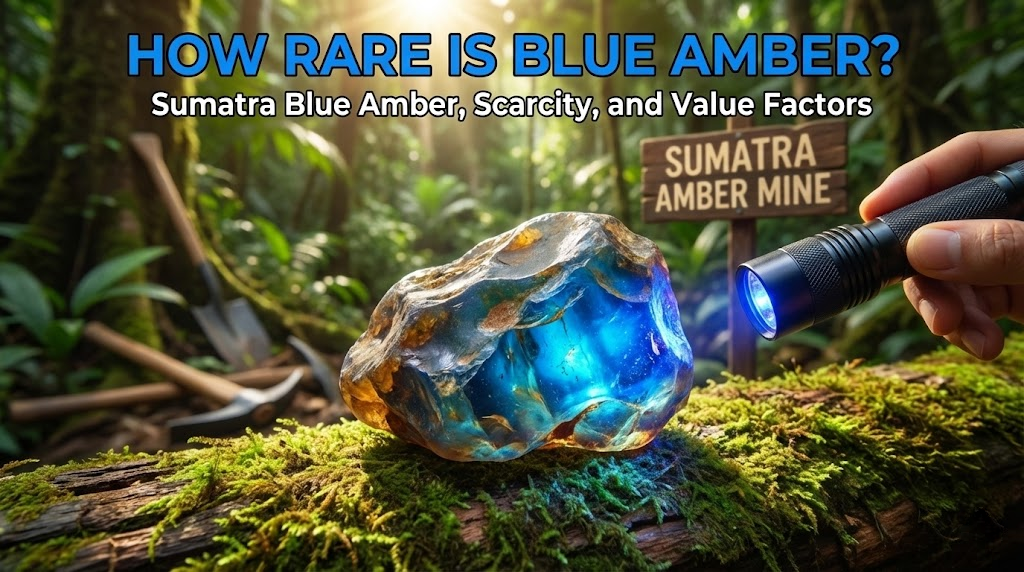
Amber itself is uncommon, and blue amber is a small slice of that. Only a limited fraction of mined amber shows the strong blue fluorescence collectors want, and the finest daylight-blue pieces are rarer still. That scarcity, combined with limited mining regions, is the core answer to why prices climb. Read the full breakdown in how rare is blue amber.
12. Body color and glow color are two different things
One of the trickiest blue amber facts for beginners: the amber’s body color in transmitted light differs from its glow color in reflected or UV light. Sumatran blue amber often looks dark, like deep amber, teak, or near-black, when you hold it up to a light, yet it flares blue-to-teal when light bounces off the surface. Don’t judge a piece by transmitted color alone.
13. It can contain fossil inclusions
Because amber started as sticky resin, it sometimes trapped insects, plant fragments, air bubbles, or debris before hardening. These inclusions are scientifically priceless windows into ancient ecosystems and can add value and character to a piece. In blue amber, an inclusion sitting inside a glowing matrix is especially striking. Not every stone has them, and clean glowing material is prized in its own right.
14. Prices are quoted per gram, and they vary widely
Unlike faceted gems sold per carat, amber is typically priced per gram. As a rough guide, entry-level blue amber runs around $5-$15 per gram, good-quality material lands near $20-$80 per gram, and top daylight-blue pieces, large Sumatran nodules, or fine inclusion specimens can exceed $100+ per gram. Size, glow strength, clarity, and origin all move the number. See the comparison table below for a side-by-side.
15. Real blue amber can be tested, and treatments exist
You can screen blue amber with simple checks: it should glow under 365 nm UV, float in salt water, feel warm and light, and give off a faint pine-resin scent when rubbed or hot-needle tested in an inconspicuous spot. Beware pressed amber (amberoid), heat-treated pieces, and copal or plastic fakes. When in doubt, buy from a specialist who discloses origin and any treatment.
Blue Amber Facts: Quick-Reference Table
Here are the core blue amber facts compressed into one quotable block of blue amber quick facts. Use it as your at-a-glance reference for the science and the numbers, whether you’re studying, buying, or just settling a debate.
| Property | Blue Amber Fact |
|---|---|
| What it is | Fossilized tree resin (an organic gem) |
| Cause of blue | Fluorescence + Rayleigh scattering, not pigment |
| Age | Miocene, millions of years |
| Main sources | Sumatra, Indonesia (standout) and Dominican Republic |
| Source trees | Sumatran: Dipterocarpaceae (Shorea); Dominican: Hymenaea |
| Mohs hardness | 2-2.5 (soft) |
| Specific gravity | ~1.05-1.10 (floats in salt water) |
| Fluoresces under | Long-wave UV (~365 nm); Sumatran glows in daylight |
| Rarity | Tiny fraction of all amber |
| Typical price | ~$5-$100+ per gram by quality |
How Do Sumatran and Dominican Blue Amber Compare?
Both are wonderful and closely matched in quality and value. The table below highlights where they differ, with Sumatran listed first as the standout source many collectors chase today.
| Feature | Sumatran (Indonesian) | Dominican |
|---|---|---|
| Source tree | Dipterocarpaceae (Shorea) | Hymenaea (legume) |
| Where mined | Jambi province, Sinamar area | Cordillera Septentrional mines |
| Typical piece size | Larger nodules available | Often smaller pieces |
| Daylight glow | Dramatic, strong blue-teal | Strong, especially in direct sun |
| Body color | Darker (teak to near-black) | Lighter, more transparent tones |
| Standing | Newer source, standout value | Long-established, prized classic |
Neither is a lesser stone. But if you want the biggest pieces and the most theatrical daylight glow, Sumatran blue amber is where the excitement is. Dig deeper in our Sumatran vs Dominican comparison.
Why Is Blue Amber So Rare?
Three forces stack up. First, amber only forms under specific burial conditions over millions of years, so it’s uncommon to begin with. Second, only a small share of amber contains the compounds and structure that produce strong blue fluorescence. Third, the deposits that yield true blue material are geographically tiny and hard to mine. Combine all three and you get a gem that’s scarce by nature, not by marketing.
How Do You Use These Blue Amber Facts When Buying?
Knowing the science is only useful if it changes what you do at the point of purchase. Turn these blue amber facts into a simple buying routine so you don’t overpay or end up with copal or plastic.
- Confirm the origin. Ask whether it’s Sumatran or Dominican, and favor sellers who state it plainly rather than saying only “blue amber.”
- Check the glow. Ask for photos or video under both a 365 nm UV light and natural daylight against a dark background.
- Verify the weight and feel. Real amber is light and warm; confirm the price is quoted per gram and reasonable for the grade.
- Request a treatment disclosure. Ask if the piece is natural, pressed (amberoid), or heat-treated before you commit.
- Buy from a specialist. A dedicated blue amber seller stakes their reputation on accurate origin and honest quick facts.
What We Notice When Selecting Sumatran Blue Amber
Of all the “facts” worth knowing, the one we can vouch for firsthand is the daylight-to-glow transformation, and Sumatran blue amber shows it more dramatically than anything else we handle. Under normal indoor light our Sumatran pieces read as deep cognac to near-black, but step them into sunlight or UV and that dark body flashes an electric blue you have to see to believe. We look for that strong contrast first, then for clean nodules with honest natural inclusions and a mirror polish that lets the colour move as you turn the stone. These are the details that separate a genuine collector specimen from something merely marketed as blue amber, and they take shape over ancient stretches of time in the resin itself.
If you would like to see that shift for yourself, we warmly invite you to explore our hand-selected Sumatran blue amber at Blue Amber Bliss. Shop hand-selected Sumatran blue amber →
FAQ: Common Blue Amber Questions Answered
These frequently asked questions round out the blue amber facts above with quick, direct answers you can act on.
What is blue amber in simple terms?
Blue amber is fossilized tree resin, millions of years in the making, that glows blue-to-teal under ultraviolet and sunlight. The color comes from fluorescence and light scattering, not from any dye or pigment. It’s the same material as regular amber, just with an unusual optical property that makes it far rarer and more valuable.
Why does blue amber glow blue?
Two effects work together. The amber absorbs ultraviolet light and re-emits it as visible blue (fluorescence), and its microscopic structure scatters short blue wavelengths back to your eye (Rayleigh scattering). There is no blue pigment inside. This is one of the most important blue amber facts to understand before buying, since it explains why lighting changes everything.
Is Sumatran or Dominican blue amber better?
In raw quality and value they’re closely matched, so neither is simply “better.” That said, Sumatran (Indonesian) blue amber is the standout for many collectors because it comes in larger pieces and shows a dramatic blue glow in ordinary daylight. As a newer source with excellent quality and impressive size, it’s often the more valuable, head-turning choice.
How old is blue amber?
Most blue amber dates to the Miocene epoch, commonly cited at millions of years in the making, though estimates vary by deposit. Either way, you’re holding something that predates modern humans by millions of years, which is a big part of its appeal as both a gem and a genuine geological time capsule.
How hard is blue amber, and is it fragile?
Blue amber rates just 2-2.5 on the Mohs hardness scale, so it’s soft and scratches easily. It’s not brittle like glass, but it can chip or crack from sharp impacts and dislikes heat, solvents, and harsh chemicals. Store it separately, clean it with only a damp soft cloth, and keep it off hard surfaces and other jewelry.
Does real blue amber float in water?
Genuine amber, with a specific gravity around 1.05-1.10, floats in saturated salt water while most plastics and heavier fakes sink. It won’t float in plain fresh water. The salt-water float test is a useful first screen, but pair it with UV glow, the warm feel, and a pine-resin scent test for a more reliable read on authenticity.
How much does blue amber cost?
Blue amber is usually priced per gram. Entry-level pieces run about $5-$15 per gram, good-quality material sits around $20-$80 per gram, and exceptional daylight-blue stones, large Sumatran nodules, or fine inclusion specimens can top $100 per gram. Glow strength, size, clarity, and origin drive the price more than any single factor.
Is blue amber the same as regular amber?
Chemically, yes, it’s fossilized resin like all amber. The difference is optical: blue amber contains structures and compounds that make it fluoresce and scatter blue light. That rare property, not a different mineral makeup, is what separates it from common honey or cognac amber and pushes its value well above ordinary material.
How can I tell if blue amber is real?
Check several signs together: a blue glow under 365 nm UV, buoyancy in salt water, a light warm feel, and a faint pine scent from friction or a discreet hot-needle test. Watch for pressed amber (amberoid), plastic, and immature copal. The safest route is buying from a specialist who states the origin and discloses any treatment.
Where does blue amber come from?
The two major sources are Sumatra in Indonesia, mined mainly in Jambi province around the Sinamar deposits, and the Dominican Republic, mined in the Cordillera Septentrional mountains. Sumatran material is the newer, standout source known for larger nodules and vivid daylight glow, while Dominican amber is the long-established classic.
The Bottom Line on Blue Amber
Those are the blue amber facts worth carrying with you: fossilized resin, ancient natural resin, blue by physics rather than pigment, soft at Mohs 2-2.5, light enough to float in brine, and genuinely rare. Above all, remember that Sumatran (Indonesian) blue amber is the standout source, prized for its size and its unforgettable daylight glow. When you’re ready to go deeper on any single fact, follow the guide links above.