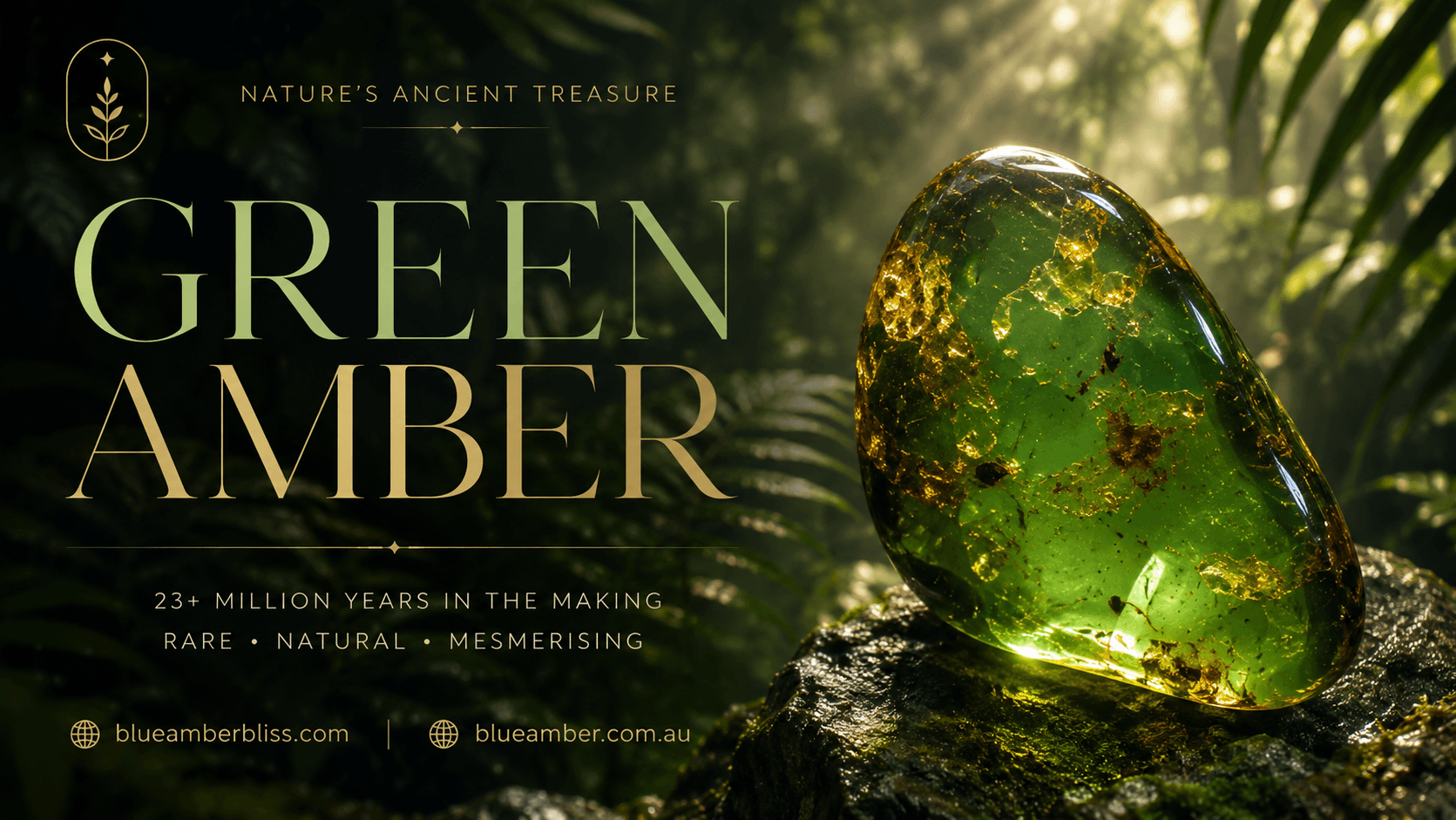
Green amber is fossilized tree resin that displays a green body color or surface glow, ranging from soft olive to vivid lime. Some of it is natural; much on the market is heat- or pressure-treated. Compared with Sumatran blue amber, this stone is more common and typically lower in value, though both are real, collectible, and genuinely beautiful.
If you have been hunting for honest answers about green amber, you are in the right place. As gemologists who handle Sumatran (Indonesian) blue amber every week, we will walk you through what the gem actually is, how to tell natural from treated, how it stacks up against the blue glow that made our shop famous, and what it is genuinely worth. No hype, no half-truths, just the kind of plain-spoken guidance you would get leaning over our counter with a loupe in hand.
Key Takeaways
- Sumatran blue amber is the rarer, more valuable glow – its dramatic daylight blue and large nodules outshine green amber in both scarcity and price.
- Green amber can be natural (from plant inclusions, oxidation, or background color) or treated (heated in autoclaves), and the two look similar to the naked eye.
- Most bright, uniform green amber jewelry on the mass market is treated, often Baltic amber clarified and color-shifted under heat and pressure.
- Genuine amber shares the same physical traits: specific gravity ~1.05-1.10, Mohs hardness 2-2.5, and it floats in saturated saltwater.
- Green amber value spans roughly $5-$60 per gram, while top Sumatran blue amber can reach $100-$300+ per gram.
- Both gems are real fossil resin millions of years old – the difference is rarity, glow drama, and how the color is produced.
What Is Green Amber, Exactly?
Amber is fossilized tree resin, hardened over millions of years from the sap of ancient conifers and broadleaf trees. When that resin shows a green hue – whether deep in the body or shimmering across the surface – we call it green amber. The color can come from several sources, and understanding them is the key to buying smart.
According to the Gemological Institute of America, amber’s color range is broad, from pale yellow through cognac, red, and the prized cool tones. Green sits within that spectrum. Some amber looks green because of botanical inclusions and microscopic plant matter suspended in the resin. Other pieces take on green from oxidation or from the way light scatters through a darker base.
Then there is the surface phenomenon. Certain ambers fluoresce – they fluoresce blue or green when light strikes the surface even though the body underneath reads warm. This is the same optical family that produces our hero gem. If you want the deeper science, our guide on what blue amber is covers fluorescent fossil resin in plain language.
Why Does Green Amber Look Green?
Three mechanisms create the color. First, natural inclusions: plant debris, pollen, and organic particles can tint resin olive or forest green. Second, a darker base body (cognac to near-black) viewed under daylight can throw a green-yellow cast. Third, and most commonly on the market, treatment: heating amber in an autoclave with controlled pressure shifts and clarifies the color into bright, even green.
None of these mechanisms make a stone “fake” by themselves – treated amber is still real amber. But the distinction massively changes value and honesty in a transaction, which is why we insist on clear disclosure.
Is Green Amber Real? Natural vs Treated Green Amber
Is green amber real? Yes – genuine green amber is authentic fossil resin, the same material as any other amber. The honest nuance is that “natural green” and “treated green” are two different things wearing the same color. Both are real amber; only one occurs without human intervention.
Natural green-toned amber is uncommon. It usually appears in muted, organic tones – olive, mossy, or a green-gold that shifts with the angle of light. You will often see swirls, plant inclusions, and uneven color because nature does not produce perfect uniformity. These quirks are signatures of authenticity, not flaws.
Treated green amber is the bright, glassy, intensely uniform material you see in costume-style jewelry and many online listings. Real amber – frequently Baltic – is placed in an autoclave and heated, sometimes with added pressure, until the color transforms. The result is vivid and consistent, but the green is a manufactured outcome, not what came out of the ground.
How Is Green Amber Treated?
The standard process is autoclave heat treatment. Technicians heat raw amber to roughly 150-250°C under inert gas and elevated pressure. This clarifies cloudy resin (removing trapped air bubbles), deepens or shifts color, and can produce the sun-spangle internal discs collectors recognize. Pushing temperature and time further drives the body toward green, red, or “cherry.”
This is a legitimate, centuries-old craft – amber has been heat-clarified since at least the 1800s. The problem is not the technique; it is when sellers present treated material as rare natural green at natural-material prices. Disclosure is everything.
How Can You Tell Natural Green Amber From Treated?
You cannot always tell with the naked eye, but here are reliable tells. Look for uniformity: nature is messy, so flawless even color is a treatment flag. Inspect under magnification for stress fractures – disc-shaped “sun spangles” indicate rapid heat treatment. Check the fluorescence behavior under UV. And always ask the seller directly, in writing, whether the piece is treated.
The same authentication discipline we teach for our hero gem applies here. Our walkthrough on how to spot real blue amber covers the saltwater float test, UV response, static electricity, and the hot-needle test – all of which work for verifying any green-toned amber is genuine fossil resin and not plastic or copal.
Green Amber vs Blue Amber: The Honest Comparison
Here is where we put our cards on the table. In the green amber vs blue amber debate, Sumatran blue amber is the standout. It is rarer, glows more dramatically in daylight, and commands higher prices. That is not marketing – it is what the global supply and the auction record reflect.
Sumatran (Indonesian) blue amber is the newer source, and it changed the game. It yields larger nodules than older deposits, with somewhat better clarity and a more intense daylight blue. That combination of size and quality is exactly why we built our shop around it. When sunlight hits a Sumatran piece, the surface ignites electric blue while the body stays warm honey-brown – a contrast green amber simply does not match for drama.
Green amber, by contrast, is more abundant. Treated stones in particular are produced at scale, which keeps prices accessible. That makes it a wonderful entry point into amber collecting – but on rarity and value, the blue glow leads.
Green Amber vs Blue Amber: Which Glows More?
Both phenomena involve fluorescence – the gem absorbing UV and shorter visible wavelengths and re-emitting them as visible color. Blue amber’s emission peaks in the blue band and reads vividly in ordinary daylight, not just under a UV lamp. That daylight visibility is the magic. The green variety’s glow is generally subtler and more dependent on a UV source to pop.
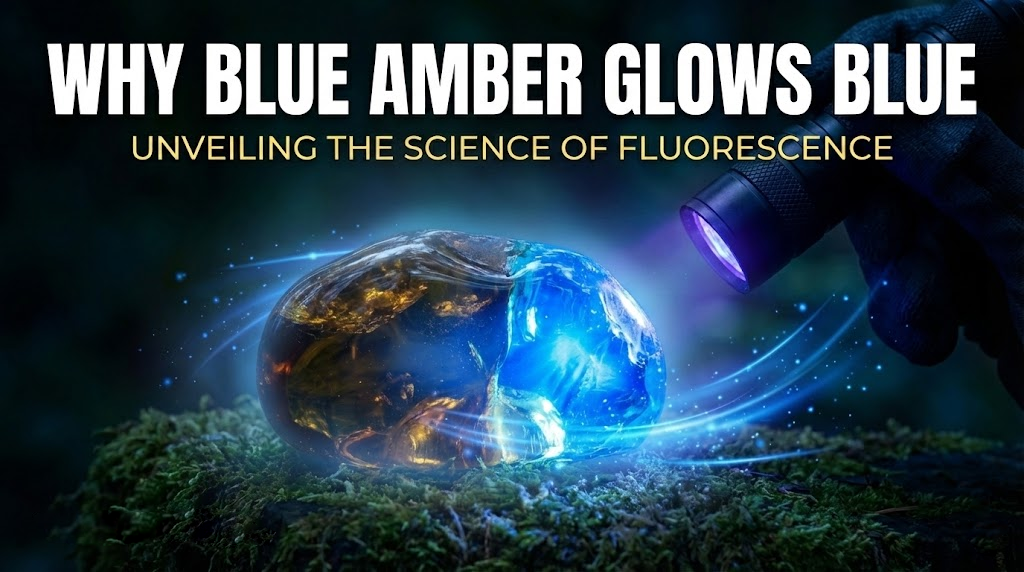
The physics behind this is fascinating, and we break it down fully in why blue amber glows blue. The short version: Sumatran blue amber’s molecular structure and perylene-related compounds make it one of the most efficient daylight fluorescers in the gem world.
Green Amber vs Blue Amber Comparison Table
| Factor | Sumatran Blue Amber (hero) | Green Amber |
|---|---|---|
| Glow in daylight | Dramatic electric blue, visible without UV | Subtle green; usually needs UV to pop |
| Rarity | Very rare; standout source | More common, especially treated |
| Typical color source | Natural fluorescence of fossil resin | Natural inclusions OR autoclave treatment |
| Nodule / piece size | Larger nodules from newer Sumatran source | Often smaller; depends on origin |
| Specific gravity | ~1.05-1.10 | ~1.05-1.10 |
| Mohs hardness | 2-2.5 | 2-2.5 |
| UV fluorescence | Strong, peaks in blue (~430-450 nm) | Moderate; green emission |
| Typical price/gram | $100-$300+ for top grade | $5-$60 depending on natural vs treated |
| Best for | Collectors, statement pieces, investment | Entry-level buyers, everyday jewelry |
To be clear and fair: green amber and Sumatran blue amber are equal in being genuine, ancient, beautiful fossil resin. The difference that matters is rarity and glow drama, where Sumatran blue amber – newer source, bigger pieces, somewhat better quality – is the more valuable standout.
Green Amber Value: What Is It Worth?
Green amber value depends almost entirely on one question: natural or treated? Natural green with genuine inclusions and clean origin documentation can fetch a respectable premium because true natural green is scarce. Treated green, being mass-produced, sits at the accessible end of the market.
As a working range, expect treated green amber beads and cabochons around $5-$20 per gram, and finer natural green around $20-$60 per gram. Exceptional natural specimens with strong fluorescence or rare inclusions can exceed that. By contrast, premium Sumatran blue amber routinely commands $100-$300+ per gram, with collector nodules going higher.
Why the gap? Scarcity and that daylight glow. We dig into the supply story in how rare blue amber is – it makes up a tiny fraction of global amber output, which is the single biggest driver of its value over the green variety.
What Factors Drive Green Amber Value?
Five levers move the price. Natural vs treated is the biggest. Clarity matters – clean, transparent stones outprice cloudy ones. Color intensity and evenness count, though suspiciously perfect evenness signals treatment. Size adds value, since large clean pieces are harder to find. And inclusions cut both ways: an insect or rare plant fossil can multiply value dramatically.
For comparison shopping across the cool-toned spectrum, our breakdown of blue amber types and grades shows how the same grading logic – clarity, color, size, origin – separates the good from the exceptional.
Is Green Amber a Good Investment?
Honestly? For pure investment, Sumatran blue amber is the stronger play because of its rarity and rising demand. Green-toned amber shines as a beauty-and-budget choice: it lets you own genuine ancient fossil resin in an eye-catching color without a collector’s price tag. If you love green and want value, treated green is a smart buy – just pay treated prices, not natural ones.
Green Amber Meaning and Symbolism
Green amber meaning traditionally centers on renewal, growth, and connection to nature – fitting for a gem that literally captures ancient forests inside it. Across folklore, amber broadly has symbolized warmth, protection, and life energy, and the green variety adds associations with healing, balance, and the natural world.
In metaphysical circles, people associate this stone with the heart chakra, emotional grounding, and a sense of revitalization. We are gemologists, not healers, so we will not overstate these claims – but the symbolism is genuinely lovely and part of why so many wearers feel drawn to the color.
What we can vouch for materially is the romance of the object itself: every piece of green amber is a time capsule of resin that flowed from a tree millions of years ago. The general history and chemistry of this remarkable material are well documented on Wikipedia’s amber entry, which traces its use in jewelry and ornament back tens of thousands of years.
What Does Green Amber Symbolize in Jewelry?
In finished jewelry, green amber reads as fresh, organic, and earthy – it pairs beautifully with silver, gold, and natural materials like wood and leather. Wearers often choose it to express a love of nature or a desire for renewal. Sumatran blue amber, meanwhile, carries a cooler, more mysterious symbolism tied to its rare daylight glow, which is why it tends to anchor statement and heirloom pieces.
How to Buy Green Amber the Smart Way
Buying green amber well comes down to disclosure, testing, and trusting the right seller. Because so much green on the market is treated, your job is to know exactly what you are paying for. A reputable dealer will tell you upfront whether a stone is natural or autoclave-treated and price it accordingly.
Run the basic authenticity checks to confirm you have real fossil resin, not plastic or pressed copal. Genuine amber floats in saturated saltwater (specific gravity ~1.05-1.10), generates static when rubbed, smells of pine when warmed by a hot needle, and shows natural internal flow and bubbles under magnification. These tests separate authentic gems from imitations regardless of treatment.
Above all, buy from specialists. When a seller knows the science cold – fluorescence, specific gravity, treatment processes – and discloses freely, you can trust the color in the box matches the story on the label.
What Questions Should You Ask a Green Amber Seller?
- Is this green amber natural or treated, and if treated, how?
- What is the origin (Baltic, Sumatran, Mexican, Dominican, etc.)?
- Has it been clarified, pressed, or reconstituted in any way?
- Can you confirm the specific gravity and UV fluorescence behavior?
- Do you offer a return policy and authenticity guarantee?
What We Notice Comparing Green and Blue Amber By Hand
At Blue Amber Bliss we handle green and blue pieces side by side every week, and the difference is easiest to read in changing light. Our Sumatran blue amber carries a dark cognac-to-coffee body that can flash green over a black background, then leaps to a strong electric blue in daylight and under UV — a shift far more dramatic than the steadier, more constant tone of true green amber. We also find the Sumatran material tends to arrive in bigger, cleaner nodules with lively natural inclusions, which is why collectors keep asking us to distinguish a genuine blue transformation from a green surface glow rather than trusting a single indoor photo.
If you would like to see that daylight-to-glow shift for yourself, we warmly invite you to explore our hand-selected Sumatran blue amber at Blue Amber Bliss. Shop hand-selected Sumatran blue amber →
FAQ
Is green amber real or fake?
Genuine green amber is real fossil resin, the same material as all amber. “Fake” only applies when sellers pass off plastic, glass, or copal as amber. Real green can be natural or autoclave-treated; both are authentic amber. Run the saltwater float and UV tests to confirm genuineness.
What is the difference between green amber vs blue amber?
In green amber vs blue amber, the core difference is rarity and glow. Sumatran blue amber is rarer, glows dramatic electric blue in daylight, and costs more. The green variety is more common, often treated, glows green mainly under UV, and is more budget-friendly. Both are genuine ancient fossil resin.
Is most green amber natural or treated?
Most bright, uniform green amber on the mass market is treated – typically Baltic amber heated in an autoclave under pressure to shift and clarify the color. Natural green is scarcer and shows muted, uneven olive tones with organic inclusions. Always ask the seller to disclose treatment.
What is green amber value per gram?
Green amber value typically runs $5-$20 per gram for treated material and $20-$60 per gram for finer natural green, with exceptional specimens higher. For comparison, premium Sumatran blue amber commands $100-$300+ per gram thanks to its rarity and daylight glow.
What is the green amber meaning?
Green amber meaning centers on renewal, growth, healing, and connection to nature. In metaphysical traditions it is linked to the heart chakra and emotional balance. Materially, it is a time capsule of resin that flowed from ancient trees millions of years ago.
How can I tell if green amber is treated?
Look for suspiciously perfect, uniform color (a treatment flag) and inspect under magnification for disc-shaped “sun spangle” stress fractures caused by rapid heating. Natural green-toned amber shows uneven, organic tones and plant inclusions. When in doubt, ask the seller for written treatment disclosure.
Does green amber glow under UV light?
Yes, this stone often shows a green or greenish-yellow fluorescence under UV (around 365 nm). However, its glow is subtler and more UV-dependent than Sumatran blue amber, whose blue emission (~430-450 nm) is so strong it appears in ordinary daylight.
What are the physical properties of green amber?
Like all amber, green amber has a specific gravity of ~1.05-1.10 (it floats in saturated saltwater), a Mohs hardness of 2-2.5, a resinous luster, and a warm feel. It generates static when rubbed and releases a piney scent when touched with a hot needle.
Is green amber rarer than blue amber?
No. Sumatran blue amber is the rarer and more valuable gem. Green amber – especially treated green – is produced more abundantly, which keeps it accessible. The natural form is uncommon, but it still does not match the global scarcity of Sumatran blue amber.
Where does green amber come from?
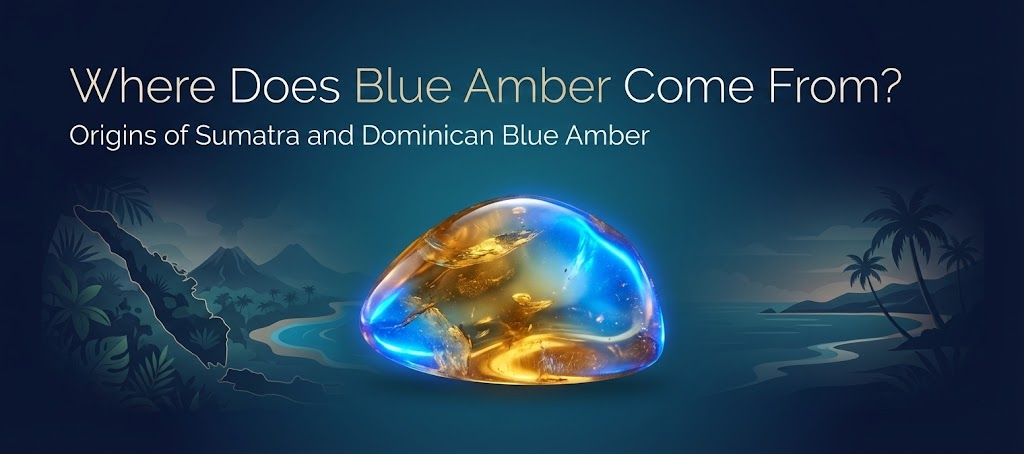
Most treated green amber starts as Baltic amber, then is autoclave-processed into green. Natural green can occur in various deposits, including Mexican and Dominican amber. The cool-toned glow our shop specializes in, by contrast, comes from the newer Sumatran (Indonesian) source.
The Bottom Line on Green Amber
Green amber is a genuine, beautiful, and accessible way to own ancient fossil resin – whether you choose scarce natural green or vibrant treated green. Just buy it informed: know which one you are getting, pay the right price, and verify authenticity with the float and UV tests.
And if it is the rarer, more dramatic glow you are after, Sumatran blue amber is the standout – bigger nodules, that unforgettable daylight blue, and the kind of scarcity that makes a piece a true heirloom. Whichever color speaks to you, we are here to help you buy it with confidence and full disclosure.
Related Blue Amber Guides
- treated, heated and clarified blue amber
- Blue Amber Types: 4 Real Origins, Grades & Prices
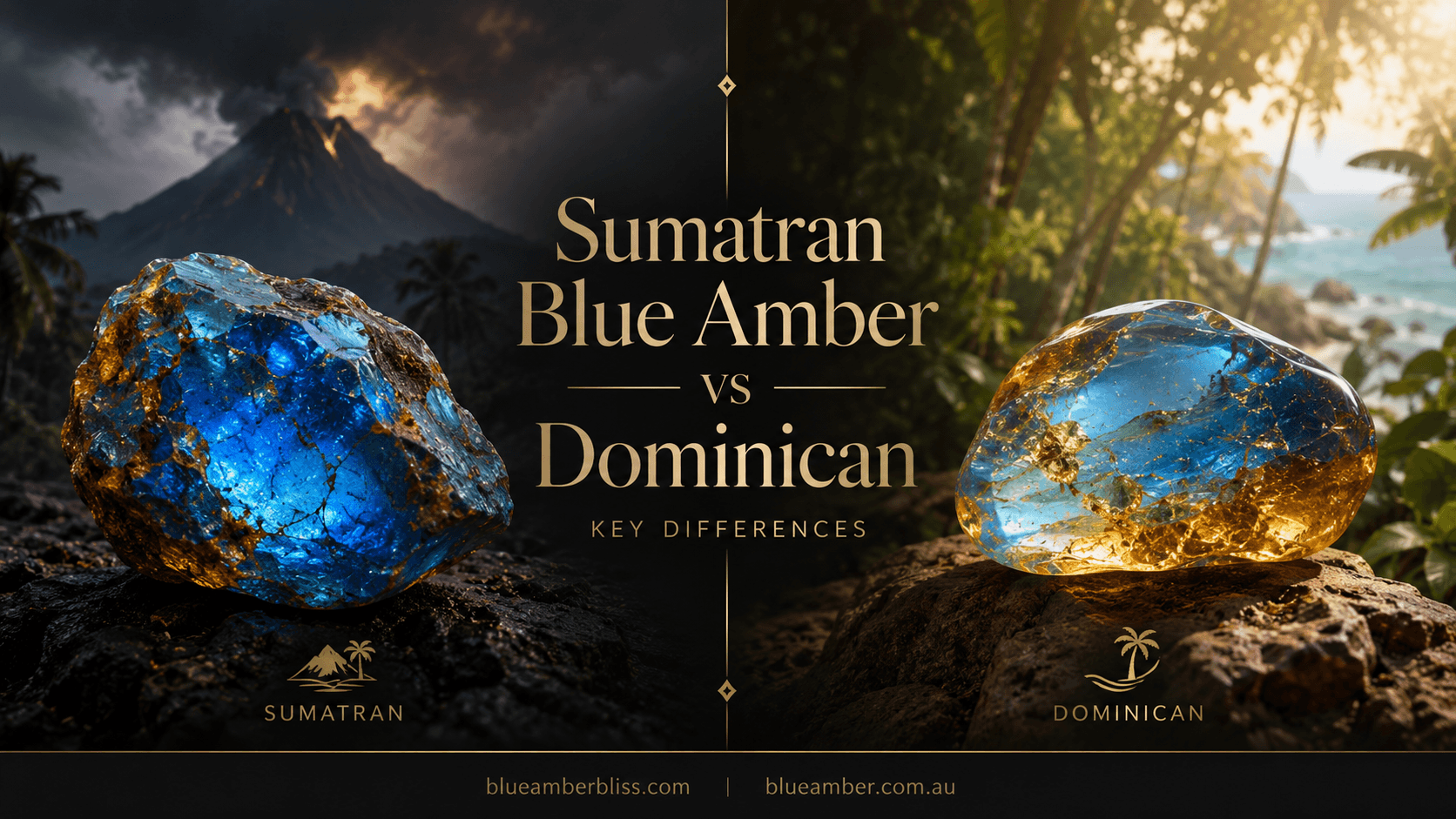
- Sumatran Blue Amber vs Dominican: 7 Proven Differences
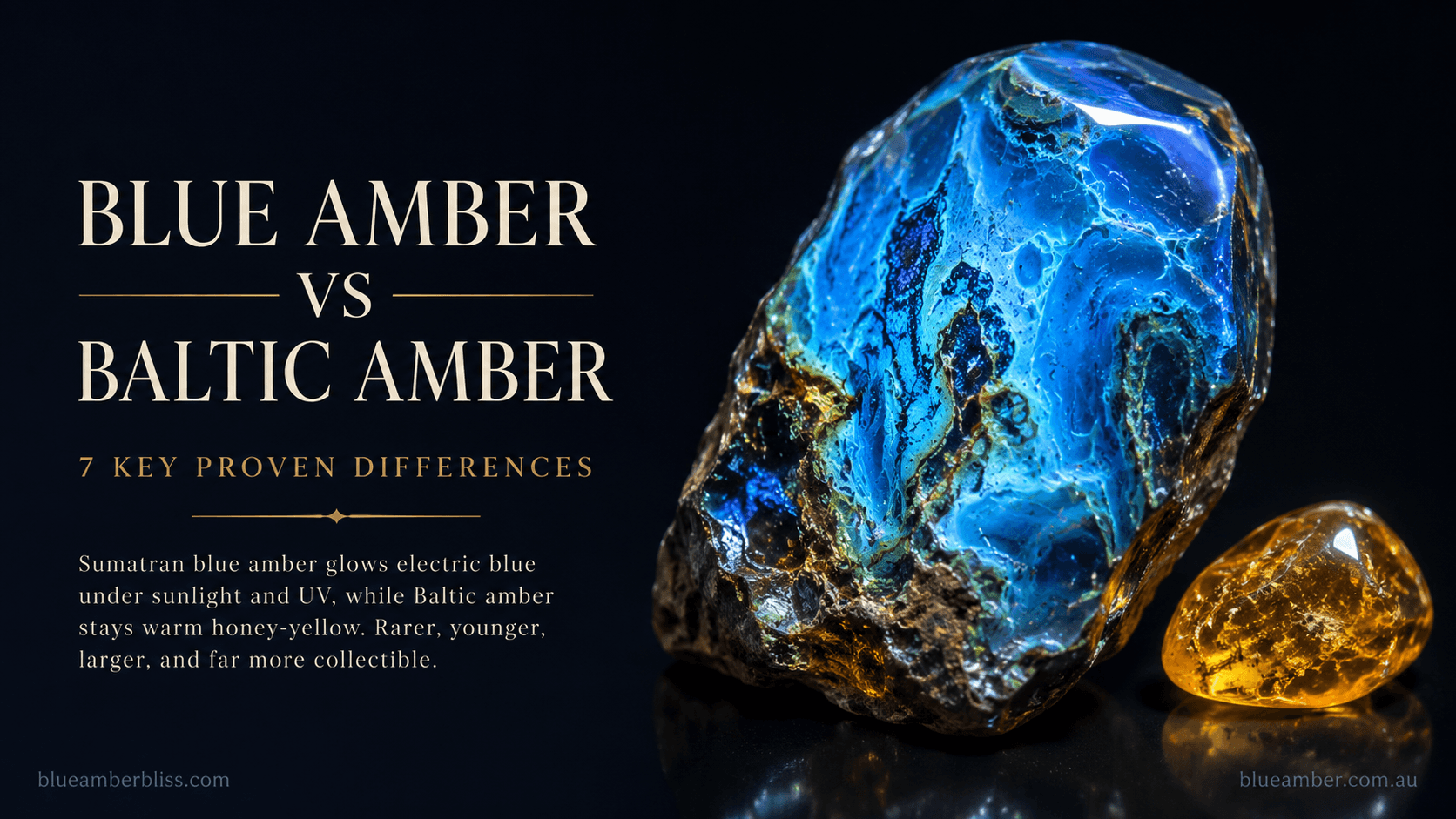
- Blue Amber vs Baltic Amber: 7 Key Proven Differences
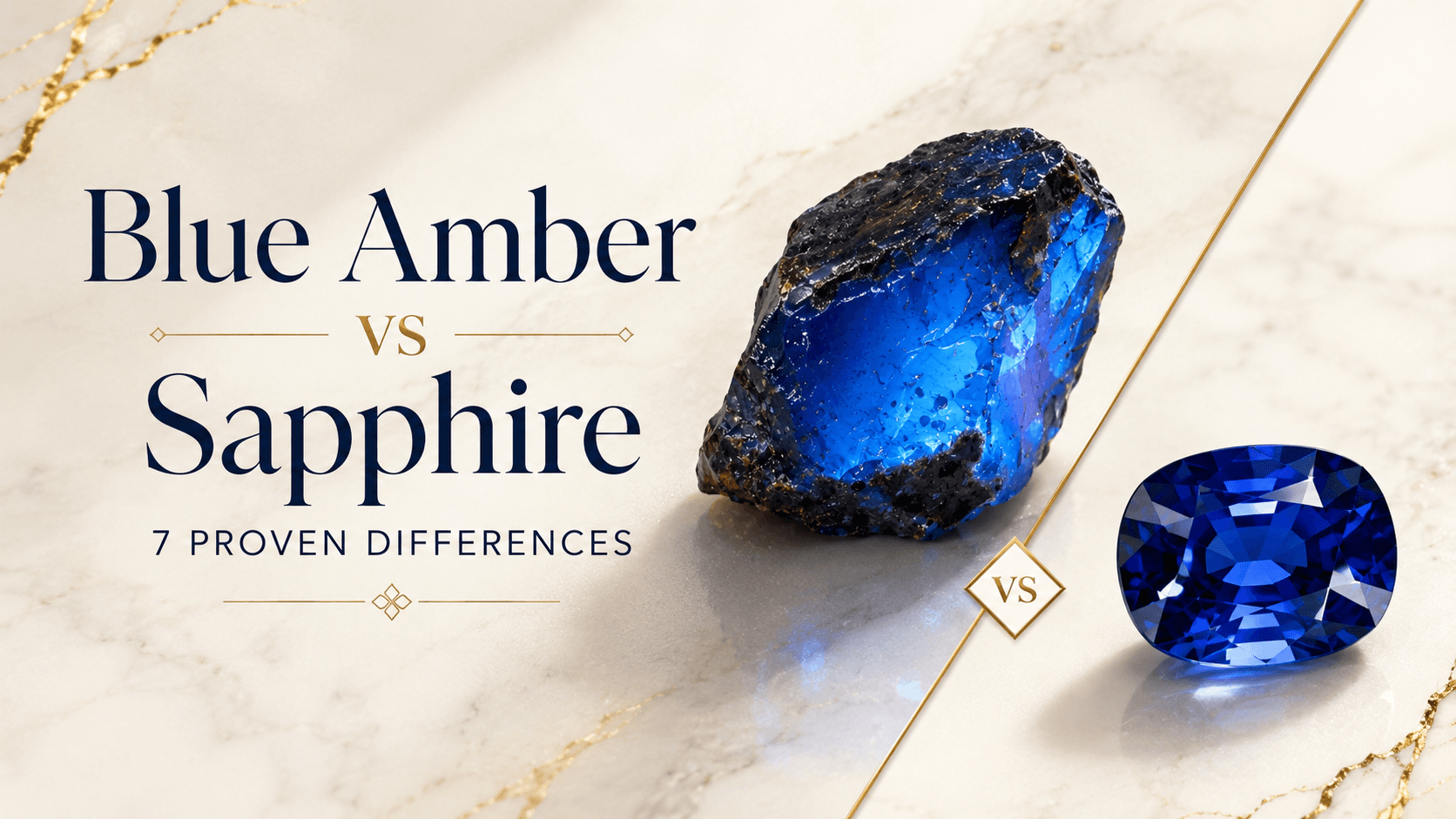
- Blue Amber vs Sapphire: 7 Proven Differences
- Blue Amber vs Larimar: 7 Proven Differences