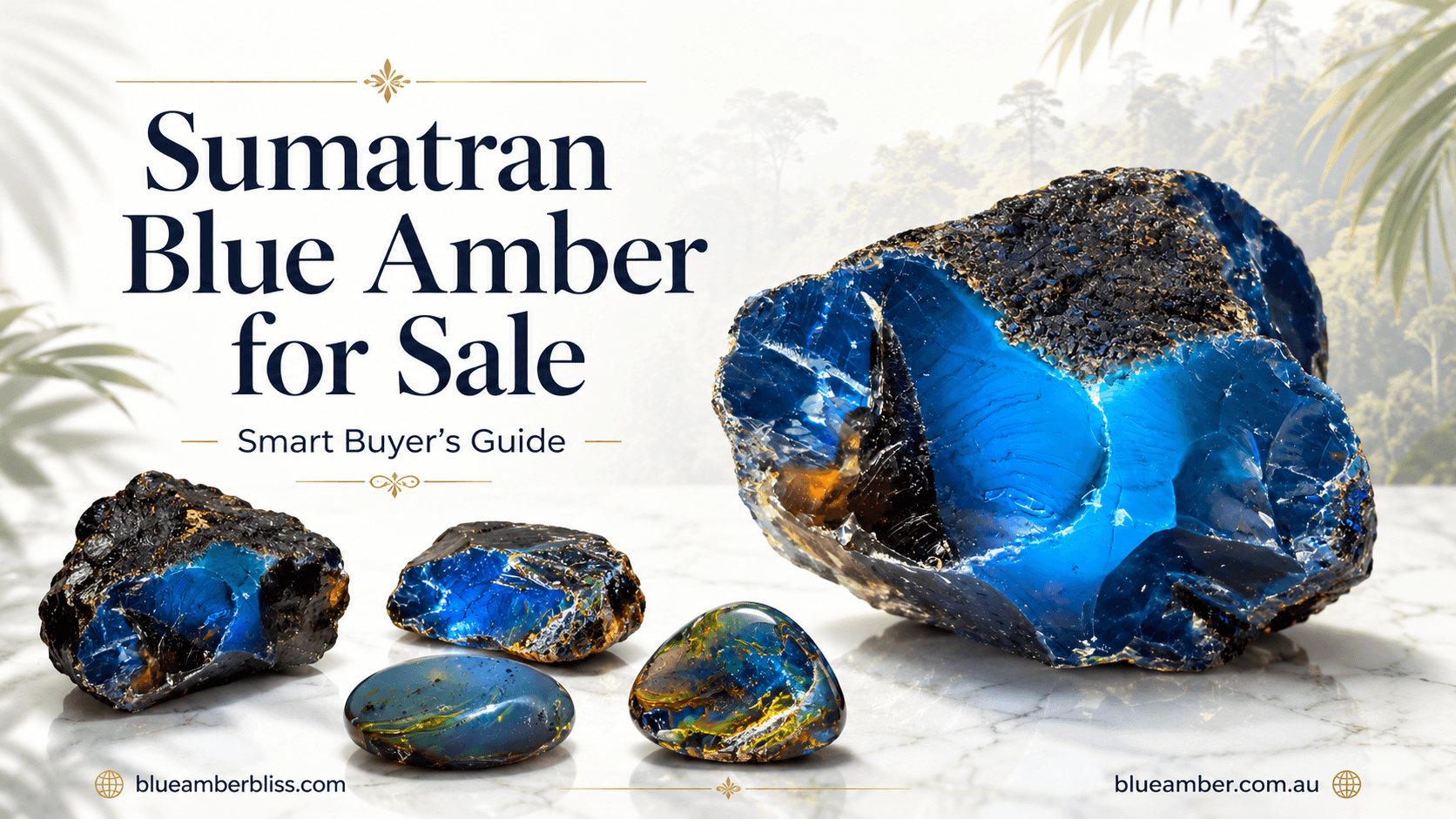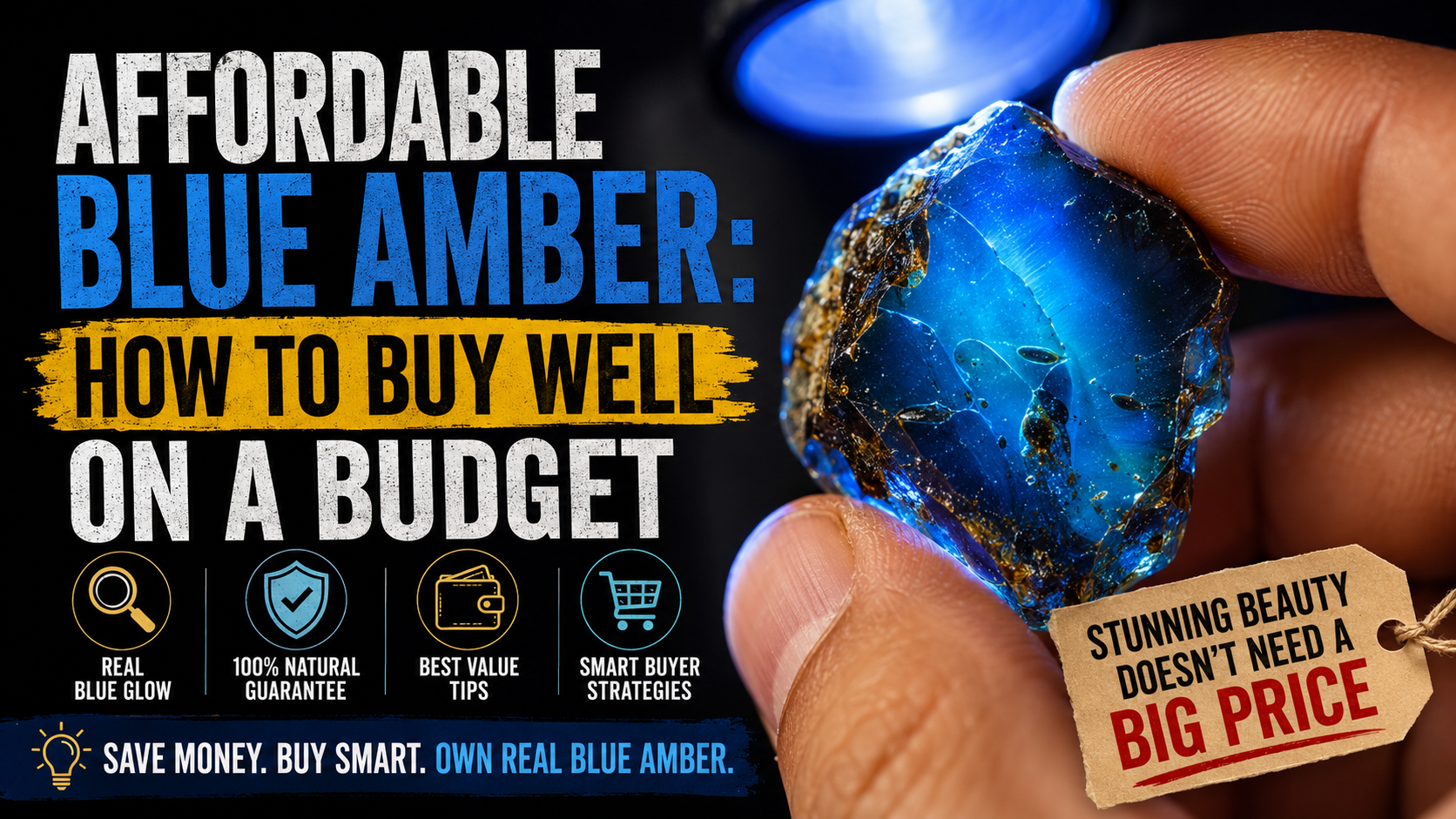
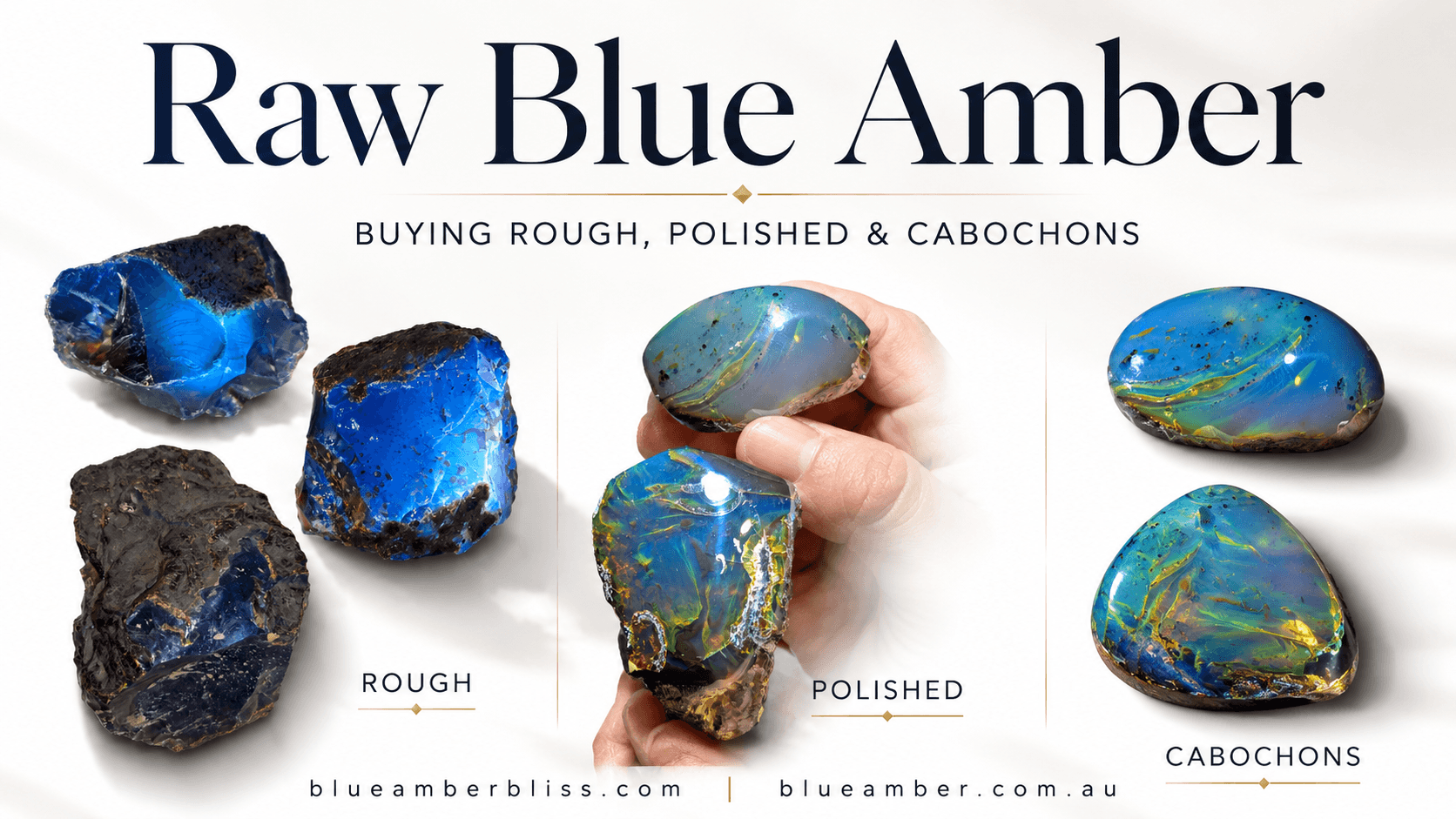
Raw blue amber is unpolished, natural fossil resin sold as rough nodules, straight from the source before cutting. You buy it cheaper per gram but gamble on hidden fractures and glow. Polished pieces, cabochons, and loose stones cost more because you see the true daylight-blue color you are paying for.
Choosing between rough and finished stones is the single biggest decision a new collector faces. Get it right and you save money while landing a piece with a jaw-dropping blue flash. Get it wrong and you overpay for a nodule that turns out crazed, cloudy, or dull under sunlight. This gemologist’s guide walks you through every form, what to pay, and how to test a rough stone before your money leaves your hand.
Key Takeaways
- Raw blue amber (rough nodules) is the cheapest entry per gram, but you carry the risk of internal fractures and weak fluorescence you cannot see until it is cut.
- Polished pieces and cabochons cost more because the seller has done the work and revealed the genuine daylight-blue glow you are buying.
- Sumatran (Indonesian) blue amber yields the largest, cleanest nodules, making it the standout choice for cutting statement pieces.
- Blue amber has a specific gravity of roughly 1.05-1.10 and a Mohs hardness of only 2-2.5, so it floats in saltwater and scratches easily.
- Always test rough with a 365 nm UV torch and inspect for crazing (surface cracking) before committing.
- Loose stones and cabochons are the safest buys for jewelry because the color, clarity, and cut are already locked in.
What Is Raw Blue Amber?
Raw blue amber is fossilized tree resin, ancient natural resin, that has not yet been cut, ground, or polished. It arrives as rough nodules with a dull, oxidized outer skin that hides the color inside. Amber itself is fossil resin, as GIA notes, hardened over geologic time (GIA – Amber).
The “blue” is not a body color. It is fluorescence: the surface glows blue when ultraviolet light in daylight strikes it, while the amber stays honey or amber-toned when backlit. That optical trick is why the raw form is a gamble. The oxidized skin masks how strong the glow will be until you cut a window into the stone.
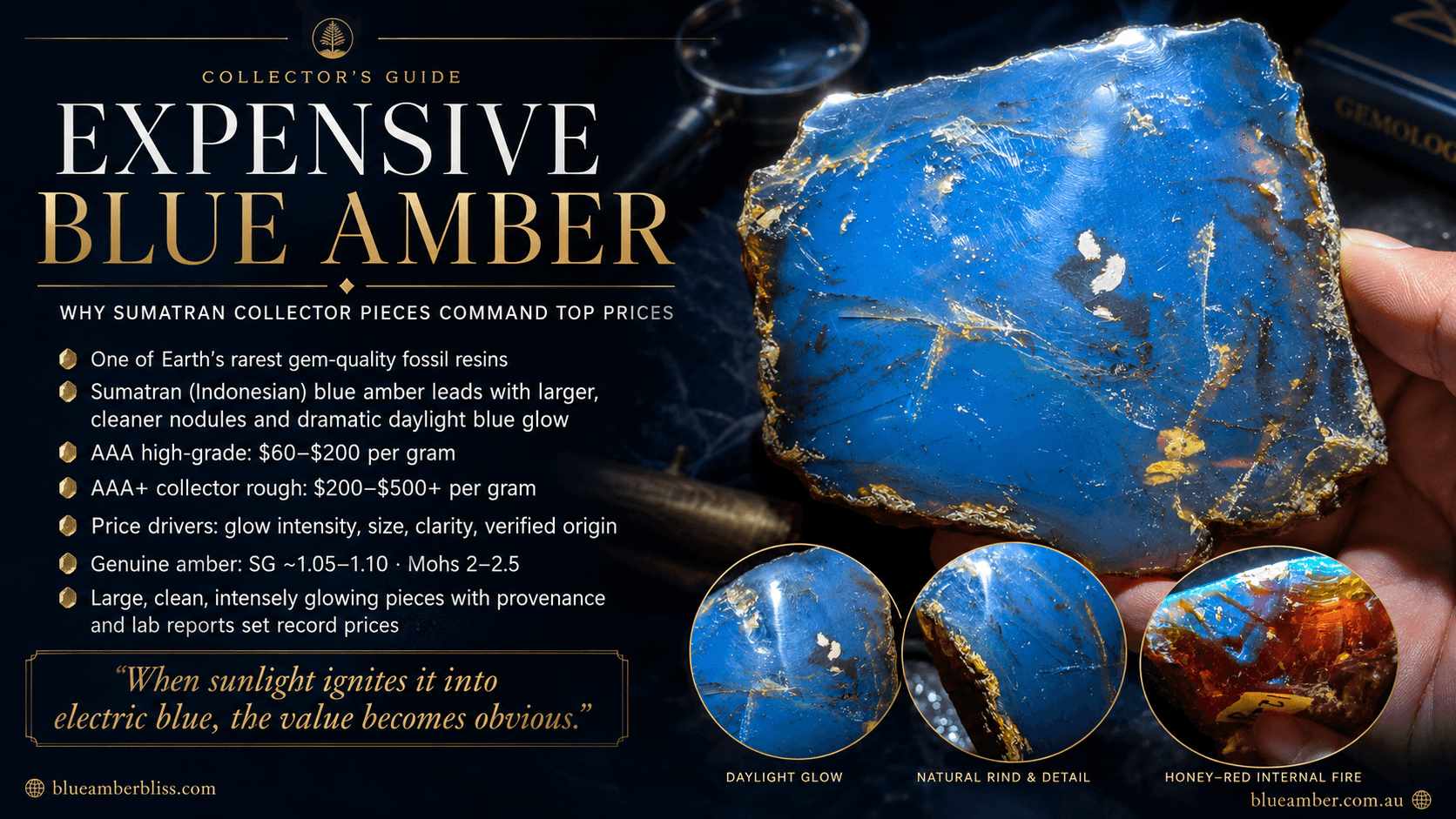
Sumatran blue amber, mined in Indonesia, is a newer source than the classic Caribbean deposits, and it tends to surface in bigger, cleaner nodules. That combination of size and clarity is exactly what a cutter wants, which is why so many collectors now start their search with raw material from Sumatra.
Not every rough nodule glows the same. The intensity of the daylight-blue effect varies with how the resin fossilized and how many microscopic bubbles and impurities scatter the light. This is why two stones of identical weight can sell for very different prices: one lights up like a neon sign in sunlight, the other barely shifts from honey to a soft blue haze.
The Four Forms of Blue Amber: Rough, Polished, Cabochon and Loose Stones
Blue amber reaches buyers in four main forms. Each sits at a different point on the price-versus-risk curve, and each suits a different kind of buyer. Understanding what you are actually paying for in each form is the fastest way to avoid overpaying or being disappointed.
What is rough blue amber?
Rough blue amber is the raw nodule as it comes out of the ground, with only the loose dirt removed. You see an opaque, weathered crust rather than clear color. Prices per gram are the lowest of any form, but so is your certainty. Skilled buyers love rough because a large, clean Sumatran nodule can be cut into several high-value pieces, multiplying its worth.
What is polished blue amber?
Polished blue amber has had its skin ground away and its surface brought to a glassy shine, usually as a free-form piece or a specimen. Now the daylight blue is fully visible, so you buy with your eyes, not on faith. You pay for the labor and the seller’s assumed risk, but you eliminate almost all guesswork about color and glow.
What is a blue amber cabochon?
A blue amber cabochon is a stone shaped with a smooth, domed top and a flat back, cut specifically for setting into jewelry. The dome maximizes the surface that catches UV, so cabochons often show the most dramatic blue flash. Because they are precision-cut and calibrated to standard sizes, they command a premium over rough or rough-polished material.
What are loose blue amber stones?
Loose blue amber stones are finished, unset gems, cabochons or faceted pieces, ready to drop into a setting. They are the choice of jewelers and DIY makers who want to control the metalwork. Buying loose lets you inspect each stone’s color, clarity, and glow in isolation before you commit it to a ring or pendant.
Faceting is rarer than cabbing for this material. Because amber is soft and its beauty comes from surface fluorescence rather than internal brilliance, most cutters favor domes over facets. When you do see faceted loose stones, treat crisp facet edges as a sign of careful work, since the low hardness makes sharp junctions hard to hold.
Blue Amber Form Comparison: Rough vs Polished vs Cabochon vs Loose
The table below sums up how the four forms trade off cost, risk, and readiness. Use it as a quick reference when you are weighing a purchase.
| Form | Relative price per gram | Glow visible before buying? | Main risk | Best for |
|---|---|---|---|---|
| Raw / rough nodule | Lowest | No (skin hides it) | Hidden fractures, weak glow, crazing | Cutters, gamblers, big statement pieces |
| Polished piece | Moderate | Yes | Overpaying for average color | Specimen collectors |
| Cabochon | High | Yes (strong dome flash) | Paying premium for calibration | Jewelry, maximum blue flash |
| Loose stones | Moderate to high | Yes | Matching stones across a set | Jewelers, custom builds |
Raw vs Polished Blue Amber: Which Should You Buy?
The raw vs polished blue amber decision comes down to your appetite for risk and your goals. Buy raw blue amber if you can cut or trust a cutter, and you want the lowest per-gram entry with upside on a big, clean nodule. You are effectively betting that the color and clarity inside beat the price you paid for the mystery.
Buy polished if you want certainty. With a polished stone, the seller has already absorbed the cutting risk, so you pay more but you see exactly what you get, no crazing surprises, no dull interiors. For most first-time buyers, polished or cabochon material is the wiser starting point.
There is a middle path many collectors take: buy a modest rough lot to learn the material, cut a window to reveal the glow, and reserve polished pieces for gifts or resale where presentation matters. Once you can read a nodule’s skin, the economics of buying rough start working in your favor.
How Does Cutting Reveal the Blue Glow?
Cutting is where raw blue amber turns from a dull pebble into a glowing gem. Grinding away the oxidized skin exposes fresh resin that transmits and re-emits ultraviolet light. The stronger and cleaner that fresh surface, the more vivid the daylight-blue fluorescence you see.
Orientation matters. A skilled cutter studies the nodule, plans a window, and angles the piece so the largest, most flawless zone faces up. A domed cabochon cut spreads incoming UV across a curved surface, which intensifies the perceived blue. This is why the same rough stone can look mediocre polished flat yet spectacular as a cabochon.
Cutting also exposes flaws. Internal fractures that were invisible under the skin appear as the wheel bites in, and a nodule you hoped to cut whole may yield only smaller clean sections. That yield loss is the real cost hidden inside cheap-looking rough, and it is why per-gram rough pricing is never the whole story.
How Do You Judge Raw Blue Amber Before Buying?
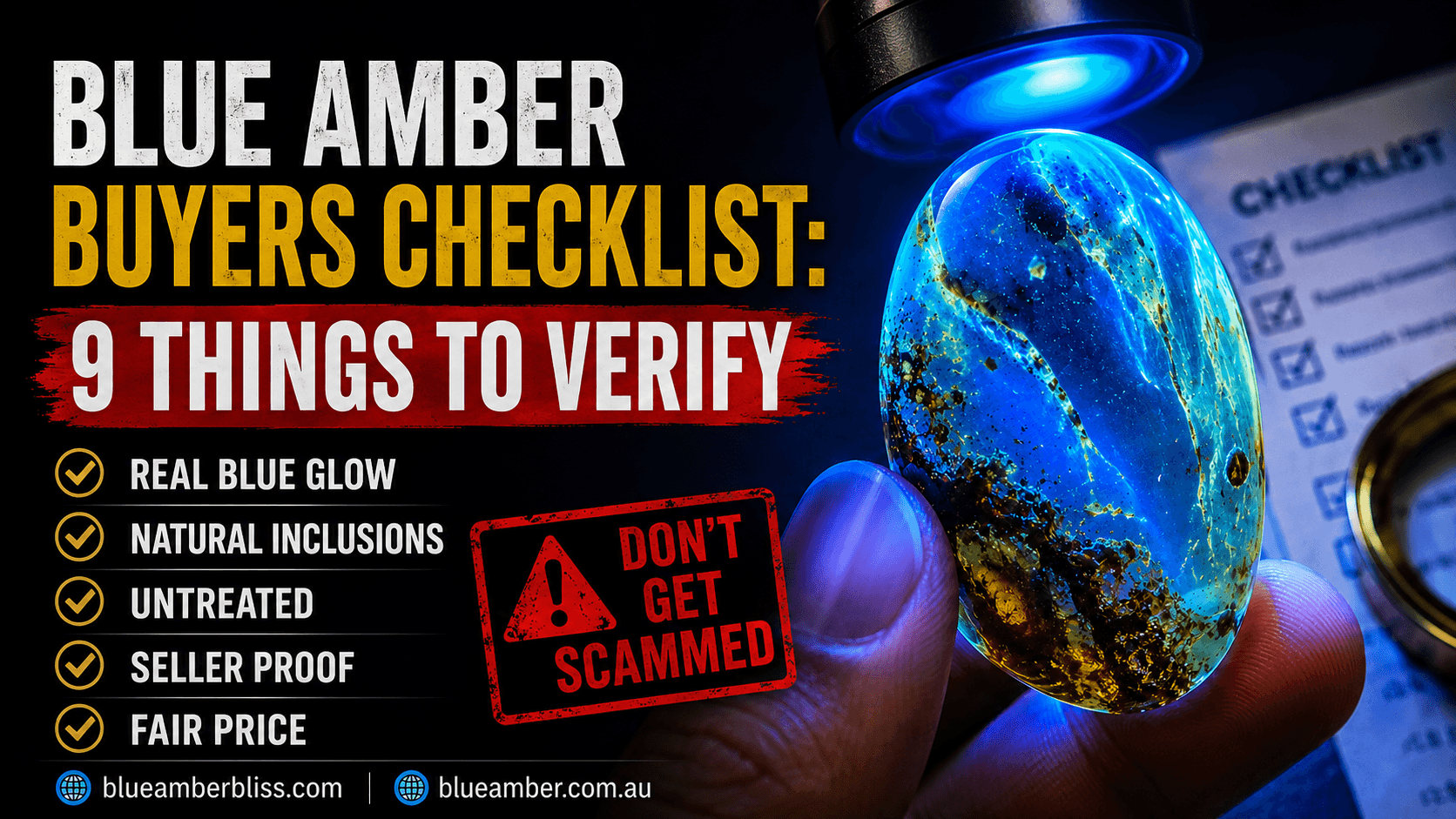
Judging rough well is a learnable skill, and two tests do most of the work: a UV check for glow and a close look for crazing. Do both before any rough leaves the seller’s hands, and you eliminate most of the risk that scares newcomers away from raw blue amber.
How do you test the glow with UV?
Shine a 365 nm long-wave UV torch on the nodule in a dim room. Genuine blue amber fluoresces a clear blue to blue-white; the brighter and more even that response, the stronger the daylight glow will be after cutting. A 395 nm torch works in a pinch but gives a weaker, less diagnostic reaction, so 365 nm is the standard.
Where the skin is thin or nicked, you will see the true glow leak through. Rotate the stone and watch for dead zones, patches that stay dull signal cloudy or fractured resin underneath. Strong, uniform fluorescence across the whole nodule is the green light every raw blue amber buyer wants to see.
What is crazing and why does it matter?
Crazing is a fine network of surface cracks that forms as amber loses moisture and oxidizes over time. On rough it looks like a spiderweb or dry riverbed on the skin. Light crazing may grind away, but deep crazing runs into the body and can cause the stone to fracture on the wheel or in wear.
Inspect under magnification and angled light. Reject or heavily discount any nodule with deep, interconnected cracks, brittle amber (Mohs just 2-2.5) will not survive setting or daily use. Some crazing is normal on aged rough; the goal is to gauge how deep it goes before you pay.
How can you confirm it is genuine blue amber?
Real amber is remarkably light. With a specific gravity around 1.05-1.10, genuine amber floats in a saturated saltwater solution (roughly 1.13 g/cm3) while most plastics sink. Note that copal, an immature resin, has nearly the same density and floats too, so the float test separates amber and copal from denser plastics but cannot tell amber from copal on its own.
To rule out copal, add a hot-needle test (copal softens and gives a sharp piney, acetone-like smell) or dab a hidden spot with acetone, which makes copal tacky but leaves true amber unaffected. Amber is fossil resin, per Britannica, and behaves quite differently from modern fakes (Britannica – Amber).
Combine the float test with the 365 nm UV response and a warm-resin scent when a discreet spot is rubbed. No single test is proof, but together the float, the glow, and the low hardness make a confident case that your rough is authentic before you invest in cutting it.
What Should You Pay for Each Form?
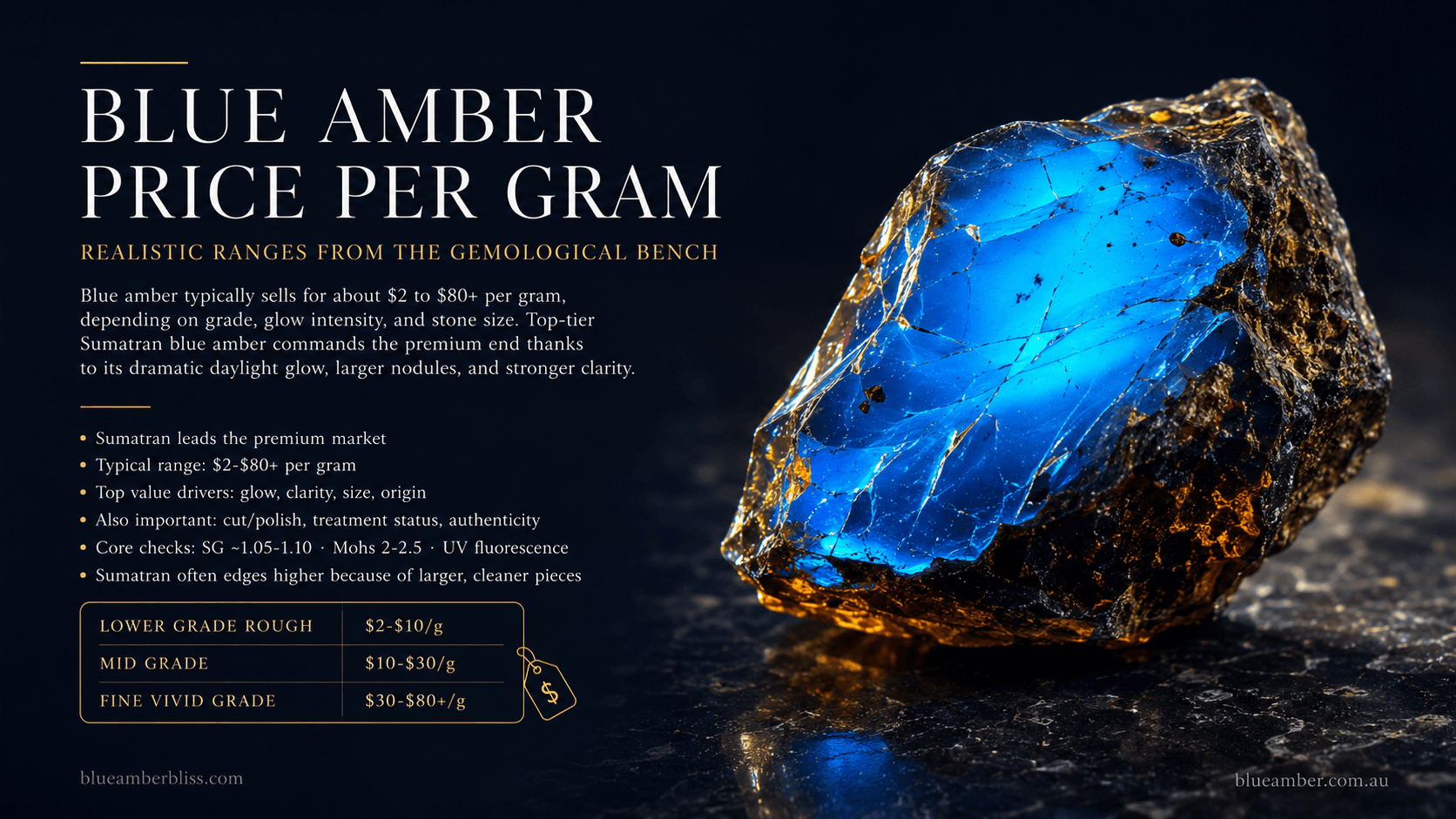
Pricing follows the risk. Raw blue amber carries the lowest sticker per gram because you shoulder the cutting gamble, while cabochons and finished loose stones cost the most because the glow is proven and the labor is done. For a full breakdown of weight-based pricing, see our guide to blue amber price per gram.
As a rough rule, expect polished and cabochon material to run several times the per-gram figure of unworked rough, reflecting yield loss and labor. Top-tier nodules with intense, even fluorescence can leap far beyond ordinary rough; the extremes are covered in our look at the most expensive blue amber.
Grade drives price as much as form. Color intensity, clarity, and size all push value up, and the same factors that make a nodule great rough make it a great cut stone. Our overview of blue amber types explains the grades that decide what any rough lot is really worth.
Whichever form you choose, care matters after purchase. Amber is organic and reacts to heat, solvents, and prolonged sunlight, which can dry the surface and deepen crazing over years. Store your pieces away from radiators and perfume, clean them with only a soft, damp cloth, and keep cut stones in a padded pouch. Treated gently, a good blue amber holds its daylight glow for a lifetime, protecting the value of whatever form you paid for, whether rough, polished, cabochon, or loose.
How to Buy Raw Blue Amber Step by Step
Ready to buy your first nodule? Follow this sequence and you will screen out most bad rough before any money changes hands. The whole routine takes only a few minutes per stone once you have a UV torch and a small tub of saltwater on hand.
- Set your goal first. Decide whether you want rough to cut, a specimen to display, or cabochons to set. Your goal dictates how much risk and yield loss you can accept.
- Weigh it and read the skin. Note the gram weight, then study the oxidized crust. Thin, translucent skin lets you preview the interior; thick, chalky skin hides more and raises the gamble.
- Test the glow with a 365 nm UV torch. In a dim room, look for bright, even blue to blue-white fluorescence. Dull patches mean cloudy or fractured resin below.
- Hunt for crazing. Under magnification and angled light, judge how deep the surface cracks run. Shallow is fine; deep, interconnected crazing is a deal-breaker.
- Confirm it is real. Float the piece in saturated saltwater. Genuine amber (specific gravity 1.05-1.10) floats and most plastics sink; because copal floats too, add a hot-needle or acetone test to rule it out.
- Price on yield, not raw weight. Estimate the clean, glowing volume you can actually cut, and let that, not the headline gram price, set what you offer.
Work through these six steps every time and buying raw blue amber stops feeling like a lottery. You are no longer paying for a mystery; you are paying for a stone whose glow, soundness, and authenticity you have already checked with your own eyes and torch, and that confidence is exactly what separates a seasoned buyer from a hopeful beginner.
Why Are Sumatran Nodules the Standout for Cutting?
Sumatran blue amber is the form buyers reach for when they want to cut something impressive. As a newer deposit, it surfaces in larger, cleaner nodules than older sources, and that scale means a single stone can become a bold pendant, a matched pair, or several cabochons from one cut.
Bigger, cleaner rough also means better yield: fewer fractures to cut around and more usable clear zones per gram. Combined with its famously dramatic daylight-blue glow, that makes Sumatran raw blue amber more valuable and the standout for statement pieces. It is the material this shop is built around, and the one we recommend you learn on.
When you are ready to source rough or finished stones, our guide on where to buy blue amber points you to trustworthy channels, and once you have cabochons in hand, see blue amber jewelry for turning them into wearable pieces.
What We Notice When Choosing Rough, Polished, and Cabochons
At Blue Amber Bliss, most of the Sumatran rough we handle looks like a dark cognac stone in the tray, so we always test each piece under UV and in shifting daylight before deciding how it should be cut, because the blue only reveals itself once light moves across the body. When we buy rough we grade for glow strength and clean internal zones first, then decide whether a piece earns a full polish or a domed cabochon that concentrates that indoor-to-daylight shift. We tend to keep the boldest nodules and the more characterful inclusions as specimen-grade rough for collectors, and reserve the cleaner, evenly glowing material for cabochons where the transformation reads most dramatically.
If you would like to see how these differ in person, you are welcome to explore our hand-selected Sumatran blue amber in rough, polished, and cabochon form. Shop hand-selected Sumatran blue amber →
FAQ
Is raw blue amber worth buying over polished?
Raw blue amber is worth it if you can cut or trust a cutter and want the lowest per-gram price with upside on a large, clean nodule. If you want certainty about color and glow with no cutting risk, polished or cabochon material is the smarter buy for most beginners.
How can you tell if rough blue amber will glow?
Shine a 365 nm UV torch on it in a dim room. Strong, even blue to blue-white fluorescence, especially where the skin is thin, predicts a vivid daylight glow after cutting. Dull, patchy zones warn of cloudy or fractured resin that will disappoint once polished.
What is a blue amber cabochon used for?
A blue amber cabochon is a domed, flat-backed stone cut for setting into rings, pendants, and earrings. Its curved top spreads UV light across the surface, producing an especially strong blue flash, which is why cabochons are the preferred form for finished jewelry.
Why is Sumatran blue amber considered the best?
Sumatran blue amber comes from a newer deposit that yields larger, cleaner nodules with a dramatic daylight-blue glow. That size and clarity make it more valuable and the standout choice for cutting statement pieces, which is why it is listed and prized first among blue ambers.
What does crazing mean on raw blue amber?
Crazing is a web of fine surface cracks caused by moisture loss and oxidation over time. Shallow crazing may grind away during cutting, but deep, interconnected crazing can split the stone on the wheel or in wear, so inspect it closely and discount accordingly.
How do you test if blue amber is real?
Float it in saturated saltwater: genuine amber (specific gravity about 1.05-1.10) floats while most plastics sink. Because copal floats too, follow up with a hot-needle or acetone test to rule out copal. Confirm authenticity with a clear blue 365 nm UV response and a warm-resin scent from a discreetly rubbed spot. Together these signals reliably flag genuine material.
Are loose blue amber stones a good choice for jewelry?
Yes. Loose blue amber stones are finished and unset, so you can inspect each one’s color, clarity, and glow before committing it to a setting. They give jewelers and DIY makers full control over the metalwork, which is ideal for custom or matched-set pieces.
How hard is blue amber and will it scratch?
Blue amber is soft, with a Mohs hardness of just 2-2.5, so it scratches easily and needs gentle wear. Keep it away from abrasives, store it separately, and set cabochons in protective bezels rather than exposed prongs to preserve their surface and glow.
Does raw blue amber cost less than polished per gram?
Yes, rough carries the lowest per-gram price of any form because you take on the cutting risk and yield loss. Polished pieces, cabochons, and loose stones cost more since the glow is already revealed and the labor is done. See our price-per-gram guide for detail.
Can you cut raw blue amber at home?
You can, with patience and the right tools. Amber’s low hardness means it grinds fast but cracks under heat, so use light pressure, plenty of water, and fine grits. Start with inexpensive rough to learn before you risk a large, clean Sumatran nodule.
Related Blue Amber Guides