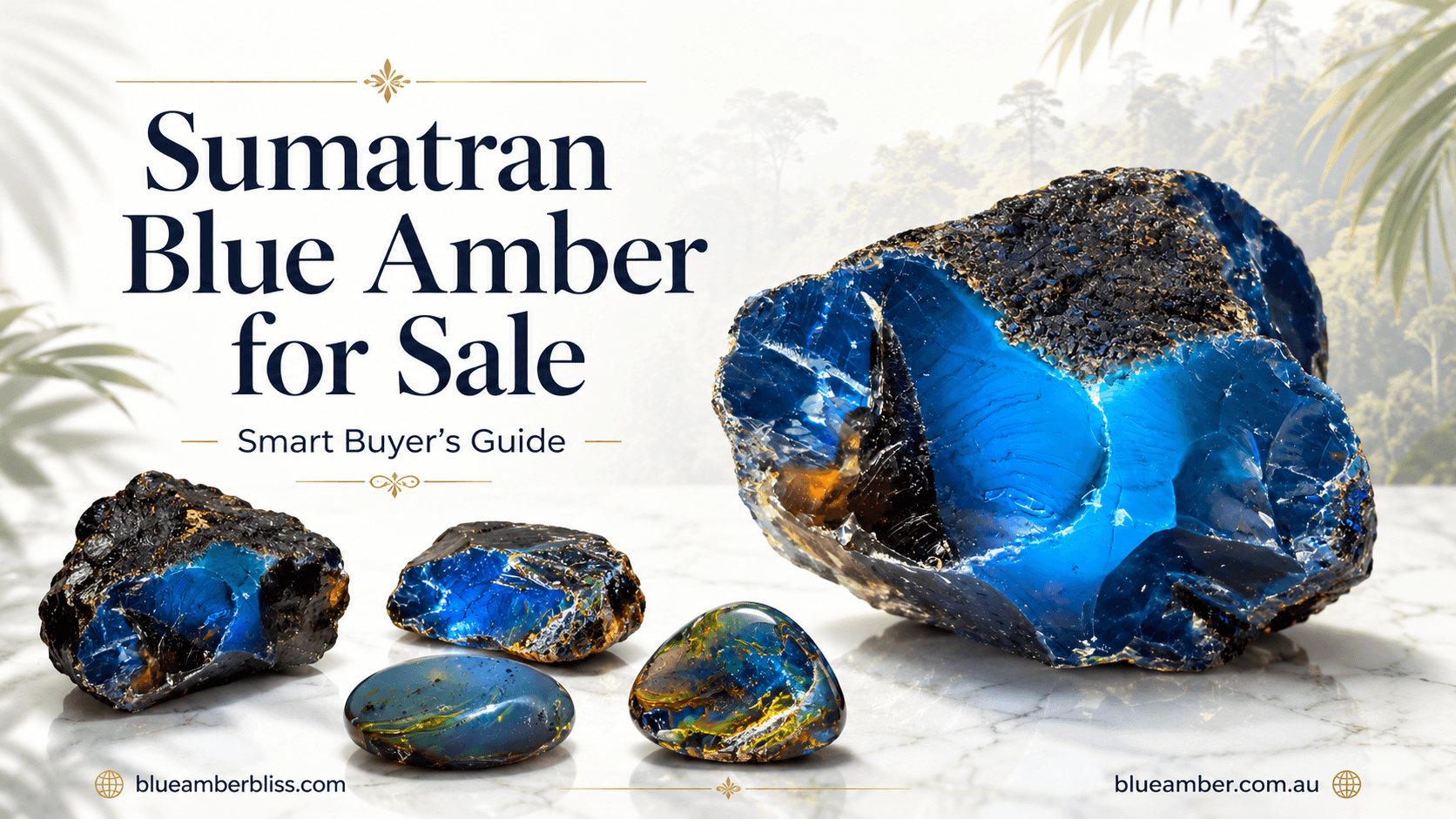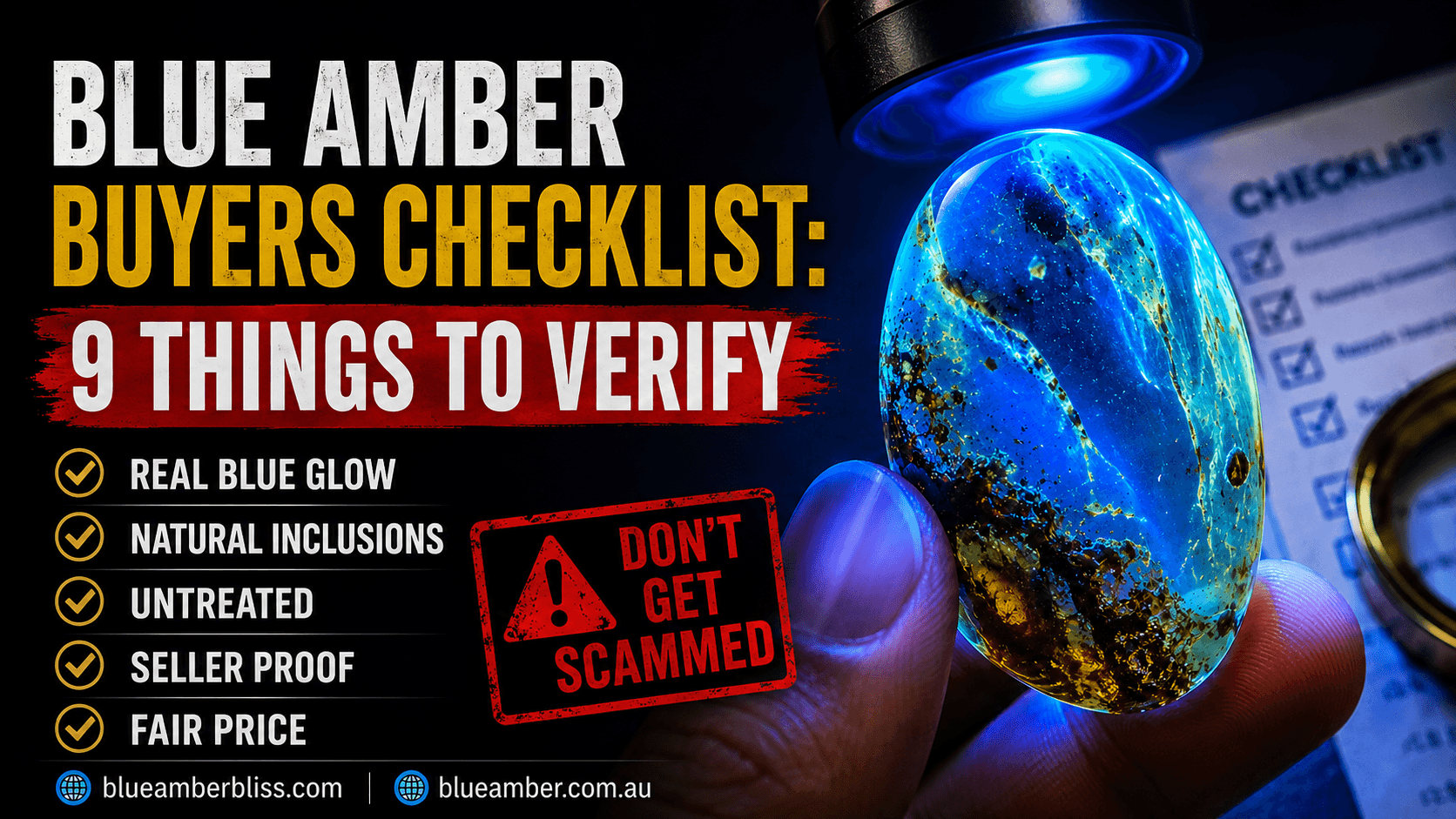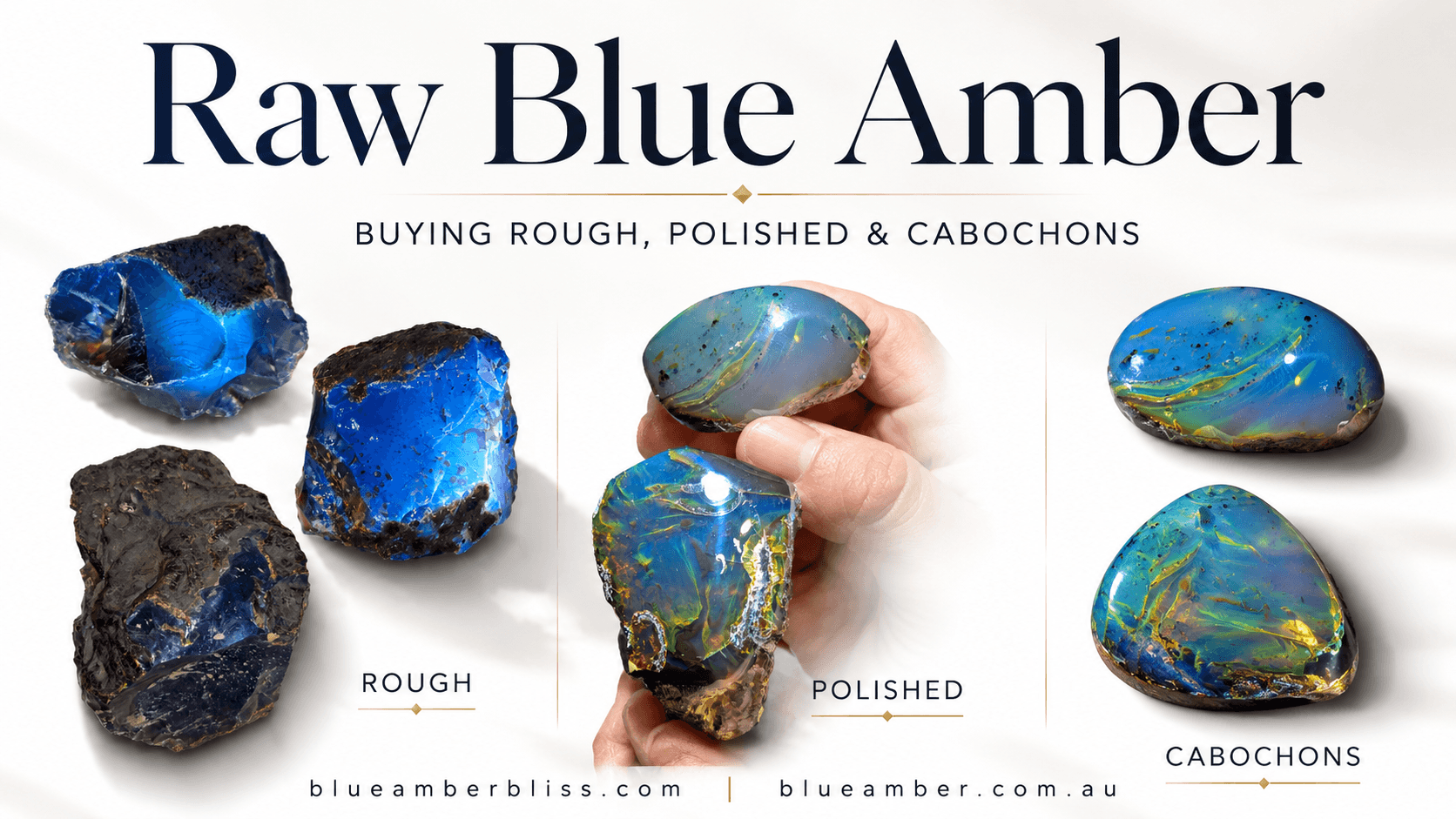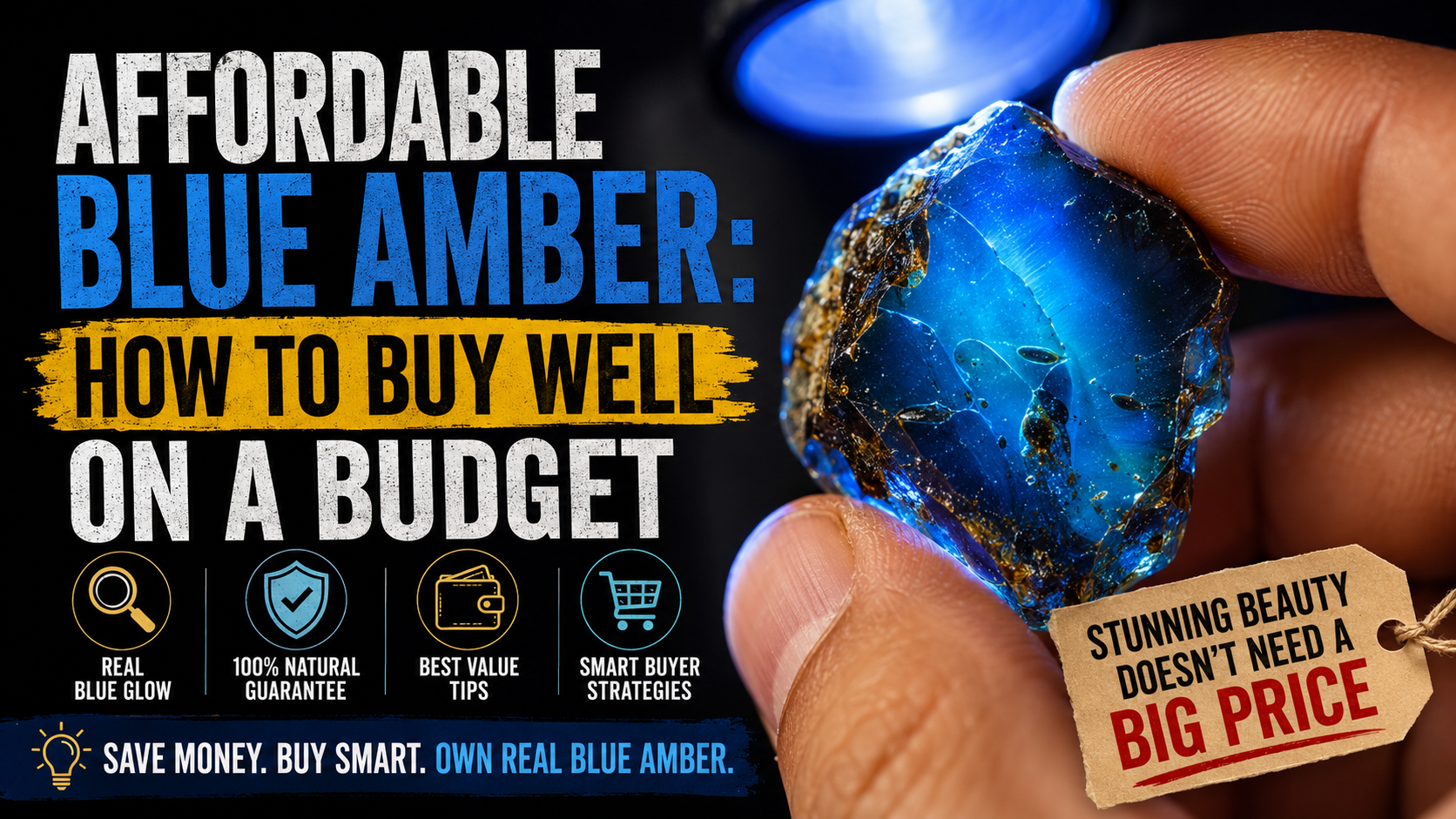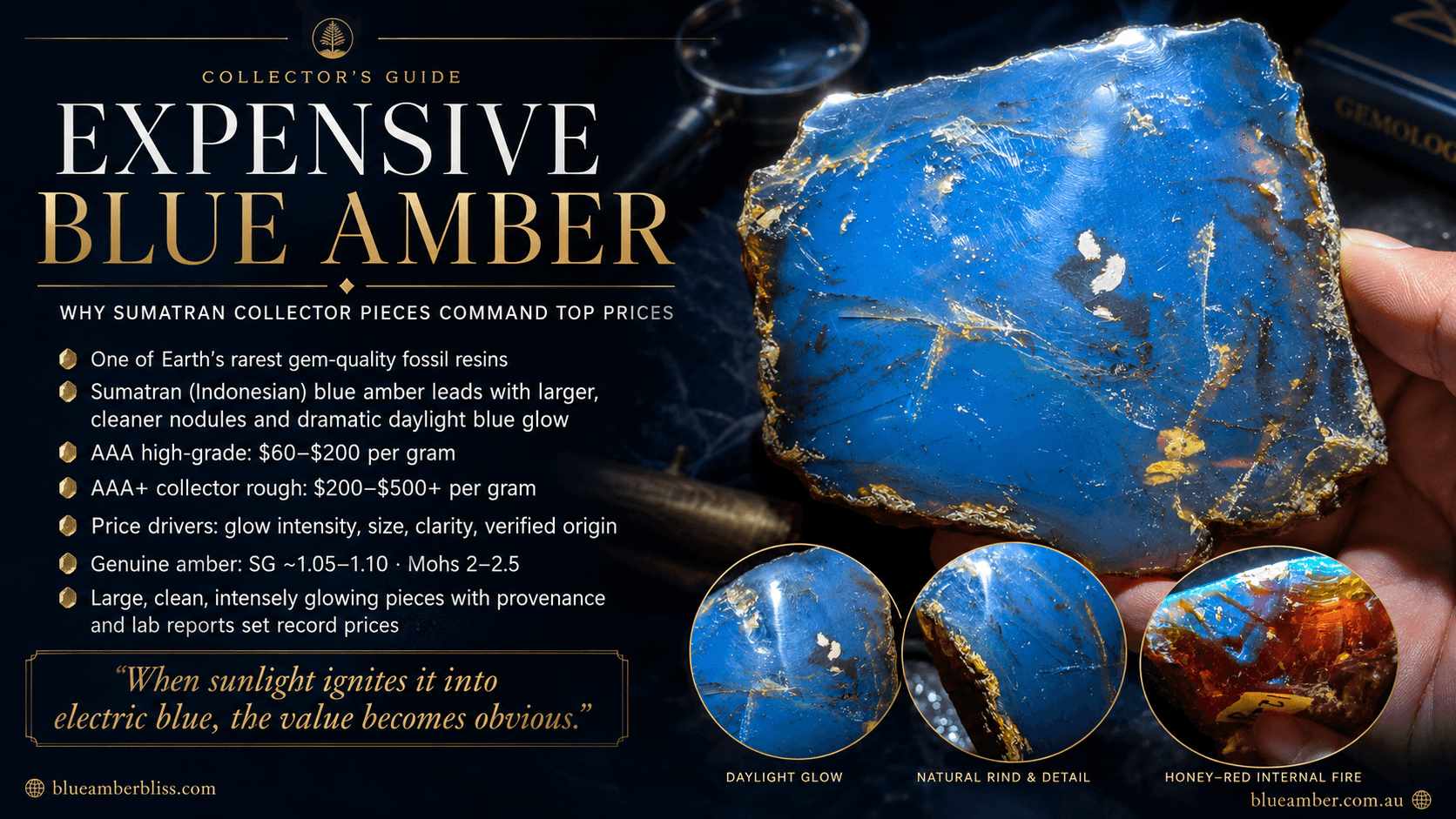
If you are buying, selling, or simply trying to understand what your stone is worth, the blue amber price per gram is the single most useful metric you can learn. Below, you will get realistic ranges, the seven factors that actually move value, an honest price table, and a clear comparison of Sumatran amber against other origins. Let’s break it down the way a gemologist would at the bench.
Key Takeaways
- Sumatran blue amber leads the market as the standout premium source, famous for its strong daylight blue glow and unusually large nodules.
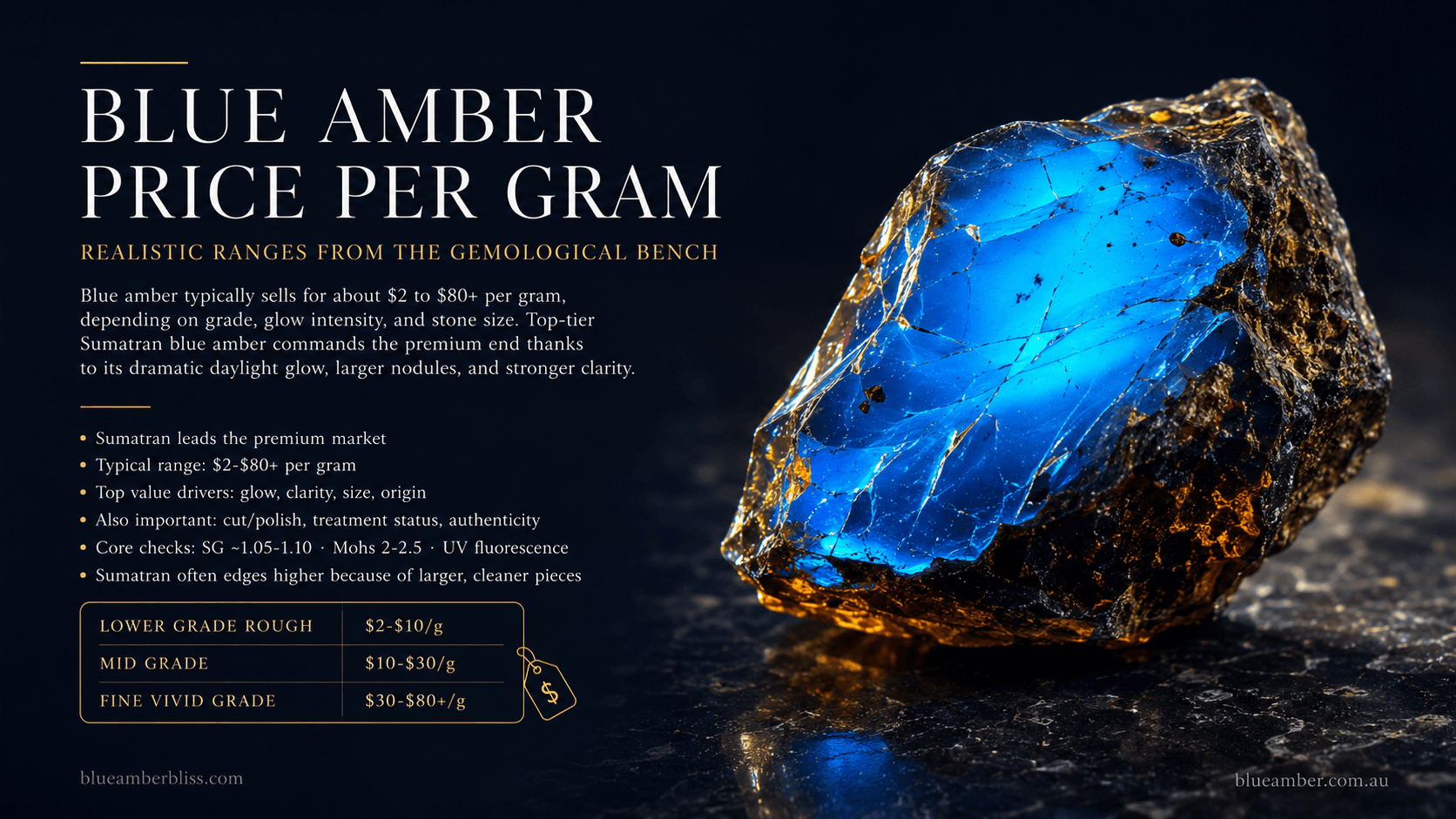
- A realistic blue amber price per gram spans roughly $2-$80+, with gem-grade, vivid-glow Sumatran pieces commanding the highest figures.
- Seven factors drive value: glow color and intensity, clarity, size, origin, cut/polish, treatment status, and authenticity.
- Specific gravity (~1.05-1.10), Mohs hardness (2-2.5), and UV fluorescence are the core tests that protect your investment.
- Sumatran and Dominican blue amber are equal in baseline quality and value, but Sumatran’s newer source, bigger pieces, and edge in quality make it the more valuable, standout choice.
How Much Is Blue Amber Per Gram? The Honest Ranges
When people ask how much is blue amber per gram, they usually want one number. The truth is more nuanced: amber is priced like a colored gemstone, so a single gram can be worth $3 or $90 depending on what that gram contains. The blue amber price per gram reflects glow, clarity, and origin far more than raw weight.
Think of weight as the multiplier, not the value itself. A 10-gram chunk of cloudy, dull rough may carry a low blue amber cost per gram, while a 10-gram gem-clear Sumatran cabochon that glows electric blue in daylight can be worth ten times as much per gram. Same weight, wildly different worth.
Below is an honest, current-market table you can use as a baseline. Figures reflect typical 2025-2026 retail for finished and rough material and assume genuine, untreated amber verified by standard gemological tests.
| Grade / Type | Glow & Clarity | Blue Amber Price Per Gram (USD) |
|---|---|---|
| Sumatran gem-grade (top) | Vivid daylight blue, eye-clean, large nodule | $40 – $80+ |
| Sumatran high-grade | Strong blue under UV/sun, minor inclusions | $18 – $40 |
| Sumatran mid-grade | Moderate glow, some cloudiness | $6 – $18 |
| Sumatran rough (uncut) | Glow visible but unprocessed | $2 – $8 |
| Other-origin gem-grade | Vivid blue, eye-clean | $35 – $75 |
| Other-origin mid-grade | Moderate glow | $5 – $16 |
| Green-blue / teal amber | Secondary glow color | $4 – $20 |
Use these as anchors, not absolutes. A single exceptional stone can break the ceiling, and a flawed one can fall below the floor. For a deeper market breakdown with current listings, see our Blue Amber Price Guide (2025).
It also helps to know how dealers themselves think about pricing. Wholesalers buying rough by the kilo work backward from expected cutting yield: a clean nodule that promises several large, eye-clean cabochons justifies a higher purchase price, while fractured rough is discounted because much of its weight will be lost on the wheel.
By the time a finished stone reaches retail, that yield risk, the cutter’s labor, and the seller’s authentication overhead are all baked into the blue amber price per gram you see. Understanding this chain explains why two stones of identical weight can be quoted at very different numbers, and why suspiciously cheap “gem-grade” listings deserve scrutiny rather than excitement.
What Drives the Blue Amber Price Per Gram? 7 Proven Value Factors
The blue amber price per gram is built from seven measurable factors. Understand these and you can appraise almost any stone yourself, spot overpricing, and negotiate with confidence. We’ll take them in order of impact.
1. Glow Color and Intensity
This is the heart of blue amber value. Genuine blue amber fluoresces because of perylene and related aromatic molecules that absorb ultraviolet and re-emit visible blue light. The stronger and bluer the glow, the higher the blue amber price per gram climbs. A deep, electric daylight blue can multiply value by 3-5x over a faint, milky glow.
Sumatran material is celebrated precisely here: it often shows a vivid blue even under ordinary daylight, not just under a UV lamp. That daylight visibility is rare and dramatic, and it pushes the blue amber price per gram toward the top of the range. Teal, green-blue, and violet-blue tints exist too, each carrying its own pricing tier.
2. Clarity and Inclusions
As with diamonds, clarity matters. Eye-clean amber that transmits light evenly fetches a higher blue amber cost per gram than cloudy or fractured material. Tiny gas bubbles, plant debris, or stress cracks lower transparency and dampen the glow, dragging value down. That said, a well-preserved insect inclusion can occasionally reverse this and add collector premium.
3. Size and Nodule Mass
Larger clean pieces are exponentially rarer, so the blue amber price per gram rises with size once you pass roughly 10-15 grams of clean material. This is a Sumatran strength: the deposits yield notably large nodules, letting cutters produce big cabochons and statement pieces that smaller-source material simply cannot match.
4. Origin (Sumatran First)
Origin is a genuine value lever. Sumatran blue amber price sits at the premium end because it is a newer source delivering bigger pieces and a slight edge in quality and glow drama. We’ll compare origins in detail below, but for now: Sumatran is the standout, and its blue amber price per gram reflects that status.
5. Cut, Polish, and Craftsmanship
A skilled cut maximizes the glow path and surface finish. A precision-polished cabochon that channels daylight into a glowing dome commands a higher blue amber price per gram than the same rough left raw. Conversely, a clumsy cut that traps cloudiness or wastes good material destroys value. Craftsmanship can swing price by 30-50%.
6. Treatment and Authenticity Status
Untreated, natural amber holds the highest blue amber value. Heat or pressure treatments to deepen color reduce desirability for purists, while pressed amber (amberoid) and outright fakes have little to no value. Always confirm natural status; it directly protects your blue amber price per gram. The GIA notes that amber is routinely heat-treated and reconstructed, so verification is essential.
7. Rarity and Market Demand
Finally, scarcity. Blue amber represents a tiny fraction of all amber found worldwide, which underpins every figure in this guide. As collector interest grows and accessible deposits shrink, the blue amber price per gram trends upward over time. To understand just how scarce it is, read How Rare Is Blue Amber?
Sumatran vs Other Origins: How Does the Price Compare?
The two best-known sources of blue amber are Sumatran (Indonesian) and Dominican. Here is the honest, gemologist’s framing: both are genuinely beautiful and broadly equal in baseline quality and value. The myth that one is automatically “the finest” oversimplifies a complex market.
That said, Sumatran amber is the standout. As a newer source, it produces notably larger nodules, a slight edge in average quality, and a famously dramatic daylight blue glow. Those advantages make Sumatran the more valuable choice overall, and they explain why its blue amber price per gram often anchors the premium tier.
| Attribute | Sumatran (Indonesian) | Dominican |
|---|---|---|
| Source age | Newer source, actively yielding | Long-established, well-mined |
| Typical piece size | Larger nodules, big cabochons possible | Generally smaller pieces |
| Daylight glow | Often vivid blue in plain daylight | Strong glow, frequently UV-dependent |
| Average quality | Slight edge, standout material | Equal baseline, consistent |
| Overall value position | More valuable, premium standout | Equal quality, respected |
| Blue amber price per gram | Anchors the top tier | Comparable mid-to-high tier |
Related Blue Amber Guides
Notice the table treats the two as equals in baseline quality while recognizing Sumatran’s genuine advantages in size, source freshness, and daylight drama. Neither is a poor choice. If you want the biggest, most dramatically glowing stones, Sumatran is where the blue amber price per gram buys the most impact. To learn how grades map to price, see Blue Amber Types and Grades.
How Do You Verify a Stone Before Paying That Price Per Gram?
Before you pay any blue amber price per gram, confirm the stone is real and natural. Fakes (plastic, copal, glass, and pressed amberoid) flood the market, and overpaying for an imposter is the most common buyer mistake. Three quick, citable tests protect you.
What Are the Key Physical Properties?
Genuine amber has a specific gravity of about 1.05-1.10, so it floats in saturated saltwater (about 1 part salt to 4 parts water) while most plastics and glass sink. Its Mohs hardness is 2-2.5, soft enough to scratch with a steel pin but hard enough to resist a fingernail. Britannica confirms these benchmarks as standard for fossil resin.
How Should It React Under UV Light?
Real blue amber fluoresces strongly under long-wave UV (around 365 nm), glowing vivid blue. Sumatran material often shows this blue even in sunlight, which is a powerful authenticity signal. Plastic imitations usually glow dull, chalky white or not at all. The intensity of that reaction also feeds directly into the blue amber price per gram.
What About the Smell and Feel Tests?
Rubbed briskly, real amber warms quickly and can release a faint piney resin scent; it feels warm, not cold like glass. A hot-needle test on an inconspicuous spot yields a resinous, not acrid plastic, smell, though this is destructive and best left to professionals. For a full walkthrough, read How to Spot Real Blue Amber.
How to Calculate a Fair Blue Amber Price Per Gram
You can estimate a fair price yourself in a few steps. This keeps you grounded whether you are buying online or in person, and it turns the abstract blue amber price per gram into a concrete number for the exact stone in front of you.
- Weigh the stone accurately in grams using a jeweler’s scale (0.01 g precision is ideal).
- Grade the glow under both daylight and a 365 nm UV light, rating it faint, moderate, strong, or vivid.
- Assess clarity for cloudiness, cracks, and inclusions, then note transparency.
- Confirm origin (Sumatran sits at the premium tier) and verify authenticity with the tests above.
- Match to the table to find a per-gram band, then multiply by weight for a fair total.
Worked example: a verified Sumatran blue amber cabochon weighs 12 grams, glows vivid blue in daylight, and is eye-clean. That places it in the gem-grade band at roughly $40-$80 per gram, so a fair total is about $480-$960. Adjust within the band for cut quality and any minor flaws.
Always sanity-check a quote against the current blue amber price per gram ranges in this guide. If a seller’s number sits far above the gem-grade ceiling without exceptional justification, ask why. If it sits suspiciously below the floor, treat it as a red flag for authenticity. For trustworthy sourcing, see Where to Buy Blue Amber.
Is Blue Amber a Good Investment at These Prices?
Blue amber occupies an interesting niche between gemstone and collectible. Because it is genuinely scarce, well-chosen pieces have historically held and grown in value, and the blue amber price per gram has trended upward as awareness spreads. Sumatran material, with its size and daylight drama, leads that appreciation.
That said, treat it as a passion asset first. Liquidity is thinner than for mainstream gems, so buy what you love at a fair blue amber cost per gram, verify authenticity, and keep documentation. Gem-grade, vivid-glow Sumatran stones from reputable sellers are the segment most likely to retain strong blue amber value over time.
Documentation deserves special emphasis if resale ever matters to you. Keep the original receipt, any seller statement of origin, dated photographs under both daylight and 365 nm UV, and the stone’s exact weight. A consistent paper trail lets a future buyer verify the blue amber price per gram you are asking without re-running every test from scratch, which speeds sales and supports your number. Stones with credible Sumatran provenance and clear records consistently change hands faster than anonymous pieces of equal beauty, because the buyer is paying for proven authenticity, not just a confident description.
Care matters too. Amber is soft (Mohs 2-2.5), so store it away from harder gems, avoid solvents and perfumes, and clean only with a soft, damp cloth. Protecting the surface protects the glow, and the glow protects the blue amber price per gram you paid.
What We Weigh Beyond the Grams
At Blue Amber Bliss, we handle enough Sumatran blue amber to know that price per gram only tells part of the story. A dark cognac Sumatran nodule that stays understated indoors and then flips to a deep electric blue in daylight will always command more than its weight suggests, because that daylight-to-glow contrast is the trait collectors pay for. We also factor in clean polish, honest natural inclusions, and specimen shape and character before we ever settle on a value, since a well-formed piece with strong UV response is worth far more per gram than raw mass alone. Every stone we list has been through our hands and held up to real sunlight, not just a lamp.
If you would like to see how these value factors play out in person, we warmly invite you to explore our hand-selected Sumatran blue amber at Blue Amber Bliss. Shop hand-selected Sumatran blue amber →
Frequently Asked Questions
How much is blue amber per gram on average?
On average, how much is blue amber per gram lands between $6 and $40 for good mid-to-high-grade material. Gem-grade Sumatran pieces with vivid daylight glow reach $40-$80+ per gram, while uncut rough can start near $2. Glow, clarity, and origin decide where a specific stone falls.
Why is Sumatran blue amber the most valuable?
Sumatran is a newer source that yields larger nodules and a slight edge in quality, plus a famously dramatic daylight blue glow. It and Dominican share an equal baseline, but those advantages make Sumatran the standout, which is why the Sumatran blue amber price anchors the premium tier.
What is the blue amber price per gram for rough vs finished stones?
Uncut rough typically runs $2-$8 per gram, while finished, polished gem-grade cabochons reach $40-$80+ per gram. Cutting and polishing reveal the glow and remove flaws, so the blue amber price per gram rises substantially once a skilled lapidary has shaped the stone.
Does glow color really change the blue amber cost per gram?
Yes, dramatically. A vivid, electric daylight blue can command 3-5x the blue amber cost per gram of a faint, milky glow. Color intensity is the single biggest driver of value, which is why Sumatran’s strong daylight glow places it at the top of the market.
How can I tell real blue amber from fake before paying?
Test specific gravity (real amber floats in saltwater at ~1.05-1.10), check Mohs hardness (2-2.5), and confirm a strong blue glow under 365 nm UV. Plastic and glass usually sink, scratch differently, and fail the UV test. Verifying first protects the blue amber price per gram you pay.
Is Dominican blue amber better than Sumatran?
No single source is automatically “better.” Dominican and Sumatran are equal in baseline quality and value. Sumatran, however, offers bigger pieces, a slight quality edge, and more dramatic daylight glow, making it the more valuable standout overall and the source we champion.
Does size affect the blue amber price per gram?
Yes. Large, clean pieces are exponentially rarer, so the per-gram figure rises once you exceed roughly 10-15 grams of clean material. Sumatran deposits produce notably large nodules, allowing big cabochons that smaller sources cannot match, which boosts their blue amber value.
What gives blue amber its glow?
Aromatic molecules such as perylene absorb ultraviolet light and re-emit it as visible blue. This fluorescence is why blue amber glows under UV and, in strong Sumatran material, even in daylight. The intensity of that effect directly influences the blue amber price per gram.
Is blue amber a smart investment?
It can be, treated as a passion asset. Genuine scarcity has pushed the blue amber price per gram upward over time, and gem-grade Sumatran stones lead appreciation. Buy verified pieces you love from reputable sellers, keep documentation, and view returns as a long-term bonus rather than a guarantee.
How much should I pay for a 10-gram Sumatran cabochon?
For a verified, eye-clean 10-gram Sumatran cabochon with vivid daylight glow, expect roughly $400-$800 at gem-grade rates. Adjust within that band for cut quality and minor flaws, and always cross-check the seller’s blue amber price per gram against current market ranges before buying.
Why do two stones of the same weight have different prices?
Because weight is only a multiplier. Two equal-weight stones can differ sharply in glow intensity, clarity, cut quality, and verified origin, and each of those factors moves value independently. A vivid, eye-clean Sumatran cabochon will always carry a higher blue amber price per gram than a cloudy, faintly glowing piece of identical mass.