That said, this is not a stock or a savings bond. A blue amber investment behaves like fine art or rare gems: illiquid, condition-sensitive, and rewarding to those who understand what they own. Below you will find five proven facts, honest risks, and a practical buying framework so you can decide with clear eyes rather than hype.
Key Takeaways
- Sumatran blue amber is the appreciating standout – a newer source famous for big pieces, intense daylight glow, and slightly higher quality, making it more valuable and the natural anchor for a serious collection.
- Value drivers are simple: glow (color and intensity), size, clarity, origin, and craftsmanship. Strong scores on all five protect resale value.
- Rarity is real: blue amber represents a tiny fraction of all amber mined worldwide, which supports long-term scarcity.
- It is illiquid: this asset rewards patience, not quick flips. Plan to hold three to ten years.
- Authentication is everything: fakes and treated stones destroy returns. Buy verified, documented pieces from trusted sellers.
- Diversify: treat amber as a passion-led slice of a wider portfolio, not your core nest egg.
Is Blue Amber a Good Investment? The Honest Answer
Is blue amber a good investment? For the right buyer, yes – but with caveats. Blue amber is fossilized tree resin millions of years in the making, and the blue is a rare optical effect, not a dye. According to Britannica, amber forms over millions of years as resin polymerizes and hardens, which is why supply cannot simply be increased.
The investment case rests on scarcity meeting demand. A blue amber investment works when you treat it like collectible-grade material: buy the best you can afford, verify it, and hold. Buyers chasing fast profit usually lose, because spreads between retail and resale are wide and the market rewards patience over speculation.
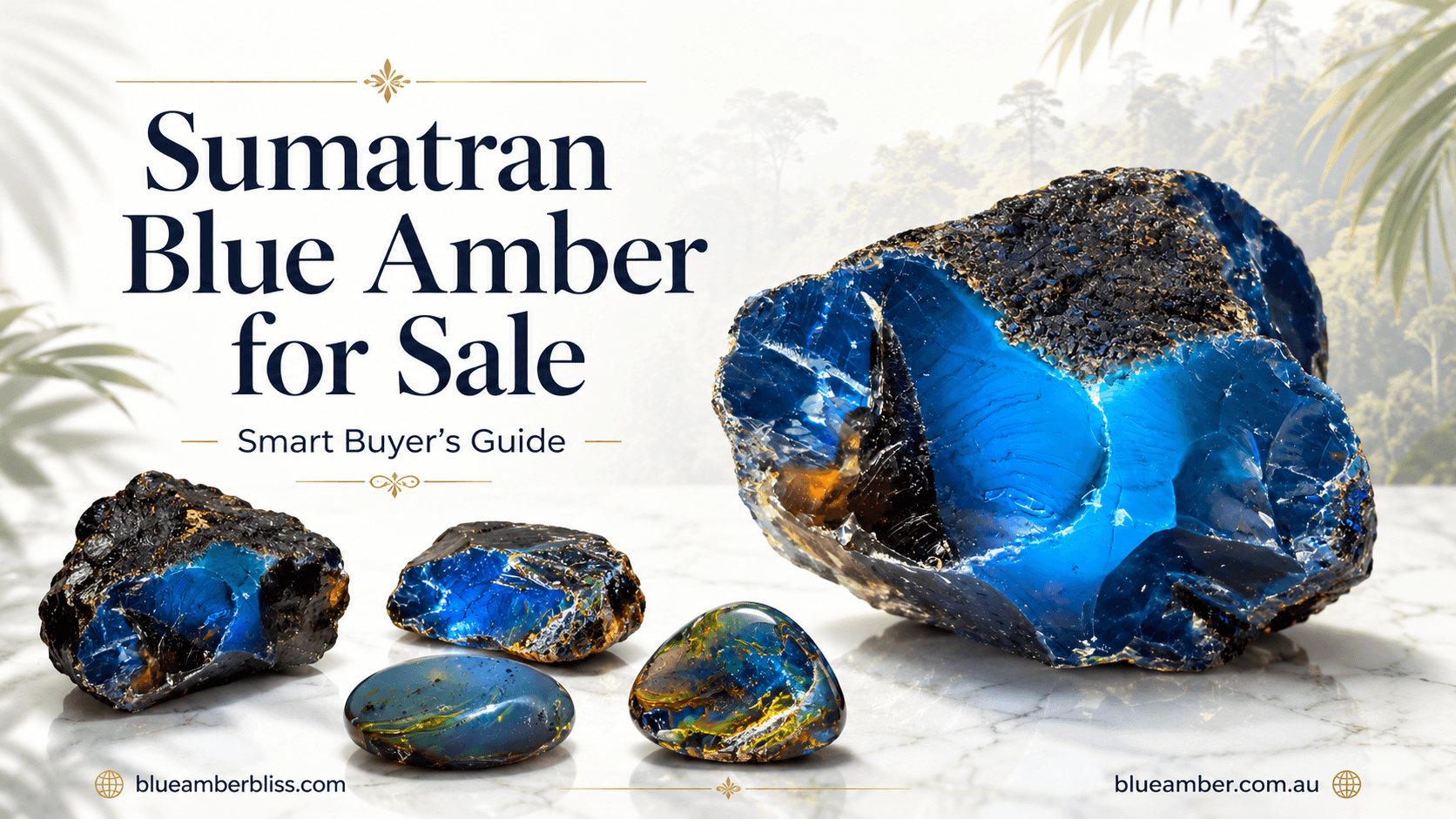
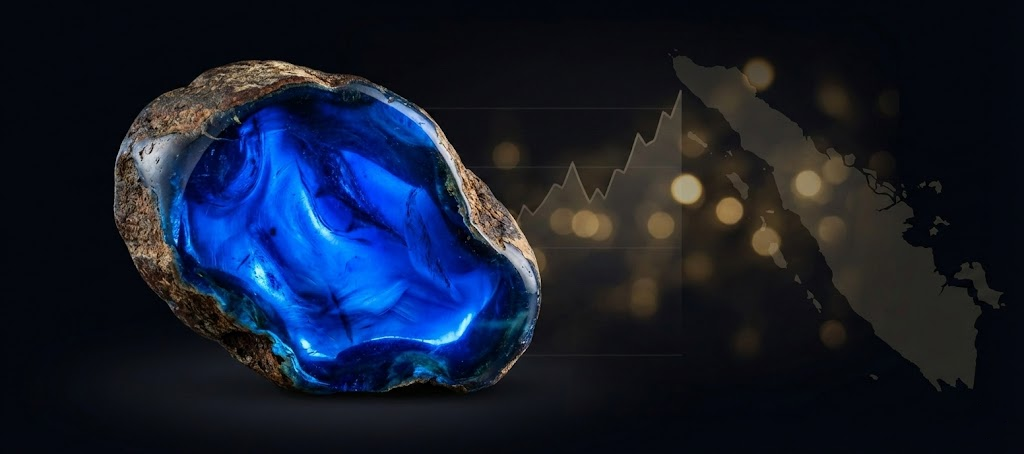
Sumatran blue amber sits at the front of this story. It is the newer, headline-grabbing source, known for larger raw nodules and a vivid blue glow in daylight. Those traits make it the most exciting piece of any modern collecting thesis, and the easiest grade to fall in love with and to resell.
What makes blue amber different from ordinary amber?
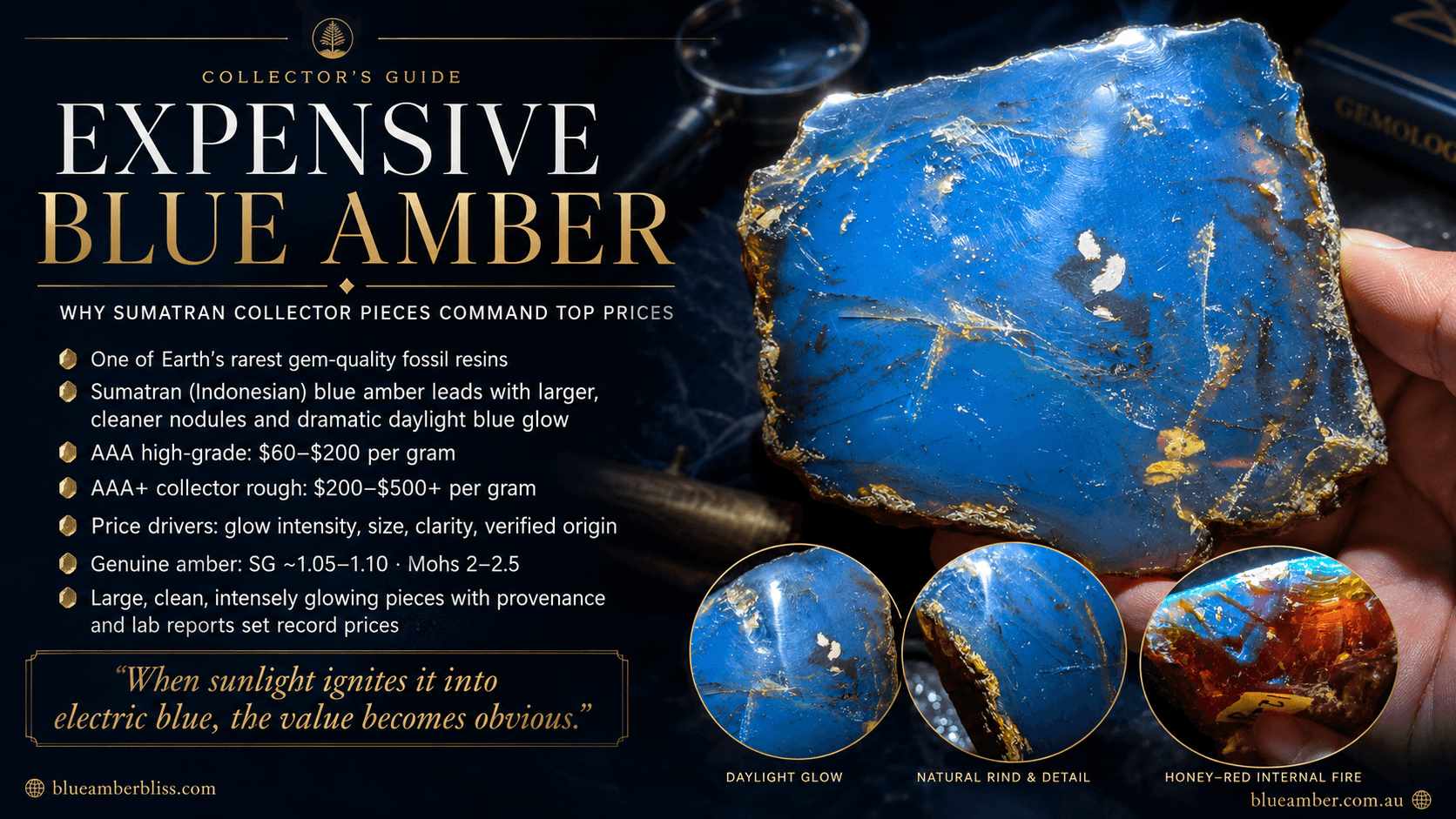
Ordinary amber is yellow, orange, or cognac and is relatively common. Blue amber looks ordinary in shade until light hits it – then it flashes electric blue. The effect comes from fluorescence: the amber absorbs ultraviolet and shorter-wavelength light and re-emits it as visible blue. Few deposits on Earth produce this, which is exactly why a carefully chosen piece can hold its value.
Fact 1: Sumatran Blue Amber Is the Rising Standout
Let me be direct as a gemologist. When people ask where the momentum is, the answer starts with Sumatra. Indonesian blue amber emerged as a serious market force more recently than other sources, and it arrived with advantages – bigger workable pieces, a strong daylight blue, and consistent quality that carvers and collectors love.
Sumatran and the older Dominican material are genuinely comparable in quality and value; both are world-class. But because Sumatra is the newer source supplying larger nodules with somewhat better overall quality, it has become the more valuable and most talked-about choice. That rising profile is central to any forward-looking blue amber investment you might build.
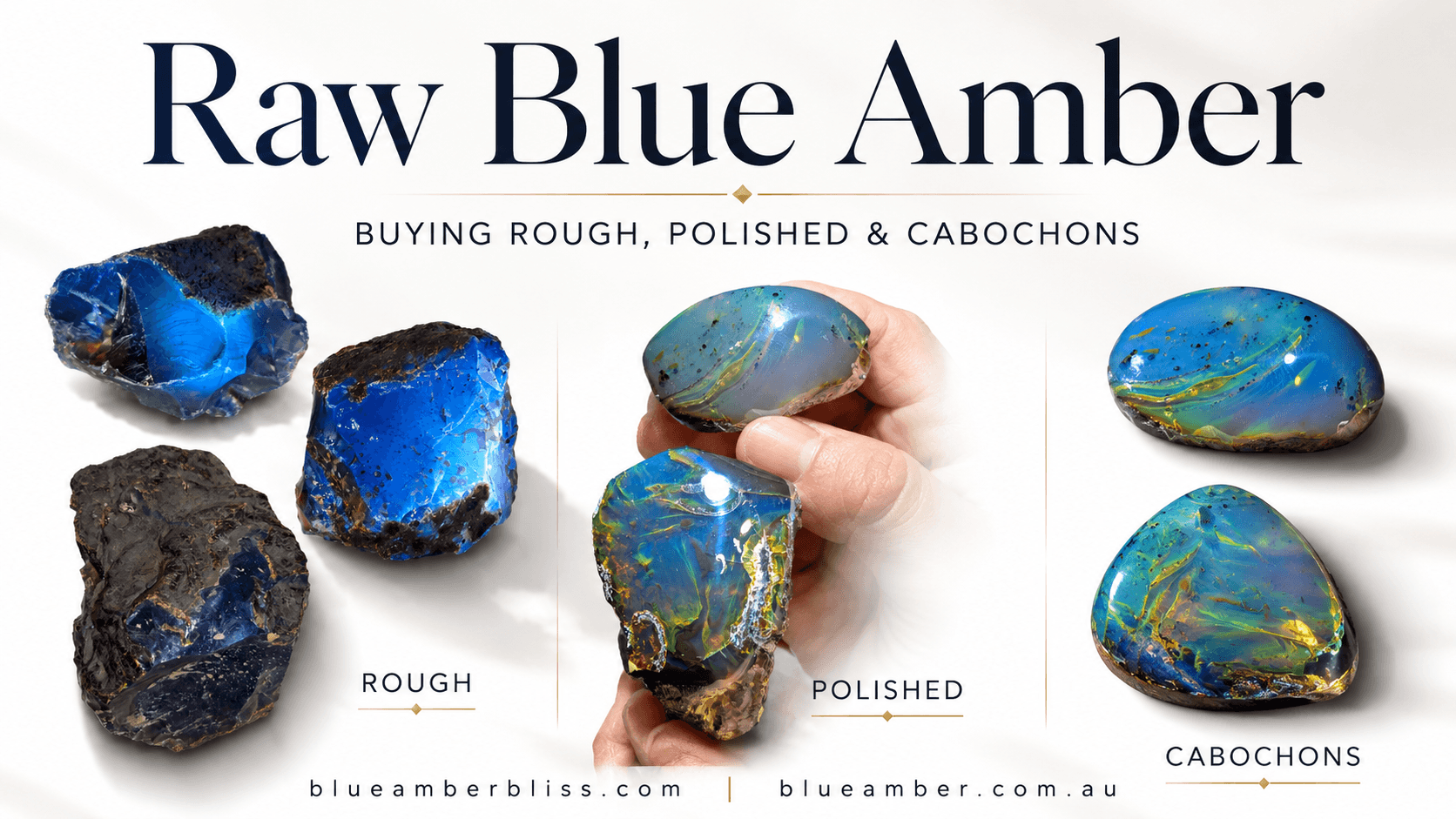
For collectors, this matters practically. Larger Sumatran rough means bigger finished cabochons, beads, and sculptures – and size strongly drives price. When you anchor your collection in Sumatran material, you are buying the grade with the clearest upward trajectory and the broadest buyer interest today.
Why does origin affect blue amber value over time?
Origin signals rarity, glow character, and average size – all of which shape blue amber value over time. Sumatran amber and its reputation for dramatic daylight color and large pieces gives it premium positioning. Provenance also reassures future buyers, which tightens resale spreads. A documented Sumatran piece is simply easier to sell later than an unverified stone of unknown source.
Fact 2: Rarity Is Real and Hard to Fake
Scarcity underpins every credible blue amber investment. Blue amber is a tiny slice of global amber production – often estimated at well under 1% of mined material – and only a handful of geographic deposits produce it at all. You cannot farm it, synthesize it cheaply, or mine more on demand.
I cover the numbers in depth in our guide on how rare blue amber is, but the headline is this: true blue specimens with strong, even glow are uncommon even within blue amber itself. Top-glow Sumatran nodules are rarer still, which is why they command attention and price.
Rarity alone does not guarantee returns – plenty of rare things are not valuable. What makes the category compelling is rarity plus demand plus desirability. Blue amber checks all three: it is scarce, increasingly sought after globally, and visually stunning in a way photographs barely capture.
How rare is genuine blue amber really?
Genuine blue amber comes from only a few sources worldwide, with Sumatra and the Dominican Republic the best known. Within total amber output, blue is a sliver, and intense, evenly glowing pieces are a sliver of that sliver. This layered scarcity is the structural reason a quality piece can appreciate as awareness spreads.
Fact 3: Five Factors Drive Blue Amber Value
If you remember one framework, make it this. Five factors determine what your stone is worth and how a blue amber investment performs at resale. Score high across all five and you own a blue-chip piece; score low on several and you own a curiosity.
| Value factor | What to look for | Impact on resale value |
|---|---|---|
| Glow (color) | Vivid, even daylight blue; minimal green or grey | Very high |
| Size | Larger, clean pieces (Sumatran excels here) | High |
| Clarity | Few cracks or debris; pleasing translucency | High |
| Origin | Documented Sumatran first, then Dominican | High |
| Craftsmanship | Skilled cut, polish, or carving | Medium-high |
Glow is king. A small stone with electric blue can outvalue a larger dull one. Size amplifies value when glow is present, which is where Sumatran material shines because the rough comes bigger. For a deeper breakdown, see our blue amber types and grades guide before you commit serious money to any single stone.
What does a strong daylight glow look like?
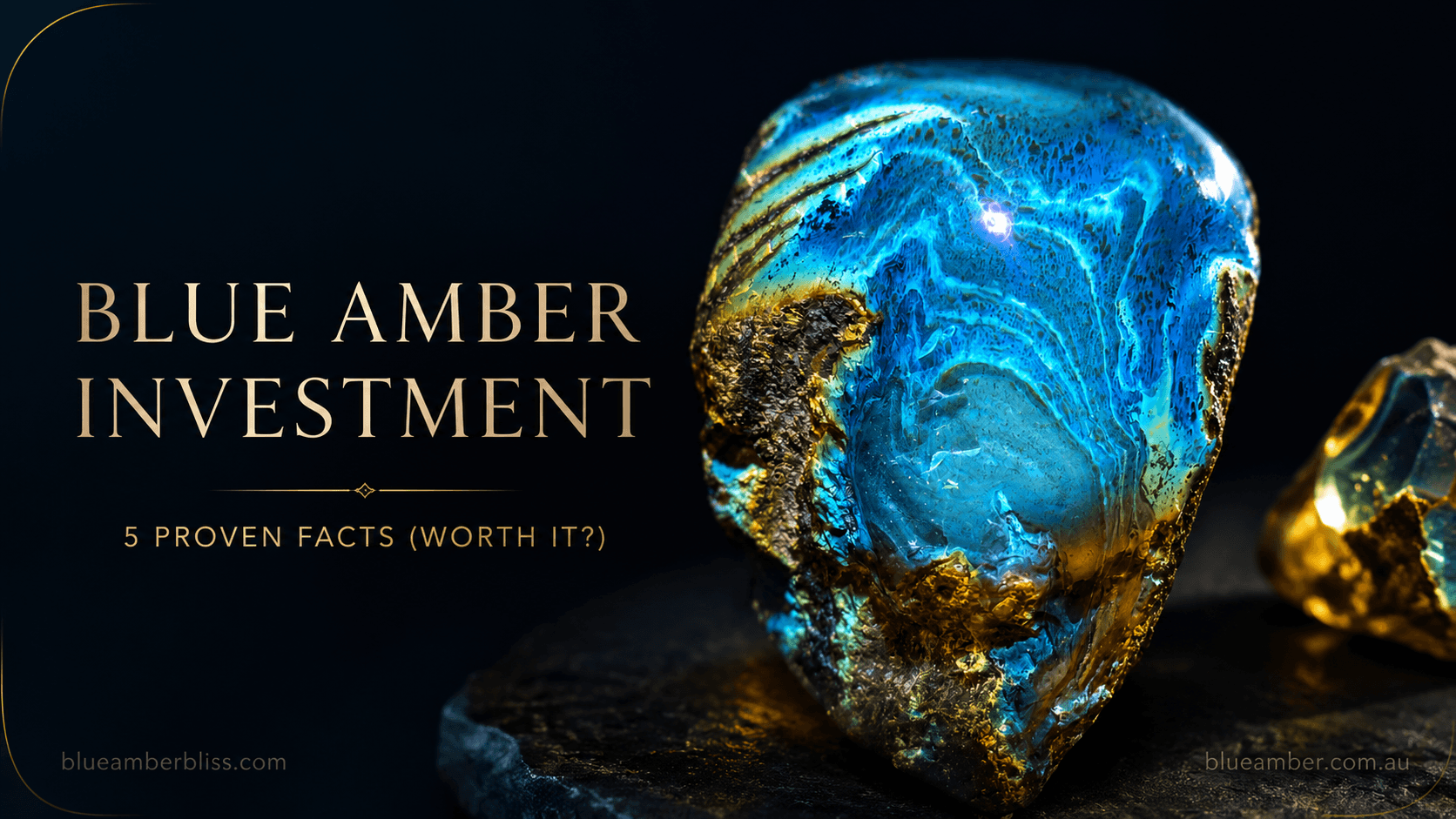
Hold the piece in sunlight or under a white LED against a dark background. Premium blue amber lights up an unmistakable, saturated blue across the whole surface, not just at the edges. Weak material looks faintly bluish or patchy. The stronger and more even the daylight glow, the better the long-term hold.
Fact 4: Blue Amber Value Over Time Trends Upward – Slowly
Honest framing matters here. There is no public stock-style price index for amber, so claims of exact annual returns are guesses. What we observe is steady, gradual appreciation for top-grade pieces as global awareness grows, especially across Asian collector markets. That is the realistic shape of blue amber value over time.
Think years, not weeks. A blue amber investment rewards holders who buy quality and wait while demand deepens and supply stays fixed. Sumatran pieces, as the rising source, have shown the most visible upward interest recently, which is why they anchor most serious collections being built today.
Compare this to gold or equities and the contrast is clear. Amber is illiquid and condition-dependent, but it is also tangible, beautiful, and immune to the dilution that affects printed currency. For passion-driven buyers, that combination is precisely the appeal here.
Will blue amber keep appreciating in the future?
No one can promise future prices. But the structural setup is favorable: fixed supply, rising awareness, and a newer Sumatran source expanding the high-end market. As long as demand outpaces the trickle of new finds, the conditions that support healthy appreciation should persist. Buy quality and you tilt the odds in your favor.
Fact 5: Blue Amber Resale Value Depends on Trust
Your eventual blue amber resale value is set the day you buy. Three things protect it: authenticity, documentation, and the quality factors above. A stunning stone with no proof of identity sells for a fraction of a documented equivalent, because buyers price in their own verification risk.
This is why I push hard on provenance. A receipt naming Sumatran origin, clear glow photos, weight, and dimensions all raise blue amber resale value. When you later sell, you are not just selling a stone – you are selling confidence. The more confidence you can transfer, the smaller your spread between buy and sell.
Liquidity is the catch. Even a great piece can take time to sell at full value, since the buyer pool is specialized. Plan your blue amber investment with an exit in mind: know your channels, keep your paperwork, and never count on selling fast at peak price.
How do I maximize blue amber resale value?
Buy verified Sumatran-first pieces with strong, even glow and minimal flaws. Keep all documentation, original photos, and any lab notes. Store the piece carefully to avoid scratches and cracks. Sell through specialist channels rather than dumping into a generic marketplace. Each step protects your blue amber resale value when it matters.
What Are the Risks of a Blue Amber Investment?
Balance is non-negotiable, so here are the real risks. First, fakes. Plastic, copal (young resin), and glass imitations flood casual markets. A bad buy can wipe out your entire blue amber investment on day one, which is why authentication tests are essential before money changes hands.
Second, illiquidity – there is no instant sell button. Third, no standard pricing index, so valuation is part art. Fourth, condition risk, since amber is soft (Mohs 2 to 2.5) and can crack or scratch. Fifth, market mood: demand can cool, and amber is not immune to broader collector sentiment.
| Risk | Why it matters | How to manage it |
|---|---|---|
| Fakes and treatments | Worthless if not genuine | Test, demand proof, buy from trusted sellers |
| Illiquidity | Slow to sell at full value | Hold long term; line up channels early |
| No price index | Valuation is imprecise | Compare quality factors; get expert input |
| Softness (Mohs 2-2.5) | Scratches and cracks cut value | Store and handle carefully |
| Demand shifts | Sentiment can cool | Buy the best grade; diversify holdings |
None of this means avoid amber. It means respect it. A disciplined approach sidesteps most of these traps through verification, quality focus, patience, and sensible position sizing within a broader portfolio.
Can fake blue amber ruin my investment?
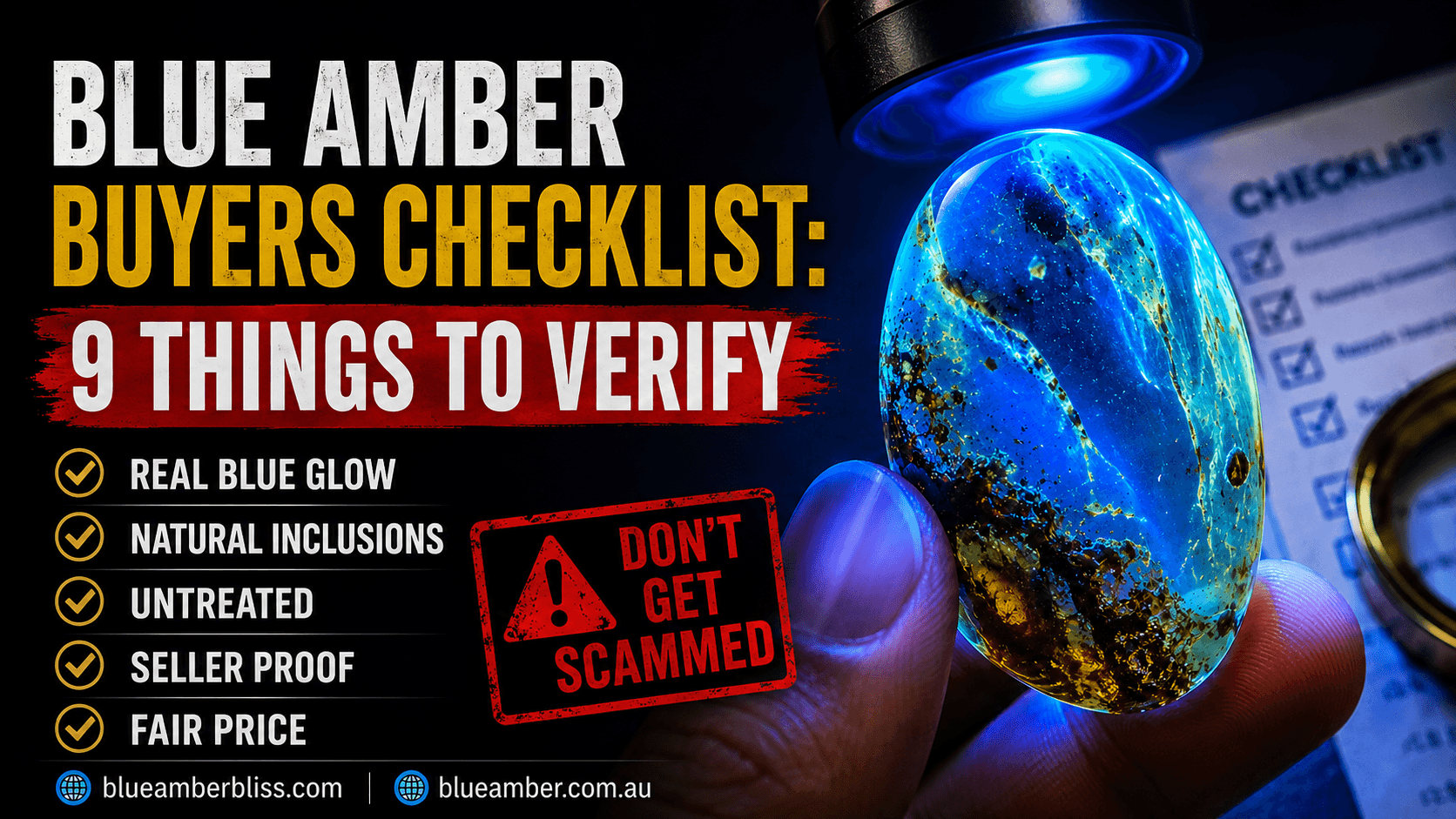
Absolutely – it is the single biggest threat. Copal and plastic can mimic the look superficially but fail simple tests. Before any purchase, confirm authenticity using UV response, a saltwater float test, and trusted documentation. Our guide on how to spot real blue amber walks through each method step by step.
How to Buy Blue Amber Smart (Step by Step)
Smart buying is the whole game. Get this right and a blue amber investment becomes far less risky and far more enjoyable. Follow a deliberate process rather than buying on impulse from the first pretty photo you see online.
- Set a budget and a horizon. Decide what you can hold for three to ten years without needing the cash back.
- Prioritize Sumatran first. Start with the rising standout source for glow and size.
- Demand documentation. Origin, weight, dimensions, and clear glow photos in daylight.
- Verify authenticity. UV fluorescence, a saltwater float, and a warm-resin feel.
- Judge the five factors. Glow, size, clarity, origin, craftsmanship.
- Buy from trusted sellers. Reputation reduces fraud risk and protects resale.
- Keep records forever. Your paperwork is your future selling power.
For current numbers, our blue amber price guide for 2025 shows how glow and size move pricing, and our overview of where to buy blue amber helps you find reputable sources. Both reduce the guesswork in your first purchase.
How do I verify authenticity before buying?
Use three quick checks. Under UV light, genuine blue amber fluoresces strongly. In saltwater (about two tablespoons of salt per cup), real amber floats while most plastics and glass sink. Genuine amber feels warm, not cold, to the touch. Pass all three, plus documentation, and your blue amber investment rests on solid, defensible ground.
Blue Amber vs Other Collectible Assets
Context helps you size your position. Below is a fair comparison of blue amber against familiar alternatives that collectors weigh it against. Each has trade-offs; the edge of amber is rarity and beauty, while its weakness is liquidity and the absence of a formal, published market index you can track daily.
| Asset | Liquidity | Appreciation potential | Main risk |
|---|---|---|---|
| Sumatran blue amber | Low | Moderate, rising | Fakes, illiquidity |
| Gold | High | Steady | Price volatility |
| Fine art | Low | Variable | Taste shifts, fakes |
| Stocks | High | High (volatile) | Market swings |
| Colored gemstones | Low-medium | Moderate | Treatments, grading |
Related Blue Amber Guides
The lesson is balance. Blue amber should be the passion-led, tangible slice of a diversified plan – not a replacement for liquid assets. Hold amber because you love it and believe in its scarcity, and let liquid assets handle short-term needs.
The Science Behind the Value
A quick gemology grounding builds confidence. Amber has a low specific gravity of roughly 1.05 to 1.10, which is why it floats in saltwater – a handy authenticity check that protects any buyer. Its hardness is just Mohs 2 to 2.5, so it is soft and demands careful handling.
The blue glow is fluorescence. The material absorbs ultraviolet and violet light (roughly the sub-400 nm range) and re-emits it as visible blue, strongest under UV and in bright daylight. The GIA documents the organic origin and optical behavior of amber, which underpins why genuine specimens behave this way and imitations do not.
For reference, that low specific gravity is well below quartz or glass, so the saltwater float is one of the most reliable field tests you can run. Pair it with a strong daylight glow and the picture becomes very hard to fake convincingly.
Understanding this science is not academic. It is exactly how you authenticate, grade, and defend value at resale. A buyer who can explain why their stone glows commands more trust – and trust is what converts a stone into a realized blue amber investment return.
What We Notice About Sumatran Blue Amber That Holds Value
When collectors ask us what actually holds value, we point to the traits that are hard to fake: at Blue Amber Bliss we consistently see Sumatran pieces with a deep cognac-to-near-black body that flips to a strong blue-green glow the moment they move from indoor light into daylight, and that daylight-to-glow contrast is far more dramatic than most buyers expect. We favour larger clean nodules with honest natural inclusions and a hand-worked polish, because in our experience those specimen-grade stones, ancient resin that was millions of years in the making, are the ones people hold onto and the ones that become genuinely difficult to replace once they leave the tray.
If you are weighing blue amber as something to keep, we warmly invite you to explore our hand-selected Sumatran pieces and see the transformation in person. Shop hand-selected Sumatran blue amber →
FAQ: Blue Amber Investment Questions Answered
Is blue amber a good investment in 2026?
For patient collectors who buy verified quality, yes. The combination of genuine rarity, rising global demand, and fixed supply supports gradual appreciation. Sumatran pieces lead as the standout source. Treat it as a long-hold passion asset, not a quick-flip trade, and the odds favor you over a multi-year horizon.
Which blue amber is the best investment, Sumatran or Dominican?
Sumatran first. Both sources are excellent and broadly equal in quality and value, but Sumatra is the newer source producing larger nodules with somewhat better overall quality, making it more valuable and the standout. That is why most forward-looking collectors anchor an investment in Sumatran material.
How does blue amber value over time actually behave?
It tends to rise slowly and steadily for top-grade pieces as awareness spreads, rather than spiking. There is no formal index, so expect gradual gains over years, not predictable annual percentages. Quality and documentation are what allow blue amber value over time to compound in your favor.
What is the resale value of blue amber?
It varies widely with glow, size, clarity, origin, and proof of authenticity. Documented, strong-glow Sumatran pieces hold the best blue amber resale value. Unverified or weak-glow stones sell at steep discounts. The day you buy quality and keep records is the day you protect your future resale.
How much does investment-grade blue amber cost?
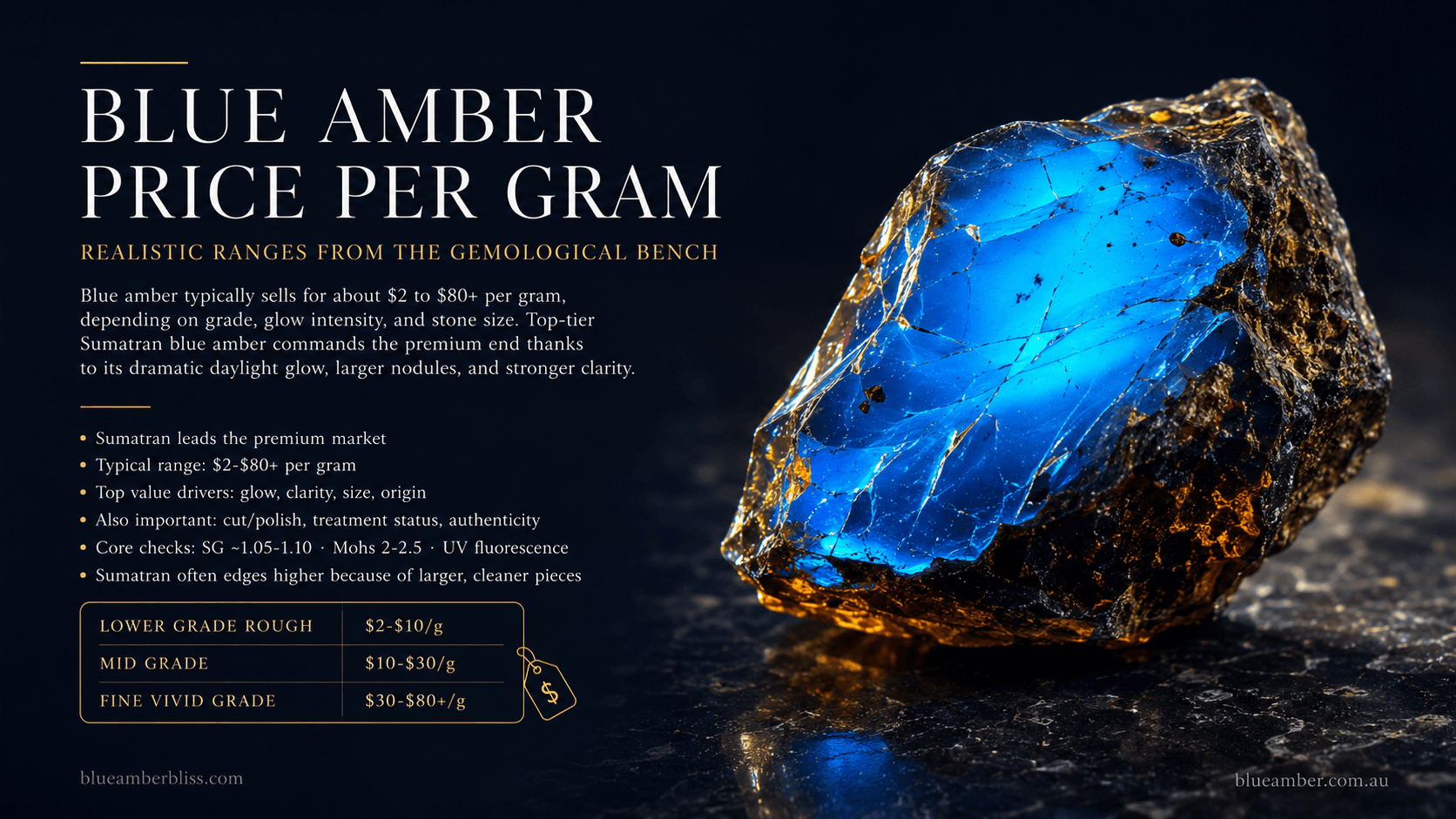
Prices range enormously, from modest sums for small pieces to thousands for large, intensely glowing, documented specimens. Glow and size drive the curve most. Our 2025 price guide breaks down tiers, so you can calibrate your spend to your budget without overpaying for hype.
How do I avoid fake blue amber?
Run three tests: strong UV fluorescence, a saltwater float (real amber floats at specific gravity around 1.05 to 1.10), and a warm-to-touch feel. Demand documentation and buy from trusted sellers. Skipping verification is the fastest way to turn an investment into an expensive plastic paperweight.
Is blue amber liquid, or hard to sell quickly?
It is illiquid. The buyer pool is specialized, so selling at full value can take time. Plan an exit before you buy, keep your documentation, and use specialist channels. Patience is a feature, not a flaw, of a well-chosen amber holding.
Is blue amber a safe investment compared to gold?
Different risk profiles. Gold is liquid and steady; amber is illiquid but offers rarity, beauty, and scarcity-driven upside. Neither is risk-free. A blue amber investment works best as a passion-led, diversified slice alongside liquid assets, not as a one-for-one gold substitute.
What size of blue amber should I buy for investment?
Bigger, clean, glowing pieces generally outperform, and Sumatran rough supplies larger sizes. That said, a small stone with electric daylight glow can beat a large dull one. Balance size against glow quality – both together make the strongest blue amber investment for the long run.
Do I need a certificate to resell blue amber?
It is not legally required, but documentation dramatically improves blue amber resale value by reducing buyer uncertainty. Keep origin notes, weight, dimensions, daylight glow photos, and any lab observations. The more proof you transfer, the smoother and more profitable your eventual sale.
The Bottom Line
So, is a blue amber investment worth it? For collectors who buy verified, high-glow Sumatran pieces and hold with patience, the answer leans yes. Rarity is real, demand is rising, and supply cannot expand on command. Sumatran amber, as the newer standout source, sits at the front of that story.
Just go in clear-eyed. Authenticate everything, judge the five value factors, keep meticulous records, and size your position sensibly within a diversified plan. Do that, and your blue amber investment becomes both a genuine pleasure to own and a scarce, tangible asset positioned to reward the patient.