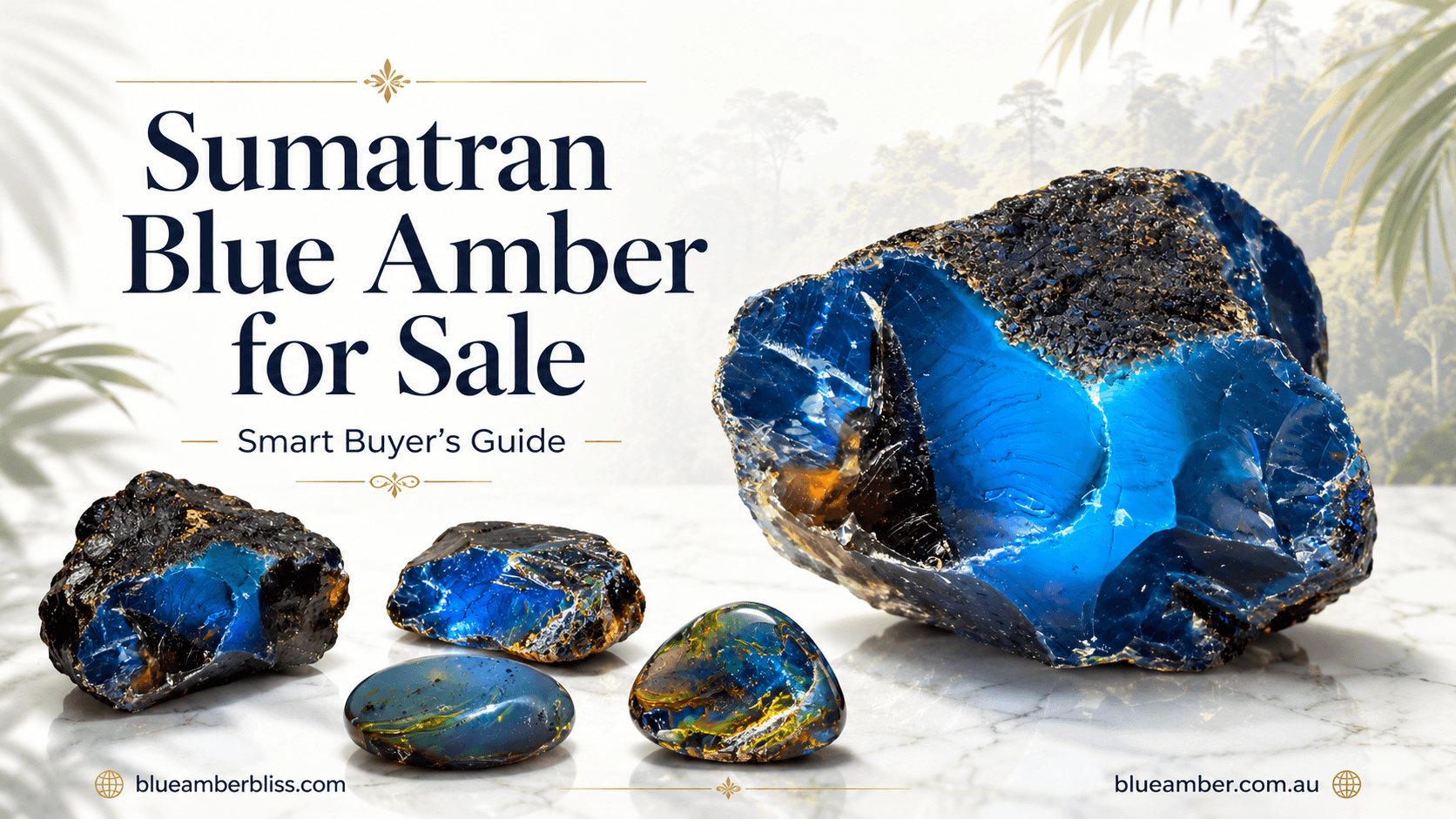
Looking for Sumatran blue amber for sale? Buy from sellers who show a real daylight-blue glow, honest Jambi or Sinamar provenance, and a clear return policy. Expect roughly 2 to 40 dollars per gram by grade. Sumatran (Indonesian) blue amber is the hero here: bigger nodules, a dramatic daylight glow, and standout value that make it the smart buy.
Key Takeaways
- Sumatran is the standout. Indonesian blue amber comes in larger nodules with a dramatic daylight blue glow, making it more valuable and the first choice when you shop for Sumatran blue amber for sale.
- Glow is the value driver. The stronger the blue in plain daylight, not just under UV, the higher the grade and price.
- Prices scale with grade. Realistic ranges run from about 2 dollars per gram for rough up to 40 dollars per gram for top polished specimens.
- Provenance protects you. Genuine material traces to Jambi province and the Sinamar River basin on Sumatra.
- Vet the seller, not just the stone. Demand daylight plus UV photos, honest origin, and returns before you pay.
What Makes Sumatran Blue Amber the Standout?
Sumatran blue amber is fossilized resin, millions of years in the making, sourced from the Indonesian island of Sumatra. It is genuine amber, not copal, and it belongs to the same family of ancient tree resins described by GIA and Britannica. What sets it apart is its optical behavior.
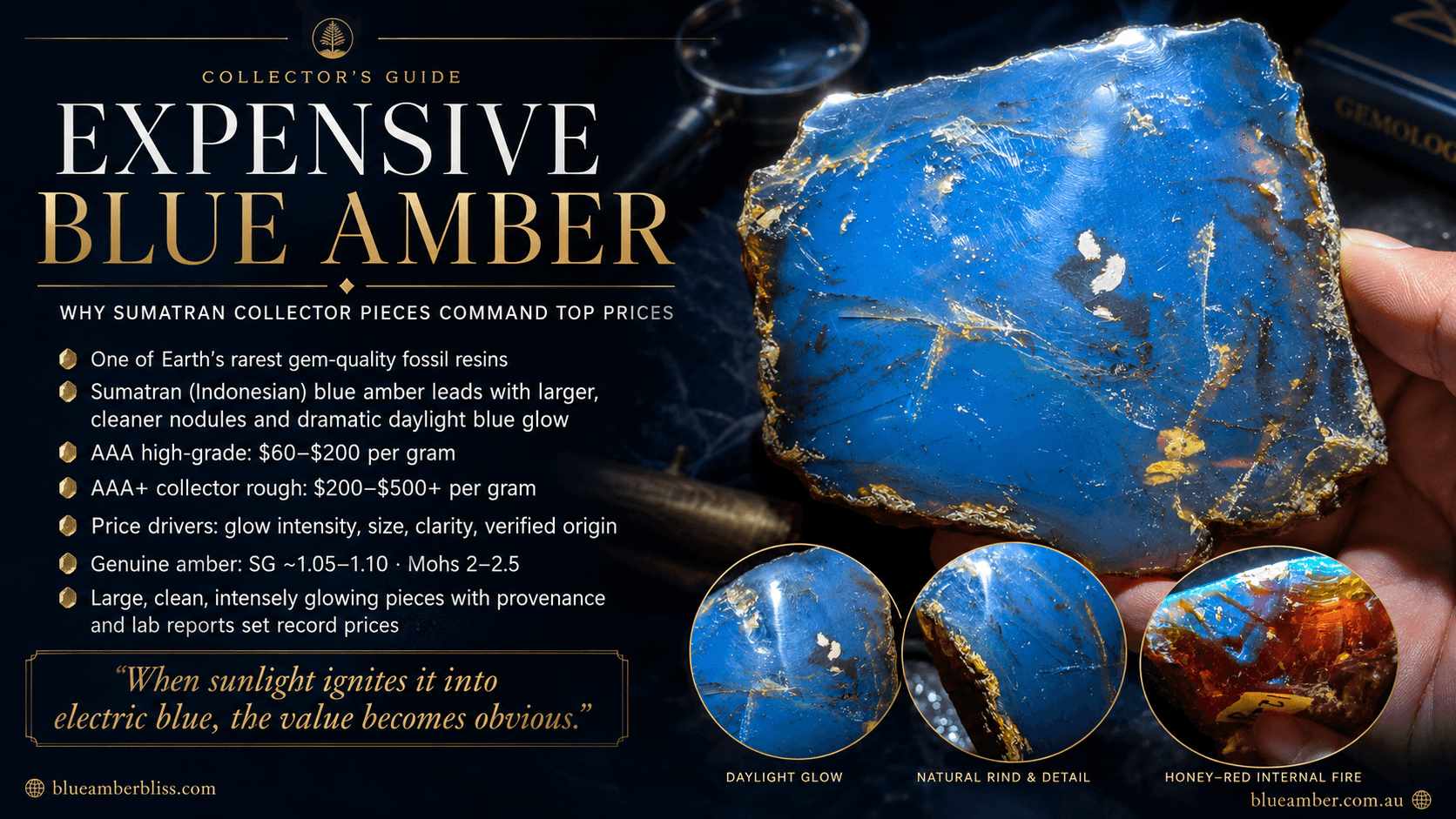
Unlike ordinary honey amber, this material throws a striking blue sheen. In direct daylight against a dark background, high-grade Sumatran pieces glow electric blue to blue-green. That daylight effect, not just UV fluorescence, is what buyers chase and what makes quality Sumatran blue amber for sale genuinely special.
Blue amber is genuinely rare worldwide. Only a handful of deposits, chiefly in Indonesia and the Dominican Republic, produce it in gem quality at all. Among these, Sumatran material stands out for the sheer size of its nodules and the theatrical strength of its daylight glow, which is why it leads our lineup and commands such devoted collector interest.
Sumatra is a newer, prolific source, and its geology yields notably bigger nodules than older deposits. Larger rough means larger finished pieces, dramatic cabochons, and statement carvings that simply are not possible with smaller material. To understand the material in depth, see our full guide to Indonesian blue amber.
Because the pieces are bigger and the daylight glow so theatrical, Sumatran commands strong collector demand. If you are weighing origins, our Sumatran vs Dominican blue amber comparison lays out why Sumatran is the standout choice for size and daylight drama.
What are the physical properties of real Sumatran blue amber?
Authentic Sumatran blue amber measures about 2 to 2.5 on the Mohs hardness scale, so it scratches easily and feels warm, never cold like glass. Its specific gravity sits around 1.05 to 1.10, meaning it sinks in fresh water but floats in saltwater, roughly 2 tablespoons of salt per cup.
Under longwave UV light near 365 nm, it fluoresces vivid blue. It carries a faint pine or resin scent when gently warmed, and it is light in the hand. These traits, taken together, help separate real Sumatran blue amber for sale from plastic, glass, and treated imitations.
Why Is Sumatran Blue Amber Blue?
The blue is not a pigment or a dye. It is fluorescence. Aromatic hydrocarbon molecules trapped in the ancient resin, commonly linked to perylene-type compounds, absorb invisible ultraviolet and near-ultraviolet light and re-emit it as visible blue. Against a dark background, that emitted glow dominates what your eye sees, so the stone appears to shine blue from within.
This is why background and lighting change the effect so dramatically. On white paper the amber can look ordinary yellow-brown; on black it can blaze blue. Strong material re-emits enough energy to read blue even in ordinary daylight, while weaker stones need a concentrated UV torch to wake the color up.
Sumatran resin tends to fluoresce vividly, often reading electric blue to blue-green, and the biggest nodules keep that intensity across large flat surfaces. That combination of strong emission and generous size is exactly why collectors prize this origin, and it is the quality you are paying for at the premium end of the market.
What Should You Look For When You Buy Sumatran Blue Amber?
When you buy Sumatran blue amber, four things decide value: daylight glow strength, size, clarity, and honest provenance. Master these and you can judge almost any listing quickly. Skip them and you risk overpaying for a weak stone or, worse, a fake.
How strong should the daylight blue glow be?
Glow is the single biggest price driver. Ask for photos in natural daylight against a black surface, with no UV torch involved. Top pieces show a bold, saturated blue that seems to hover above the surface. Mid grades show blue at certain angles. Weak stones look brown or green until you point a UV light at them.
A flat, lifeless glow in daylight is a red flag, even when a seller waves a UV torch to fake excitement. The best Sumatran blue amber for sale earns its price on daylight performance first. Insist on seeing that before you commit.
What size and clarity should you expect?
Size is the calling card of this material. Because nodules run large, you can realistically find clean cabochons of 5 to 30 grams and rough chunks well over 100 grams. Bigger, cleaner pieces cost more per gram, not just more in total, because they are rarer.
Keep perspective on size, too. In a market where many blue ambers arrive as thumbnail fragments, a palm-sized Sumatran nodule that glows blue across its whole face is a special object. That scale lets cutters plan matched sets, bold cabochons, and carvings, and it is a practical reason the origin earns its premium reputation among serious buyers.
Clarity varies. Some collectors prize transparent, glassy stones; others love the swirling internal flow lines and occasional inclusions that prove natural origin. Neither is wrong. Just make sure the price matches the clarity, and that any cracks or crazing are disclosed in the listing photos.
One more clarity note: natural flow lines, tiny gas bubbles, and the occasional ancient plant fleck are friends, not flaws. They are physical proof that you are holding real fossilized resin rather than molded plastic, and many collectors deliberately seek pieces where these natural fingerprints sit alongside a strong, even blue.
Why does provenance to Jambi and Sinamar matter?
Real Sumatran material comes primarily from Jambi province, especially the Sinamar River basin. A seller who can name the region, describe the mining, and show consistent rough is far more trustworthy than one who just writes “blue amber.” Honest provenance is your first line of defense.
Vague or shifting origin stories are a warning sign. Credible dealers of Sumatran blue amber for sale are proud of the Jambi and Sinamar source and will say so plainly. If origin is hidden, treat every other claim with caution too.
Grade Tiers and Realistic Price-Per-Gram Ranges
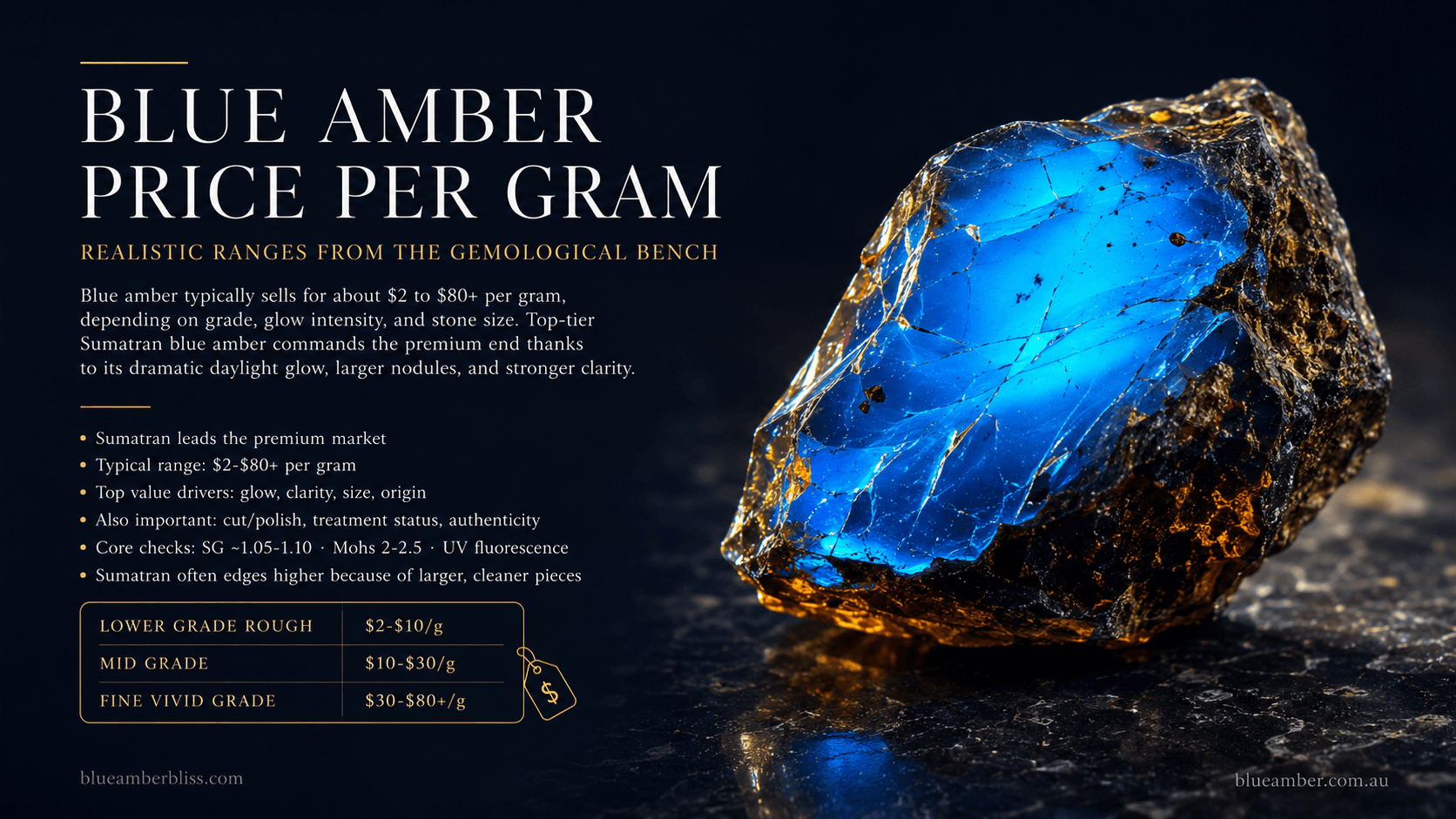
Pricing follows grade, and grade follows glow, size, and clarity. The table below shows realistic per-gram ranges for genuine Sumatran material in current market conditions. Treat these as informed guidance, not fixed law; dramatic large specimens can exceed the top of any range.
| Grade tier | Daylight glow | Typical form | Price per gram (USD) |
|---|---|---|---|
| Entry / rough | Faint, angle-dependent | Uncut chunks, offcuts | 2 – 6 dollars |
| Standard | Clear blue at angles | Small cabochons, beads | 6 – 15 dollars |
| Premium | Strong, broad blue | Clean cabochons, pendants | 15 – 30 dollars |
| Collector / top | Intense electric blue | Large clean specimens, carvings | 30 – 40+ dollars |
How much does Sumatran blue amber cost per gram?
Most quality Sumatran blue amber for sale lands between 6 and 30 dollars per gram once cut and polished. Rough sits lower, around 2 to 6 dollars, and elite daylight-glowing specimens push past 40 dollars. A 10-gram premium cabochon might run 150 to 300 dollars; a large collector carving can reach four figures.
For a deeper breakdown by weight, form, and market trend, see our dedicated blue amber price guide. It helps you sanity-check any listing before you buy.
Is more expensive always better with Sumatran blue amber for sale?
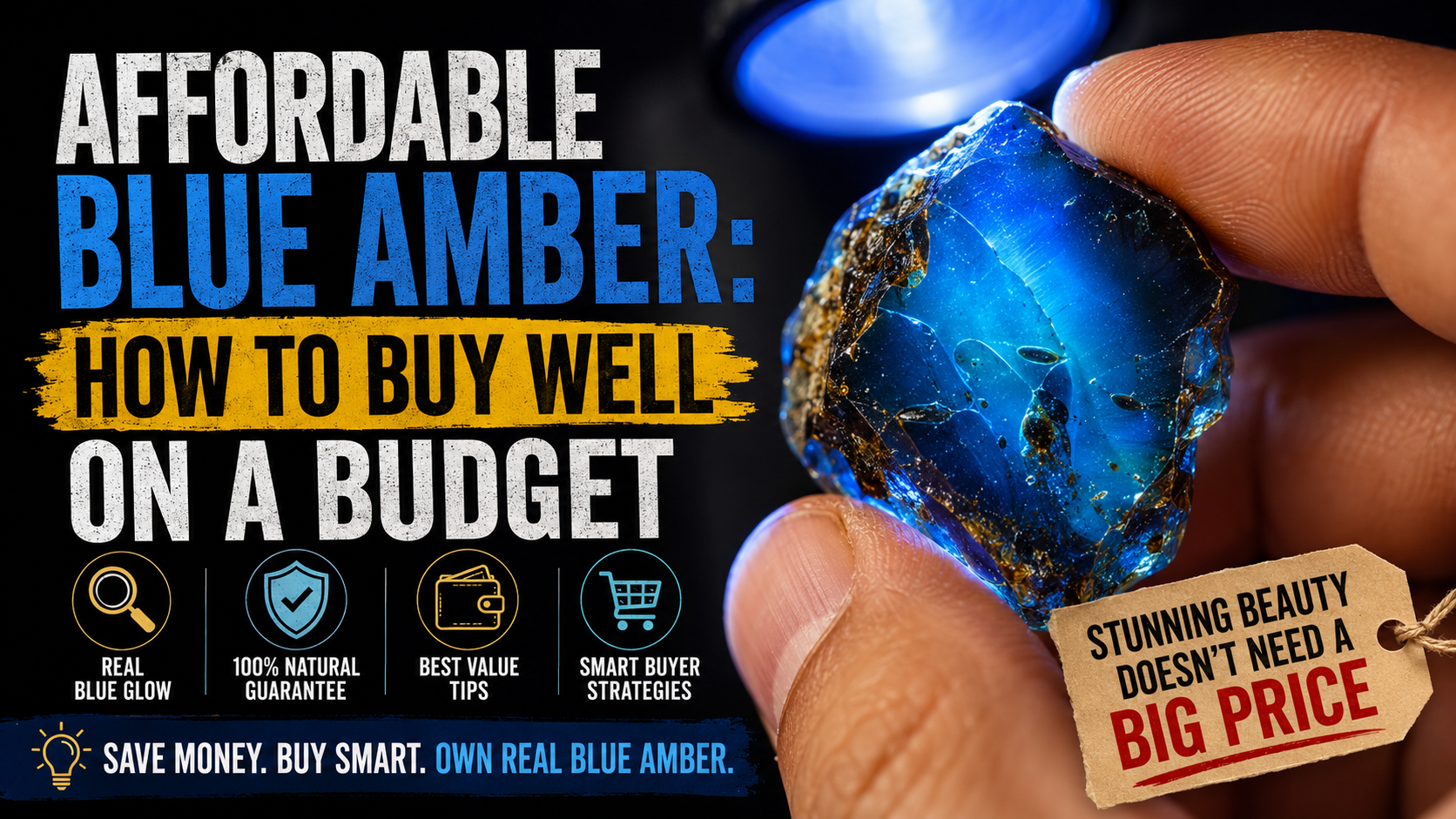
Not automatically. Price should track glow, size, and clarity, so a fair 12-dollar-per-gram cabochon with strong daylight blue can outperform a dull 25-dollar stone. The goal is value, not the highest sticker. Compare glow photos across listings, then judge whether the asking price fits the grade you are actually seeing.
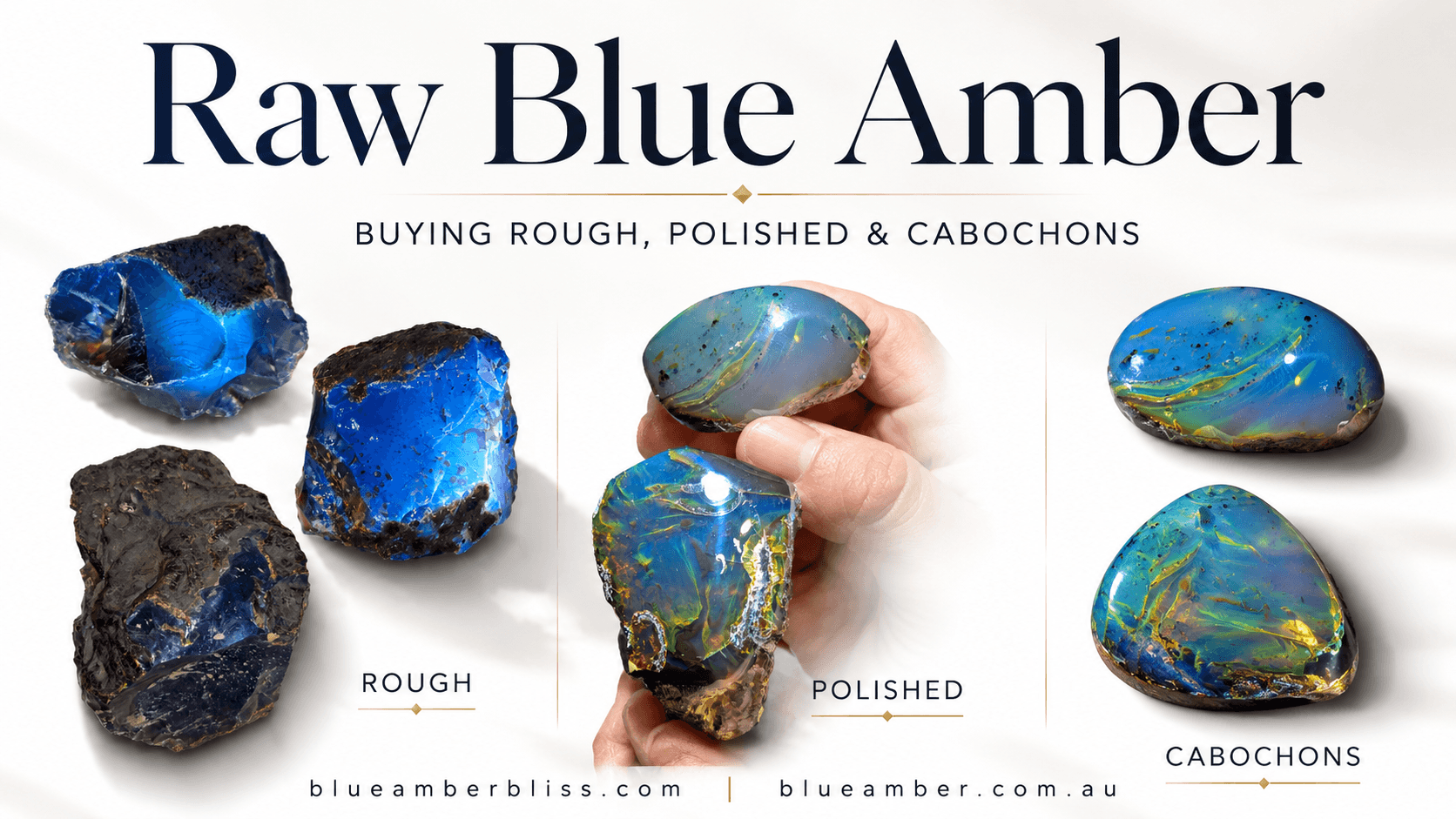
Rough vs Polished vs Jewelry: Which Should You Buy?
This material sells in three main forms, and each suits a different buyer. Your choice depends on budget, skill, and whether you want a project or a finished treasure. The comparison below breaks down the trade-offs.
| Option | Best for | Pros | Cons |
|---|---|---|---|
| Rough (uncut) | Cutters and collectors | Lowest cost per gram; hidden glow potential | Risk of cracks; needs skill to cut |
| Polished specimen | Display collectors | Glow fully revealed; ready to admire | Higher per-gram price than rough |
| Finished jewelry | Wearers and gift buyers | Set, wearable, no lapidary needed | Metal and labor add to cost |
If you love a project and understand the risk of internal cracks, rough offers the best entry price. Buy a little extra, because not every chunk cuts into a strong-glow gem, and some rough hides crazing you only see once you grind in.
Polished specimens are the sweet spot for most collectors. You see exactly what you get, glow and all. When browsing polished Sumatran blue amber for sale, prioritize the daylight photos and any visible surface fractures before you decide.
Jewelry suits wearers and gift buyers. Because amber is soft, at Mohs 2 to 2.5, choose protective settings and avoid daily-wear rings where knocks are likely. Pendants, earrings, and occasional-wear pieces preserve the fragile surface far better than exposed mounts.
How Do You Vet a Seller of Sumatran Blue Amber for Sale?
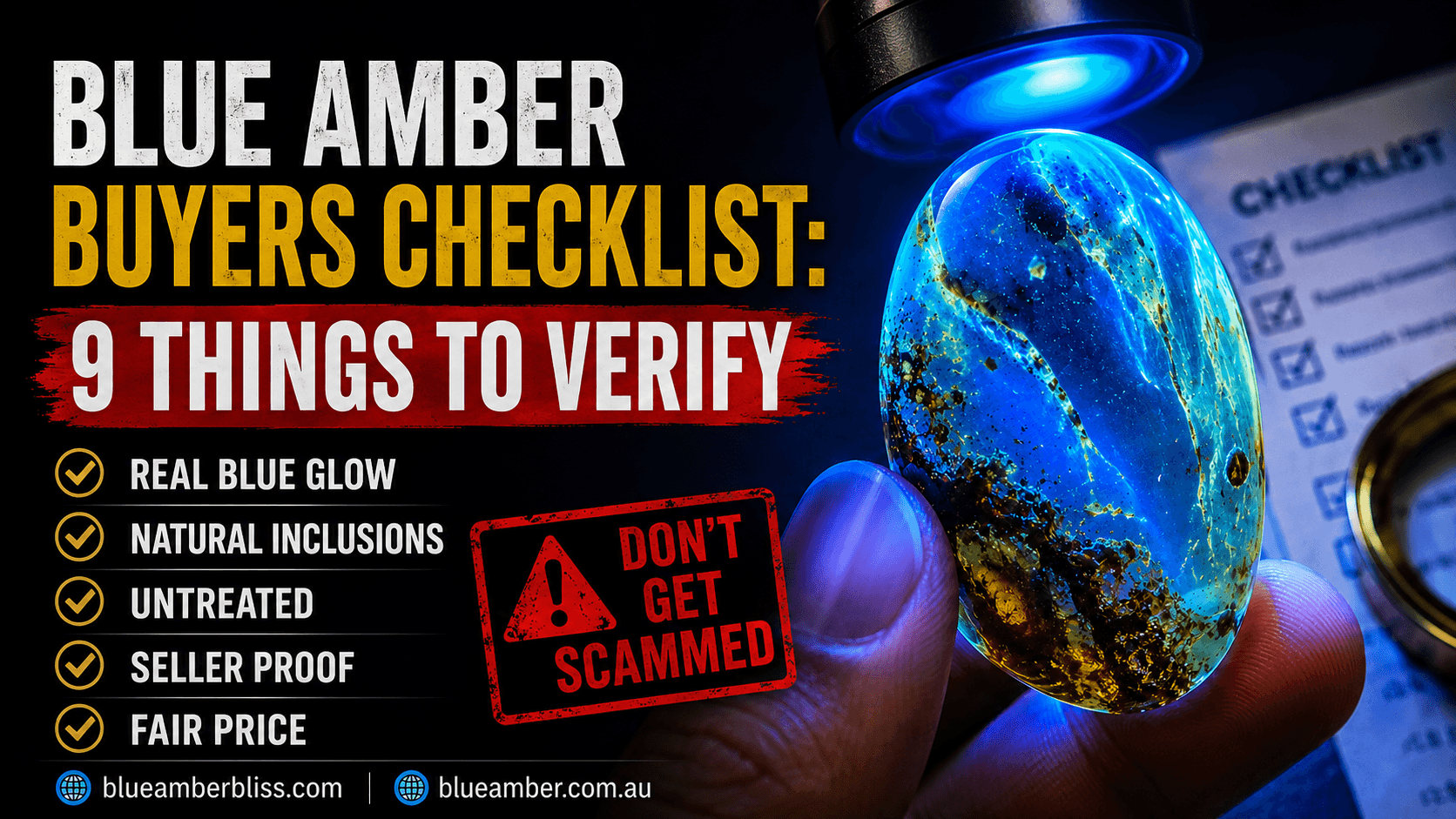
The stone matters, but the seller matters just as much. A trustworthy dealer removes guesswork by documenting origin, showing the glow honestly, and standing behind the sale with returns. Use the checklist below every single time.
- Named provenance: Jambi province and the Sinamar basin, stated openly.
- Dual photos: the same piece shown in daylight and under UV, unedited.
- Weight and dimensions: exact grams and millimeters, not vague sizing.
- Return policy: a real window to inspect and send back.
- Authenticity support: a COA or willingness to accept independent testing.
Our broader walkthrough on where to buy blue amber covers the general seller-vetting process in detail. Pair it with this page whenever you are comparing vendors of Sumatran blue amber for sale so you never skip a step.
What documentation and photos should a seller provide?
Ask for a certificate of authenticity (COA) or a lab report, plus original photos of your exact stone. The photos should include one clean daylight shot on a dark background and one under longwave UV near 365 nm. Beware stock images reused across many listings; they hide the real piece.
A confident seller will also accept simple at-home checks after delivery, like the saltwater float test tied to the 1.05 to 1.10 specific gravity of amber. Reluctance to allow any verification is itself a red flag when buying online.
Do you need a lab certificate to buy Indonesian blue amber for sale?
For lower-value rough, a COA is nice but not essential if the seller is reputable and returns are open. For premium and collector pieces, insist on documentation. A lab report confirming natural amber, plus honest origin notes, protects a serious investment in Indonesian blue amber for sale and supports future resale.
Red Flags: When Is a Deal Too Good to Be True?
Fakes and misrepresented stones follow patterns. Learn the warning signs once and you will spot them instantly. Any single red flag warrants questions; two or more should end the transaction.
- Too cheap: “blue amber” under 1 to 2 dollars per gram is almost always plastic, glass, or dyed copal.
- No origin: a listing that never mentions Sumatra, Jambi, or Sinamar.
- UV-only glow: vivid under a torch but flat, brown, or lifeless in daylight.
- Reused photos: identical images across many supposedly unique listings.
- No returns: all sales final, no inspection window, evasive answers.
Suspiciously perfect, bubble-filled clarity can signal glass or plastic; perfectly uniform color can signal dye. To confirm before you pay, follow our step-by-step guide on how to spot real blue amber. It turns doubt into a quick, repeatable test you can trust.
Why is a flat daylight glow such a serious warning sign?
The whole point of this material is its daylight blue. Many imitations and even weak natural stones only light up under UV, which any glass or treated resin can fake. If a piece looks dull brown or plain yellow in normal daylight, you are not getting the premium effect that defines real Sumatran blue amber for sale, regardless of the price tag.
Where to Buy Sumatran Blue Amber for Sale Safely?
Buy from specialist dealers who focus on this material, document provenance, and show honest daylight and UV photos. Specialists know their rough, grade consistently, and offer returns. General marketplaces can work, but only when the individual seller meets every checklist point above.
Blue Amber Bliss focuses exclusively on Sumatran (Indonesian) material, so every listing centers the daylight glow, weight, and Jambi or Sinamar origin you need to buy with confidence. When you want Sumatran blue amber for sale without guesswork, a dedicated specialist beats a scattershot marketplace.
Whichever route you choose, let the daylight glow lead your decision, confirm origin, and keep a return option open. Do that, and buying real Sumatran blue amber becomes straightforward, enjoyable, and genuinely rewarding.
How Do You Buy Sumatran Blue Amber Step by Step?
Buying well is a repeatable process, not luck. Follow these seven steps and you will filter out most fakes and overpriced stones before any money changes hands. The same routine works for a single pendant or a serious collector specimen.
- Set your budget and target grade using the per-gram ranges above, so you know what a fair price looks like.
- Shortlist specialist sellers who openly state Jambi or Sinamar provenance and focus on this material.
- Request photos of your exact piece in natural daylight on a dark background, plus one under 365 nm UV.
- Confirm the weight in grams, the dimensions in millimeters, and any cracks or crazing in writing.
- Verify authenticity with a COA, a lab report, or an agreed return-based testing arrangement.
- Check the return policy and payment protection before you pay, never after.
- On arrival, run the saltwater float and warm-scent checks, and inspect the daylight glow yourself.
Complete every step and buying becomes low-stress and genuinely enjoyable. Skip the photos, the provenance, or the return window, and you are gambling rather than collecting.
How Should You Care for Sumatran Blue Amber?
Amber is soft, at Mohs 2 to 2.5, and chemically delicate, so a little care keeps its glow intact for decades. Clean it only with a soft, slightly damp cloth, then dry it. Never use an ultrasonic cleaner, and keep it away from solvents, perfume, hairspray, and household chemicals, which can dull or craze the surface.
Store each piece separately, wrapped in soft cloth, so harder gems cannot scratch it. Avoid prolonged direct sunlight and high heat, which dry the resin and encourage fine cracks over time. Put jewelry on last, after cosmetics, and wipe it after wearing. Treated gently, natural amber ages beautifully and holds its color.
Is Sumatran blue amber a good investment?
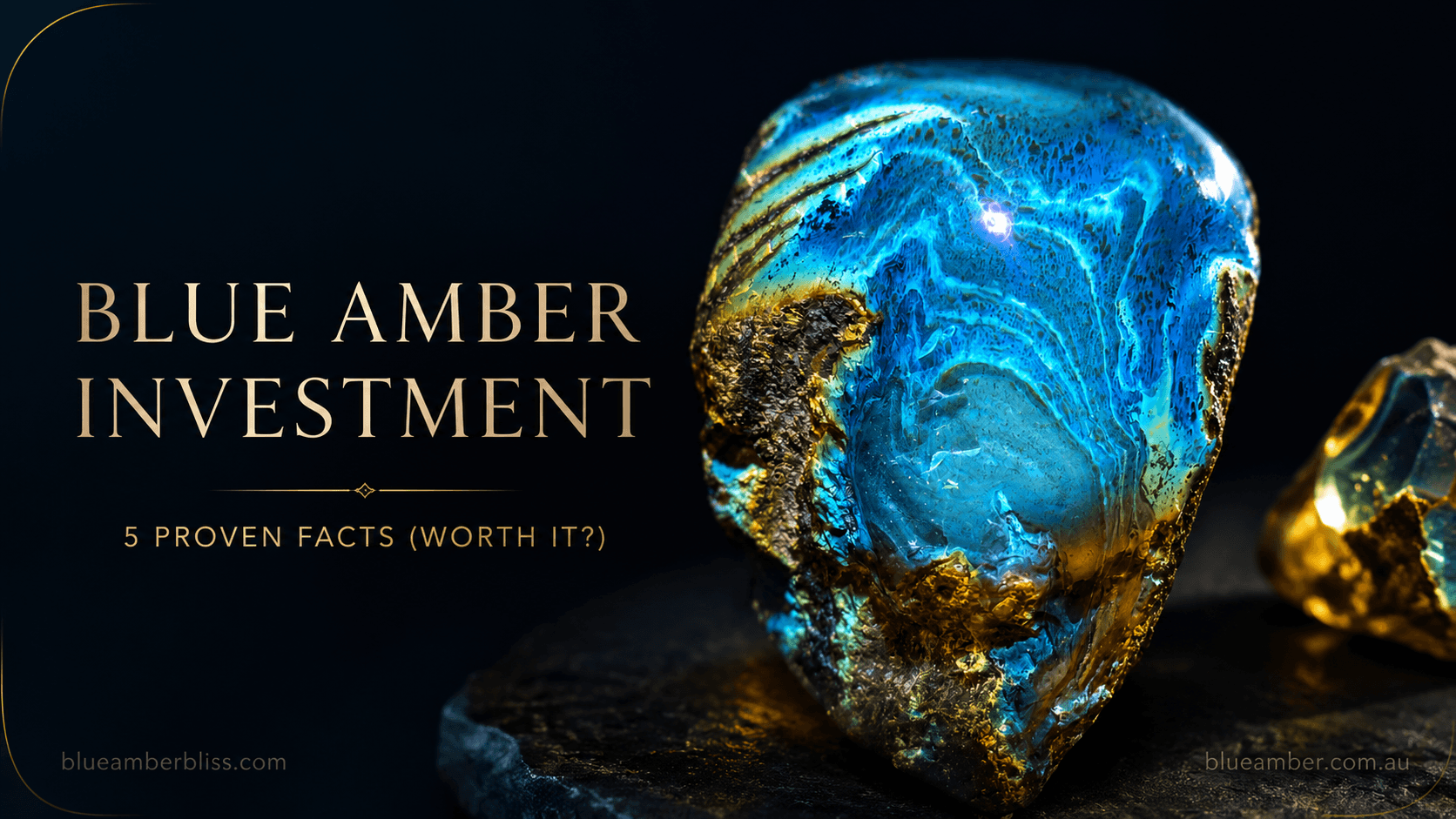
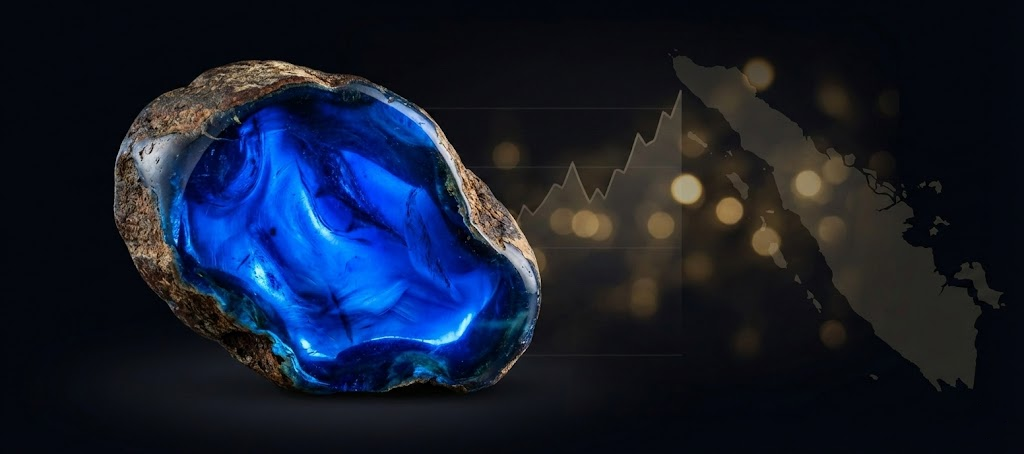
As a newer, standout source with limited high-grade output, top Sumatran material has shown steady collector demand, and large, strong-glow specimens are genuinely scarce. That said, buy for love first and value second. Focus on daylight glow, honest provenance, and clean condition, keep documentation, and any resale upside becomes a welcome bonus rather than a gamble.
What We Notice When Selecting Sumatran Blue Amber
When we hand-select Sumatran blue amber for buyers, we look first at the daylight-to-glow shift: a good stone reads as a deep cognac or near-black body in the hand, then flashes strong electric blue the moment UV or bright sun hits it, and that contrast is the single best value tell we know. We also weigh the nodule as a whole rather than the price tag alone, checking that the polish is clean, the size and shape are honest, and any natural inclusions read as authentic specimen character instead of flaws to hide. Sumatran material, ancient resin that has been millions of years in the making, tends to give us the biggest, cleanest bodies with the most dramatic glow, which is why we consistently place it first for collectors comparing options.
If you would like to see this glow and body contrast in person, we warmly invite you to explore our hand-selected Sumatran blue amber at Blue Amber Bliss. Shop hand-selected Sumatran blue amber →
FAQ
How can I be sure I am buying real Sumatran blue amber?
Check for a warm, not cold, feel, low weight, a faint pine scent when rubbed, blue fluorescence under 365 nm UV, and a saltwater float consistent with a 1.05 to 1.10 specific gravity. Most importantly, confirm the daylight blue glow and honest Jambi or Sinamar provenance before you pay for real Sumatran blue amber.
How much should I expect to pay per gram?
Rough runs about 2 to 6 dollars per gram, standard cut pieces 6 to 15 dollars, premium cabochons 15 to 30 dollars, and top collector specimens 30 to 40+ dollars. Genuine Sumatran blue amber for sale priced under 1 to 2 dollars per gram is almost certainly fake.
Where can I buy Sumatran blue amber safely?
Buy from specialist dealers who document Jambi or Sinamar origin, show daylight and UV photos of the exact piece, and offer returns. Our guide on where to buy blue amber walks through vetting any vendor. Specialists remain the safest route to real Sumatran blue amber for sale.
Is Sumatran or Dominican blue amber better?
They are equal in quality and value as natural blue ambers, but Sumatran is the standout: it comes in bigger nodules with a more dramatic daylight glow, which makes it more valuable and our clear first recommendation. See our Sumatran vs Dominican comparison for a full breakdown.
What is the difference between UV glow and daylight glow?
UV glow is fluorescence you see only under a torch, and many fakes reproduce it. Daylight glow is the blue you see in plain sunlight against a dark background, and it is far harder to fake. Real premium Sumatran material performs in daylight, not just under UV.
Can I buy rough Indonesian blue amber for sale and cut it myself?
Yes, and rough offers the lowest cost per gram. But amber is soft, at Mohs 2 to 2.5, and can hide internal cracks, so buy a little extra and expect some loss. Beginners often start with polished pieces, then graduate to cutting rough Indonesian blue amber for sale.
Does Sumatran blue amber make good jewelry?
Yes, especially pendants and earrings. Because amber is soft, choose protective settings and avoid daily-wear rings that take knocks. Its light weight makes even large statement pieces comfortable, and the daylight blue glow gives finished jewelry a color you cannot get from any other natural gem.
Why does provenance to Jambi and Sinamar matter so much?
Because it is the honest signature of genuine Sumatran material. A seller who names the region and shows consistent rough is far more credible than one who hides origin. When you shop for this material, verified Jambi or Sinamar provenance is your strongest assurance of authenticity.
What is the single biggest red flag to avoid?
A flat daylight glow. If a stone only lights up under UV but looks dull brown or plain in daylight, it is not premium material, whatever the label says. Combine that with a missing origin or a no-returns policy, and you should walk away from the listing.
Do I really need a return policy if the seller seems trustworthy?
Yes. Even honest photos cannot fully convey a stone’s daylight glow, size, and surface condition. A real inspection window lets you confirm everything in person. Any seller confident in their stock will happily offer returns, so treat an all-sales-final stance as a caution.
Related Blue Amber Guides