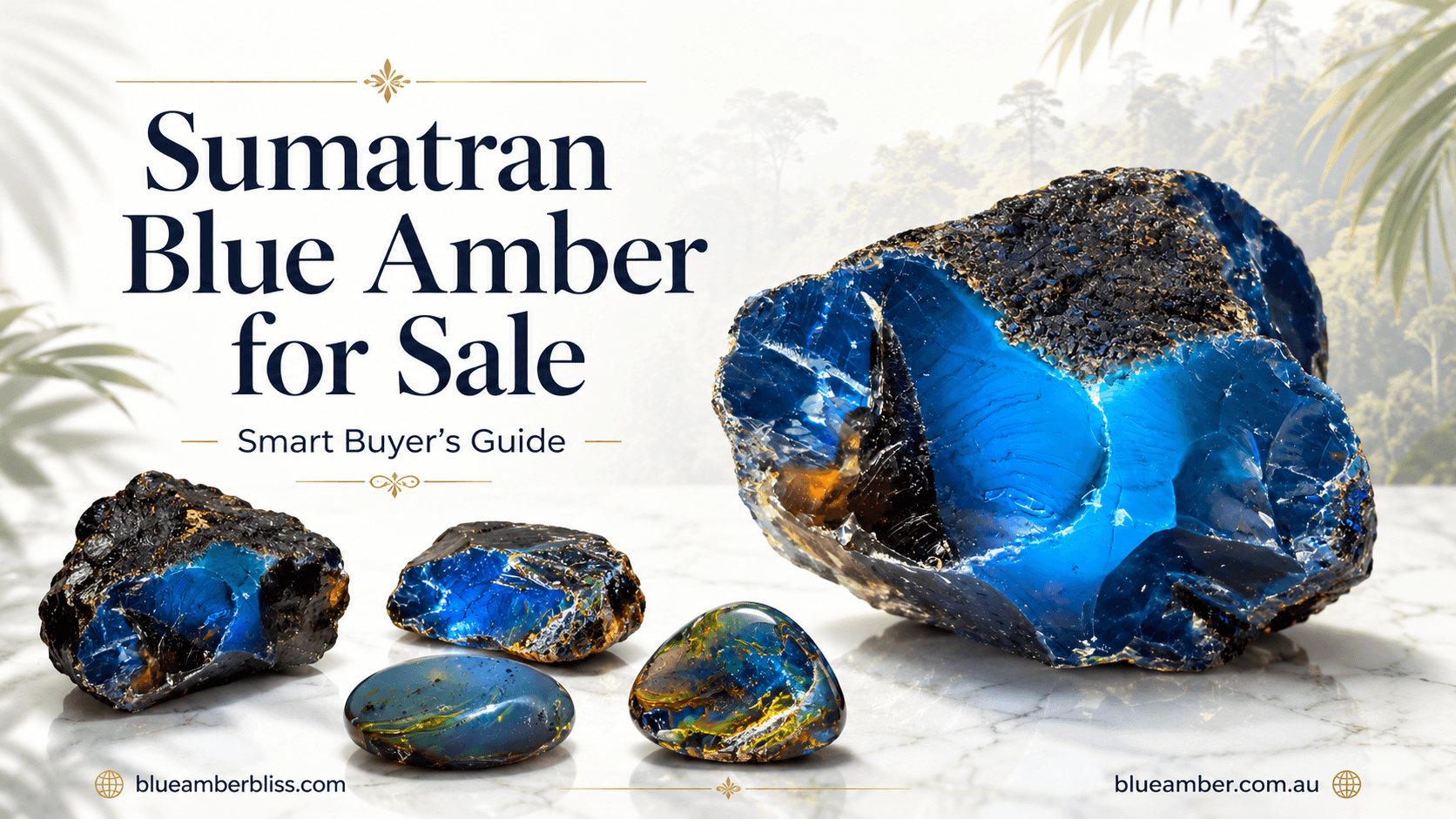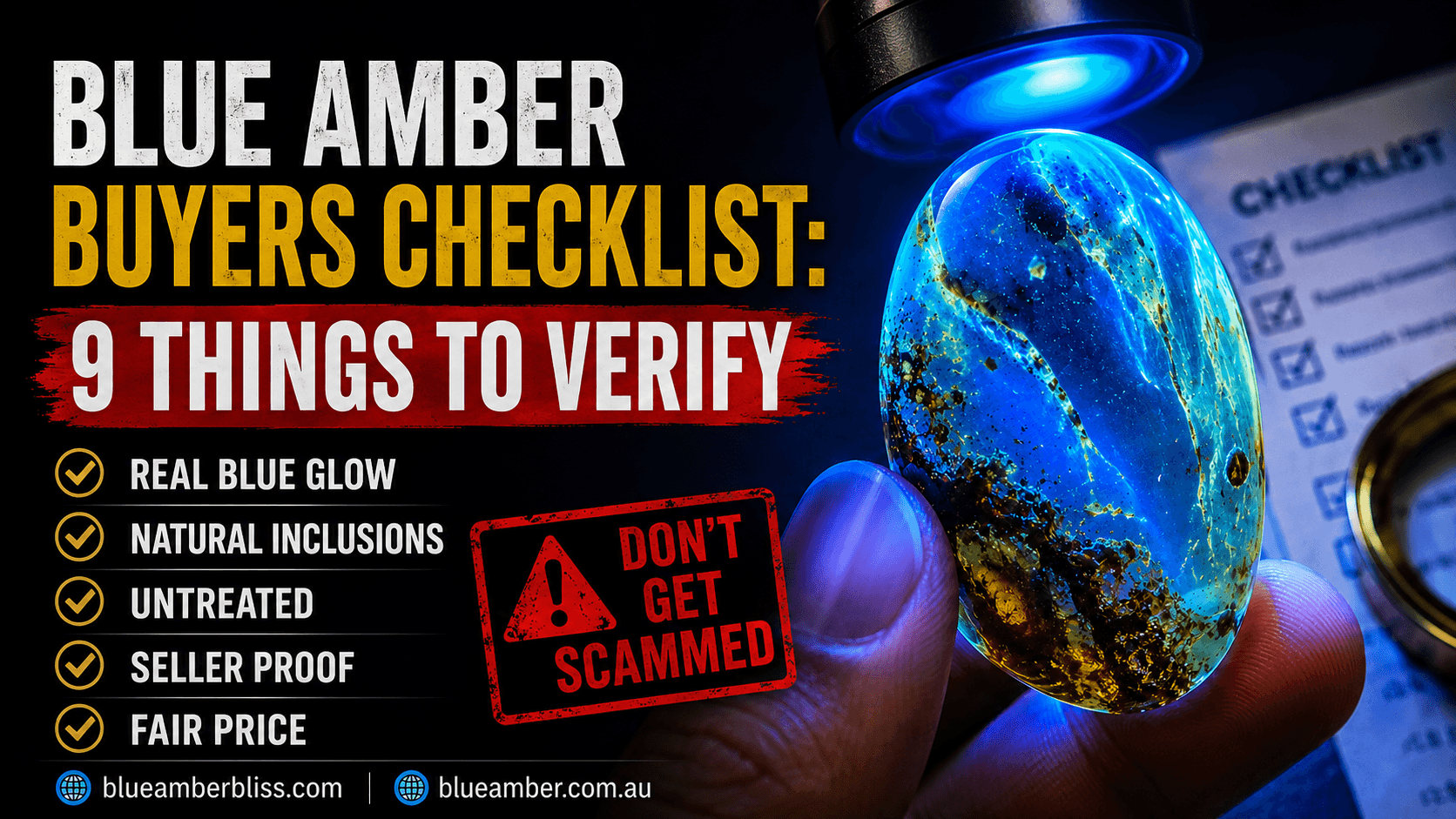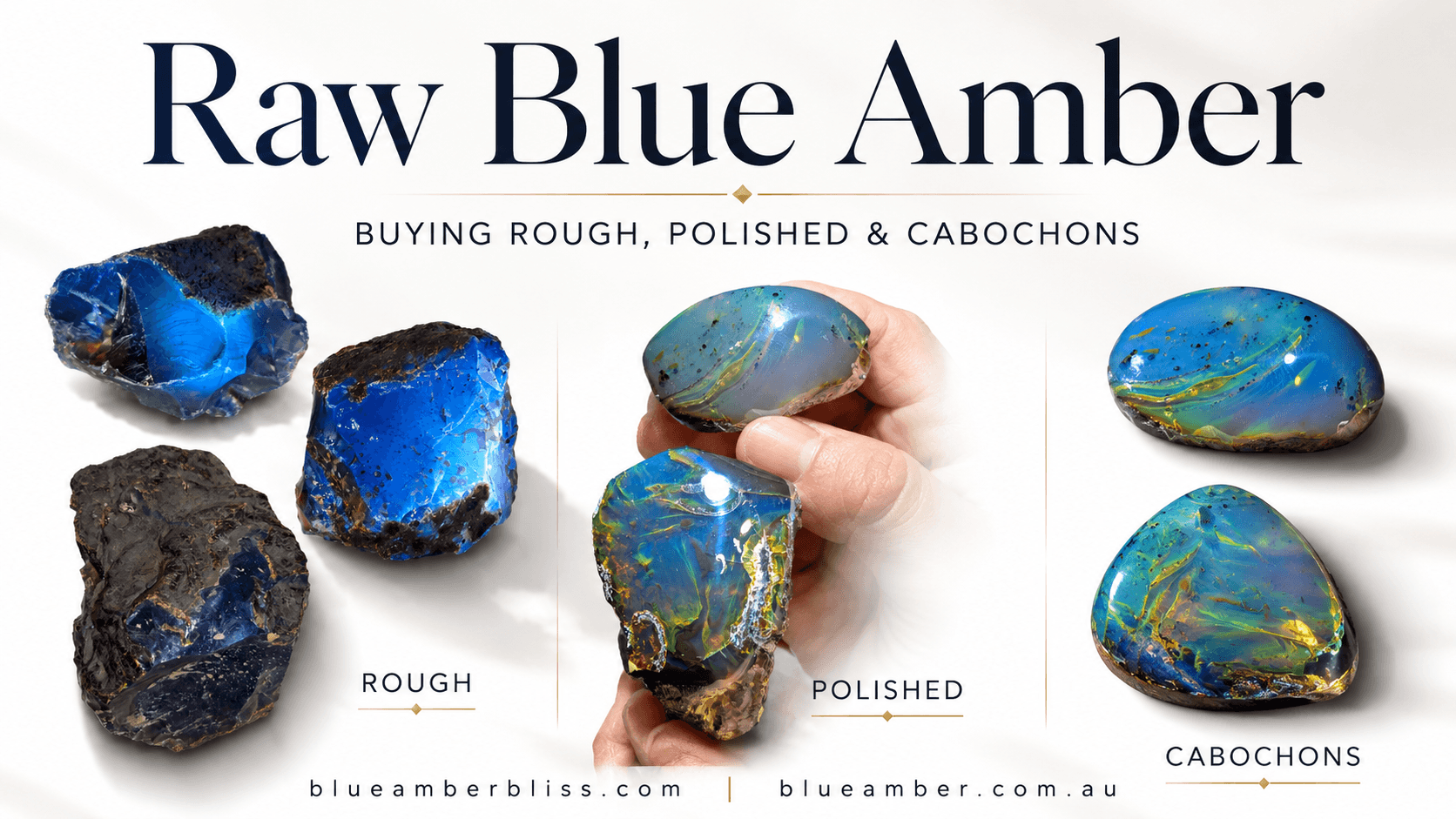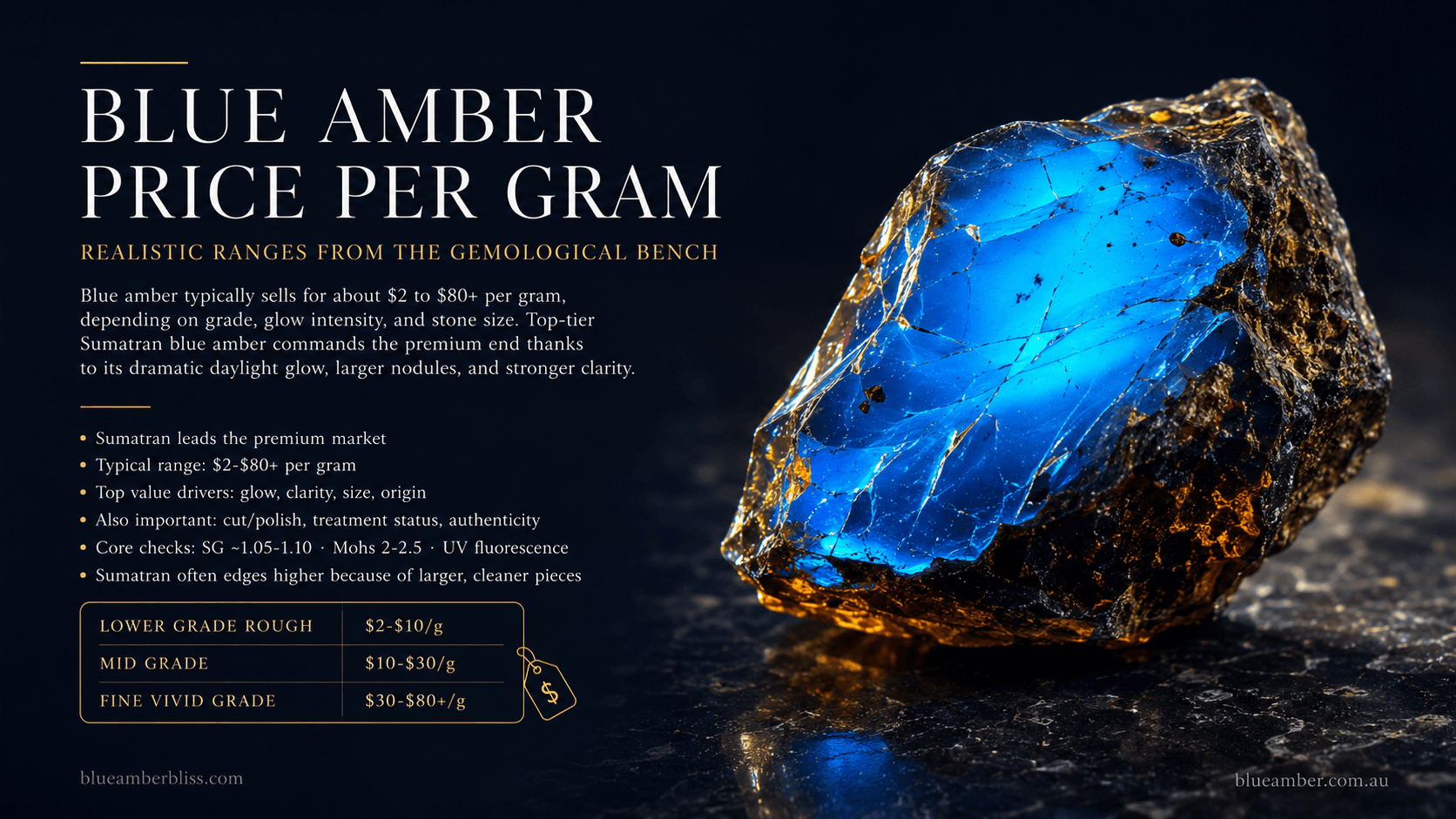
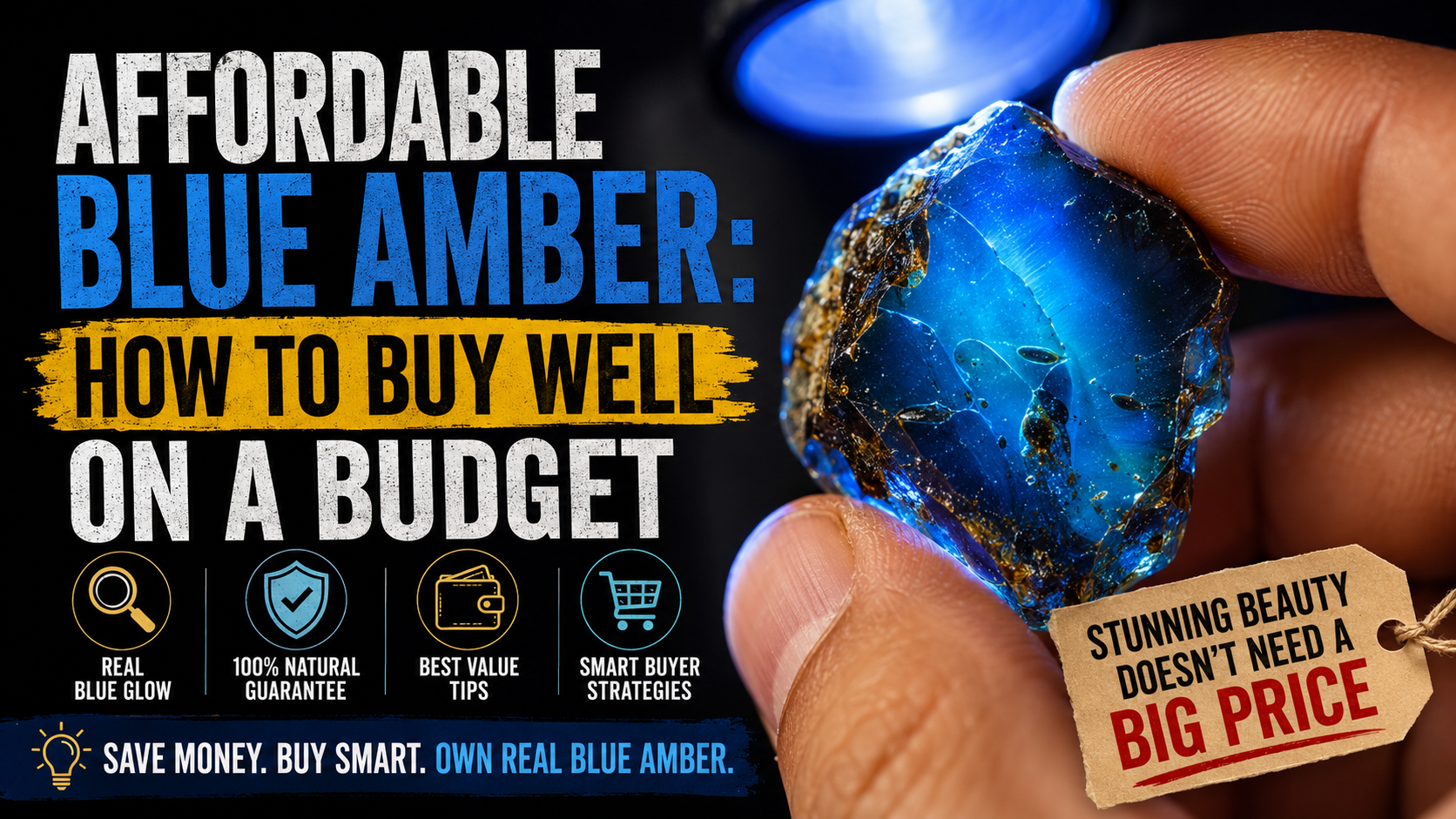
Affordable blue amber starts around $2 to $5 per gram for green-toned Sumatran pieces and rises with the strength of the daylight-blue glow. To buy well on a budget, choose smaller polished Sumatran stones, accept a slightly greener tone, and always verify authenticity—entry-grade Sumatran material still fluoresces beautifully in sunlight.
Key Takeaways
- Sumatran blue amber is the standout value. It is a newer source with bigger nodules and a dramatic daylight-blue glow, so buying on a budget here means genuine quality, not a compromise.
- Prices climb through clear tiers: green (entry), teal-blue (mid), and daylight blue (premium)—roughly $2–$5, $6–$20, and $25–$120+ per gram.
- Save smartly by going smaller or greener, choosing polished over huge rough, and buying only the grade you can personally verify.
- Too cheap is a warning sign. Copal, plastic, and dyed resin are the real false economy; authentic amber floats in saltwater with specific gravity ~1.05–1.10 and Mohs hardness 2–2.5.
- Entry-grade Sumatran still glows, giving you the best value blue amber for a trustworthy first piece.
What Makes Blue Amber Affordable (and What Drives the Price Up)?
Blue amber is not dyed or treated—the color is an optical effect. The resin absorbs ultraviolet light and re-emits it as visible blue fluorescence, strongest under sunlight or a 365 nm UV lamp. The more intense and daylight-visible that glow, the higher the price. Understanding this single factor is the fastest route to a smart budget purchase.
Four levers set the cost. Color intensity comes first: a faint green-blue is entry-grade, while a vivid sky-blue in ordinary daylight is premium. Size matters next, since larger clean nodules are rarer. Clarity, cut, and polish follow. Provenance rounds it out—and this is where Sumatran material shines.
Sumatran (Indonesian) blue amber is the hero of the market. As a newer source, it yields larger nodules and, piece for piece, somewhat better clarity and a more theatrical daylight glow. That makes it the more valuable and the standout stone. For a full breakdown, see the Blue Amber Price Guide.
According to GIA, amber is fossilized tree resin—organic, lightweight, and warm to the touch. Because it is not a mineral crystal, small inclusions and natural variation are normal and should never scare you off a budget piece. They are proof of a natural origin, not a defect.
Blue Amber Price Tiers: What You Actually Get at Each Level
Thinking in blue amber price tiers keeps you calm and prevents overspending. Each tier delivers a real, describable experience, so you can match your budget to the look you actually want rather than chasing the absolute top grade. Here is what your money buys across the range.
| Tier | Typical color in daylight | Approx. price per gram (Sumatran) | What you get | Best for |
|---|---|---|---|---|
| Entry / Green | Green to green-blue; glow shows best in shade or under UV | ~$2–$5 | Genuine fluorescence, natural inclusions, smaller polished pieces | First buyers, budget blue amber, everyday wear |
| Mid / Teal-Blue | Teal to turquoise; clear blue in indirect daylight | ~$6–$20 | Stronger daylight glow, cleaner clarity, cabochons and beads | Value seekers wanting visible blue without premium cost |
| Premium / Daylight Blue | Vivid sky-blue in direct sunlight | ~$25–$120+ | Dramatic large nodules, top clarity, collector cabochons | Collectors and statement pieces |
These bands are guides, not guarantees—individual stones vary with clarity and cut. For exact figures by grade, cross-check the Blue Amber Price Per Gram reference. The honest headline: a budget-friendly stone lives comfortably in the entry and lower-mid tiers, and it still delivers the glow that first attracted you to the gem.
Where does the green tier sit?
The green tier is the true home of cheap blue amber done right. These Sumatran pieces read green-gold in a room and flip to a cool blue-green in shade or sunlight. You sacrifice daylight drama, not authenticity. A 3–5 gram polished pendant here often costs less than a nice dinner, making it the friendliest place to start.
What changes in the mid teal-blue tier?
Step up and the blue becomes obvious in ordinary indirect daylight, not just in shade. Clarity usually improves, and cutters favor these stones for cabochons and bracelet beads. This tier is the sweet spot for blue amber on a budget when you want people to actually see the blue without paying premium daylight-blue prices.
What justifies the premium daylight-blue tier?
Premium stones glow electric-blue in direct sun—the effect that made this gem famous. Sumatran nodules dominate here because the source produces the large, clean rough these grades require. It is glorious, but it is not the only way to own real glow. Plenty of buyers stay happily in the lower tiers and never feel short-changed.
How to Buy Affordable Blue Amber Without Getting Fooled?
Buying budget blue amber well is about disciplined trade-offs, not luck. The goal is maximum genuine glow per dollar while keeping a fake out of your collection. Follow a simple rule: buy the highest grade you can personally verify, and let size and tone flex to fit your budget.
Start with tone. A greener Sumatran stone can cost a third of a vivid daylight-blue one yet still fluoresce strongly under UV. If you love the glow more than the exact hue, greener is the smartest lever you can pull. You keep authenticity and the fluorescent magic while shedding the premium.
Next, flex on size. Blue amber is priced per gram, so a compact 4 gram cabochon costs far less than a 15 gram showpiece of identical color. Smaller stones set beautifully in pendants and rings. Choosing modest size is the least painful way to bring premium color into a budget purchase.
Finally, prefer polished over huge rough. Rough looks cheap per gram, but you are gambling on hidden fractures and paying for waste that vanishes when it is cut. A finished, polished piece shows its true color and clarity honestly—far safer value for anyone making a first purchase.
Should you choose smaller size or a greener tone to save?
Choose whichever bothers you least. If daylight blue is non-negotiable, shrink the stone. If size matters for a statement pendant, accept a greener tone that still glows under sunlight or UV. Doing both at once—smaller and greener—unlocks the deepest discounts and is how most people land a genuinely wallet-friendly stone.
Is polished blue amber better value than rough?
For nearly every budget buyer, yes. Rough hides internal cracks that only reveal themselves during cutting, and you pay for grams that get polished away. A finished cabochon shows exactly what you are getting. Unless you are an experienced lapidary, polished is the honest, lower-risk path to best value blue amber.
Smart Trade-Offs: Where to Save and Where Never to Cut Corners
Some savings are free; others cost you the whole stone. The art of buying well on a budget is knowing which is which. Save on ego and drama—the things that do not change whether your amber is real. Never save on the things that prove it is genuine in the first place.
- Safe to save on: overall size, a greener tone, minor natural inclusions, and simple bezel settings instead of elaborate goldwork.
- Safe to save on: non-collector shapes—free-form cabochons and tumbled pieces cost less than perfectly calibrated ovals.
- Never cut corners on: authenticity verification, a clear return policy, and a seller who specializes in real blue amber.
- Never cut corners on: provenance clarity—know you are getting Sumatran material, the standout source.
Mapping grade to price is easier once you understand the material itself. The overview of Blue Amber Types shows how color, clarity, and origin combine into a grade—and therefore a price. That knowledge turns vague browsing into confident buying decisions you will not regret later.
How much can you realistically save with trade-offs?
A lot. Moving from premium daylight blue (~$25–$120+/g) to a strong teal-blue (~$6–$20/g) can cut cost by 60–75% while preserving obvious blue. Dropping to a genuine green tier (~$2–$5/g) saves even more. Stacking smaller size on top means a real, glowing stone often lands under $40 for a wearable pendant.
The False Economy of Cheap Blue Amber: Why Too Cheap Is a Red Flag
Here is the trap: a listing so cheap it feels like a win is usually not amber at all. Copal (young, unfossilized resin), plastic, and dyed glass flood budget marketplaces. Paying $8 for a large “blue amber” pendant is not a bargain—it is buying a fake at full price. That is the real false economy.
Protect yourself with quick, cited tests. Genuine amber has a specific gravity of about 1.05–1.10, so it sinks in fresh water but floats in a saturated saltwater solution (roughly two tablespoons of salt per cup). Plastic and glass sink; most copal behaves ambiguously. This one test filters out a huge share of frauds cheaply.
Hardness helps too. Amber sits at Mohs 2–2.5—soft enough to feel warm, never cold like glass, and it carries a faint pine or resinous scent when gently warmed. Under a 365 nm UV light, real Sumatran blue amber fluoresces an unmistakable blue. These checks confirm your stone is the real thing.
GIA’s amber quality guidance confirms that color, transparency, and the absence of treatment drive value. For a full walkthrough of at-home checks, read How to Spot Real Blue Amber before you buy. Verification is the one step that separates a smart deal from an expensive mistake.
What price is “too cheap” to be real?
Be suspicious when a large, vividly blue piece is priced far below the tiers above—say a 10 gram “daylight blue” pendant for under $15. Genuine Sumatran material at that color and size sits in the tens to hundreds. Suspiciously cheap blue amber almost always means copal or plastic wearing a hopeful label.
Is Entry-Grade Sumatran Blue Amber Still Worth It?
Absolutely—and this is the reassuring heart of the whole guide. Entry-grade Sumatran blue amber is not a watered-down version of the gem. It is the same fossilized resin, the same fluorescent physics, and the same standout origin as premium stones. You are simply choosing a greener tone or a smaller size, not a lesser truth.
Hold an entry piece in shade or under sunlight and it comes alive with that cool blue-green shimmer. Under UV it glows unmistakably. For most people, that first flash of real fluorescence is the moment they fall in love—and it happens just as powerfully with a budget stone as with a collector cabochon.
Because Sumatran material leads the market on size, clarity, and drama, even its entry grade punches above its price. That is why it earns the title of best value blue amber: you get the world’s standout source at the friendliest cost. Buying budget here is not settling—it is buying smart.
Does entry-grade blue amber still glow in daylight?
Green-tier stones glow best in shade, indirect light, or under UV, with a subtler daylight shift. Teal-tier pieces show clear blue in ordinary indirect daylight. Only premium stones flare electric-blue in direct sun. So yes—your stone glows, and stepping up one tier buys more daylight drama when you are ready.
Where to Find the Best Value Blue Amber?
Value lives with specialist sellers, not generic marketplaces. A dedicated blue amber shop stakes its reputation on authenticity, grades stones honestly, and explains exactly what tier you are buying. That transparency is worth more than a rock-bottom price from an anonymous listing. Start with the guide to Where to Buy Blue Amber.
Look for four things: clear provenance (Sumatran, stated plainly), per-gram pricing that matches the tiers above, real photos in multiple lighting conditions, and a return policy. A seller who films the daylight-to-UV color shift is showing you the truth. That is exactly where a fair price and genuine trust meet.
Avoid the deepest-discount corners of open marketplaces, where copal and plastic thrive. A fair, honest price from a specialist beats a suspicious bargain every time. Remember, the aim is not the cheapest object—it is the most genuine glow per dollar. That is what makes a purchase truly the best value blue amber.
A Simple Plan to Buy Affordable Blue Amber Well
Put it together and buying becomes almost effortless. Set a budget, pick your tier, decide your trade-offs, verify authenticity, and buy from a specialist. Follow that order and you will consistently land a real, glowing stone without the anxiety of overspending—or the heartbreak of a fake dressed up as a deal.
- Set your budget and match it to a tier: green (~$2–$5/g), teal (~$6–$20/g), or premium (~$25–$120+/g).
- Choose your trade-off: smaller size, greener tone, or both, to fit the budget without losing the glow.
- Prefer polished pieces over huge rough to avoid hidden fractures and wasted grams.
- Verify authenticity—saltwater float (SG ~1.05–1.10), warmth, faint resin scent, and blue UV fluorescence at 365 nm.
- Buy Sumatran from a specialist with clear provenance, per-gram pricing, and a return policy.
What We Notice When Buying Sumatran Blue Amber on a Budget
At Blue Amber Bliss we find the best value in Sumatran pieces that carry honest character rather than perfect show-stone looks. A dark, cognac-toned body with a strong indoor-to-daylight glow shift often costs far less than a large flawless nodule, yet it delivers more of the drama collectors actually want. We tell budget buyers to prioritise a clean UV transformation and a well-finished polish over sheer size, and to treat small natural inclusions as proof of ancient natural resin, not flaws to pay extra to avoid. Buying a modest, high-glow Sumatran stone almost always beats stretching for a big piece with weak colour play.
If you would like to see where honest value meets real glow, you are welcome to explore our hand-selected Sumatran blue amber at Blue Amber Bliss. Shop hand-selected Sumatran blue amber →
FAQ
What is the cheapest way to buy real blue amber?
The cheapest honest route is a small, polished, green-tier Sumatran stone. Expect roughly $2–$5 per gram, so a 3–5 gram pendant stays budget-friendly. It fluoresces genuinely under sunlight and UV. This is a sensible way to buy real material with real glow, keeping tone and size modest to hold the price low.
How much does affordable blue amber cost per gram?
Entry green-tier Sumatran runs about $2–$5 per gram, mid teal-blue about $6–$20, and premium daylight blue about $25–$120+. Your total depends on grams times grade. For precise, grade-by-grade figures, see the Blue Amber Price Per Gram guide. Most budget buyers stay in the $2–$20 range and still get visible blue.
Is cheap blue amber always fake?
Not always—but suspiciously cheap usually is. Genuine cheap blue amber exists in the green tier at small sizes. The red flag is a large, vividly blue piece priced far below the tiers, which typically signals copal, plastic, or dyed resin. Verify with a saltwater float test and UV fluorescence before you trust any bargain.
What is the difference between Sumatran and Dominican blue amber for value?
Both are equal in quality and value as genuine blue amber, but Sumatran is the newer source with bigger nodules and somewhat better clarity and a more dramatic daylight glow—making it the more valuable standout. Blue Amber Bliss lists Sumatran first because it delivers the best value blue amber for the money.
Does entry-grade blue amber still fluoresce?
Yes. Fluorescence is the core physics of blue amber, and even green-tier stones glow blue under a 365 nm UV lamp and shift color in sunlight or shade. Higher tiers simply show more of that blue in ordinary daylight. Entry-grade material still delivers the magic that makes this gem special.
How can I tell budget blue amber is genuine?
Run quick tests: real amber has specific gravity ~1.05–1.10, floating in saturated saltwater while plastic and glass sink. It rates Mohs 2–2.5, feels warm (never cold like glass), gives a faint resin scent when gently warmed, and fluoresces blue under UV. These checks protect every budget blue amber purchase.
Should I buy blue amber rough or polished on a budget?
Polished, for almost everyone. Rough looks cheaper per gram but hides internal fractures and includes grams that vanish in cutting, so the “deal” can disappear. A finished, polished stone shows its true color and clarity honestly. That transparency makes polished the safer, smarter choice on a budget.
What size blue amber gives the best value?
Small-to-medium pieces, roughly 3–8 grams, offer the best value blue amber for wearable jewelry. Because pricing is per gram, compact stones keep totals low while still setting beautifully in pendants and rings. Scaling down size is the least painful way to afford a stronger color grade on a budget.
Can I get daylight-blue color affordably?
You can approach it. Mid teal-blue stones show clear blue in indirect daylight at about $6–$20 per gram—far below premium. True electric daylight blue in direct sun sits in the premium tier, but a strong teal keeps your stone genuinely blue to the eye without the top-tier cost.
Where should I buy affordable blue amber safely?
Buy from a specialist that states Sumatran provenance, prices per gram, shows multi-light photos or video, and offers returns. Avoid the deepest-discount marketplace listings where copal and plastic hide. See the Where to Buy Blue Amber guide. A trustworthy seller is the surest path to a safe, budget-friendly purchase.
Related Blue Amber Guides