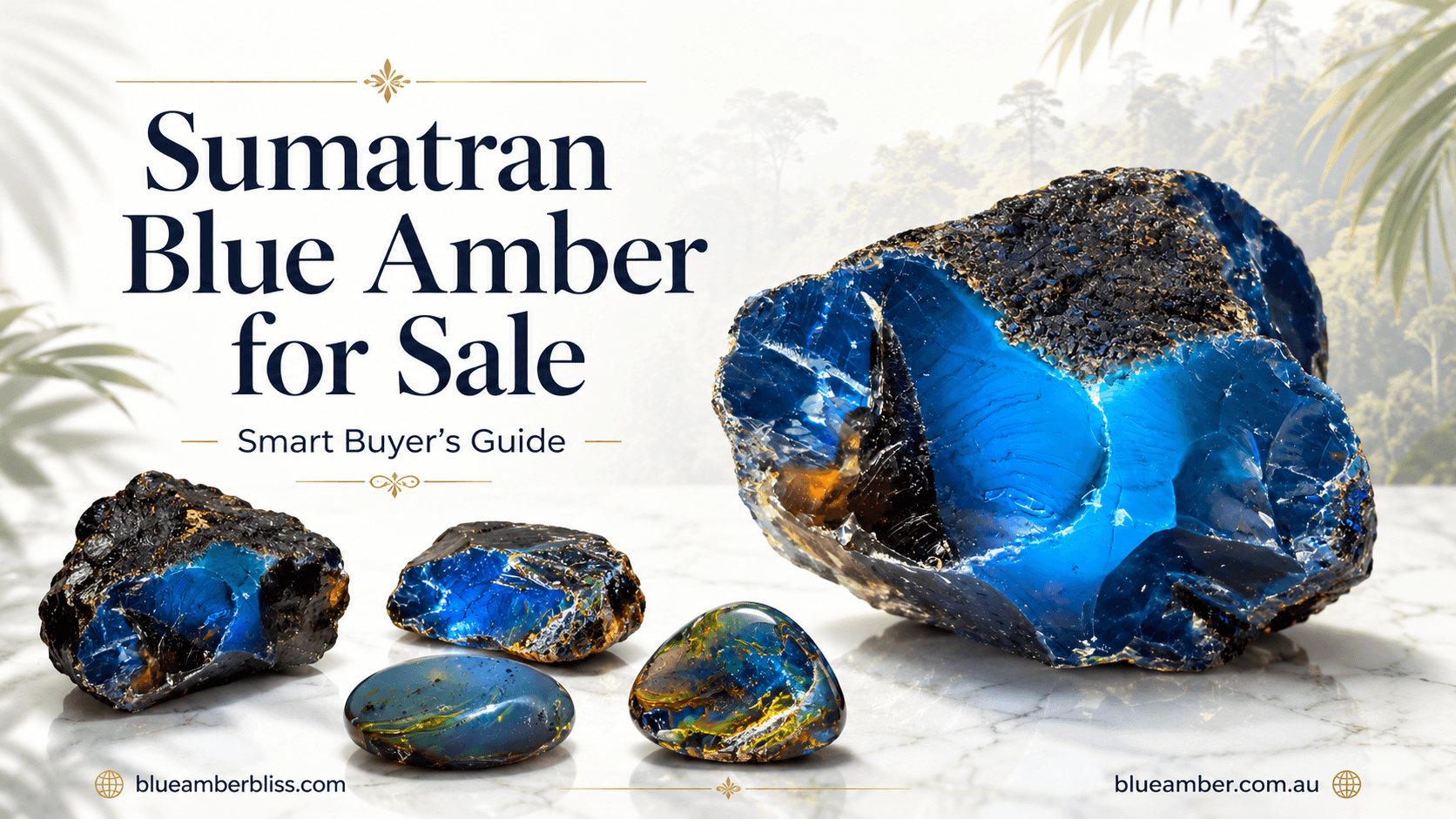

Blue amber wholesale means buying rough or polished blue amber in bulk—by the gram or the kilogram—at tiered, below-retail prices. Sumatran (Indonesian) blue amber leads this trade, prized for its larger nodules and dramatic daylight-blue glow. Expect per-gram rates from roughly $2 to $40+, scaling by grade, clarity, treatment status, and parcel size.
If you resell gemstones, cut jewelry, or build a serious collection, buying at the wholesale tier is how you protect your margins. But the bulk market rewards buyers who can grade, sort, and verify—and it punishes those who cannot. This guide walks you through pricing tiers, parcel contents, grading, risks, and seller vetting so your first bulk order is a smart one.
Key Takeaways
- Blue amber wholesale is priced in per-gram and per-kilogram tiers; higher grades and larger clean nodules command steep premiums.
- Sumatran blue amber is the standout for bulk buyers thanks to bigger nodules and a strong daylight blue glow—list it first, source it first.
- A “lot” or parcel is rarely uniform; you must grade-sort every batch by color, clarity, size, and treatment.
- Top risks are mixed quality, hidden fractures, and treated or synthetic pieces slipped into a lot.
- Demand provenance, an unheated-material guarantee, and a right of return before wiring any wholesale payment.
- Genuine amber shows specific gravity ~1.05–1.10 and Mohs hardness 2–2.5, and true blue amber glows blue under long-wave UV (~365 nm).
What Does Blue Amber Wholesale Actually Mean?
At the retail level, you buy one finished stone at a marked-up price. In the blue amber wholesale channel, you buy quantity—often rough nodules or unsorted parcels—directly from miners, exporters, or established dealers. The unit is weight, not the piece: sellers quote a price per gram or per kilo, and the more you buy, the lower that unit rate typically falls.
Wholesale is not a magic discount, though. You trade convenience for effort. A retail stone is already cleaned, graded, and often certified. A wholesale parcel arrives raw and mixed, and the value you capture depends on your ability to sort winners from filler. That sorting skill is the real margin.
Amber itself is fossilized tree resin, typicallymillions of years in the making for Sumatran material, per gemological references from GIA. Blue amber is not dyed—its color is an optical effect where the resin absorbs ultraviolet light and re-emits it as a blue glow. That physics is exactly why grading a bulk lot demands the right lighting.
How Does Blue Amber Wholesale Pricing Work?
Wholesale pricing follows two axes at once: grade and volume. Grade covers the intensity of the blue glow, transparency, size of the nodule, and freedom from fractures. Volume covers how much you commit to—single-parcel buyers pay more per gram than someone taking a full kilo of the same grade. The two combine into a tiered price sheet.
Because rough is sold by weight, a heavy, clean, large nodule with a vivid glow can be worth many times a small, cloudy fragment of equal mass. This is why blue amber wholesale quotes always specify a grade band, not a single number. If a seller offers one flat per-gram price for “blue amber,” treat that as a red flag—real parcels span grades.
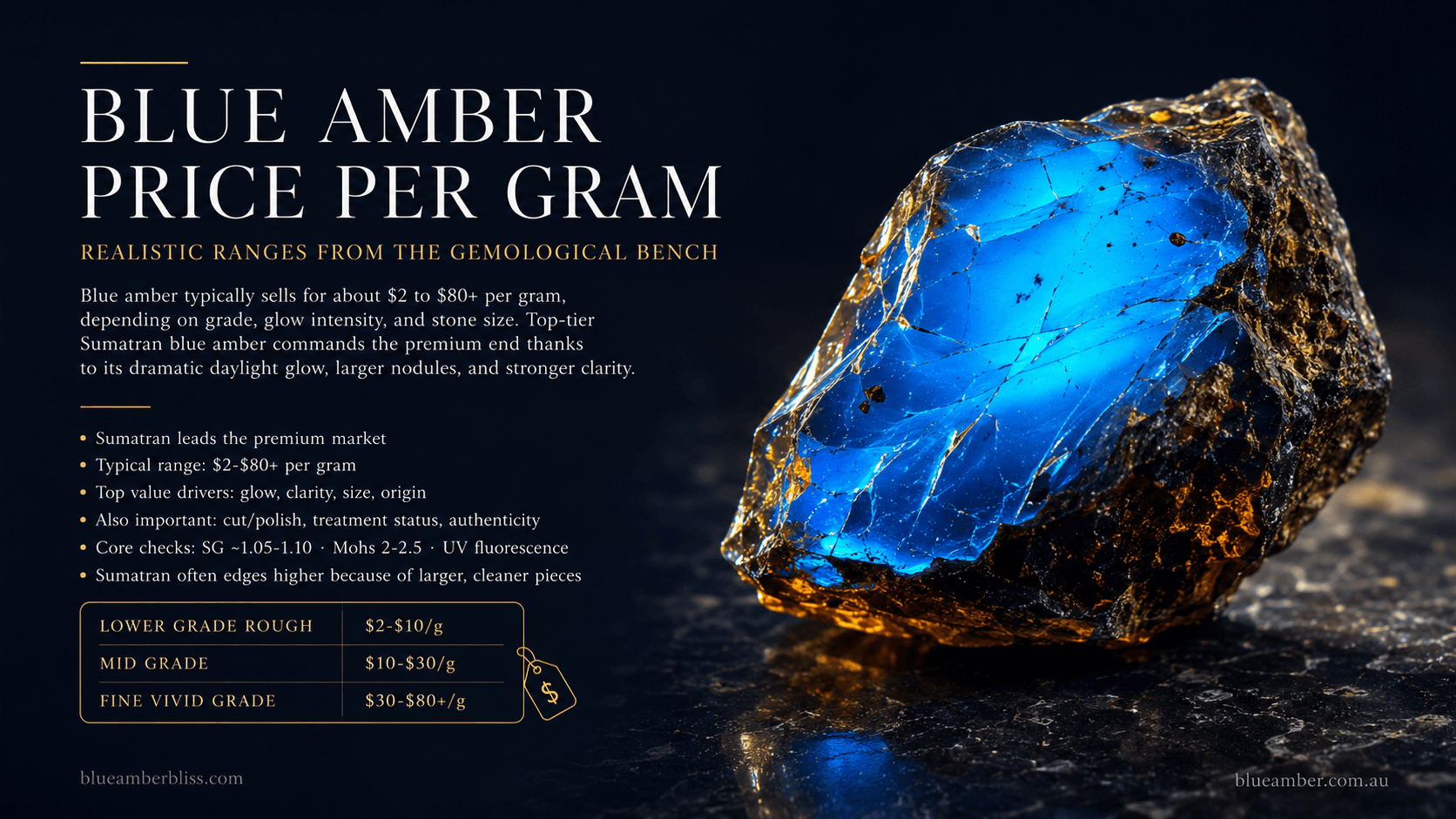
The table below shows representative blue amber wholesale tiers for Sumatran material. Treat these as directional market ranges, not fixed quotes; actual pricing shifts with supply, glow intensity, and how the lot is pre-sorted. For finished retail context, compare against our breakdown of blue amber price per gram.
| Grade tier | Description | Per-gram (wholesale) | Per-kg (bulk lot) |
|---|---|---|---|
| Commercial / mixed rough | Small pieces, weak glow, some fractures, sorting required | $2–$6 | $1,500–$4,000 |
| Standard | Moderate blue glow, mostly clean, mixed sizes | $6–$14 | $4,000–$9,000 |
| Premium | Strong daylight glow, good clarity, medium nodules | $14–$28 | $9,000–$18,000 |
| Top / collector rough | Vivid glow, large clean nodules, cutting-grade | $28–$45+ | $18,000–$35,000+ |
Notice the spread: top rough can cost ten times commercial mixed material by the gram. That gap is the whole game. Your profit comes from buying a parcel priced at a blended grade, then sorting out the premium and collector pieces that individually sell far above the lot’s average rate.
What Is a Minimum Order for Bulk Blue Amber?
Minimums vary by seller and by how you enter the market. Small exporters may sell a starter parcel of 50–100 grams so new buyers can test quality. Established wholesalers usually set minimums of 250 grams to 1 kilo per grade, and mine-direct sellers often quote by the full kilo. Expect a first-order minimum around $500–$2,000.
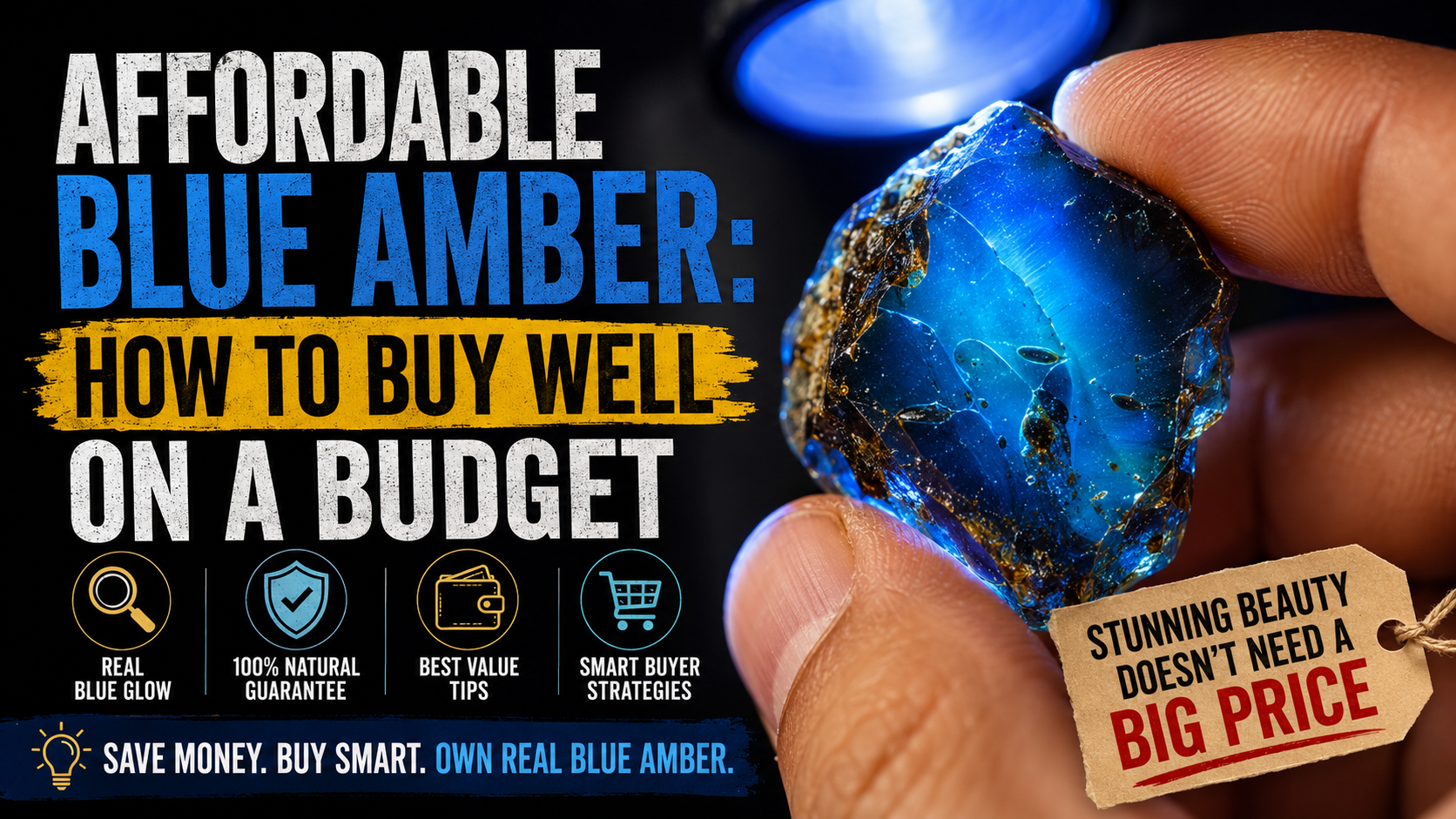
Do not chase the lowest minimum blindly. A tiny parcel gives you too small a sample to judge a seller’s consistency, and per-gram rates on micro-orders creep toward retail. A sensible first move is a mid-sized standard-grade lot from a vetted seller, sorted carefully, before you scale into bulk blue amber at kilo volumes.
What’s Inside a Blue Amber Lot or Parcel?
A blue amber lot is a weighed batch of rough (or sometimes semi-polished) nodules sold together at a blended price. Unless a seller explicitly labels it “hand-sorted top grade,” assume the parcel is mixed. That is normal and not dishonest—nature does not produce uniform material—but it means the average is what you paid for, not the best pieces you can see in the photos.
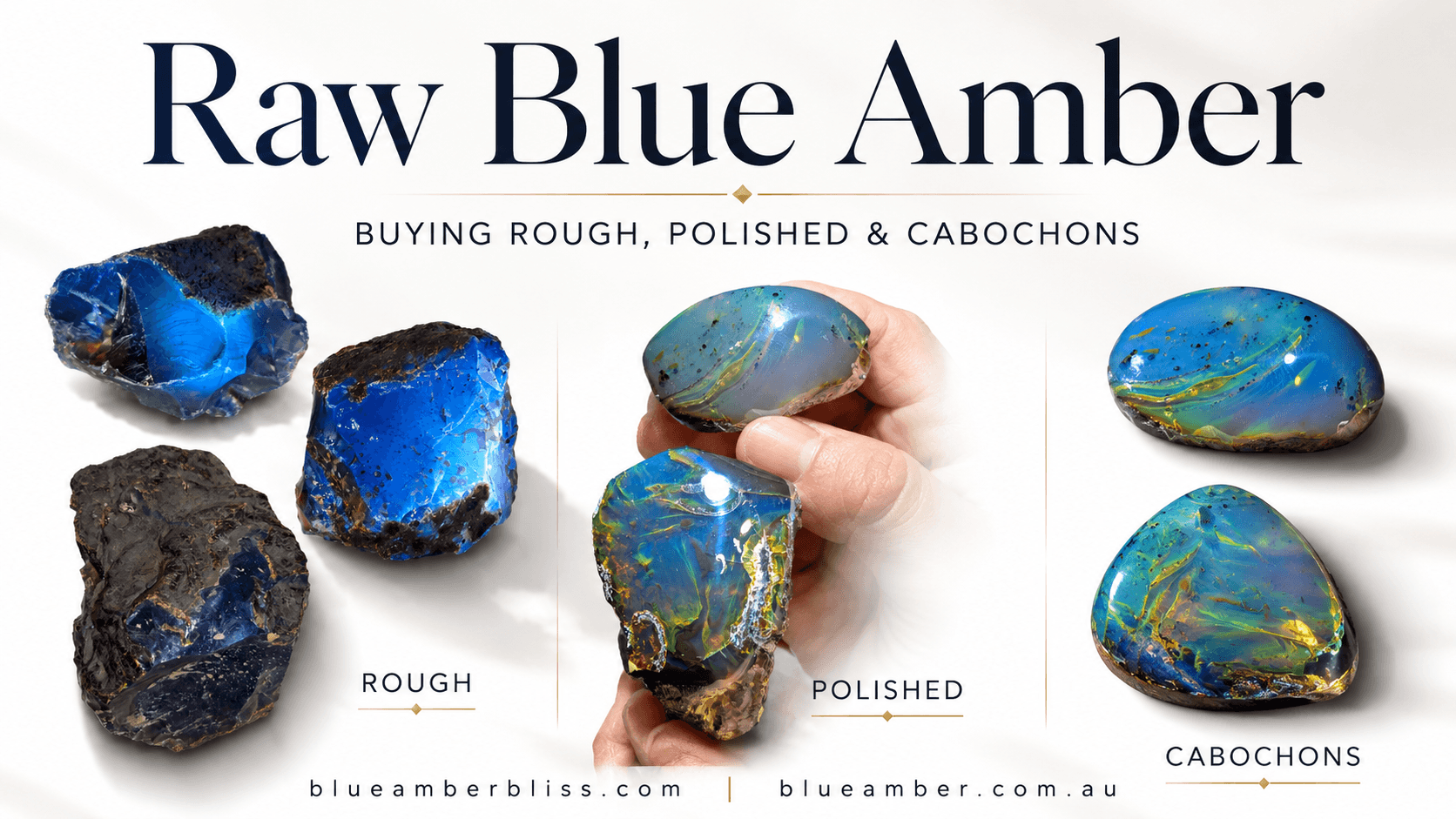
Typical blue amber lots contain a spread of sizes from sub-gram chips to multi-gram nodules, a range of glow intensities, and a mix of transparent and cloudy interiors. Some pieces will have surface crust or oxidation rind that hides the true body color until cleaned. A few may carry internal fractures invisible until you cut.
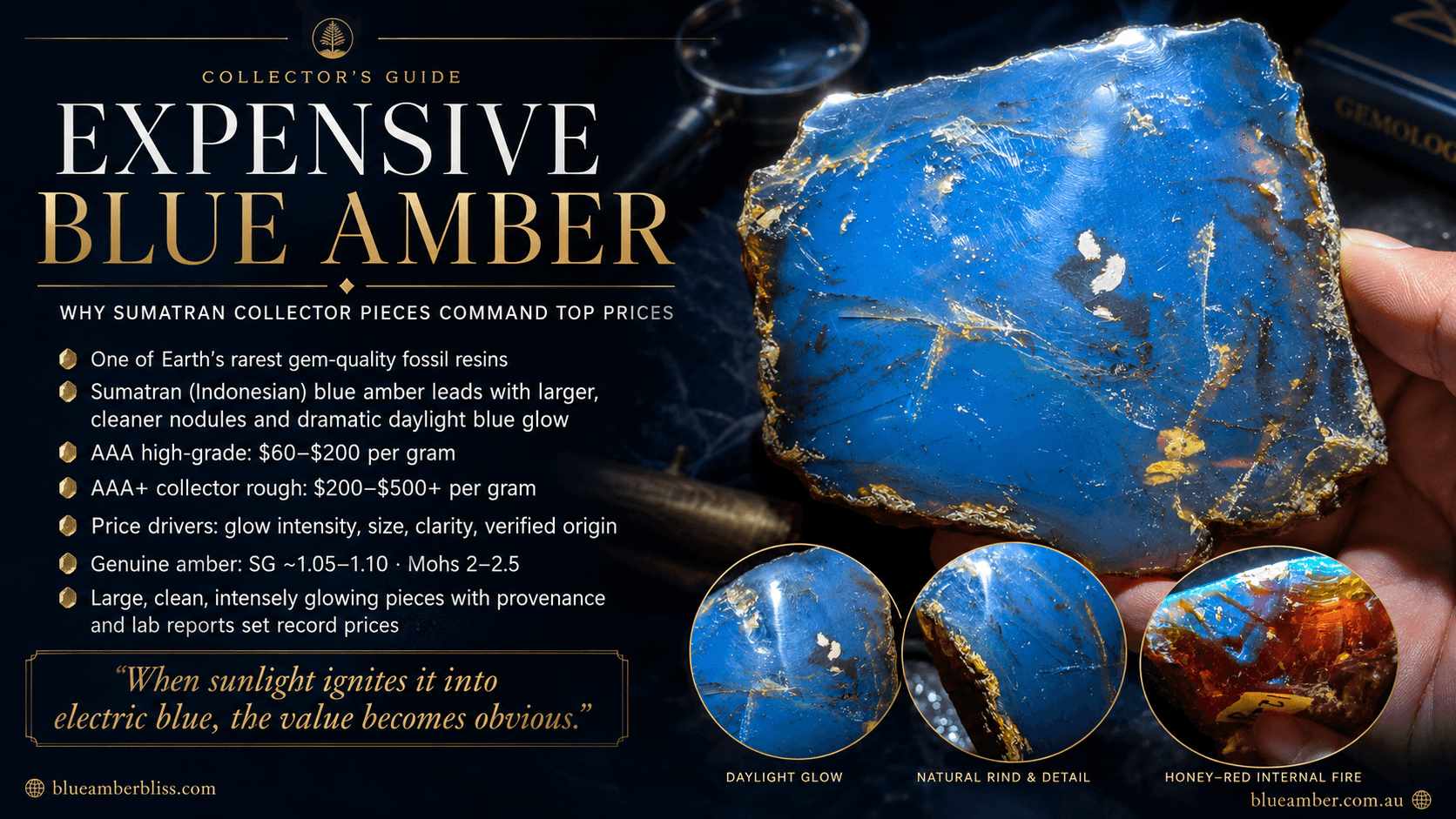
Sumatran parcels stand out here because the source yields notably larger nodules than other origins. For bulk buyers, bigger rough means more cutting-grade candidates per kilo and less waste—one reason wholesale sumatran blue amber is the material most resellers build around. If you are buying rough specifically, our guide to raw blue amber covers what uncut material looks and behaves like.
How Do You Grade-Sort a Wholesale Parcel?
Grade-sorting is the skill that turns a mixed lot into profit. Work through every parcel methodically, in consistent lighting, and record what each grade band weighs so you know your true blended cost. Here is a repeatable sequence.
- Clean and inspect. Wipe surface crust so you can see true body color. Examine each piece in both shade and direct daylight—blue amber’s glow only reveals itself against a dark or indirect background.
- Test the glow under UV. Shine a long-wave UV torch (~365 nm). Genuine blue amber fluoresces a vivid milky-blue; weak or greenish response signals lower grade or a non-blue variety.
- Grade by intensity and clarity. Separate into strong-glow transparent, moderate, and cloudy/weak. Pull cutting-grade nodules aside.
- Check for fractures. Backlight each larger piece; internal cracks catch the light. Flag anything that may shatter on the wheel.
- Weigh each band. Log grams per tier to calculate real per-gram cost and resale potential.
Two quick authenticity checks belong in every sort. Genuine amber floats in saturated saltwater because its specific gravity is only ~1.05–1.10, and it is soft at Mohs 2–2.5, so it takes a fingernail-resistant but knife-scratchable surface. These traits, documented by Britannica, help you catch glass or plastic imitations early.
Why Is Sumatran Material the Standout for Bulk Buyers?
When you buy in quantity, consistency and yield matter more than any single showpiece. Sumatran (Indonesian) blue amber wins on both. It is a newer, actively worked source that produces larger nodules than the older Dominican deposits, which means more high-yield cutting rough per kilogram and fewer tiny fragments diluting your average grade.
Sumatran material is also famous for a strong daylight blue glow—the color shifts visibly as you turn it under the sun, not only under a lab lamp. For a reseller, that “wow” in ordinary light is what closes sales. Sumatran and Dominican amber are comparable in overall quality and value, but Sumatran’s bigger pieces and glow give it the edge for bulk supply, making it the more valuable standout.
Practically, that is why blue amber wholesale programs built on Sumatran rough tend to deliver better margins: you get more usable weight, a more marketable glow, and a supply chain you can actually scale. To understand why even this material stays scarce, see how rare is blue amber.
What Are the Risks of Buying Blue Amber Wholesale?
Bulk buying concentrates risk. A single bad retail stone costs you one sale; a bad parcel can cost thousands. Three problems recur across the blue amber wholesale market, and each is preventable with discipline.
Mixed quality. The most common issue is a lot photographed with its best pieces but delivered with a weaker average. You paid for a grade the parcel does not hold. Defense: buy against a written grade breakdown, and reserve the right to return material that misses the stated bands.
Hidden fractures. Rough can look flawless on the surface yet carry internal cracks that split it on the cutting wheel, destroying yield. Defense: backlight-inspect on arrival, and negotiate lots priced with expected breakage baked in for lower grades.
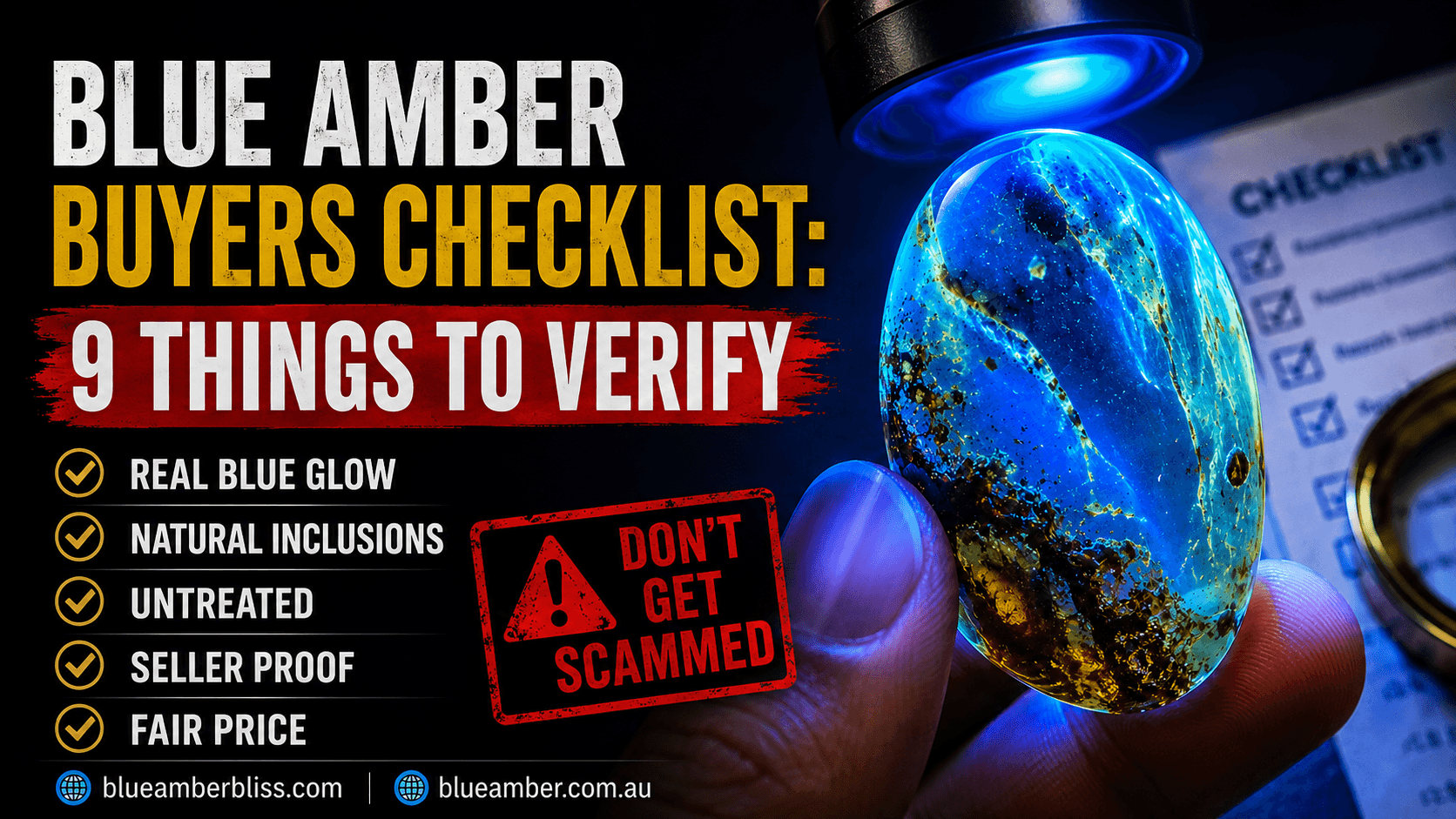
Treated or fake pieces slipped in. Some sellers pad lots with heat-clarified amber, pressed amber (amberoid), copal, or dyed and synthetic blue imitations. Defense: UV-test every piece, run saltwater float and hardness checks on samples, and demand an unheated, untreated, natural-origin guarantee in writing. If a seller resists that clause, walk.
How Do You Vet Wholesale Sellers and Demand Provenance?
Your supplier is your biggest variable. A great sorter cannot fix a dishonest source. Before wiring money, run every prospective blue amber for resellers supplier through a short due-diligence checklist and insist on documentation.
- Verifiable origin. Ask directly whether the material is Sumatran, and request mine or region provenance. Reputable sellers of wholesale sumatran blue amber name their source and can explain their supply chain.
- Treatment disclosure. Get a written statement that the amber is natural, unheated, and untreated. Silence is not a yes.
- Grade transparency. Require a per-band breakdown of the lot, not one blended number.
- Sample and return terms. A seller confident in their goods will offer a sample parcel and a return window on misgraded material.
- Track record. Look for consistent reviews, real photos of actual lots, and references from other resellers.
Provenance is not paperwork for its own sake—it protects resale value and your reputation. When you later sell to jewelers or collectors, they will ask the same questions you should be asking now. For a wider view of trustworthy channels, including bulk suppliers, see our guide on where to buy blue amber.
Should You Buy Blue Amber by the Gram or by the Kilo?
Both entry points exist in the blue amber wholesale market, and the right one depends on your volume, cash, and grading confidence. Buying by the gram lets you cherry-pick specific grades and test a seller cheaply; buying by the kilo lowers your unit cost but hands you a wider quality spread to sort. The comparison below lays out the trade-offs.
| Factor | Buy by the gram | Buy by the kilo (bulk lot) |
|---|---|---|
| Unit price | Higher per gram | Lowest per gram |
| Quality control | You pick grade precisely | Mixed—heavy sorting needed |
| Upfront cost | Lower total outlay | Larger commitment |
| Best for | Testing sellers, jewelers needing specific stones | Resellers scaling supply, cutters |
| Risk exposure | Contained per order | Concentrated in one lot |
A common path is to buy blue amber by the gram first—one modest, graded parcel to judge a supplier’s honesty and your own sorting—then move to kilo lots once you trust the source. Committing kilo-scale money to an unproven seller is the fastest way to lose it.
Who Buys Bulk Blue Amber, and Why?
Three buyer types dominate the bulk blue amber market, each with a different goal. Understanding which one you are keeps your purchases aligned with how you will actually recover the money.
Resellers and dealers buy parcels to sort, then sell graded pieces individually at a markup. Their edge is grading speed and a reliable Sumatran source, which is why blue amber for resellers centers on consistent, larger rough. Jewelers and cutters buy for cutting-grade nodules to set into finished pieces, prioritizing clean, fracture-free material over sheer volume.
Collectors and investors buy quantity to hold, betting on scarcity and rising demand. If that is you, treat each parcel as a position, not a purchase—document provenance, store carefully, and read our blue amber investment guide before committing serious capital. Across all three, the discipline is identical: grade honestly, verify origin, and never confuse a lot’s best photo with its true average.
What We Notice When Buying Sumatran Blue Amber by the Gram
When we buy Sumatran blue amber in bulk, we never grade purely by weight, because a heavier parcel isn’t automatically the better one. We sort each rough and polished piece by how strongly the dark cognac body flips to that electric blue glow under UV and shifting daylight, and by the cleanness of the larger nodules, since one big honest piece with sharp indoor-to-sun contrast usually outperforms a handful of small, cloudy grams. At Blue Amber Bliss we’ve found that natural inclusions and specimen character add collector value that a per-gram price alone will never capture, so we weigh glow, size, and shape together before anything is priced.
If you’re building a parcel or looking for a single standout stone, we warmly invite you to explore our hand-selected Sumatran blue amber and see the daylight-to-glow shift for yourself. Shop hand-selected Sumatran blue amber →
FAQ
What is blue amber wholesale?
Blue amber wholesale is buying blue amber in bulk—by the gram or kilogram—directly from miners, exporters, or dealers at tiered, below-retail prices. You purchase quantity, usually as rough or mixed parcels, and capture margin by grading and sorting the material yourself.
How much does blue amber cost wholesale per gram?
Wholesale per-gram rates for Sumatran material typically run about $2–$6 for commercial mixed rough, $6–$14 standard, $14–$28 premium, and $28–$45+ for top cutting-grade. Volume, glow intensity, clarity, and nodule size move the number within and beyond those bands.
Is Sumatran blue amber better for bulk buying than Dominican?
For bulk buyers, yes. Sumatran and Dominican are comparable in quality and value, but Sumatran is a newer source with larger nodules and a strong daylight blue glow. That means more cutting-grade yield per kilo and more marketable stones, making Sumatran the standout for wholesale supply.
What is a blue amber lot or parcel?
A blue amber lot is a weighed batch of rough sold together at a blended price. Unless labeled hand-sorted, assume it is mixed in size, clarity, and glow. You pay for the average, so grade-sorting each lot on arrival is essential.
How do I check if wholesale blue amber is real?
Run three tests. Genuine amber floats in saturated saltwater (specific gravity ~1.05–1.10), scratches only with a knife not a fingernail (Mohs 2–2.5), and true blue amber glows vivid blue under long-wave UV (~365 nm). Failing any test signals imitation or treatment.
What is the minimum order for bulk blue amber?
Minimums range from a 50–100 gram starter parcel with small exporters to 250 grams–1 kilo per grade with established wholesalers. Mine-direct sellers often quote by the full kilo. First-order minimums commonly land around $500–$2,000 depending on grade.
What are the biggest risks when buying blue amber wholesale?
Mixed quality (a lot weaker than its photos), hidden internal fractures that ruin cutting yield, and treated, pressed, or synthetic pieces slipped into the parcel. Written grade breakdowns, backlight inspection, UV testing, and a return clause defend against all three.
Should I buy blue amber by the gram or by the kilo?
Buy by the gram to test a seller and pick exact grades at a lower total outlay. Buy by the kilo for the lowest unit cost once you trust the source and can sort a wider spread. Most resellers start by the gram, then scale.
What provenance should a wholesale seller provide?
Insist on verifiable origin (Sumatran source or region), a written natural-unheated-untreated guarantee, a per-grade breakdown of the lot, and sample-and-return terms. A reputable supplier discloses all four without hesitation; resistance is a reason to walk away.
Can I resell bulk blue amber for profit?
Yes—that is the core model for resellers. You buy a blended-grade parcel wholesale, sort out premium and collector pieces, and sell them individually well above the lot’s average per-gram cost. Profit depends on honest grading, a reliable Sumatran source, and verified provenance.
Related Blue Amber Guides