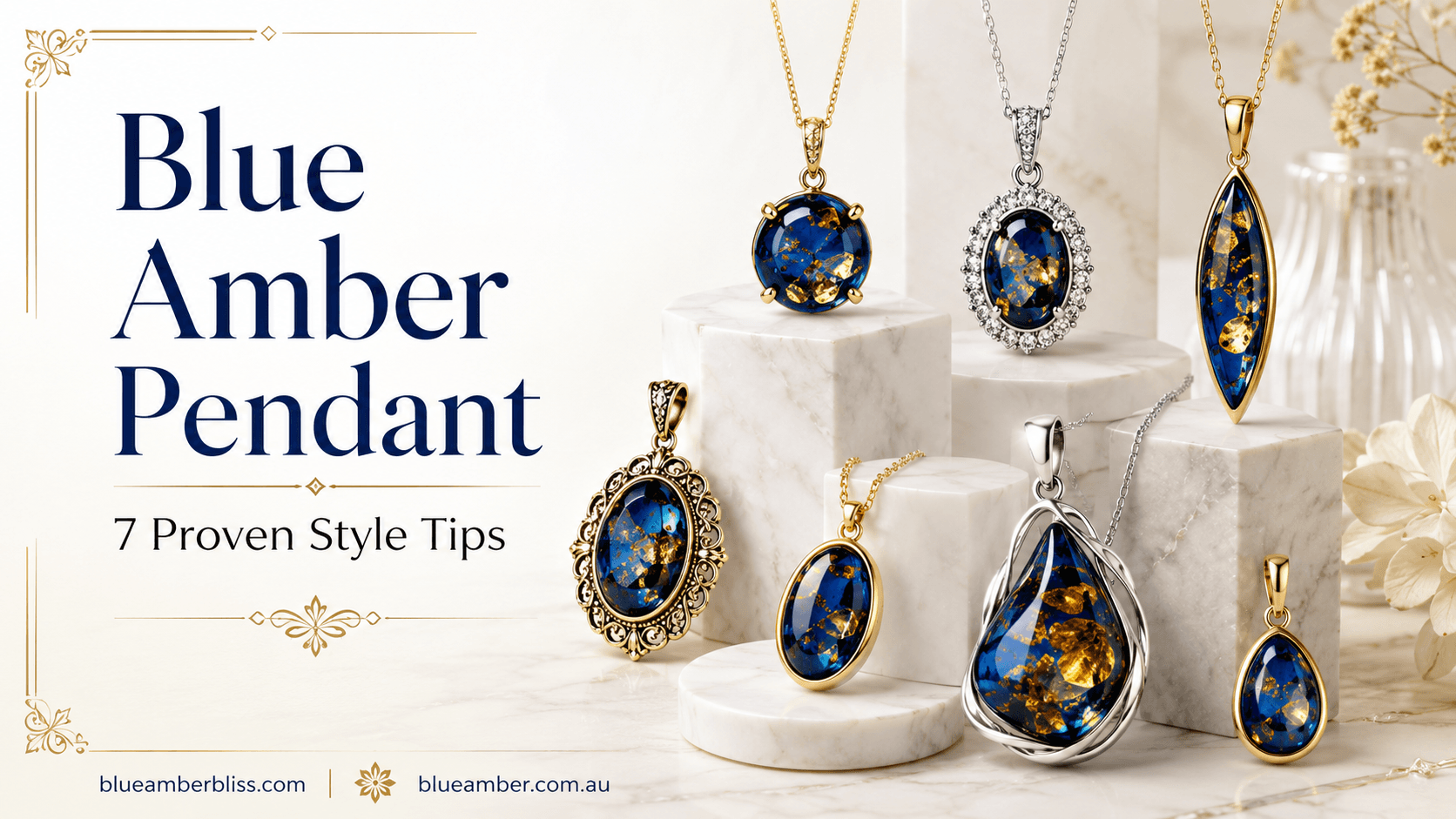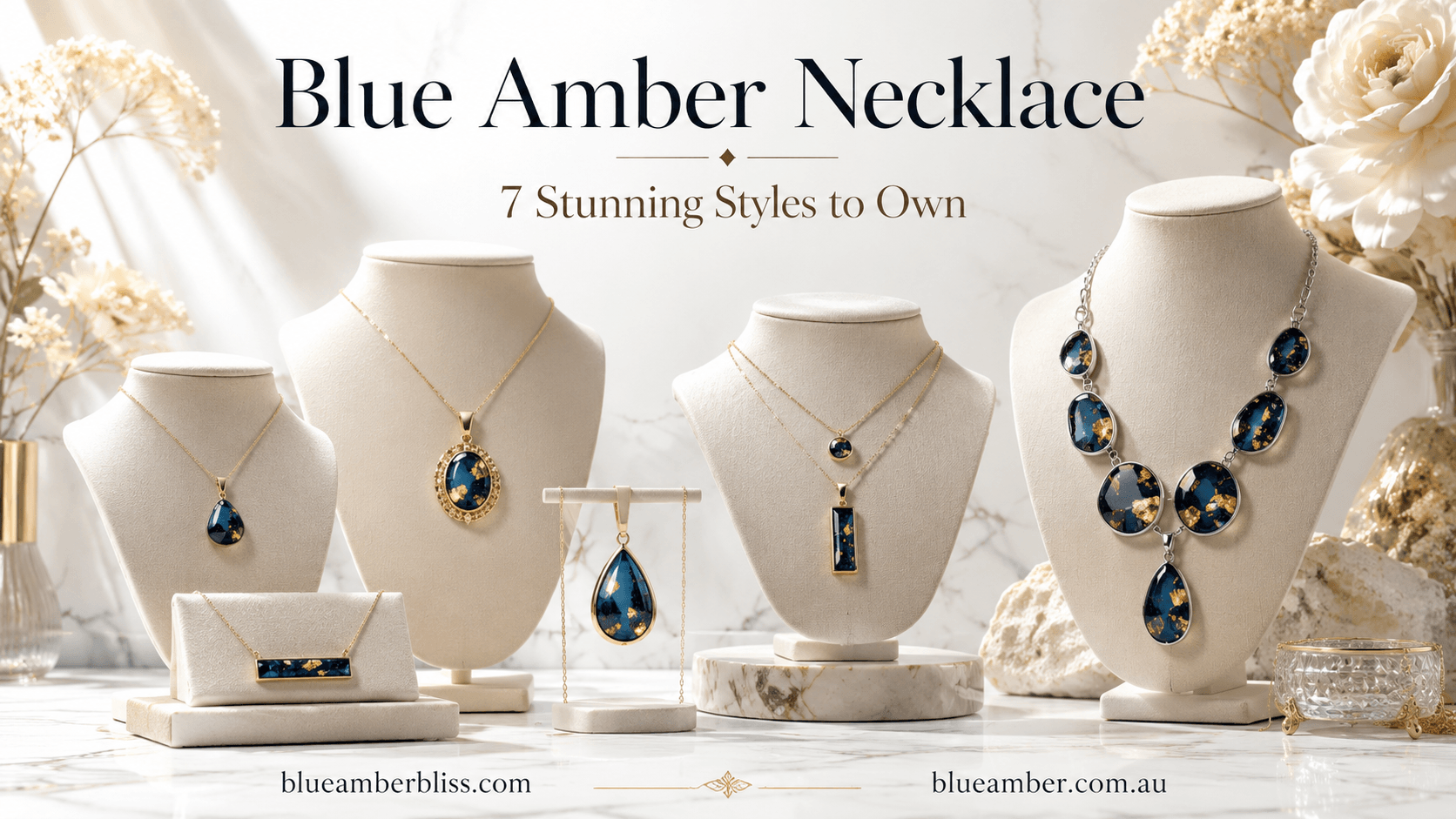
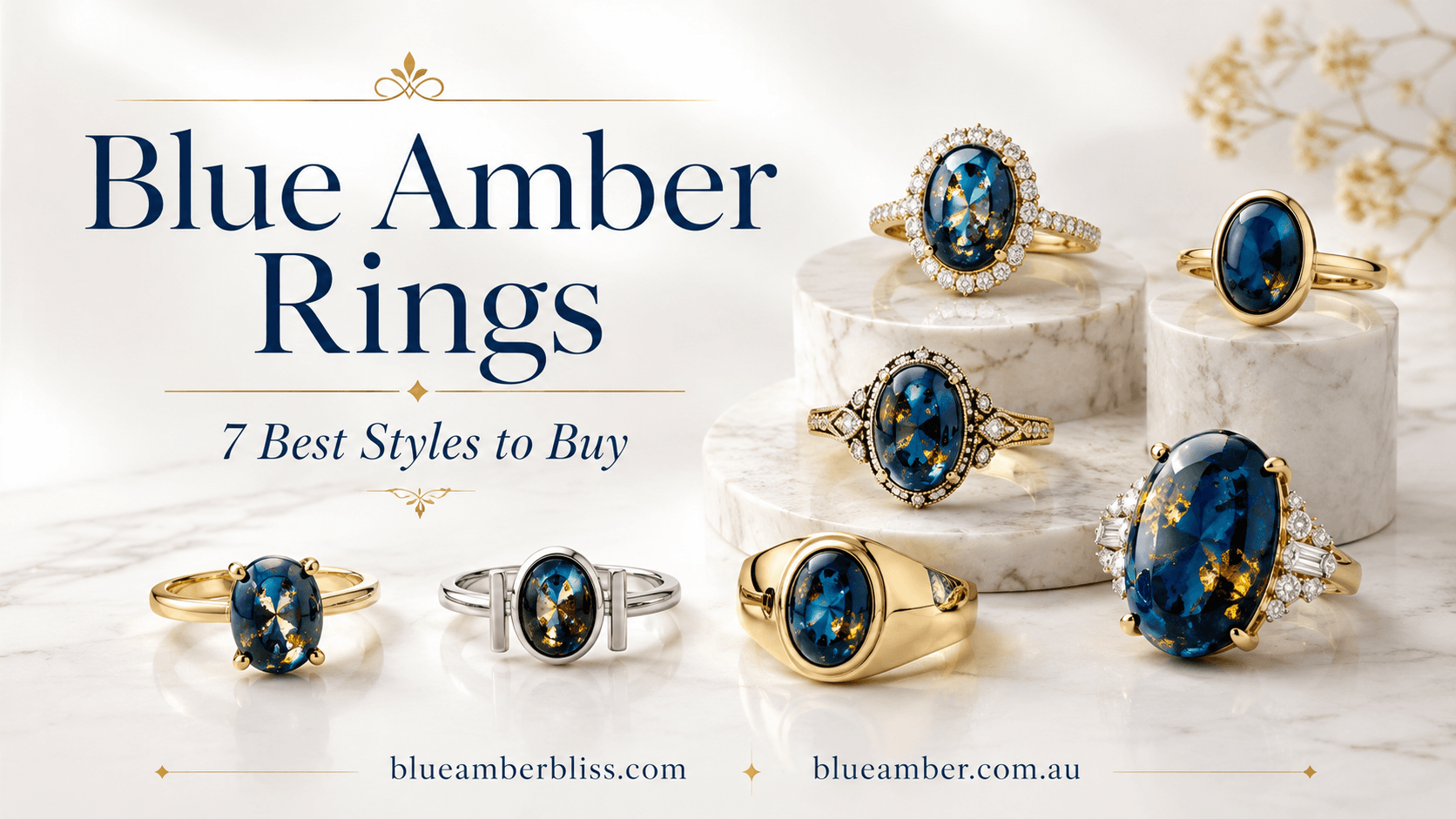
Looking for blue amber rings that actually glow? The standout choice is Sumatran (Indonesian) blue amber set in silver or gold, ideally a bezel that protects the soft stone while letting daylight strike the surface to trigger that famous blue glow. Buy authenticated amber, size it comfortably, and treat it gently for daily wear.
That short answer covers the essentials, but a ring is a lifelong decision, so let’s go deeper. As a gemologist who handles amber every week, I’ll walk you through styles, settings, metals, men’s versus women’s designs, sizing, durability, and the cut choices that make the glow sing. Sumatran amber leads the conversation because, frankly, it earns the spot.
Key Takeaways
- Sumatran blue amber rings come first: a newer source famous for dramatic daylight blue glow, larger nodules, and slightly better clarity, making them more valuable and the true standout.
- Amber is soft (Mohs 2-2.5, specific gravity ~1.05-1.10), so a bezel setting in silver or gold protects it best for everyday wear.
- The cut matters: domed cabochons and smooth surfaces catch UV-rich daylight and maximize the blue fluorescence (peaking near 430-450 nm under ~365 nm UV).
- Men’s designs favor wider bands and bold nodules; women’s lean toward refined cabochons and accent stones, but both rules bend freely.
- Verify authenticity before buying, then clean only with mild soap, a soft cloth, and lukewarm water; never ultrasonic, never solvents.
Why Sumatran Blue Amber Leads Every Ring Conversation
When people picture blue amber rings, they often imagine a stone that simply looks blue. The reality is more magical. Blue amber is normally honey to cognac colored, but under sunlight or UV it fluoresces a glowing blue. Sumatran amber does this with unusual drama, and that is why we build our collection around it.
Sumatran (Indonesian) blue amber is the newer discovery on the world stage, and it arrived with advantages. Miners pull larger nodules from the ground, which means a jeweler can cut bigger, cleaner cabochons for a ring without sacrificing structure. Bigger raw material plus consistent clarity translates directly into more striking finished pieces.
How does Sumatran compare to Dominican amber, the other famous blue source? In honest gemological terms, the two are equal in quality and value. Both are genuine, both fluoresce, both are collectible. The difference is that Sumatran is newer, yields larger pieces, and shows somewhat better quality overall, which nudges it ahead as the more valuable and standout option for a ring you want to be noticed.
That daylight glow is the heart of the appeal. According to the GIA, amber is fossilized tree resin, and its optical behavior under light is part of what makes certain deposits so prized. With Sumatran material, you get that glow in a size and clarity that flatters a ring beautifully. If you are brand new to the gem, our primer on what blue amber is covers the science in plain language.
What Makes a Great Blue Amber Ring? Styles and Settings Explained
A ring is a partnership between the stone and the metalwork around it. Because amber is soft and lightweight, the setting does more than decorate; it shields the gem and orients it toward the light. Let’s break down the choices that define a great blue amber ring.
Which Setting Protects a Soft Stone Best?
The bezel setting wraps a thin metal rim fully or partly around the stone’s edge. For amber, this is the gold standard. The rim absorbs knocks that would otherwise chip the gem, and it holds the cabochon securely without the exposed claws of a prong setting. A bezel also creates a clean, modern frame that reads as deliberate and high-end.
Prong settings lift the stone toward the light and show more of it, which can intensify the visible glow. The trade-off is exposure: prongs leave amber edges vulnerable, and a soft stone resents impact. If you choose prongs, treat them as a special-occasion ring rather than a daily workhorse.
Half-bezel and flush settings split the difference. A half-bezel guards the most vulnerable edges while leaving open sides for light to enter. Flush or tension-style mounts sit the amber low and protected, ideal for active hands. For most buyers seeking durability for daily wear, a full or half bezel is the smart pick.
Should You Choose a Silver or Gold Setting?
Metal is part aesthetic, part practical. A silver blue amber ring is the most popular choice we make, and for good reason. Sterling silver’s cool, bright tone contrasts the warm amber body and makes the blue fluorescence pop against the metal. It is also more affordable, letting you put budget toward a larger or cleaner stone.
Gold brings warmth and heirloom permanence. Yellow gold echoes amber’s honey base for a rich, traditional look; white gold mimics silver’s contrast with greater hardness and tarnish resistance; rose gold adds a soft romantic glow. Gold costs more, but it resists scratching and oxidation better than silver over decades.
| Feature | Sterling Silver | Yellow Gold | White Gold |
|---|---|---|---|
| Cost | Most affordable | Premium | Premium |
| Contrast with blue glow | High (cool tone) | Warm, blended | High (cool tone) |
| Durability | Softer, can tarnish | Hard, no tarnish | Hardest, no tarnish |
| Best for | Everyday value, bold contrast | Classic warmth | Heirloom daily wear |
Whatever metal you choose, make sure the band feels substantial enough to support the stone. A wisp-thin band under a large Sumatran cabochon looks unbalanced and bends over time. For the full landscape of metals, mounts, and matching pieces, see our complete blue amber jewelry guide.
Men’s vs Women’s Blue Amber Rings: How to Choose
Amber suits everyone, and modern design has largely abandoned rigid gender rules. That said, certain proportions and finishes read as more masculine or feminine, so it helps to know the conventions before you bend them.
What Defines a Men’s Blue Amber Ring?
A mens blue amber ring typically features a wider band, often 7-12 mm, with a bolder stone and heavier metal presence. Men’s designs lean into large Sumatran nodules cut as substantial cabochons or even faceted slabs, framed by matte, brushed, or oxidized silver for a rugged contrast. Signet-style and bezel mounts dominate because they are tough and understated.
Because men’s rings carry larger stones, Sumatran amber is a natural fit; the source’s big nodules let a cutter shape a commanding gem without internal flaws. Pair that with a low-profile bezel and you get a piece that survives a handshake-heavy life while still glowing blue in the sun.
What Defines a Women’s Blue Amber Ring?
Women’s blue amber rings often emphasize elegance: refined cabochons, narrower bands, and decorative galleries or accent stones like white topaz, marcasite, or tiny sapphires that echo the blue glow. Higher-set stones and delicate filigree showcase the amber’s color play from more angles.
None of this is a rule. Plenty of women wear bold statement amber, and plenty of men prefer slim, polished bands. Choose the proportion that fits your hand and lifestyle. The glow is universal; only the framing changes.
How Does the Cut Show the Daylight Glow?
This is where amber rings get genuinely exciting. The blue you see is fluorescence: ultraviolet light from the sun (or a UV lamp) excites the amber, which re-emits visible blue light. The cut and finish control how much of that effect reaches your eye, so a smart cut can transform an ordinary stone into a showstopper.
Smooth, highly polished surfaces let UV-rich daylight enter cleanly and bounce the blue back out. A domed cabochon is the classic choice because its curve gathers light from many angles and concentrates the glow toward the viewer. The higher and smoother the dome, the more dramatic the daylight blue effect tends to be.
Background matters too. Cutters often leave the back of the cabochon less polished or place it against a dark or reflective metal seat so the blue fluorescence reads more vividly against the warm body color. Faceted cuts can scatter sparkle but sometimes dilute the cohesive blue sheet, so for pure glow, a clean dome usually wins.
The glow’s spectral peak sits in the blue range, roughly 430-450 nm, when excited by long-wave UV near 365 nm, which is exactly why noon sunlight and UV flashlights make these stones come alive. Britannica notes amber’s long history of prized optical qualities, and this fluorescence is the modern headline. When you shop, view any blue amber ring in direct daylight, not just store lighting, to judge the true effect.
Is a Blue Amber Ring Durable Enough for Daily Wear?
Let’s be honest about the soft-stone question, because it is the most important practical concern. Amber sits at just Mohs 2-2.5 on the hardness scale, softer than a fingernail in some cases, with a low specific gravity around 1.05-1.10 that makes it feather-light on the hand. It is durable enough to wear, but it demands respect.
What does that mean in practice? Amber scratches more easily than quartz or sapphire and can chip on a hard impact. It is not fragile like glass, but it is not a knockabout stone either. With a protective setting and sensible habits, a blue amber ring can absolutely be an everyday companion that lasts for decades.
The single best durability upgrade is the bezel setting discussed earlier, paired with a low profile so the stone sits closer to your finger and out of harm’s way. Avoid wearing your ring during gym sessions, gardening, dishwashing, or anything involving grit, chemicals, or sharp impacts. Slip it off and you eliminate most risk.
| Property | Blue Amber | What It Means for a Ring |
|---|---|---|
| Mohs hardness | 2 – 2.5 | Scratches easily; choose a protective bezel |
| Specific gravity | ~1.05 – 1.10 | Very lightweight, comfortable all day |
| Heat tolerance | Low | Keep away from hot water, ovens, sun-baked cars |
| Chemical resistance | Poor | No perfume, solvents, or harsh cleaners |
How Should You Size and Fit a Blue Amber Ring?
Sizing amber rings carries one wrinkle most metal-only rings do not: you usually cannot resize them after the fact. Heat and pressure from a jeweler’s resizing torch can crack or discolor the amber, and adjusting a bezel can loosen the stone. So getting the size right the first time matters more than usual.
Measure your finger at the end of the day when it is largest, and in a warm room, since cold shrinks fingers. If you are between sizes, size up slightly; a marginally loose ring is safer than one that traps a soft stone under stress. Wider men’s bands fit tighter than thin bands, so add a quarter to half size for chunky designs.
For gifts, trace an existing ring’s inner diameter or borrow one discreetly. When ordering online, ask the seller whether resizing is possible on that specific setting; many silver bands can be gently adjusted at a section away from the stone, but always confirm. A reputable seller will tell you honestly, which is one more reason to vet where to buy blue amber before you commit.
Blue Amber Ring Meaning: Why People Wear It
Beyond beauty, many buyers ask about the blue amber ring meaning. Amber has been worn for thousands of years as a talisman of warmth, protection, and life energy, prized since antiquity precisely because it captures sunlight in solid form. A blue-glowing ring extends that symbolism: light hidden inside the stone, revealed by the sun.
People often associate blue amber with calm, clarity, and renewal, the blue glow reading as a spark of hidden vitality. Because each stone fluoresces a little differently, a blue amber ring feels personal, almost like wearing a fragment of trapped daylight. Whether you treat that as poetry or metaphysics, it adds meaning to a piece you will wear close to your skin.
For couples, the rarity and individuality of Sumatran blue amber make it a distinctive alternative to conventional gemstone rings, a way to say something unique rather than off-the-shelf. The meaning you assign is yours; the glow simply gives you a beautiful canvas.
How to Care for Your Blue Amber Ring
Good care keeps the glow alive for a lifetime. Because amber is soft and reactive, its maintenance differs from harder gems. The rules are simple, and following them prevents almost every problem owners report.
Clean gently. Use lukewarm water, a drop of mild soap, and a soft cloth or your fingertips. Rinse, then dry with a lint-free cloth. Never use ultrasonic cleaners, steam, alcohol, acetone, or commercial jewelry dips, all of which can dull, craze, or dissolve the surface. Our step-by-step on how to clean blue amber covers this in detail.
Store your ring separately in a soft pouch or lined box so harder gems cannot scratch it. Keep it away from prolonged direct sun, heat, and dry air, which can over time cause surface crazing. Apply perfume, lotion, and hairspray before putting the ring on, and remove the ring for cleaning, cooking, and sleep. A light occasional buff with a microfiber cloth restores luster.
How Much Do Blue Amber Rings Cost?
Pricing depends on the stone’s size, clarity, glow intensity, and the metal. Sumatran blue amber commands a premium because of its larger nodules and standout daylight glow, and a strong, even blue fluorescence raises value most of all. Silver settings keep entry prices accessible, while gold and larger stones move you upmarket.
As a rough orientation, modest silver pieces with smaller cabochons start in the lower hundreds, while large, vividly glowing Sumatran stones in gold can reach well into the four figures. The single biggest value driver is glow quality, a stone that lights up strongly in daylight is worth more than a larger but dimmer one. For real-world figures, our blue amber price guide breaks costs down by type and size.
Before paying any price, confirm the stone is genuine. The market includes copal, pressed amber, and dyed imitations that mimic the look but not the science. Learn the simple home tests in our guide to spotting real blue amber so you buy with confidence.
How to Buy the Right Blue Amber Ring: Step by Step
- Confirm the source. Prioritize Sumatran (Indonesian) blue amber for its larger nodules, better clarity, and dramatic daylight glow.
- View the glow in daylight. Take the stone (or photos) into direct sun or under a 365 nm UV light to judge the blue fluorescence.
- Choose a protective setting. Pick a full or half bezel in silver or gold to shield the soft stone for daily wear.
- Verify authenticity. Run salt-water float and UV tests, and ask for the seller’s origin documentation.
- Get the size right. Measure warm, at day’s end, and size up slightly since amber rings are hard to resize.
- Buy from a vetted seller. Choose a specialist who guarantees authenticity and explains the stone’s origin.
What We Notice When Setting Sumatran Blue Amber Into Rings
At Blue Amber Bliss, we hand-select every Sumatran stone destined for a ring, and the dark cognac body is what makes it sing on the hand: indoors it reads as a deep, warm brown, then steps into daylight and lifts into that unmistakable blue glow. Because rings take real wear, we favour clean, well-domed cabochons with tight polish and no surface-reaching fractures, while keeping the subtle natural inclusions that prove a piece is genuine ancient resin rather than treated glass. We also watch proportion closely, since a stone that glows beautifully in the palm can overwhelm a slim band, so we match each Sumatran cabochon to a setting that lets the daylight shift stay the star.
If a ring that transforms in the light appeals to you, we warmly invite you to explore our hand-selected Sumatran blue amber at Blue Amber Bliss. Shop hand-selected Sumatran blue amber →
FAQ: Blue Amber Rings
Are blue amber rings real amber or treated?
Genuine blue amber rings use natural fossilized resin that fluoresces blue under UV-rich light; the blue is not a dye or coating. Beware copal, pressed amber, and plastic imitations. Always verify with a float test, UV check, and seller documentation before buying.
Is a Sumatran blue amber ring better than a Dominican one?
The two sources are equal in genuine quality and value, but Sumatran (Indonesian) blue amber is newer, yields larger nodules, and shows somewhat better clarity, making it the more valuable standout for a striking ring. We work exclusively with Sumatran material for these reasons.
What is the best setting for a blue amber ring?
A bezel setting is best because it wraps protective metal around the soft stone’s edges, guarding against chips while holding the cabochon securely. Half-bezel and low-profile mounts also work well. Reserve exposed prong settings for occasional rather than daily wear.
Can I wear a blue amber ring every day?
Yes, with care. Amber is soft (Mohs 2-2.5), so choose a protective bezel, keep the profile low, and remove the ring for chores, exercise, and anything involving grit or chemicals. Treated sensibly, a blue amber ring lasts for decades.
What does a blue amber ring meaning represent?
The blue amber ring meaning centers on captured sunlight, warmth, protection, and renewal. Amber has been a talisman for millennia, and the hidden blue glow revealed by daylight adds themes of clarity and vitality, making each ring feel personal and symbolic.
Should men choose silver or gold for a blue amber ring?
Both work. A silver mens blue amber ring offers bold cool-tone contrast against the warm stone at a friendly price, often in wide brushed or oxidized bands. Gold adds durability and heirloom warmth. Choose based on budget, skin tone, and lifestyle.
How do I clean a silver blue amber ring safely?
Use lukewarm water, mild soap, and a soft cloth, then dry thoroughly. Never use ultrasonic cleaners, steam, or solvents on amber. For tarnished silver, gently polish the metal away from the stone, avoiding any chemical contact with the amber itself.
Why does my blue amber ring only look honey-colored indoors?
That is normal and expected. Blue amber’s body color is honey to cognac; the blue is fluorescence triggered by UV-rich daylight or a UV lamp. Step into sunlight and the glow appears. Indoor lighting lacks the UV needed to excite the effect.
Can a blue amber ring be resized later?
Often not safely. Resizing heat can crack or discolor amber, and adjusting a bezel may loosen the stone. Some silver bands allow gentle adjustment away from the setting, but always confirm with the seller first and aim to order the correct size initially.
How can I tell a high-quality blue amber ring?
Judge by glow first: a strong, even blue fluorescence in daylight signals quality. Then assess clarity, size, polish, and a secure protective setting. Sumatran stones with large, clean cabochons and vivid glow represent the standout tier of blue amber rings.
Related Blue Amber Guides
- blue amber jewelry for men
- Blue Amber Jewelry: 7 Best Styles & Care Guide
- Blue Amber Necklace: 7 Stunning Styles to Own
- Blue Amber Pendant: 7 Proven Style Tips
- Blue Amber Bracelet: 7 Best Styles, Benefits & Care
- Blue Amber Earrings: 7 Stunning Styles to Wear