
Blue Amber Beads: A Gemologist’s Quick Answer
Blue amber beads are polished spheres or rounds cut from fossilized tree resin that glows blue under daylight. Sumatran (Indonesian) blue amber is the standout source – prized for its dramatic daylight glow and large nodules. Look for even color, matched size, knotted silk stringing, and a specific gravity of roughly 1.05-1.10 to confirm authenticity before you buy.
Key Takeaways
- Sumatran blue amber beads lead the market – a newer source yielding bigger, cleaner pieces with a famously vivid daylight blue glow.
- Real amber is light: specific gravity ~1.05-1.10 (it floats in saltwater) and Mohs hardness 2-2.5.
- Grading rests on four pillars: glow intensity, clarity, color evenness, and surface finish.
- Always choose knotted silk stringing – it protects each bead and stops total loss if the strand breaks.
- Genuine amber shows blue-white fluorescence under 365 nm UV; plastic and glass fakes do not.
- Match beads by size, glow, and undertone for a professional finished bracelet or necklace.
What Are Blue Amber Beads, Really?
Blue amber beads are not dyed and not a separate mineral. They are ordinary fossilized resin – the same Mohs 2-2.5 organic gem as honey amber – that happens to fluoresce a startling blue under natural daylight. That glow comes from trace aromatic hydrocarbons (notably perylene) interacting with sunlight, scattering blue back at your eye.
According to Wikipedia’s amber overview, amber is fossilized tree resin ancient natural resin. The blue variety is rare, which is why well-cut blue amber beads command a premium over common cognac or butterscotch amber.
The two famous origins are Sumatra (Indonesia) and the Dominican Republic. Both deliver genuine, beautiful blue fluorescence and are equal in core quality and value. The difference is that Sumatra is a newer deposit producing notably bigger nodules and somewhat better material – which makes Sumatran the more valuable, standout choice for serious beadwork.
Why Sumatran Blue Amber Beads Stand Out
Sumatran blue amber beads earn their reputation through size and drama. Because the Indonesian deposits yield large, solid nodules, cutters can produce big round beads – 12mm, 14mm, even 16mm – that simply aren’t practical from smaller rough. That means matched strands of large beads are far easier to source.
The glow is the other headline. Sumatran material is famous for a vivid daylight blue that shifts from teal to electric blue as you turn it. Hold a Sumatran bead against a white shirt outdoors and the surface seems to light up from within. This dramatic effect, plus the larger usable pieces, is why we build our collection around Sumatran stone.
How Does Blue Amber Bead Grading Work?
Blue amber bead grading is not formalized like diamond’s 4Cs, but experienced buyers judge consistent criteria. Master these and you’ll never overpay for an ordinary strand dressed up as premium. The four pillars below carry the most weight when valuing blue amber beads.
1. Glow Intensity and Color
This is the headline trait. Top beads flash a strong, saturated blue in daylight and an even deeper blue under UV. Weaker material reads greenish, grayish, or barely blue at all. The richer and more uniform the glow across a bead’s whole surface, the higher the grade and price.
2. Clarity and Internal Character
Some buyers want flawless, glassy clarity; others love natural inclusions – tiny bubbles, plant fragments, or flow lines that prove organic origin. Neither is “wrong,” but pieces should be free of cracks that threaten durability. Stable, crack-free blue amber loose beads hold value best over decades of wear.
3. Color Evenness Across the Strand
For a finished necklace or bracelet, matching matters as much as any single bead. A strand where every bead glows the same blue at the same intensity looks far more expensive than a mismatched mix. Professional sellers hand-sort beads so the glow flows smoothly from clasp to clasp.
4. Cut, Symmetry, and Surface Finish
A true sphere with no flat spots, drilled dead-center, and polished to a clean luster signals quality workmanship. Off-center drill holes wobble on the string and wear unevenly. Run your fingertip over each bead – it should feel smooth and warm, never tacky or chemical.
| Grade | Glow | Clarity | Matching | Typical Use |
|---|---|---|---|---|
| Premium (AAA) | Strong, even daylight blue | Clean or attractive inclusions | Tightly matched | Heirloom necklaces, statement strands |
| Fine (AA) | Clear blue, minor variation | Light natural inclusions | Well matched | Everyday bracelets, gifts |
| Standard (A) | Visible but softer blue | Some cloudiness or cracks | Loosely matched | Budget strands, mala counters |
What Bead Sizes Should You Choose?
Bead diameter changes both the look and the price of blue amber beads. Larger beads from a single clean nodule are rarer, so cost climbs steeply above 12mm – one reason Sumatran rough, with its big nodules, is so valued for large rounds.
- 4-6mm: Delicate; ideal for layering bracelets and dainty necklaces.
- 8-10mm: The everyday sweet spot – comfortable, visible glow, sensible price.
- 12-14mm: Statement size; the glow reads dramatically across a room.
- 16mm+: Collector pieces, usually only feasible from large Sumatran nodules.
Remember amber is light (specific gravity ~1.05-1.10, barely denser than water), so even big beads stay wearable all day. A 14mm amber bead weighs a fraction of a same-size glass bead – an instant clue when you handle a strand.
How Many Beads Make a Bracelet or Necklace?
For a standard 7.5-inch (19cm) bracelet, you’ll need roughly 23-24 beads at 8mm or about 16 beads at 12mm. A classic 18-inch (45cm) princess necklace takes around 56 beads at 8mm. Always buy a few spares from the same batch so future repairs match the original glow and size.
How Do You Match Blue Amber Beads Into a Set?
Matching is where good strands become great. Even within premium Sumatran material, individual beads vary slightly, so sorting is an art. Spread your blue amber loose beads on a white cloth in daylight and group them by three traits before stringing.
- Glow intensity: Place the brightest beads at the center front where they catch the most light, fading slightly toward the clasp.
- Undertone: Sort teal-leaning beads from violet-leaning ones; a single undertone family looks intentional and refined.
- Diameter: Even “12mm” beads vary by tenths of a millimeter. Graduate them or keep them uniform, but never random.
This careful sorting is exactly what separates a hand-built artisan strand from a mass-strung import. When you shop our blue amber jewelry collection, every set is pre-matched so you skip this step entirely.
Why Is Knotted Stringing So Important?
Knotted stringing means tying a small knot between every bead. It looks traditional, but it’s deeply practical for blue amber beads – and skipping it risks your investment. Here’s exactly why gemologists insist on it.
- Protection: Knots keep beads from grinding against each other. Amber is soft (Mohs 2-2.5), so bead-on-bead contact dulls the polish over time.
- Loss prevention: If the strand snaps, knots stop every bead from scattering – you lose one at most, not the whole necklace.
- Drape: Knots add tiny gaps that let the piece flex and hang gracefully on the body.
- Cleanliness: Small spaces stay easier to clean and let each bead’s glow breathe.
What Material Should the Cord Be?
Traditional silk thread is the classic choice – supple, strong, and beautiful when knotted, though it needs restringing every few years with heavy wear. Modern nylon (such as braided beading thread) lasts longer and resists moisture. For elastic stretch bracelets, use quality jewelry elastic, but inspect it yearly and replace it before it fatigues. Avoid cheap cotton, which frays fast against amber’s drill holes.
Should You String at Home or Buy Pre-Strung?
Hand-knotting silk between soft amber beads takes patience and a steady tension; one over-tight pull can chip a bead. If you love the craft, buy blue amber loose beads and a beading awl. If you want a piece ready to wear, choose a professionally strung strand. Either way, knotted construction should be non-negotiable for valuable amber.
What Can You Make With Blue Amber Beads?
The versatility of blue amber beads is part of their charm. Because they’re lightweight and warm to the touch, they suit pieces you’ll actually wear daily, not just admire in a box.
Blue Amber Bead Bracelet Ideas
A blue amber bead bracelet is the easiest entry point – affordable, comfortable, and a daily conversation piece. Stretch styles slip on without a clasp; knotted silk versions read more formal. Stack a slim 6mm strand with a bold 12mm one for contrast. Explore finished designs on our blue amber bracelet page for sizing and clasp options.
Blue Amber Necklaces and Malas
Necklaces let the glow breathe at its best. A graduated strand puts the largest, brightest beads at the throat. Spiritual practitioners favor 108-bead malas for meditation, where amber’s warmth feels grounding. See full strands on our blue amber necklace collection for length guidance.
Earrings, Pendants, and Mixed Designs
Single large beads make striking pendants or drop earrings, letting one exceptional Sumatran bead take center stage. Pair amber with sterling silver or gold-fill findings – warm metals echo the resin’s honey base while the blue fluorescence supplies the cool contrast. Avoid base metals that can react with skin oils.
How Do You Spot Fake Blue Amber Beads?
The market is flooded with imitations: plastic, glass, pressed amber (amber dust melted together), and dyed copal (young, unfossilized resin). Knowing a few field tests protects your money. For a deeper walkthrough, read our guide on how to spot real blue amber.
The Saltwater Float Test
Genuine amber’s specific gravity is ~1.05-1.10, so it floats in saturated saltwater (about 2 tablespoons salt per cup) while most plastics and glass sink. This is one of the most reliable at-home checks. Rinse the bead afterward, since salt residue can dull the finish over time.
The UV Light Test
Under a 365 nm UV (blacklight) torch, real blue amber fluoresces a bright milky blue-to-white. Plastic typically stays dull or glows a flat, even color, and glass shows nothing. Sumatran material is celebrated for an especially strong UV response – a quick, convincing test in any dim room.
Hot Point, Smell, and Static Tests
- Smell: Warmed gently, true amber gives a soft piney, resinous scent. Plastic smells chemical or sharp.
- Static: Rubbed on wool, amber builds static and lifts small paper bits – the ancient “electron” trick (the word electricity comes from elektron, Greek for amber).
- Touch: Amber feels warm quickly; glass stays cold. Glass beads are also noticeably heavier in the hand.
The authoritative GIA amber resource confirms amber’s low density and warmth-to-touch as key separators from glass and many plastics. When several tests agree, you can buy with confidence.
Watch for Pressed Amber and Copal
Pressed (reconstituted) amber is real amber melted and re-formed; it can still glow but often shows swirling flow lines and elongated bubbles under magnification. Copal is too young to be true amber, melts at low heat, and grows sticky under a drop of acetone. Genuine fossil amber resists acetone briefly. Buy from sellers who clearly state origin and treatment.
Where Should You Buy Blue Amber Beads?
Source matters more than price tag. A trustworthy seller discloses origin (Sumatran first, please), treatment, size, and grade, and offers clear return terms. Beware “too good to be true” prices on large blue strands – genuine big sumatran blue amber beads are simply not cheap. Start with our guide on where to buy blue amber.
Blue Amber Beads Buying Table
| Factor | What to Look For | Red Flag |
|---|---|---|
| Origin | Stated Sumatran (Indonesian) source | Vague or no origin given |
| Glow | Strong daylight + 365 nm UV blue | Only glows under one light, weakly |
| Specific gravity | ~1.05-1.10 (floats in saltwater) | Sinks in saltwater (likely glass/plastic) |
| Hardness | Mohs 2-2.5, warm to touch | Cold, heavy, scratch-proof (glass) |
| Stringing | Knotted silk or quality nylon | Loose, unknotted, fraying cord |
| Matching | Even size and glow across strand | Random sizes and colors |
| Price honesty | Fair premium for large blue beads | Bargain-bin pricing on big strands |
| Returns | Clear policy + authenticity guarantee | All sales final, no testing allowed |
7 Best Blue Amber Bead Styles to Consider
- Sumatran big-round statement strand – 12-16mm beads with maximum daylight glow.
- Knotted silk princess necklace – 8mm graduated rounds for everyday elegance.
- Stretch blue amber bead bracelet – clasp-free, beginner-friendly, gift-ready.
- 108-bead meditation mala – warm, lightweight counters for daily practice.
- Layered stack of thin bracelets – mix 4mm, 6mm, and 8mm strands.
- Single-bead pendant – one exceptional bead on a gold-fill chain.
- Drop earrings – matched pair showing off symmetric glow.
Each style flatters amber’s lightness and color. Whatever you choose, prioritize honest Sumatran sourcing and knotted construction over flashy marketing claims.
How Do You Care for Blue Amber Beads?
Because amber is soft (Mohs 2-2.5), treat your beads gently. Wipe with a soft, slightly damp cloth and dry immediately – skip ultrasonic cleaners, which can crack resin. Keep beads away from perfume, hairspray, and solvents that attack the polish. Store them separately in a soft pouch so harder gems don’t scratch them.
Put your jewelry on last when dressing and remove it before swimming or showering. With this simple routine, quality blue amber beads stay luminous for generations – amber is, after all, already ancient natural resin.
What We Notice When Stringing Sumatran Blue Amber Beads
When we hand-match beads for a strand at Blue Amber Bliss, we work almost entirely with Sumatran blue amber because its darker cognac body gives each bead real depth on the wrist indoors, then shifts to that electric blue glow the moment daylight or UV hits it. Matching a full strand is the hard part: we sort by how evenly each bead transforms, since a single dull bead breaks the rhythm of the whole piece. On rounds and barrels we look for a clean, deep polish that lets the glow read through, and we keep the natural inclusions that mark a bead as genuine ancient resin rather than pressed or treated material. Sizing matters too, as larger nodules of this clarity are increasingly scarce, so we grade for uniform drill holes and a comfortable, balanced hang.
If you would like to see how these strands come alive from indoor tone to daylight glow, you are welcome to explore our hand-selected Sumatran blue amber beads at Blue Amber Bliss. Shop hand-selected Sumatran blue amber →
Frequently Asked Questions
Are Sumatran blue amber beads better than Dominican?
Both are genuine and equal in core quality and value. However, Sumatran blue amber beads come from a newer deposit with bigger nodules and somewhat better material, making them the more valuable, standout choice – especially for large, dramatic rounds with a vivid daylight glow.
How can I tell if blue amber beads are real?
Use three quick tests: real amber floats in saltwater (specific gravity ~1.05-1.10), fluoresces bright blue under 365 nm UV light, and feels warm to the touch. Glass sinks and stays cold; plastic smells chemical when warmed. Agreement across tests confirms authenticity.
Why are my blue amber beads blue in sunlight but yellow indoors?
That’s exactly how genuine blue amber behaves. The bead’s base color is honey-gold, while the blue is fluorescence triggered by UV-rich daylight. The color shift between light sources is a feature, not a flaw, and helps confirm you have real blue amber.
What size blue amber beads should I buy?
For everyday wear, 8-10mm offers the best balance of visible glow, comfort, and price. Choose 12mm and up for statement pieces – these large rounds are most readily available in Sumatran material thanks to its big nodules.
Do blue amber beads need to be knotted?
Yes, ideally. Knotting between each bead protects soft amber from grinding against itself, improves drape, and prevents losing the whole strand if the cord breaks. Knotted silk or quality nylon is strongly recommended for any valuable blue amber bead bracelet or necklace.
How much do blue amber beads cost?
Price scales with size, glow, and matching. Small 6-8mm strands are accessible, while large, tightly matched 14mm+ Sumatran strands command a significant premium. Be suspicious of very cheap large blue strands – genuine big beads are never bargain-bin priced.
Can I wear a blue amber bead bracelet every day?
Yes. Amber is lightweight (specific gravity ~1.05-1.10) and comfortable for daily wear. Just protect it from perfume, solvents, and hard knocks since it’s soft (Mohs 2-2.5). Put it on after cosmetics and remove it before swimming or showering.
What’s the difference between blue amber and copal beads?
Copal is young, semi-fossilized resin – not true amber. It can glow but melts at low heat and turns sticky under acetone, while genuine amber resists brief acetone contact. Always confirm you’re buying fully fossilized amber, not copal sold as amber.
How do I clean blue amber beads safely?
Wipe gently with a soft, barely damp cloth, then dry right away. Never use ultrasonic cleaners, steam, or harsh chemicals – they can crack or dull the resin. Store beads in a soft pouch, separate from harder gemstones that could scratch them.
Where is the best place to buy sumatran blue amber beads?
Buy from a specialist who clearly states Sumatran origin, discloses any treatment, shows UV and daylight glow, and offers an authenticity guarantee with fair returns. A dedicated blue amber shop will hand-match strands and stand behind every piece.
Related Blue Amber Guides
- blue amber jewelry for men
- blue amber bracelets
- Blue Amber Jewelry: 7 Best Styles & Care Guide
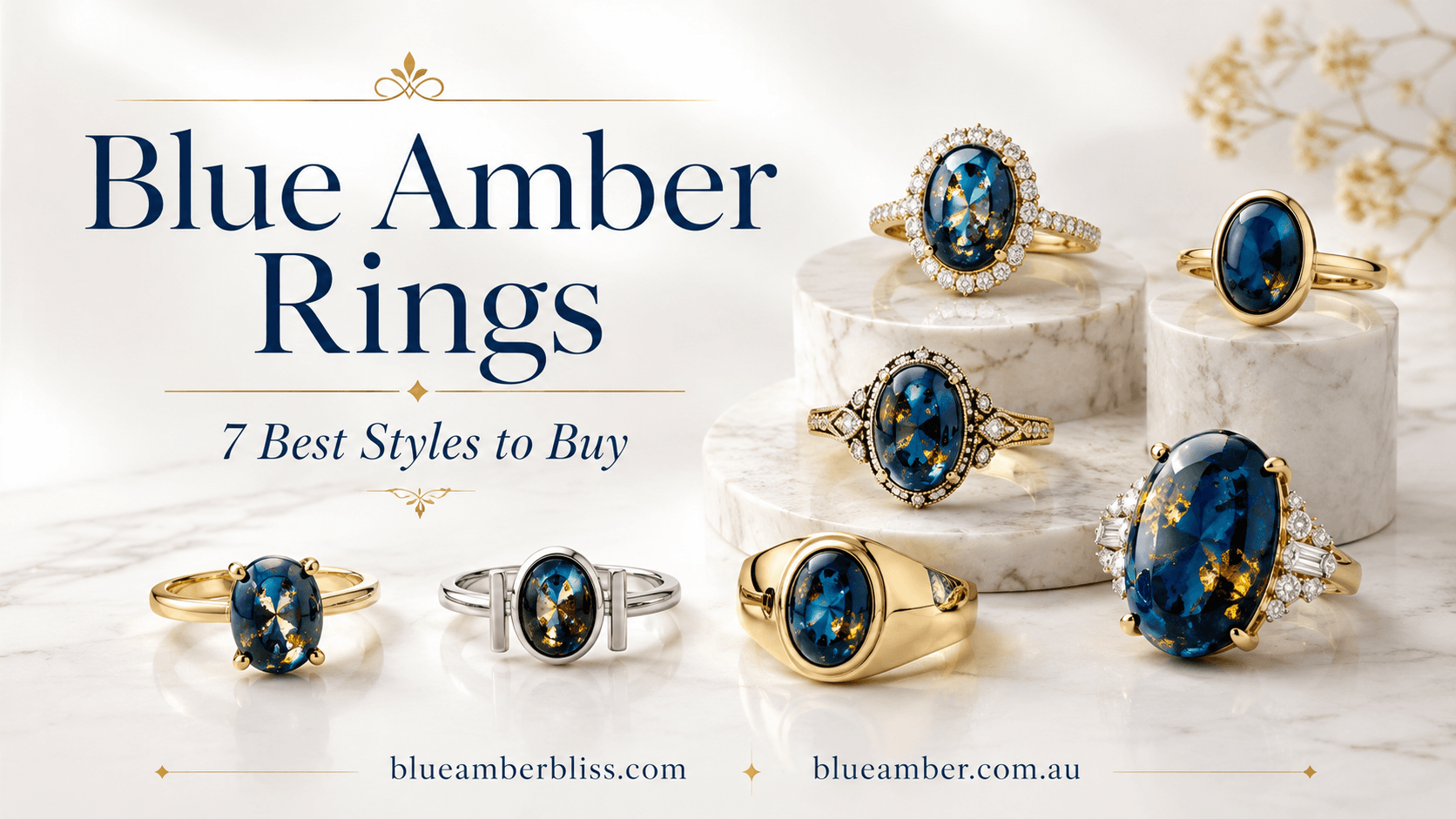
- Blue Amber Rings: 7 Best Styles to Buy
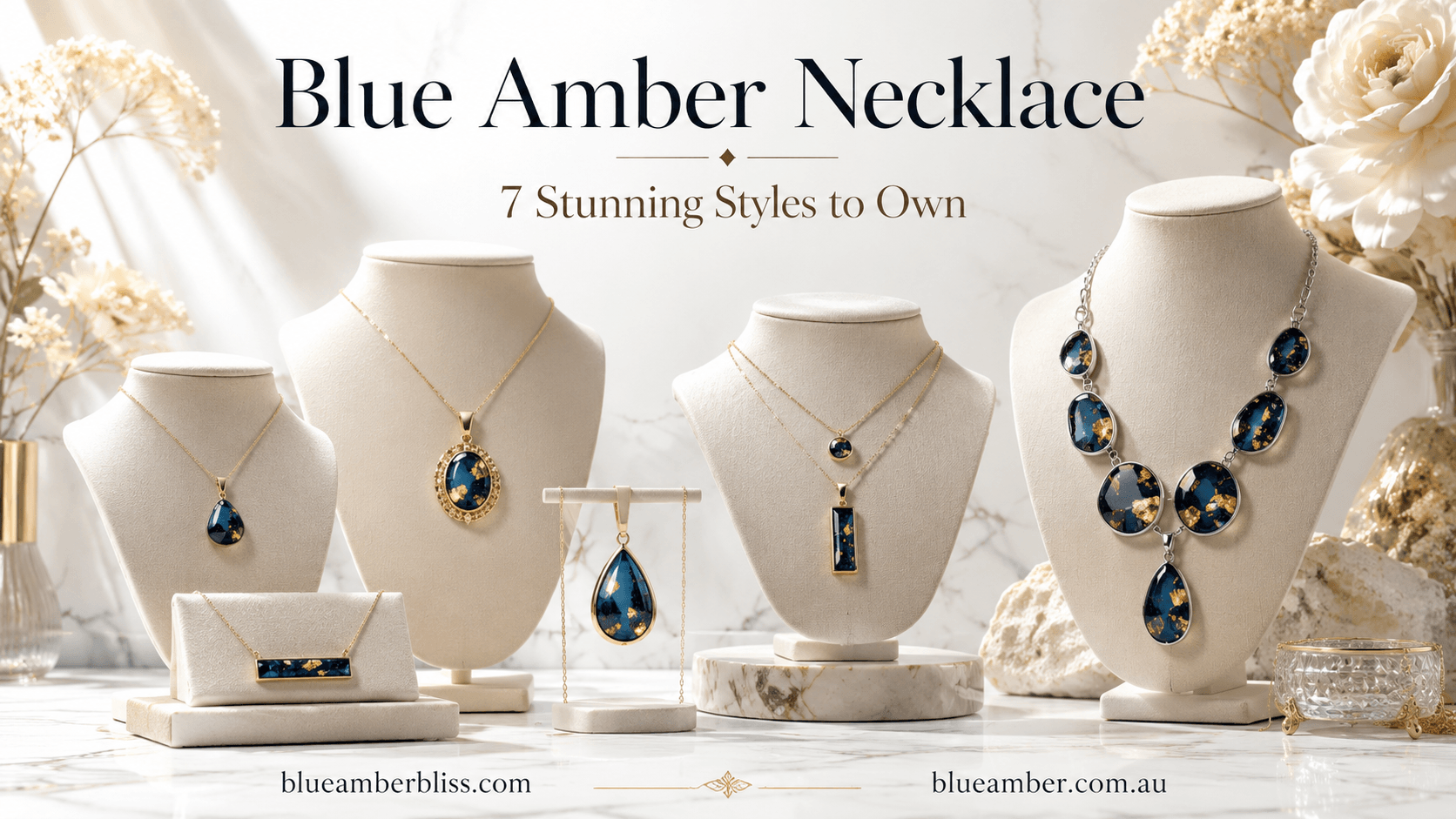
- Blue Amber Necklace: 7 Stunning Styles to Own
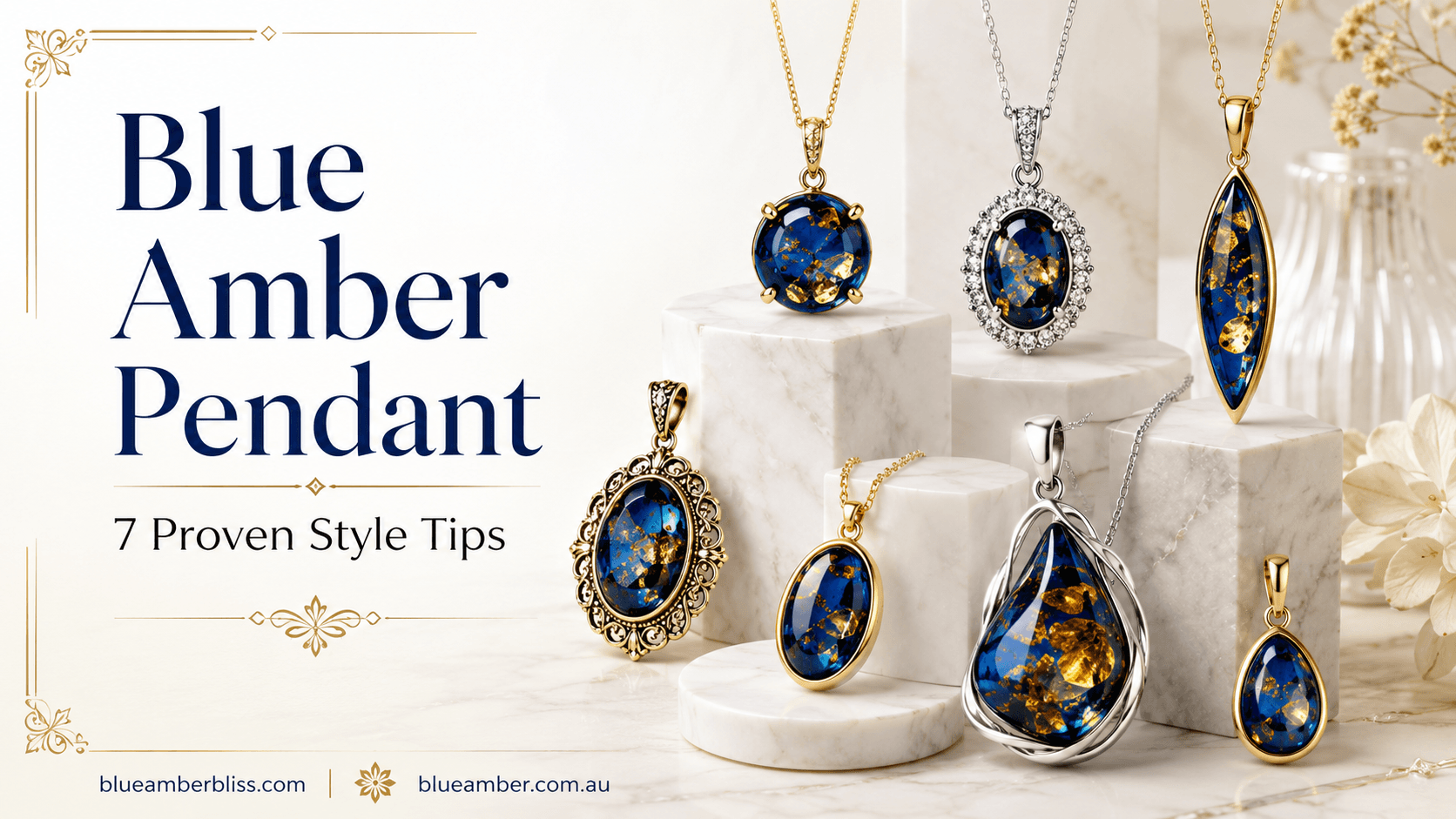
- Blue Amber Pendant: 7 Proven Style Tips