If you’ve ever watched a piece of amber suddenly flash electric blue in sunlight, you already know it doesn’t feel like an ordinary gem. The next natural question is:
“How rare is blue amber, really – and what makes one piece more valuable than another?”
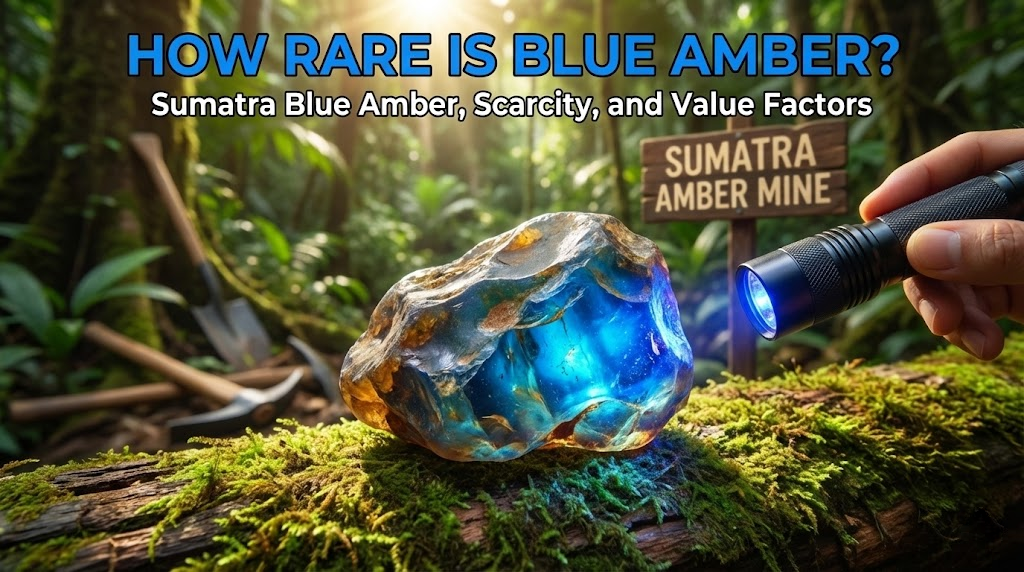
From a gemologist’s point of view, blue amber is rare both geologically and in the market, especially the strong-glow Sumatra blue amber we specialise in at Blue Amber Bliss.
This guide explains its rarity, the key factors that drive value, and how to read price differences like a collector.
Quick Answer: How Rare Is Blue Amber?
Only a handful of deposits worldwide ever produced resin with the chemistry needed to become blue amber.
Within those deposits, only a fraction of amber shows a strong blue glow.
Within that fraction, truly high-grade stones – clean, bright, well-shaped pieces suitable for fine jewellery or carvings – are a small elite.
So while ordinary amber is relatively abundant, fine blue amber is genuinely scarce, and the strongest-glow Sumatra material sits near the top of that rarity scale.
1. Geological Rarity: Why Blue Amber Is Unusual in Nature
All amber starts as tree resin, but not all resins are chemically equal.
For blue amber to form, several things must line up:
The right tree species
Certain ancient trees produced resin rich in the organic molecules that later become fluorescent. Many blue amber deposits are tied to extinct legume-type trees.The right resin chemistry
That resin must contain building blocks that, under heat and pressure, transform into blue-emitting fluorescent molecules.The right fossilisation conditions
Temperature, pressure, oxygen, minerals and time all influence whether the fluorescence survives and how strong it becomes.The right survival conditions
Even once formed, the deposit must survive erosion, mining and modern development long enough to be discovered and collected.
These conditions are rare in combination. That’s why blue amber is mostly limited to two main regions:
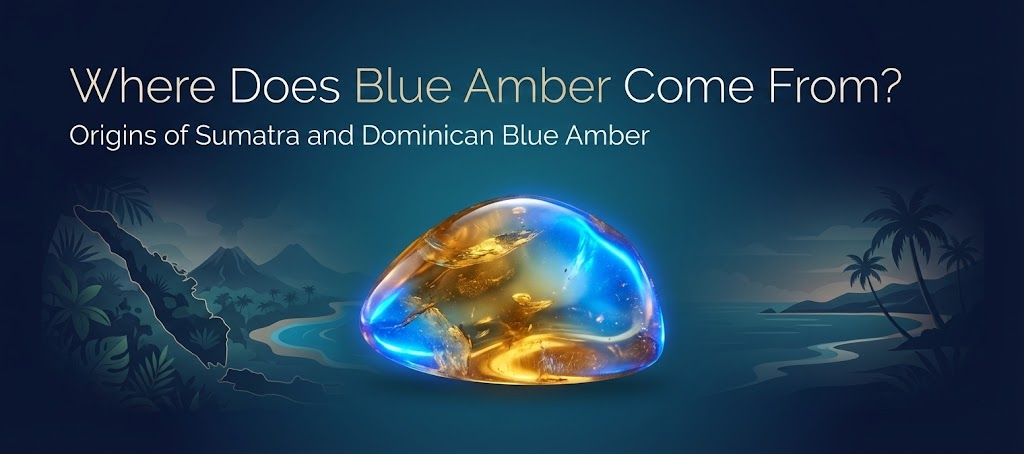
The Dominican Republic
Indonesia, particularly Sumatra
Even there, most of the amber is not strongly blue.
2. Rarity Inside the Deposit: Strong Glow vs Weak Glow
Imagine a large blue amber deposit as a forest of trees. Not every tree is the same height; not every piece of amber has the same “blue”.
Within a single mine or region you’ll find:
Stones with no visible blue glow
Stones with a soft, subtle blue haze under UV
Stones with a clear but moderate glow
A small percentage with an intense, neon-like blue or blue-green flash
Collectors and jewellers chase that upper tier.
In our buying trips and selections for Blue Amber Bliss, it’s common to sort through a large quantity of rough and keep only a small fraction that meets our standard for:
Strong, clean fluorescence
Attractive body colour
Useful shape and size for jewellery or carving
This “pyramid” structure is a key reason fine blue amber is rarer – and more expensive – than ordinary amber.
3. Sumatra vs Dominican: Which Is Rarer and More Valued?
Both Sumatra and Dominican blue amber are rare, but they have different personalities.
Dominican Blue Amber
Often lighter in body colour (yellow to light honey)
Glow can range from soft to medium strength
Historically known and studied first, so it has more “name recognition”
Sumatra Blue Amber (Indonesia)
Typically deeper honey, cognac or cola-brown body colour
Frequently shows very strong, neon-like blue or blue-green fluorescence
Often found in pieces large enough for carvings and bold cabochons
In today’s market, many collectors and artists consider top-grade Sumatra blue amber to be:
Visually superior (stronger contrast and glow)
More desirable for statement jewellery and carvings
Harder to source in consistent high quality
That is why Blue Amber Bliss chooses to specialise in Sumatra blue amber and curates it carefully rather than offering a little of everything.
4. Types of Rarity: Natural, Visual and Market Rarity
When you ask “How rare is blue amber?” you’re really asking about three overlapping ideas.
Natural Rarity
How often does this occur in nature?
Deposits with blue amber are rare.
Within them, strong-glow material is rarer still.
Visual Rarity
How often do you see this look?
A deep cola-brown stone that explodes into electric blue outdoors is not something you encounter casually.
Even among collectors, high-contrast pieces are talked about and remembered.
Market Rarity
How easily can you buy it at a given moment?
Blue amber mining is small-scale and often seasonal.
Supply can tighten quickly if demand spikes or if a mine becomes less accessible.
High-grade stones may move directly from miner to carver to private collectors.
Natural rarity and visual rarity feed into market rarity, which you experience as limited availability and higher prices, especially for standout pieces.
5. What Drives Blue Amber’s Value?
Several factors combine to determine a stone’s value. Think of them as dials: the more of them you turn up, the higher the price tends to go.
1. Strength and Quality of the Blue Glow
This is the single biggest value driver.
Strong, even fluorescence in sunlight and UV
Clean transition between amber body and blue surface glow
Glow that holds at multiple viewing angles
Pieces that only show a weak or patchy blue will be less expensive than those that look like they are lit from within.
2. Body Colour and Contrast
Rich honey, cognac or cola-brown body colours usually command more interest than very pale or muddy tones.
A dark, warm body colour gives the blue glow a dramatic stage, creating that coveted “night sky over embers” effect.
3. Clarity and Internal Structure
Fewer cracks, cloudiness and structural weaknesses generally mean higher value, especially in larger pieces.
Some gentle clouds or swirls can add character, but heavy fractures limit how the stone can be cut or set.
4. Size and Shape
Larger stones with strong glow are exponentially rarer than small ones.
Natural shapes that lend themselves to pleasing cabochons or carvings are more valuable than irregular fragments.
5. Origin and Documentation
Clear documentation that a stone comes from a respected Sumatra or Dominican source adds confidence and value.
For very high-end pieces, gemological reports may be used to document that the material is natural amber, not copal or synthetic.
6. Craftsmanship (For Finished Jewellery and Carvings)
Expert cutting and polishing can dramatically enhance glow and beauty.
Thoughtful settings that protect the stone and display its best angle add value beyond the raw material.
Artistic carvings by known carvers create a collectible art piece rather than “just a stone”.
6. Understanding Price Differences: Examples by Category
Exact prices change over time, but it helps to think in categories rather than numbers.
Raw Blue Amber Pieces
Small, lighter pieces with modest glow: entry-level price range
Medium pieces with good glow and decent shape: mid-range
Large, clean pieces with excellent glow: upper range and often sold as specimens or future carving material
You’ll see this spectrum in our
raw and specimen collection.
Cabochons and Finished Jewellery
Simple cabochons with pleasing glow in silver settings: accessible but higher than raw material of the same weight
Designer pieces in fine silver or gold, using carefully cut stones: mid-to-upper range
One-of-a-kind statement pieces (especially in gold, with exceptional glow and size): top of the range, often unique
Explore this range in our
blue amber jewellery collection.
Carvings and Sculptures
Even a modest-size carving requires a lot of material and labour.
The combination of large, high-grade rough and skilled carving makes these pieces the most expensive per item.
Prices are less about weight and more about artistry, glow and uniqueness.
Our
rare and collector-grade blue amber section usually includes some of these special pieces.
7. How to Choose a Blue Amber Piece That Holds Its Value
If you care about both beauty and long-term value, here are practical tips:
Prioritise glow and contrast
A slightly smaller stone with stunning glow is often a better choice than a bigger, duller piece.Look for clean, harmonious shapes
These are easier to set in jewellery and more pleasing to the eye.Ask about origin
Stones that are clearly identified as Sumatra or fine Dominican blue amber are easier to resell and discuss with other collectors.Buy from specialists
A focused blue amber seller is more likely to understand the material deeply, sort quality properly and stand behind authenticity.Follow your eye and your body
Value is not just financial. The piece you keep wearing, looking at and working with is the one that’s truly valuable to you.
8. Is Blue Amber a Good “Investment Stone”?
Blue amber should first and foremost be something you love and connect with. That said, there are reasons collectors see potential:
Supply is naturally limited and not easily scaled up.
Awareness of Sumatra blue amber is growing, not shrinking.
Top pieces are often one-of-a-kind; once sold into a private collection, they may not reappear for years.
If you’re thinking in investment terms:
Focus on top-quality glow, strong contrast and good size.
Keep photos, invoices and any origin notes.
Store and care for your pieces properly so they remain in excellent condition.