
What Is Blue Amber? A Gemologist Explains This Rare Glowing Amber
Blue amber looks like it belongs in a fantasy story: golden or cola-brown indoors, then suddenly glowing electric blue when you step into sunlight. If you’ve ever seen this and wondered “what is blue amber, exactly?”, the short answer is:
Blue amber is a rare type of amber – fossilised tree resin – that appears honey-gold or brown in normal light but shows a vivid blue or blue-green glow in sunlight or under UV light.
It is real amber, not glass or plastic, and the blue comes from natural fluorescent molecules inside the resin.
This article explains what blue amber is from both a scientific and a metaphysical perspective, why Sumatra blue amber is so prized, and how to recognise and care for genuine pieces like the ones we specialise in at Blue Amber Bliss.
Short Definition: What Is Blue Amber?
When people ask “what is blue amber?”, they are usually trying to understand two things:
- Is blue amber natural? – Yes. It is genuine amber formed from the fossilised resin of ancient trees.
- Why does it look blue? – Because certain organic molecules in the amber absorb high-energy light and re-emit it as blue; this is called fluorescence.
So blue amber is best described as golden amber with a natural blue halo that appears under the right light.
How Amber Forms (So Blue Amber Makes Sense)
All amber, including blue amber, starts the same way:
- Millions of years ago, trees in warm prehistoric forests produced large amounts of sticky resin.
- This resin flowed down the trunk, trapping bubbles, fragments of leaves, bark and occasionally insects.
- Over time the resin was buried by sediment and protected from air.
- Gentle heat and pressure transformed it into a stable, solid material: amber.
Because it comes from living trees, amber is classed as an organic gemstone, like pearl or coral. It is light in the hand, slightly warm to the touch, and relatively soft (around 2–2.5 on the Mohs scale).
Blue amber goes through exactly the same process. The only difference is the chemistry of the original resin.
Scientific Meaning: Why Blue Amber Glows Blue
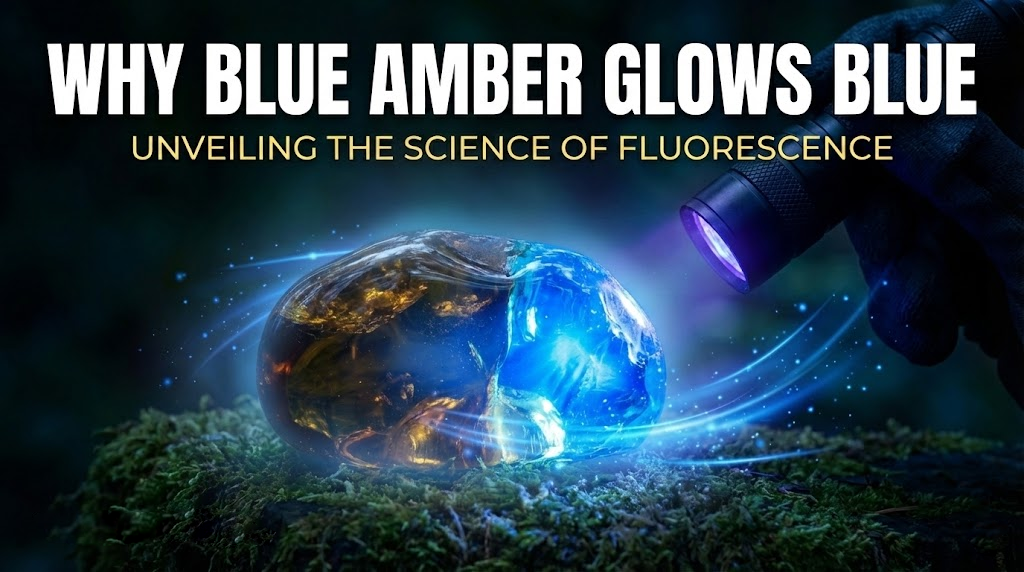
The “blue” in blue amber is not a paint or dye and it is not a solid body colour like sapphire. It is a surface effect caused by fluorescence.
Inside blue amber are special organic molecules (often described as aromatic hydrocarbons). They behave a bit like tiny solar panels:
- They absorb high-energy light, especially UV and violet-blue wavelengths.
- When they release this energy, they emit part of it as visible blue light.
This is why:
- Under warm indoor light, blue amber looks like normal honey or cognac amber.
- In sunlight or under a UV torch, the surface suddenly shows a strong blue or blue-green glow, while the interior still appears golden or brown.
If you look at a piece from the side, you will see that the body colour is still amber; the blue is strongest where light hits and reflects from the polished surface.
At Blue Amber Bliss we always photograph our stones in multiple lighting conditions so you can see this dual personality clearly. You can explore examples in our
blue amber jewellery collection and
raw blue amber specimens.
Where Does Blue Amber Come From?
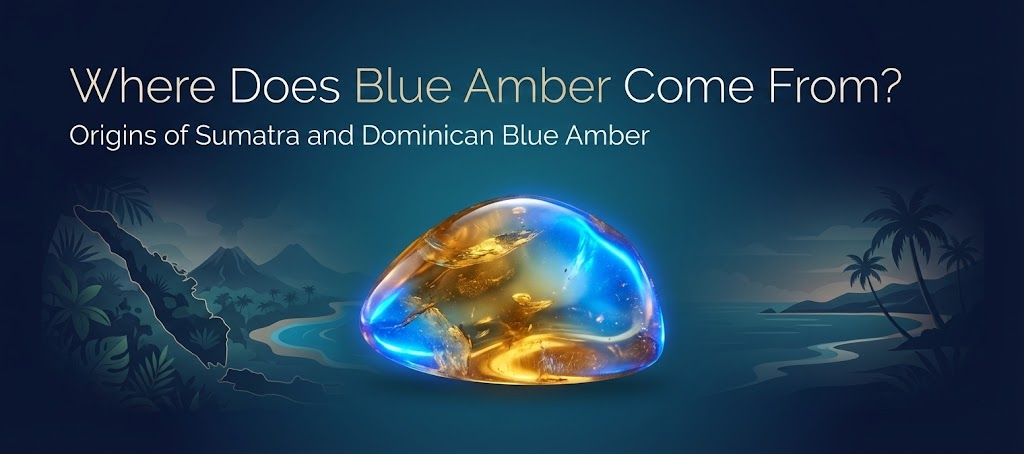
Only a few places on Earth ever produced resin with the right chemistry to become blue amber.

Sumatra Blue Amber (Indonesia) – Our Specialty
Today the most visually dramatic material comes from Sumatra, Indonesia. High-grade Sumatra blue amber is known for:
- Deep honey, cognac or cola-brown body colour
- Intense neon-blue or blue-green fluorescence in sunlight and UV
- Bold colour shifts between indoor and outdoor light
- Sizes suitable for statement jewellery and highly detailed carvings
Because of this, our shop focuses on carefully selected
Sumatra blue amber, both as jewellery and as collector specimens.
Dominican Blue Amber
Blue amber was first widely documented in the Dominican Republic. Dominican material can be beautiful, often with lighter tones and a softer blue glow.
However, when collectors compare modern material side by side, top Sumatra blue amber is often preferred for its stronger neon-blue fluorescence, richer body colour and striking contrast. That is why Blue Amber Bliss positions Sumatra blue amber as our signature gemstone.
Historical and Metaphysical Meaning of Blue Amber
Beyond the science, many people are drawn to blue amber for its energy and symbolism.
Historically, amber in general has been associated with:
- Protection – used as a talisman against negative forces
- Healing – linked with warmth, life force and vitality
- Memory and time – a physical piece of ancient forest frozen in time
Blue amber adds a new dimension:
- The golden body is often linked with the Solar Plexus Chakra, symbolising confidence, willpower and personal strength.
- The cool blue glow is associated with the Third Eye and Throat Chakras, representing intuition, insight and clear communication.
Many people use blue amber in meditation or spiritual work to:
- Clear heavy or stagnant emotions
- Strengthen energetic boundaries
- Bring a sense of calm, focused clarity
This is, of course, spiritual and symbolic rather than medical. For those who feel drawn to the stone in this way, we curate special pieces in our
spiritual blue amber range (you can adjust this URL to match your actual category).
How Rare and Valuable Is Blue Amber?
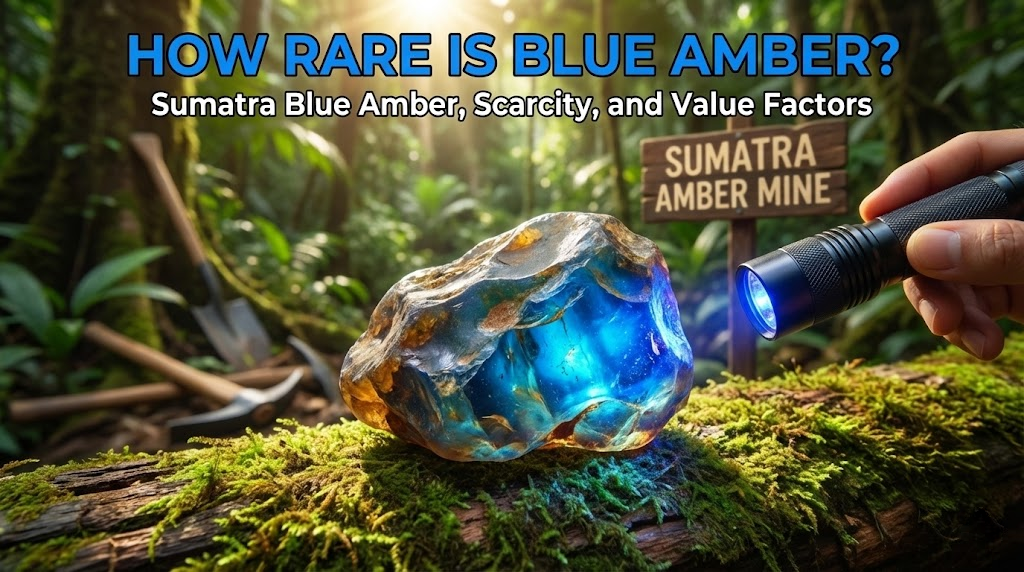
Within the amber family, blue amber is the rarest and most sought-after colour effect.
It is rare because:
- Only certain ancient tree species produced resin with the right fluorescent molecules.
- Those trees grew in limited regions, mainly what is now the Dominican Republic and parts of Indonesia.
- Even within these deposits, only a fraction of the amber shows strong blue fluorescence.
- Among those, large, clean pieces with a vivid glow are genuinely scarce.
Value is influenced by:
- Strength of the blue glow – brighter and more even is more valuable
- Clarity – fewer cracks and cloudy areas
- Body colour – rich warm tones give better contrast with the blue
- Size and shape – big, well-proportioned stones are prized
- Origin and craftsmanship in finished jewellery
Our highest-grade stones are grouped in
the rare and collector-grade blue amber collection, where you can see how these factors show up in real pieces.
How to Tell If Blue Amber Is Real
Because genuine blue amber is valuable, imitations are common. Here are practical checks you can do at home before sending anything for laboratory testing.
1. Behaviour in Different Light
Look at the stone:
- Under warm indoor light
- In natural daylight
- Under a small UV torch
Real blue amber should:
- Look amber-coloured (honey, cognac, brown) in normal indoor light
- Show a distinct blue or blue-green surface glow in sunlight or UV
- Still reveal the underlying amber colour when viewed from the side
If a piece looks flat, opaque blue in every lighting condition and never shows amber tones, it is usually dyed resin, plastic or glass.
2. Weight and Feel
- Amber is light compared with glass and feels slightly warm when held.
- Glass feels heavier and cold.
- Many plastics feel light but often look too perfect and artificial.
3. Internal Structure
Use a loupe or phone macro lens:
- Look for tiny bubbles, swirls, flow lines or organic flecks.
- These natural structures are common in real amber.
- Completely flawless, uniform material with no internal life at all can be a red flag.
4. Gentle Smell Test (Only If Necessary)
If you very gently warm the surface (for example, by rubbing with a soft cloth):
- Real amber can release a faint pine or smoky resin scent.
- Plastics usually smell synthetic or chemical when heated.
Never burn, file or aggressively heat blue amber; you will destroy its value. At Blue Amber Bliss every piece is hand-selected and checked, so you can focus on choosing the stone you love rather than worrying about authenticity.
How to Care for Blue Amber Jewellery
Blue amber is not fragile, but it does appreciate gentle care.
- Store separately
Keep each piece in its own soft pouch or jewellery box compartment to avoid scratches from harder gemstones and metals. - Avoid harsh chemicals
Remove your jewellery before applying perfume, hairspray, sunscreen or cleaning products. These can cloud or damage the surface. - Clean carefully
Wipe with a soft dry cloth. If needed, use lukewarm water with a tiny amount of mild soap, then dry immediately. Do not use ultrasonic or steam cleaners. - Protect from extreme heat and prolonged harsh sunlight
Short exposures for photos are fine. Just avoid leaving blue amber in hot cars, on heaters or on sunny windowsills for hours.
With this level of care, a good piece of blue amber can keep its glow for generations and become a meaningful heirloom.
FAQ: What Is Blue Amber?
What is blue amber in simple terms?
Blue amber is fossilised tree resin – genuine amber – that looks golden or brown indoors but shows a vivid blue or blue-green glow in sunlight and UV light. The blue is a natural fluorescent effect from organic molecules inside the amber, not from dye or artificial colouring.
Is blue amber natural or fake?
Authentic blue amber is completely natural. It forms from ancient tree resin that fossilised millions of years ago. The blue appearance comes from fluorescence, not from paint or coating. However, the market also contains dyed resin, copal and glass, so it is important to buy from specialists who understand the gemstone.
Where does blue amber come from?
Blue amber is mainly found in the Indonesia and Dominican Republic. Many collectors today consider Sumatra blue amber from Indonesia the most visually striking, thanks to its deep honey-to-cola body colour and intense neon-blue glow. Blue Amber Bliss focuses on carefully selected Sumatra blue amber.
Why is blue amber rare and valuable?
Only a few amber deposits ever developed the right chemistry to produce the blue glow, and within those deposits strong-glow stones are uncommon. Large, clean pieces with intense fluorescence – especially from Sumatra – are genuinely scarce, so collectors and jewellery lovers are willing to pay a premium for them.
By answering “what is blue amber?” clearly from both a scientific and personal point of view, this article is designed to be a complete reference for anyone discovering this rare gemstone and exploring the pieces available at BlueAmber.com.au.