Why Sumatran Blue Amber Is the New Star
If you’ve been searching for blue amber price information, you’ve probably seen everything from $20 trinkets to $1,000+ “museum pieces” – and almost no one explains why there’s such a huge gap.
Most blogs still talk about Dominican blue amber, but quietly, another source has been turning heads:
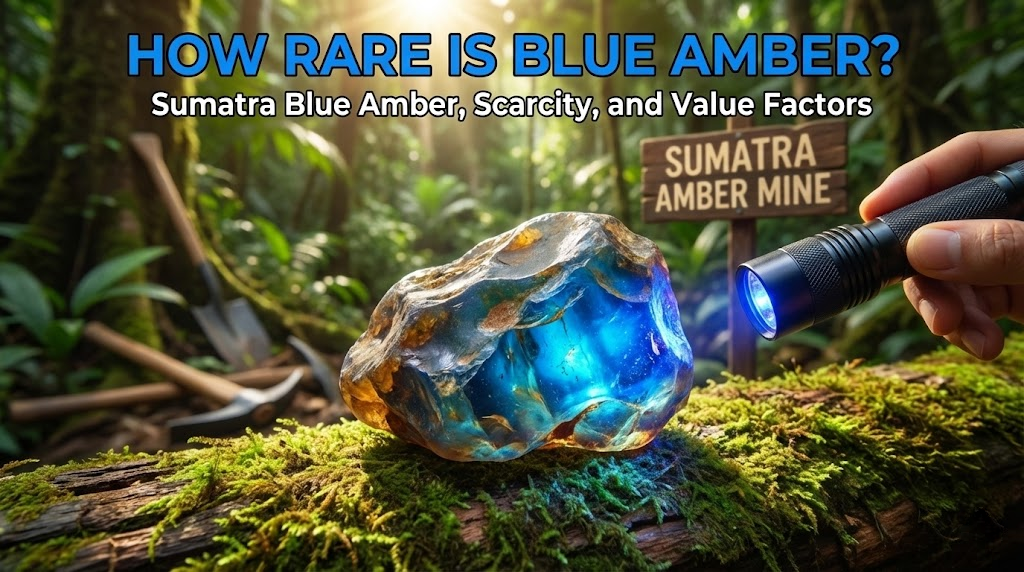
Sumatran blue amber from Indonesia – pieces that glow electric blue from the ancient rainforests, ethically mined and curated by specialists who deal in nothing else.
This guide is written for you as a serious buyer or collector, especially if you’re in the US and want to understand:
-
What actually drives Sumatran blue amber prices
-
Realistic price ranges in 2025 based on curated pieces
-
How to know when you’re getting fair value – and when you’re not

All prices below are in $ for simplicity.
What Makes Sumatran Blue Amber So Valuable?
Sumatran blue amber isn’t just “amber that happens to glow”.
From your own catalog and brand story, it’s clear that:
-
It’s mined and sourced from Sumatra, in ancient rainforest deposits that are found in only a handful of places on Earth.
-
In normal light it shows rich honey-to-golden tones, but under strong white light or UV it explodes into an electric blue halo.
-
You specialize exclusively in high-grade, untreated blue amber – no fakes, no dye, no enhancements – carefully hand-picked for glow and character.
That combination – rare locality, dramatic optical effect, and specialist curation – is what lifts Sumatran blue amber out of the “cheap gemstone” category and into the realm of serious collector material.
Key Factors That Influence Blue Amber Price
Before we talk numbers, you need to understand the levers behind the price tag.
2.1 Glow Strength (This Is #1)
For blue amber, glow = value.
-
Top Sumatran pieces show a clearly visible blue cast in strong daylight or LED light, not just under a UV torch.
-
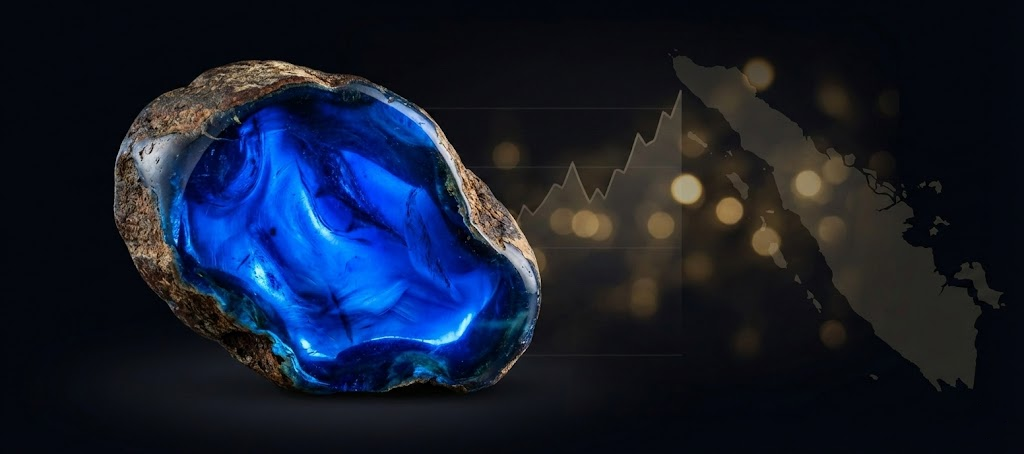
Under UV, the best stones turn into blazing cobalt – often with swirling internal patterns that look like galaxies or aerial forest maps.
If the glow is faint, patchy, or only visible from one tiny angle, the price should reflect that.
2.2 Clarity, Texture and “Story”
Sumatran blue amber comes in many flavors:
-
Clearer zones that let you look deep inside the stone
-
Bark-skin surfaces that remind you this was once living resin
-
Swirls, clouds and occasional inclusions that tell its ancient story
In general:
-
Strong glow + attractive clarity (or dramatic internal patterns) = higher value
-
Interesting bark-skin and “world map” textures can raise collector interest
-
Excessive fractures, muddy zones or messy fills should pull the price down
2.3 Size and Presence
Price doesn’t go up in a straight line with weight.
-
A 20–30 g stone with insane glow and a perfect face can be worth more per gram than a 200 g lump with average glow.
-
For collectors and interior styling, “presence” matters: how it sits on a stand, how it catches light on a shelf, how it photographs.
Smaller, ultra-glowy pieces are often priced higher per gram than big, average chunks.
2.4 Raw vs. Polished vs. Finished Jewelry
Think of three tiers:
-
Raw specimens – sunlight-glowing, rough stones; great for collectors and display.
-
Polished stones – sculpted faces, tumbled or cabochon shapes that show off glow.
-
Finished jewelry – pendants, bracelets, necklaces; stone value + metal + craftsmanship.
Each level adds skill, time and risk (cutting always sacrifices some material). Naturally, price per gram increases as you move from raw → polished → jewelry.
2.5 Curation and Trust
You can always find cheaper “blue amber” in random kilo lots which often used heavily edited or blue filter to make the stones looks more blue.
But curated Sumatran blue amber from a specialist store like Blue Amber Bliss offers:
-
Verified Sumatra origin
-
Individual photos and videos of the exact piece, including glow
-
Clear grading by size, glow and character
That trust is part of what you’re paying for. Low price with no transparency is rarely a good deal.
Realistic Price Ranges for Sumatran Blue Amber in 2025
These ranges are based directly on real product listings from a specialist Sumatran blue amber store – including raw specimens, polished pieces and bead jewelry.
They’re approximate, but they reflect how serious blue amber is actually priced today.
3.1 Raw Sumatran Blue Amber (Collector Specimens)
From the Raw Blue Amber collection, you’ll see:
-
Medium-large sunlight-glowing pieces around 100–200 g typically listed in the $300–$600 range.
-
Larger 250–350 g “centerpieces” with strong daylight glow ranging from roughly $600 up to around $1,600+, depending on glow and overall presence.
So as a rule of thumb in 2025:
-
Mid-sized curated raw specimens (100–200 g): about $300–$600
-
Large display centerpieces (200–350 g+): roughly $600–$1,600+
That’s the territory for serious collector material, not bargain-bin rough.
3.2 Polished Sumatran Blue Amber Stones
From the Polished Blue Amber section, you’ll find:
-
Smaller polished stones around 20–30 g priced roughly $100–$260, depending on glow
-
Mid-sized polished specimens between 50–150 g often in the $250–$450 range
-
A mix of 50–150 g showpieces (64 g, 72 g, 76 g, 104 g, 122 g, 148 g) priced from about $296 to $428
In other words:
-
Hero stones (20–30 g with crazy glow): approx. $100–$260
-
Display-ready polished stones (50–150 g): about $250–$450
You’re paying not just for weight, but for a ready-to-display, ready-to-photograph face with strong glow.
3.3 Blue Amber Necklaces and Bracelets (Beads)
From your front page:
-
Authentic raw-skin bead necklaces (20–25 beads) sit around $1,100–$1,200
-
15 mm bead bracelets in different tones are in the $650–$900 corridor
Because bead work requires drilling, matching, and stringing, the per-gram value is naturally higher than loose stones – but the result is a ready-to-wear statement piece.
Rough guide for 2025:
-
Bracelets (big-bore beads): around $650–$900
-
Necklaces (20–25 Sumatran beads): around $1,100–$1,200
3.4 Pendants, Rings and Carvings (Now and Future)
As your carving arts and jewelry collections expand, finished pieces will typically fall into these bands:
-
Simple silver-set pendants with strong-glow stones: ~$200–$400
-
Larger or more intricate silver designs, or pieces with particularly rare stones: ~$400–$800
-
Gold or art-jewelry pieces, or detailed carvings: $800 and up, depending on size, metal and design.
For buyers, it’s useful to remember:
Jewelry pricing = stone value + metal + craftsmanship + brand story
If the metal is heavy, the design is complex, and the glow is intense, a higher tag makes sense.
How to Tell If a Sumatran Blue Amber Price Is Fair
Instead of asking “Is this cheap or expensive?”, ask “Does this price make sense for what I’m seeing?”
Here’s a quick checklist for 2025:
4.1 Check the Glow
-
Do you see clear blue glow in photos or videos under strong white light or sunlight (not just a dark UV shot)?
-
Does the glow cover a broad area, or just a few tiny patches?
Strong, even glow justifies higher pricing. Weak or localized glow should sit at the lower end of the ranges above.
4.2 Check the Piece Type
Match the item to the right band:
-
20–30 g polished with great glow → roughly $100–$260
-
50–150 g polished display piece → roughly $250–$450
-
100–200 g raw display piece → roughly $300–$600
-
200–350+ g centerpiece → $600–$1,600+
-
Quality bracelets → $650–$900
-
20–25 bead necklace → $1,100–$1,200
If a seller is asking “mega-centerpiece” money for a small, average-glow stone, something’s off.
4.3 Check the Seller and Origin
For blue amber, you should see:
-
Real photos of the exact piece (not stock photos)
-
Glow shown from multiple angles under real light, not stock filters
If origin is vague, there are no glow videos, or every listing uses the same photo, the low price is probably not a bargain – it’s just risk.
What Different Budgets Can Buy You in 2025
These are realistic expectations based on how curated blue amber is currently priced.
Under $150
-
Small polished stones or tumbled pieces
-
Entry-level 20–30 g stones with visible blue glow
-
Occasional discounted mid-sized stone (if you catch a sale)
$150 – $400
-
Stronger-glow polished stones in the 30–80 g range
-
Some mid-sized polished showpieces (50–100 g)
-
Possible simple silver pendants as jewelry offerings grow
$400 – $1,000
-
High-grade polished specimens (50–150 g) with very good glow
-
Raw specimens in the 150–300 g range with clear daylight glow
-
Quality bead bracelets and simpler necklaces
-
More complex silver jewelry, or smaller gold designs
$1,000+
-
Museum-style raw centerpieces (250–350+ g) with strong sunlight glow
-
Full bead necklaces with matched Sumatran blue amber
-
Detailed carvings and high-end statement jewelry with rare stones
If you’re buying in this tier, you’re collecting art + geology + story – not just grams.
Is Sumatran Blue Amber “Good Value” vs Dominican?
This is where Sumatran blue amber really shines.
While Dominican blue amber still carries the old marketing halo, Sumatran blue amber offers:
-
Comparable or even stronger blue fluorescence in many stones
-
Dramatic textures and inclusions from rainforest deposits
-
Larger display pieces and full bead sets at prices that, for now, are still lower than what Dominican pieces of similar impact would usually command
That’s why many collectors see Sumatran blue amber as a new star:
Blue amber that looks and feels world-class, from a locality that is still being fully discovered and appreciated – and still priced like it’s a secret.
Blue Amber Price FAQ (2025)
Is Sumatran blue amber expensive?
Compared to generic amber? Yes.
Compared to other rare, glowing gemstones and Dominican blue amber? It’s often strong value for the visual impact and rarity you get.
How much does Sumatran blue amber cost per gram?
Curated collector pieces are usually priced per piece, not per gram, but when you reverse-calc from real listings, you’ll often find:
-
Raw display pieces effectively around the low single digits per gram
-
Polished stones and small hero pieces at higher effective per-gram values, reflecting cutting and glow selection
For most buyers, thinking in price bands per piece (see sections above) is more practical.
Why do some Sumatran blue amber pieces cost over $1,000?
Those tend to be:
-
Large, sunlight-reactive centerpieces
-
Fully beaded necklaces with matched glow
-
Exceptionally rare stones or artist-level jewelry and carvings
You’re paying for size + glow + rarity + design, not just weight.
Is Sumatran blue amber a good investment?
No gemstone is guaranteed, but Sumatran blue amber has:
-
Limited, localized supply
-
Surging awareness as more collectors discover it
-
Visual impact that photographs and films extremely well
If you choose pieces you genuinely love and keep their documentation, you get both emotional value now and potential collector value later.
Final Thoughts: Buying Sumatran Blue Amber Smart in 2025
If you remember only three things from this article, let them be:
-
Glow first, everything else second. If you don’t see strong blue, the price should be lower.
-
Match your budget to realistic bands. Use the ranges above for raw, polished and bead pieces.
-
Prioritize trusted, Sumatra-focused sellers. That’s where you find the true “new star” material – carefully chosen stones that show why blue amber from Sumatra is capturing serious collectors’ hearts.